Gardening For Seniors:10 Best Low Maintenance Plants To Grow
Staying mentally and physically active is crucial for seniors to maintain a high quality of life, both in terms of health and happiness. As we age, it’s natural to slow down, but keeping the mind sharp and the body engaged can help combat feelings of isolation, improve cognitive function, and reduce the risk of chronic diseases. Engaging in activities that stimulate both the brain and the body not only boosts mood but also fosters a sense of accomplishment and purpose.
From creative hobbies to social engagements and outdoor activities, there are countless ways to stay mentally fit and active. One such activity is gardening.
I always advise Gardening for seniors to enjoy the outdoors green ambience, stay active, and find peace. However, not everyone has the energy or mobility to take care of high-maintenance plants. There are many easy to grow and easy to care options that still bring beauty to your garden. In this post, I’ll share ten (10) best low-maintenance plants for seniors, along with tips to make gardening easier and more enjoyable.
10 Best Low Maintenance Plants For Seniors To Grow
Plants that thrive in various weather conditions and require minimal care like pests resistant, less or no pruning and drought tolerant are low maintenance plants. There are many but i suggest following low maintenance plants for seniors.
- Lavender
- Daylilies
- Hostas
- Rosemary
- Creeping Thyme
- Marigolds
- Tomatoes
- Geraniums
- Zinnias
- Lettuce
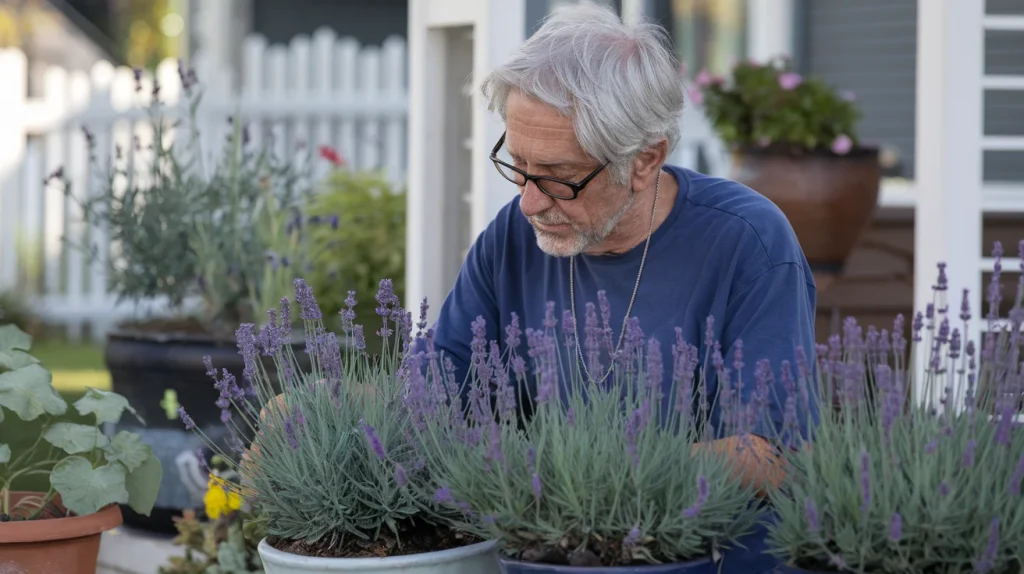
Lavender (Lavandula Angustifolia)
- Hardiness Zone: 5-9
- Growing Options: Outdoors, Container
- Tips: Lavender is a fragrant and beautiful flowering plant (purple color) that thrives in full sun (8 hours sunlight) and well-drained soil. If your soil is not well drained, you can grow lavender in raised bed or in containers. Is Lavender low maintenance? Yes it is low maintenance plant. It’s perfect for seniors because it is drought-tolerant and doesn’t need much care after planting. Prune it once a year or twice to keep it tidy, and it will continue to bloom with its lovely purple flowers. It’s also a great plant for attracting pollinators like bees and butterflies.
Lavender’s essential oil contains many medicinal benefits. It improves sleep, reduces stress and has antibacterial and antifungal effects.
An excellent plant for creating a peaceful garden space.
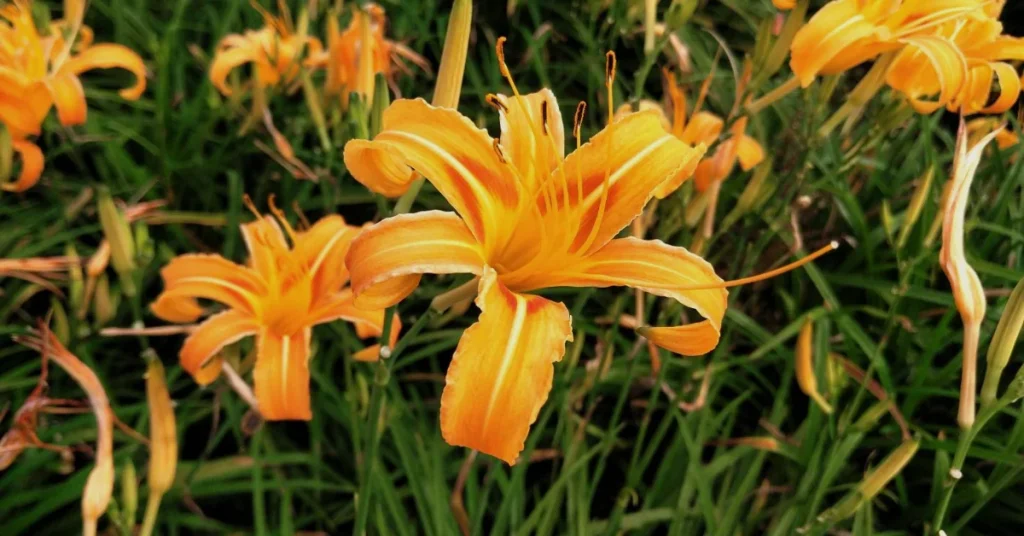
Daylilies (Hemerocallis spp.)
- USDA Hardiness Zone: 3-9
- Growing Options: Outdoors
- Tips: They are hardy and thrive in a variety of conditions, including poor soil and dry weather. These plants are perfect for seniors because they require little care and can grow in partial shade even in 4-6 hours of sunlight. They are resistant to pests and diseases. Daylilies bloom profusely and can tolerate neglect. They only need weekly watering (1 inch).
Need just trim the flowers to encourage new blooms. They can be used in borders or as ground cover.
Hostas (Hosta spp.)
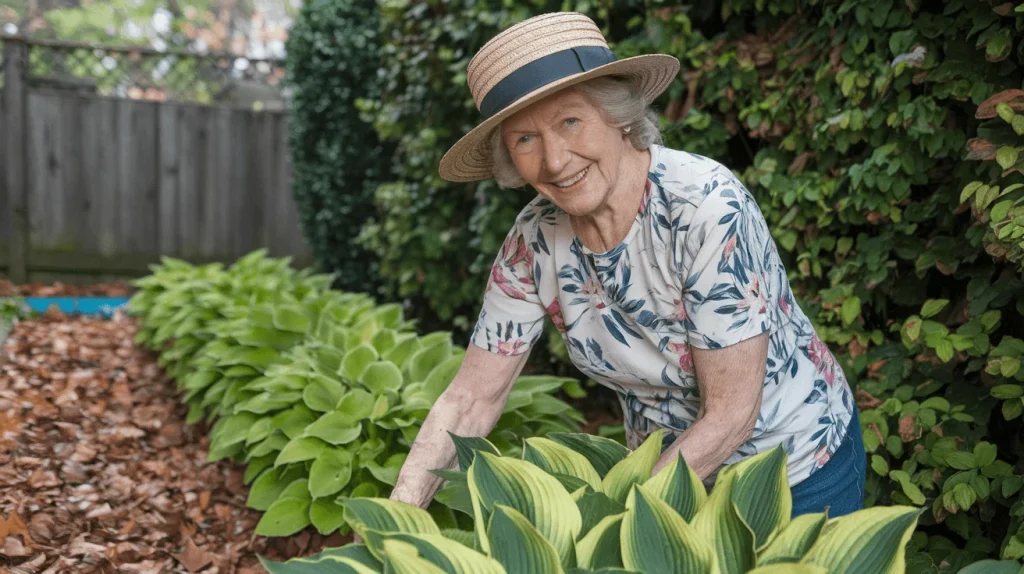
- USDA Hardiness Zone: 3-9
- Growing Options: Outdoors and can be grown in containers.
- Tips: Hostas are perfect for shady areas and great choice for gardens that don’t get a lot of direct sunlight. These perennial plants require low maintenance and easy to care. Hostas grow well in moist, well-drained soil, and they can tolerate periods of drought. Mulching around them helps retain moisture and keeps their roots cool. They come in various sizes, from small to large, and produce elegant flowers during the summer months.
Hostas are an excellent choice for filling in empty spots in shady garden beds.
Hostas are toxic to dogs, cats and horses and also not a good option in windy areas.
Marigolds (Tagetes spp.)
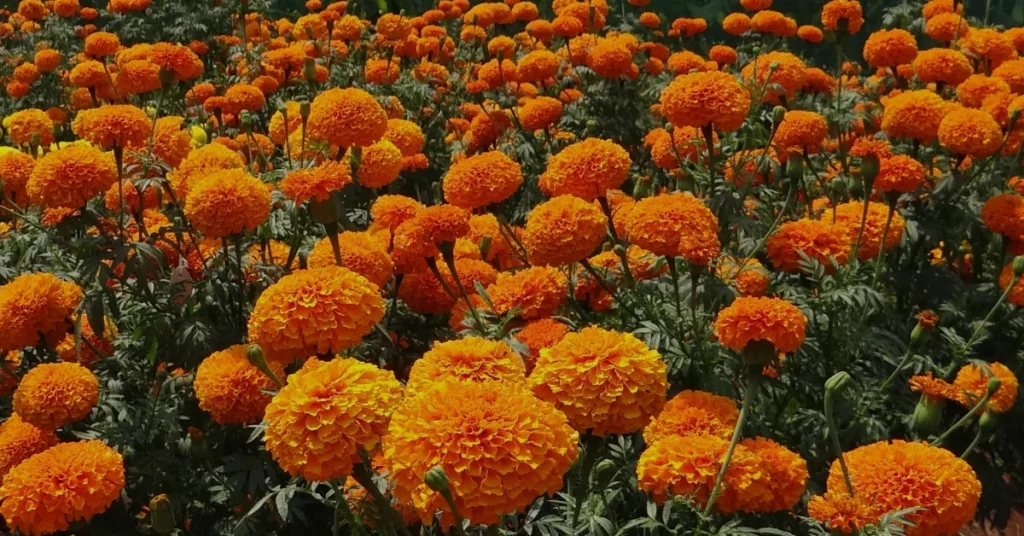
- USDA Hardiness Zone: 2-11
- Growing Options: Outdoors, Container
- Tips: Marigolds are bright and cheerful flowers that thrive in full sun and well-drained soil. Marigolds are drought-tolerant and require watering when top inch of soil is dry. Their vibrant orange and yellow flowers will bloom all summer, and they help repel pests from other plants in your garden. They are easily grown through seeds and easily managed by seniors and even children. Marigolds can be planted in the ground or in the pots.
Marigolds are ideal for adding color and beauty to your garden while keeping pests at bay.
Rosemary (Rosmarinus Officinalis)
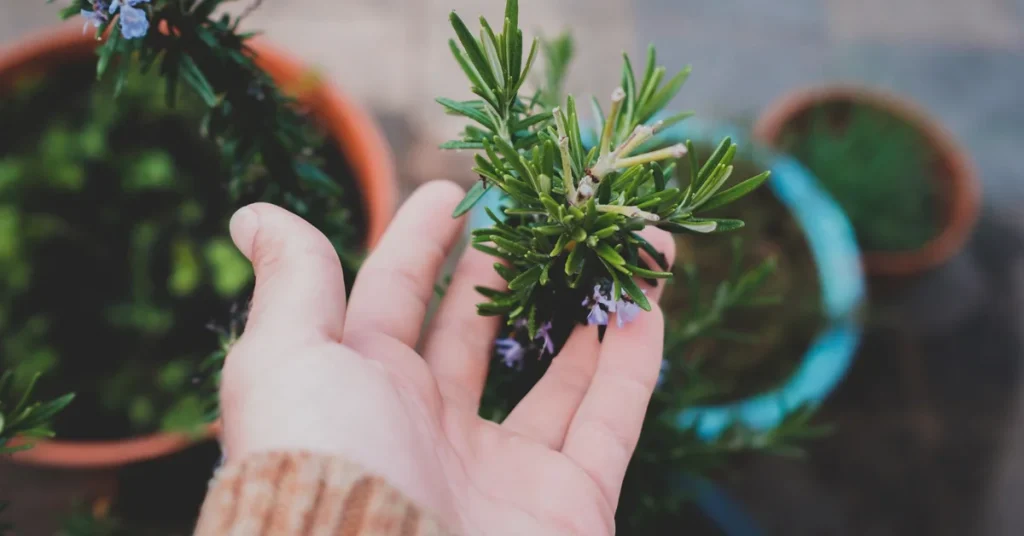
- USDA Hardiness Zone: 6b-9
- Growing Options: Outdoors, Container
- Tips: Rosemary is a hardy herb that loves full sun and well-drained soil. It’s a good plant for seniors because it doesn’t require much maintenance. Rosemary is drought-tolerant and require watering every other week. It also doesn’t need much fertilizing. Rosemary can be planted in ground or in pots. Pruning is required after flowering.
This aromatic low maintenance herb also attracts pollinators like bees and butterflies.
Creeping Thyme (Thymus serpyllum)
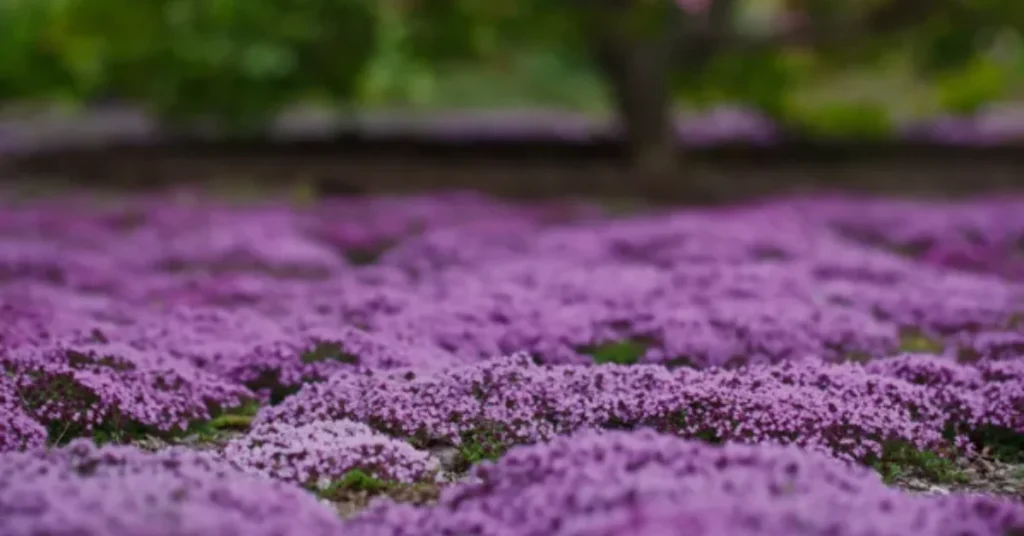
- USDA Hardiness Zone: 2-9
- Growing Options: Outdoors
- Tips: Creeping thyme is a low-growing, fragrant herb that makes an excellent ground cover. It thrives in sunny spots and well-drained soil (sandy or rocky). Once established, it requires very little water and is tolerant of drought conditions. Creeping thyme produces small purple flowers that attract bees and butterflies. It’s a great option for filling gaps in your garden and for adding texture. Due to its low growing, it requires no mowing and also resistant to pests and diseases.
Creeping thyme is also great for use between stepping stones or in rock gardens, where it adds beauty and serves as a natural weed deterrent.
Tomatoes (Solanum lycopersicum)
- Hardiness Zone: 10-11 (Annual in most zones)
- Growing Options: Container, Outdoors
- Tips: Tomatoes are a favorite vegetable for many gardeners, and they’re relatively easy to grow. Choose smaller varieties like cherry or patio tomatoes if space is limited. Tomatoes require plenty of sunlight, regular watering, and occasional pruning to help them grow. They can be grown in containers or garden beds, making them a versatile choice. While they need more attention than some other plants, they reward you with delicious, fresh fruit that can be enjoyed all summer long.
For seniors, tomatoes are a great way to grow your own food with minimal effort, and they are also excellent for container gardening.
Geraniums (Pelargonium spp.)
- Hardiness Zone: 9-11 (Annual in cooler zones)
- Growing Options: Outdoors, Container
- Tips: Geraniums are vibrant flowers that thrive in full sun and dry soil. They are perfect for seniors because they are low-maintenance and do well with minimal care. Geraniums produce colorful blooms in shades of red, pink, and white. Simply deadhead spent flowers to encourage more blooms and trim back any leggy growth. Geraniums can be grown in containers or directly in the garden, adding color and beauty with very little effort.
These flowers are perfect for balconies, patios, or garden beds and bring a pop of color to any space.
Zinnias (Zinnia elegans)
- Hardiness Zone: 3-10
- Growing Options: Outdoors, Container
- Tips: Zinnias are fast-growing annuals that bloom profusely throughout the summer. They prefer full sun and thrive in dry, well-drained soil. Zinnias are easy to care for and require minimal watering. Deadheading spent flowers encourage new blooms and keep garden vibrant all season long. Zinnias are also great for attracting pollinators.
They are available in many colors, from red to pink to yellow, and their bright flowers add a cheerful touch to any garden.
Lettuce (Lactuca sativa)
- Hardiness Zone: 4-9
- Growing Options: Outdoors, Container
- Tips: Lettuce is a quick-growing vegetable that thrives in cool weather. It’s perfect for seniors because it requires little care. Plant lettuce in early spring or fall, and it will grow quickly. You can harvest the outer leaves as they mature, leaving the rest of the plant to continue growing. Lettuce prefers moist, well-drained soil and regular watering, but it’s easy to manage. You can grow lettuce in containers or raised beds.
Lettuce adds fresh, crisp greens to your meals, and growing your own can be a rewarding experience.