What To Plant With Squash (7 Best Companion Plants)
Companion planting is like giving your garden a team of friends that help each other grow strong and healthy. Instead of planting everything alone, you pair plants that work well together. For squash—like zucchini, pumpkins, or butternut—this means choosing buddies that keep pests away, improve the soil and make your harvest bigger.
Squash plants are big and spread out, with wide leaves that shade the ground. They love warm weather and need lots of sun, water and rich soil. But they face problems like bugs, diseases, or poor soil if left on their own.
Now a days, the strategy is to use companion planting to avoid chemicals and make yards more eco-friendly. It saves space, especially in small gardens or raised beds and attracts good bugs like bees for better pollination.
Good companions can trap bad bugs or scare them off with smells. Plus, mixing plants makes your garden look pretty and diverse. In this post, we’ll cover the top benefits of companion planting, what to plant with squash (07 best friends for squash with details), what plants to avoid with squash and what to plant with squash in raised bed.
Let’s dig in and make your squash thrive!
7 Best Companion Plants for Squash
Here is a simple list of the 7 best companion plants for squash (like zucchini, pumpkins, or butternut). These plants help squash grow better by fighting pests, adding nutrients, or supporting each other.
- Corn
- Beans (pole or bush)
- Nasturtiums
- Marigolds
- Radishes
- Dill
- Borage
Corn

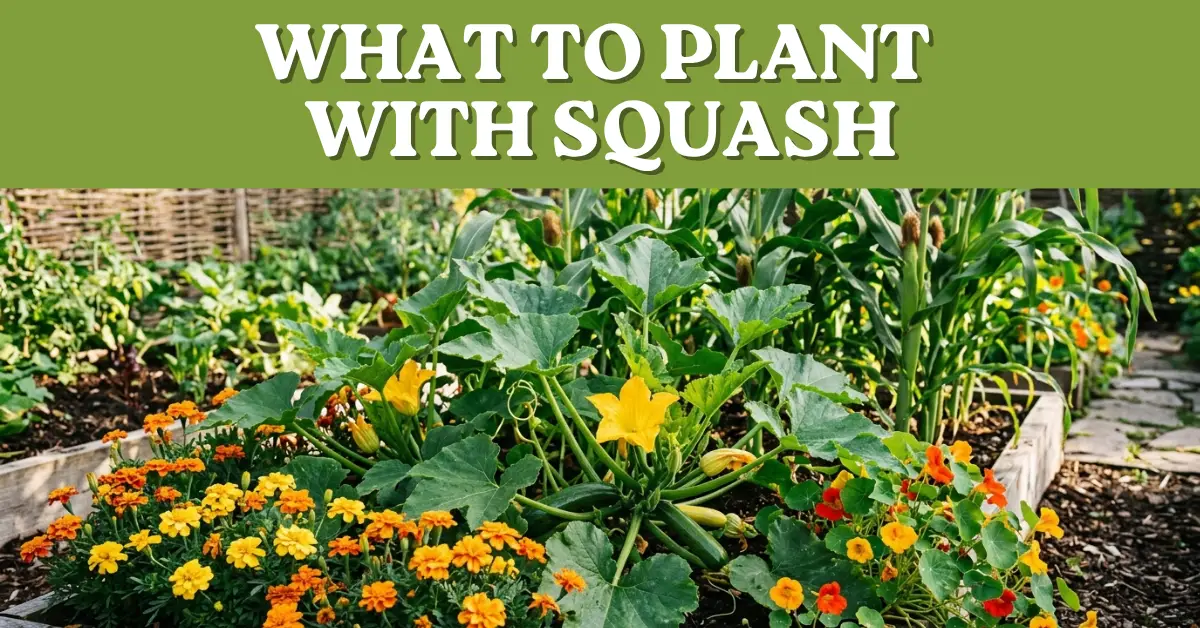
The combination of corn, beans, and squash, known as the traditional “Three Sisters” method, is a smart way to grow these plants together. Corn grows tall and strong, giving the squash something to climb on. Beans help add nitrogen to the soil, which feeds the other plants. Squash plants have large leaves that spread across the ground, acting as a natural mulch to block weeds and keep the soil moist. Together, these three plants create a healthy and productive garden ecosystem.
Benefits for Squash
Corn provides support for vining squash, allowing it to climb and save space in the garden. The wide leaves of squash act as a natural ground cover, blocking sunlight and preventing weeds from growing. This leaf cover also helps the soil hold moisture, which benefits all the plants nearby. Additionally, corn can attract pollinators, which helps the squash flowers produce fruit.
How to Plant the Three Sisters
Start by planting the corn first, either in small hills or in rows. Let the corn grow a few inches tall before adding the beans. Then, plant pole beans around the corn when the stalks are about 4–6 inches high; the beans will climb the corn naturally. Finally, plant the squash seeds at the base of the corn and beans. As the squash grows, its vines will spread over the soil, covering it like a living mulch.
Beans

Squash plants are heavy feeders—they need a lot of nutrients, especially nitrogen, to grow big leaves and produce lots of fruits. Beans are special because they are legumes. They have tiny bacteria on their roots that take nitrogen from the air and turn it into a form the plants can use. This process is called nitrogen fixation.
The beans “share” this extra nitrogen with the squash through the soil, so your squash gets a natural boost of food without you having to add extra fertilizer. This makes the plants grow faster, stay greener, and give you bigger harvests.
Bush beans grow low and bushy, forming a nice thick layer close to the ground. Squash plants have large leaves that already help shade the soil, but adding bush beans makes the shade even better. Together, they block sunlight from reaching weed seeds, so fewer weeds grow.
Nasturtiums

Nasturtiums are excellent companion plants for squash. They act as a trap crop, attracting pests like aphids, whiteflies, and squash bugs away from your main plants.
Benefits for Squash:
- Pest Deterrent: Nasturtiums confuse or repel squash bugs, cucumber beetles and aphids by attracting them to themselves instead of the squash.
- Attracts Beneficial: Bees, ladybugs and lacewings are drawn to the flowers, helping control pests naturally.
- Trap Crop: Pests gather on nasturtiums, making it easier to manage them and keeping your squash safe.
- Ground Cover: The trailing vines act as living mulch, retaining soil moisture and reducing weed growth.
- Flavor Enhancement: Some gardeners notice that planting nasturtiums near squash, melons, or cucumbers can improve their flavor.
How to Plant Them: Plant nasturtiums at the edges of your squash patch or a few feet away so they can sprawl without crowding the squash. Choose trailing types for ground cover or climbing varieties to grow on nearby trellises.
Marigolds

Marigolds are one of the most popular and effective companion plants for squash. These bright, cheerful flowers not only add beautiful color to your garden but also act like natural pest guards. Marigolds come in many types (French, African, and Signet), all of them work well with squash.
Marigolds give off a strong scent from their roots and leaves that many pests hate. They are especially good at repelling root-knot nematodes. Squash bugs, aphids, whiteflies and even some beetles are kept away by the marigold smell. When you plant marigolds around or between your squash plants, these bad bugs are less likely to attack your squash.
The bright yellow, orange and red flowers draw in beneficial insects like ladybugs, hoverflies, lacewings and parasitic wasps. These good bugs eat aphids, squash bugs and other pests that might harm your squash. Plus, the flowers bring more bees and other pollinators, which helps your squash flowers turn into more fruits.
Marigolds are super easy for beginners. They grow quickly from seed, bloom all season long, and don’t need much care. Plant them in full sun with average soil and water them when the top inch of soil feels dry. They tolerate heat and dry conditions well, making them perfect companions for squash in warm climates.
Scatter marigold seeds or seedlings around the edges of your squash patch or between plants. Space them about 8-12 inches apart so they don’t crowd the squash vines. A good rule is to plant one marigold for every squash plant or along the borders of your raised bed. They bloom in just 45-60 days and keep flowering until frost.
Radishes

They’re called a “trap crop” or “nurse crop” because they help protect squash while taking very little space or time.
Radishes have a strong, spicy scent that many pests dislike. They are excellent at repelling cucumber beetles, flea beetles and squash vine borers.
Radishes grow quickly and push deep into the soil with their roots. Squash has shallow roots, so loose, airy soil lets them spread easily and take up more water and nutrients. When you harvest the radishes, the holes they leave behind also help water and air reach the squash roots better.
Radishes grow close together and form a low cover over the soil. This shades the ground and helps stop weed seeds from sprouting.
Interplant radish seeds between squash plants or around the edges of each squash hill. Space squash plants about 2-3 feet apart, and sprinkle radish seeds in the gaps. Thin the radishes to 2-3 inches apart as they grow. Harvest them as soon as the roots are big enough (usually 3-4 weeks), and your squash will have all the space it needs to thrive.
Dill

This tall, feathery herb with its bright green leaves and yellow umbrella-shaped flowers brings both beauty and real protection to your squash patch.
Dill is like a magnet for good bugs that eat the bad ones. Its flowers attract hoverflies (also called flower flies), ladybugs, lacewings, and tiny parasitic wasps. These helpful insects love to feed on aphids, squash bugs, cucumber beetles, and other pests that attack squash. The wasps lay eggs inside squash pests, stopping them before they can cause damage.
The pretty yellow flowers of dill bloom for a long time and draw in lots of bees, butterflies, and other pollinators. Dill has a strong, fresh smell that many garden pests don’t like. It can help deter squash bugs, spider mites, and some beetles from settling on your squash plants.
Dill is very beginner-friendly. It grows quickly from seed, needs full sun, and does well in average garden soil. It’s not fussy about water—just keep the soil moist but not soggy.
Dill can grow tall (2-4 feet), so plant it at the back or edges of your squash bed so it doesn’t shade the squash vines too much. It self-seeds easily, so once you plant it, you may get more dill plants the next year.
Borage

Borage is known for its ability to repel some of the most common squash pests. Its fuzzy leaves and strong scent help keep away squash bugs, tomato hornworms, cabbage worms, and even Japanese beetles.
Borage produces lots of nectar-rich blue flowers. These flowers are a favorite of bees, hoverflies and other pollinators. Good pollination is very important for squash. More bees and pollinators mean more squash fruits and better yields. Borage also attracts predatory insects like lacewings and parasitic wasps that eat aphids, squash bugs and other pests.
Borage is one of the easiest plants to grow. It thrives in full sun, tolerates poor soil, and doesn’t need much water. It grows quickly from seed and often self-seeds, so you may only need to plant it once. Sow seeds directly in the garden after the last frost. It’s hardy in USDA zones 3-10 and handles heat well.
Plant borage seeds or seedlings around the edges of your squash patch or in small groups nearby. Space them 12-18 inches apart so they don’t shade the squash too much. One or two borage plants per squash hill is usually enough. It starts flowering in about 50-60 days and keeps blooming until frost. Cut back spent flowers to encourage more blooms and more pollinators.
Bad Companion Plants for Squash: 5 Plants to Avoid
Some plants are great companions for squash but some can cause big problems. Bad companions compete for nutrients, spread diseases, attract the same pests, or release chemicals that harm squash growth. Planting these nearby can lead to smaller harvests, weak plants, or even crop failure. Here are the 5 bad companion plants to avoid with squash.
Potatoes
Potatoes and squash are both heavy feeders—they need a lot of nutrients from the soil. When planted together, they compete fiercely for nitrogen, potassium and other food, leaving both plants hungry and weak. Potatoes can also spread diseases like blight and late blight, which easily jump to squash.
Fennel
Fennel is one of the worst neighbors for almost any vegetable, including squash. It releases strong chemicals into the soil and air that slow down or stop the growth of nearby plants. These chemicals can stunt squash vines, reduce fruit production, and make plants more vulnerable to pests and diseases. Even a single fennel plant can cause trouble, so plant it far away or in a different bed.
Other Cucurbits (Cucumbers, Melons, Watermelons, Pumpkins)
Squash belongs to the same family as cucumbers, melons, and other pumpkins (the Cucurbitaceae family). Planting them close together increases the risk of shared diseases like powdery mildew, downy mildew and bacterial wilt.
They also attract the same pests, such as squash bugs, cucumber beetles and vine borers. If one plant gets infected or infested, the problem spreads quickly to all of them. It’s best to rotate these crops and keep them in different areas each year.
Beets
Beets grow fast and have thick roots that take up a lot of space and nutrients. They compete directly with squash for water, space, and soil food. The large beet leaves can also shade young squash plants too much, slowing their growth. In tight spaces like raised beds, beets can crowd out squash vines and make it hard for them to spread. Plant beets in a separate section.
Sweet Potatoes
Sweet potatoes are another vining plant that spreads out a lot, just like squash. When planted together, they fight for room on the ground, sunlight, and nutrients. This overcrowding leads to poor air circulation. Sweet potatoes also have different needs for soil and water, so they don’t help squash grow better. Keep sweet potatoes in their own area.