Growing Hostas in Pots: Varieties, Pots, Soil and Watering
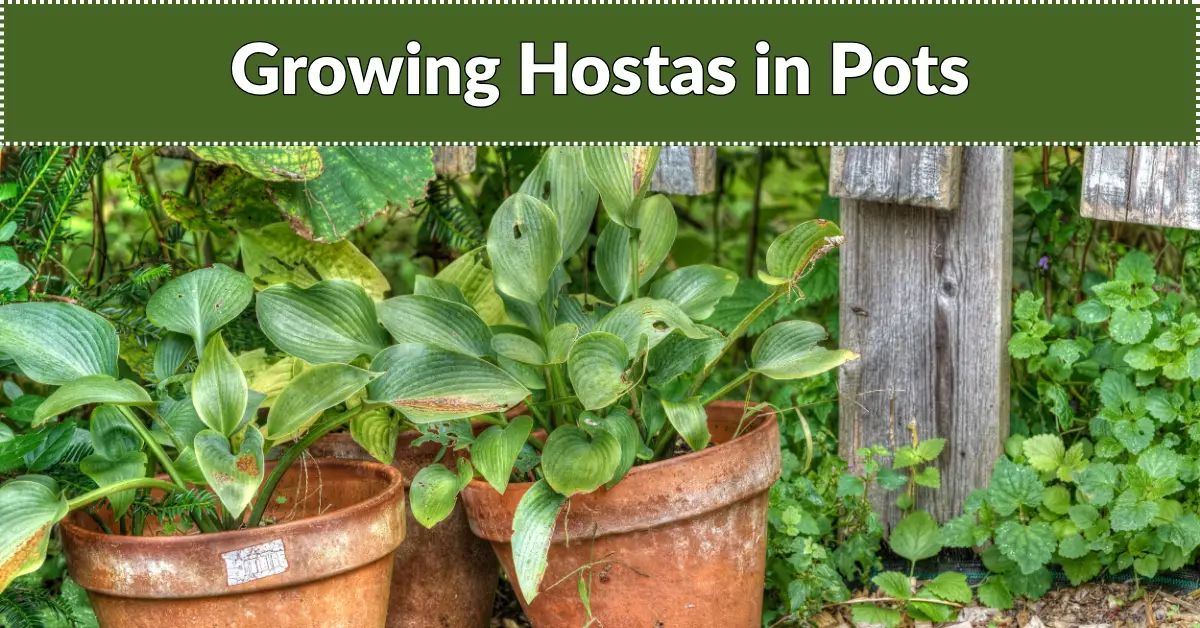
Hostas are popular leafy perennial plants grown mainly for their stunning foliage rather than their flowers. Native to northeast Asia, particularly Japan, China, and Korea, they have spread across gardens worldwide and are also commonly known as “plantain lilies.” Being perennials, they die back in winter and come back year after year.
Their large, bold leaves come in a wide range of colours, from deep green and blue-green to golden yellow and variegated patterns with multiple colours. The leaf texture varies too, with some varieties being smooth and glossy, others ridged or heavily puckered. In summer, they send up tall elegant spikes of trumpet-shaped flowers, usually in soft shades of lavender or white. Size-wise, hostas range from tiny miniature varieties that fit in a small pot to giant spreading plants stretching over four feet wide.
They thrive in shade, work beautifully in garden borders, woodland settings, and containers. They are excellent for ground cover under trees and many varieties are even deer resistant.
This guide covers growing hostas in pots with care tips.
How To Grow Hostas in Pots
The most obvious advantage of growing hostas in pots is mobility. Potted hostas can be moved around as your garden evolves, shifted to a shadier spot during a hot spell, or brought into a sheltered position as winter closes in.
A beautifully planted container transforms a bare patio slab, a narrow balcony, or a bland doorstep into something genuinely eye-catching. Hostas in pots also give you complete command over soil quality, no battling with compacted clay or thin, sandy ground. You simply fill your container with the ideal mix and give your plant the perfect start.
There is also a strong design argument for growing hostas in containers. Elevating a plant off the ground draws the eye to it, frames it as a deliberate feature, and allows you to pair it with other shade-loving plants in your space.
Affiliate Disclosure: This post contains affiliate links. If you click on links and make a purchase, I may earn a small commission at no additional cost to you. I only recommend products and resources that I genuinely believe will add value to my readers. Thank you for supporting this site!
Choosing the Right Hosta Variety
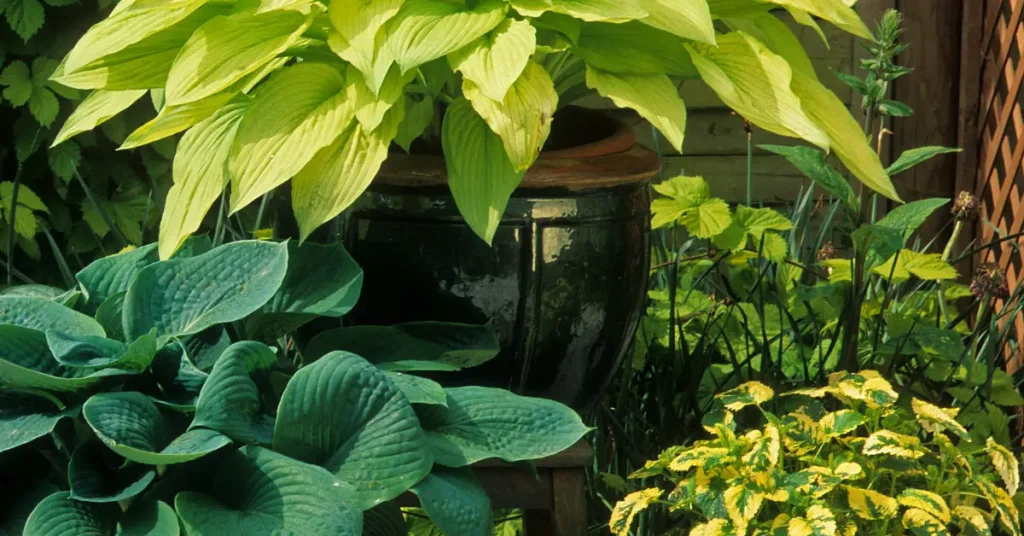
There are thousands of named cultivars worldwide, ranging from palm-sized miniatures to giants that dominate a room. For container growing, variety selection is the most important decision and it comes down to matching the plant to the pot and the space available.
Miniature and small varieties are ideal for compact containers, window boxes, or grouped displays. Varieties like ‘Blue Mouse Ears’ with its thick, rounded, blue-green leaves or ‘Tiny Tears‘ are perfect for smaller pots and bring enormous charm to tight spaces.
Medium varieties are the most versatile for container growing. A cultivar like ‘Halcyon‘, with its cool blue-grey foliage and the gorgeous gold-leaved ‘Sum and Substance‘ work beautifully in a generous container and create real impact in any space. For variegated drama, ‘Frances Williams‘ with its blue-green leaves edged in golden yellow is amazing.
When choosing, think beyond just size. Consider leaf colour and texture in relation to your surroundings. Blue-toned hostas tend to prefer more shade and bring a cool, calming quality to a space. Golden and lime varieties can brighten a dark corner brilliantly. Variegated types add complexity and visual interest.
Pots For Hostas
Size matters while growing hostas in pots. Hostas have a naturally spreading, clumping habit and their roots need room to develop properly. Choose a pot that is at least 30 to 40 centimetres in diameter for medium varieties, and larger for bigger cultivars. A pot that is too small will restrict growth and dry out far too quickly in warm weather. When in doubt, go bigger, hostas are always happier with a little extra room.
Material is worth thinking about carefully. Terracotta pots are beautiful and breathable, helping prevent waterlogging, but they do dry out faster and can crack in hard frosts.
I like these 2 terracotta and you can get them on amazon.
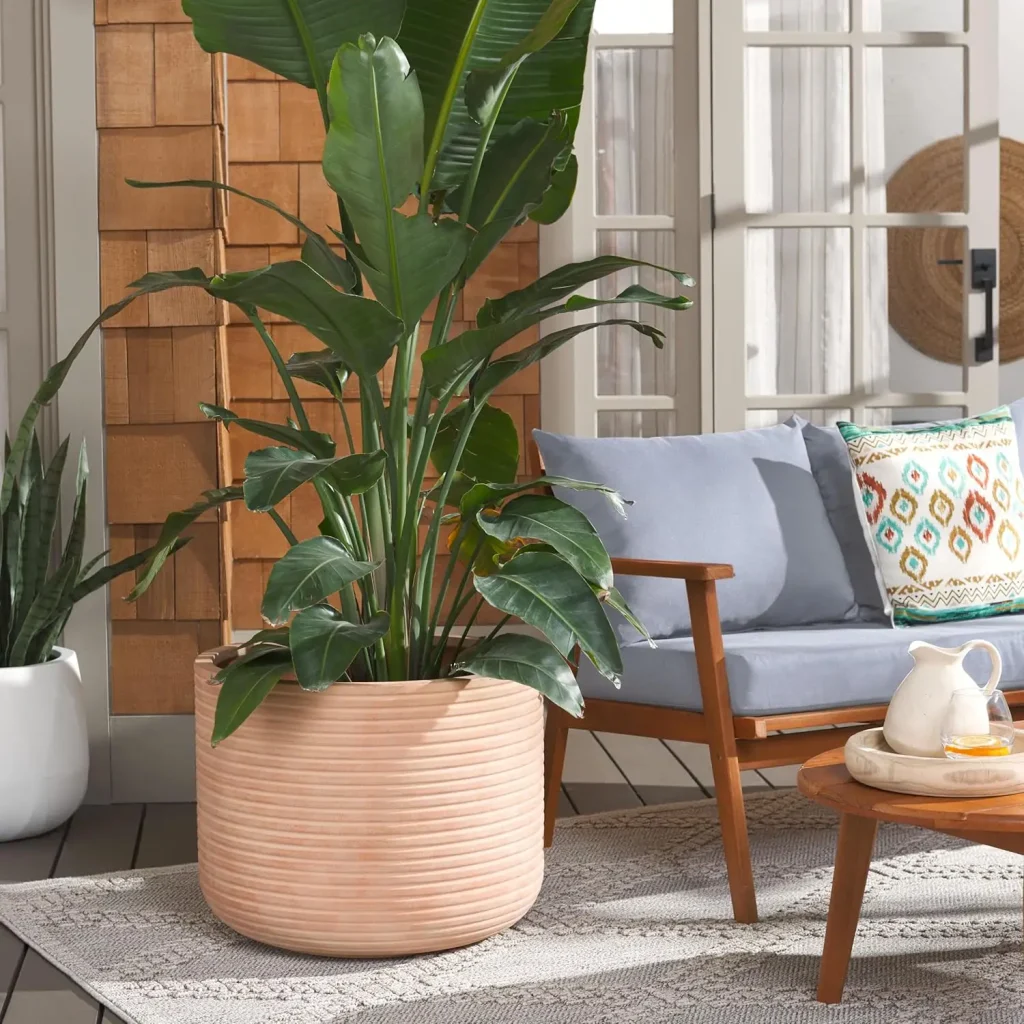
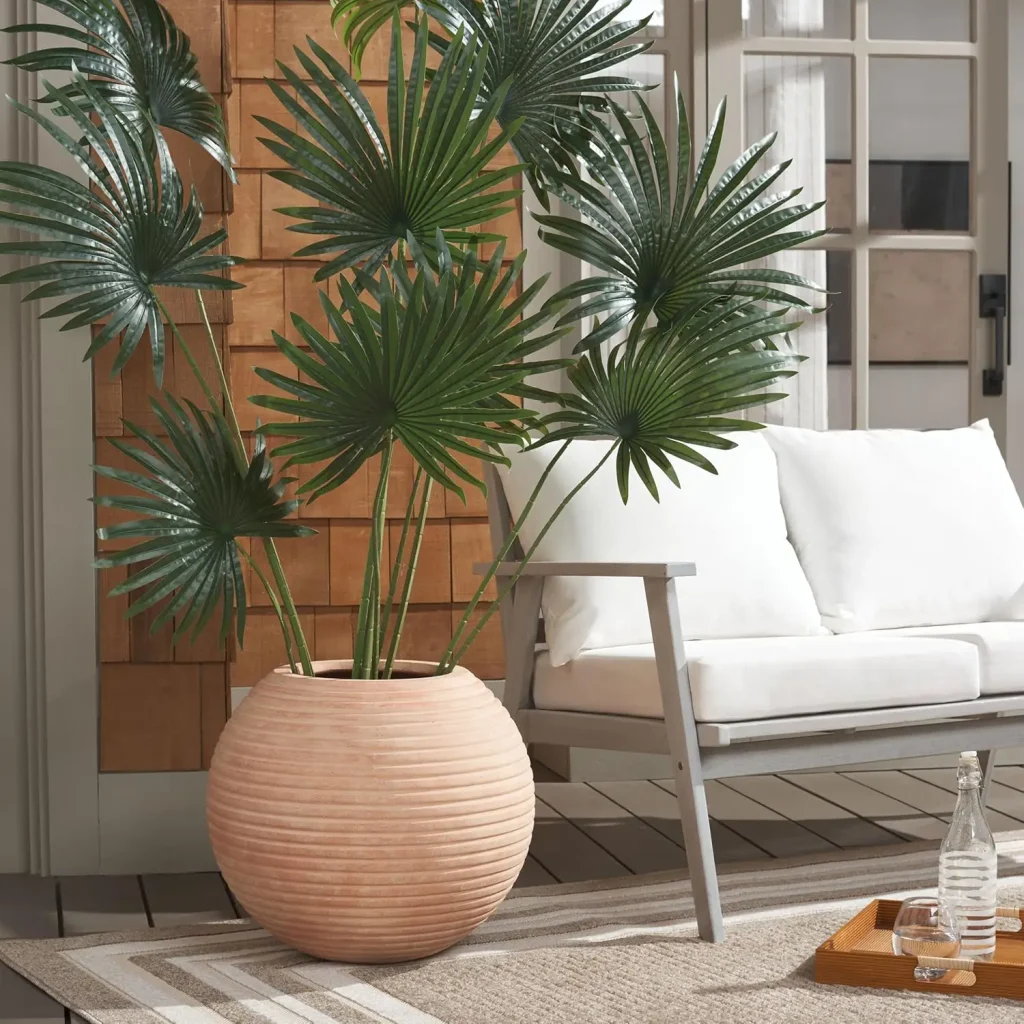
Thick plastic or resin containers retain moisture better and are lightweight. Ceramic pots are also good but can be heavy. Fabric grow bags are also good option for hostas, offering excellent drainage and air pruning of roots.
Whatever material you choose, the single non-negotiable requirement is good drainage holes. Hostas sitting in waterlogged soil will develop root rot quickly. If your chosen pot lacks adequate drainage, either drill additional holes or choose a different container.
The Best Soil Mix for Hostas in Pots
Unlike garden-grown hostas that can send roots deeper in search of nutrients and moisture, pot-grown plants live and die by the quality of their compost.
A good all-purpose peat-free compost forms an excellent base, but used alone it can become compacted and waterlogged over time.
Hostas prefer a slightly acidic to neutral soil pH somewhere between 6.0 and 7.0 is ideal. Most quality multipurpose composts fall naturally within this range, so you rarely need to adjust it. However, if you are reusing old compost from previous seasons, it is worth refreshing it entirely rather than topping up.
For an extra boost, I advise growers mix slow-release granular fertiliser at planting time. This feeds the plant steadily through the growing season.
Planting Your Hosta
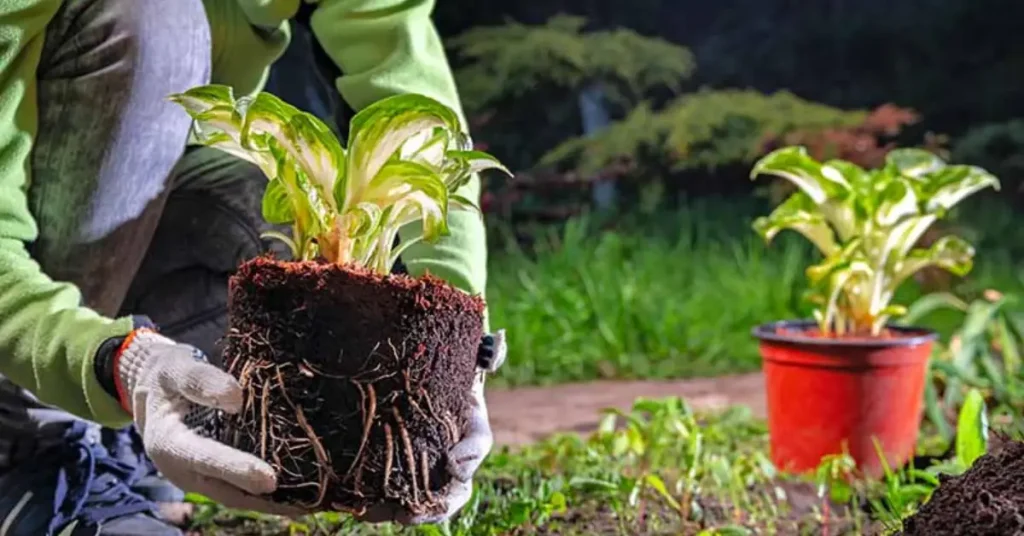
The best time to plant hostas in pots is spring, just as the new shoots begin to emerge from the soil. This gives the plant an entire growing season to settle in and develop a strong root system before winter arrives. Hostas can be planted successfully at almost any point during the growing season even in summer.
Begin by placing a layer of crocks or gravel at the bottom of your pot over the drainage holes. This prevents compost from washing out and keeps the drainage holes clear. Fill the pot roughly halfway with your prepared compost mix, then position your hosta centrally. The crown of the plant should sit just below the rim of the pot, with the top of the root ball level with or very slightly below the soil surface. Avoid burying the crown too deeply as this can cause rotting.
Fill in around the roots with compost, firming gently as you go to remove any air pockets, then water thoroughly until it drains freely from the bottom. Place the pot in its chosen spot, somewhere with dappled shade or indirect light. Give the plant two to three weeks to settle and don’t apply fertilizer.
Watering Hostas in Pots
Potted hostas dry out faster than those growing in the ground. The soil volume in a container is limited, there is no deeper earth for roots to draw moisture from, and pots exposed to wind and sun lose water rapidly. Watering needs to be a regular, attentive habit rather than an afterthought.
As a general guide, check your hostas every two to three days during the growing season, and daily during hot or windy spells. I always say, don’t follow a rigid schedule, develop the habit of checking the soil directly. Push your finger an inch or two into the compost, if it feels dry at that depth, it is time to water. If it still feels moist, leave it another day. This simple test takes seconds and removes all guesswork.
When you do water, do it thoroughly and deeply. Apply water slowly to the base of the plant until it runs freely from the drainage holes at the bottom. A light splash on the surface does more harm than good. Water in the morning.
Overwatering is just as damaging as underwatering. Compost that remains constantly saturated will starve roots of oxygen and quickly lead to root rot. If your pot is sitting in a saucer, always empty it after watering so the plant is never left standing in water. For gardeners who travel frequently or find consistent watering a challenge, self-watering containers with built-in reservoirs are an excellent investment.
Feeding and Fertilising
Unlike hostas in the open garden where roots can forage widely through nutrient-rich soil, potted plants are entirely reliant on what you provide. Nutrients in container compost are finite and deplete steadily with every watering, which means feeding is not optional, it is essential if you want your hostas to thrive.
The most convenient and reliable approach is to incorporate a slow-release granular fertiliser into the compost at planting time. These pellets break down gradually over several months.
One common mistake is continuing to feed heavily into late summer and autumn. This encourages soft new growth that has no time to harden before the cold arrives, leaving the plant vulnerable to frost damage.
Light and Positioning
They are shade-tolerant plants. Most hostas actually prefer dappled or indirect light.
Blue and green leaved varieties are the most shade-tolerant and hold their colour best away from direct sun. Place them in spots that receive gentle morning light with shade through the hottest part of the day. Gold and yellow leaved varieties, by contrast, tend to need a little more light to develop their colour fully. A position with two to three hours of gentle morning sun suits them well.
Variegated varieties sit somewhere in the middle, tolerate moderate light levels comfortably. Avoid harsh afternoon sun, particularly in summer.
Common Problems of Potted Hostas and How to Fix Them
Slugs and snails are the number one enemy of hostas everywhere. These nocturnal pests can reduce a pristine hosta to a ragged, hole-ridden shadow of itself seemingly overnight. Container growing does offer a slight advantage here, pots raised off the ground are harder to access but slugs are persistent and resourceful.
The most effective controls include copper tape fixed around the rim of the pot, which gives slugs a mild deterrent, or use slug pellets to control slugs and snails.
Root rot is the next most common problem and is always caused by poor drainage or overwatering. Symptoms include yellowing leaves, a general wilting despite moist soil, and a musty smell from the compost. If caught early, the plant can be saved by removing it from the pot, trimming away any blackened, mushy roots, and repotting into fresh, well-draining compost.
Prevention, as always, is far easier than cure, good drainage holes and a well-structured compost mix are your best defence.
Scorched or bleached leaves are a clear signal that your hosta is receiving too much direct sun. Simply move the pot to a shadier position and the new growth that follows will be healthy and unmarked.
Overwintering Hostas in Pots
As temperatures drop and daylight shortens, the foliage will yellow, collapse, and die back completely to the soil. This is not a sign that something has gone wrong. It is the plant doing exactly what it is designed to do, retreating underground to conserve energy through the cold months, ready to emerge again in spring with renewed enthusiasm.
In the open garden, hostas in the ground have the insulating mass of surrounding soil to protect their roots from hard frosts. Potted hostas are more exposed, and the roots of container plants can freeze solid in a severe winter. Frost protection is therefore an important part of container hosta care, particularly in colder regions.
The simplest and most effective approach is to move your pots to a sheltered spot for winter, against a house wall, inside an unheated greenhouse, or into a garage or shed. If moving the pot is not practical, wrap the container itself in hessian, bubble wrap, or horticultural fleece to insulate the root zone.
Once the foliage has fully died back, resist the temptation to tidy too aggressively. A light tidy to remove collapsed leaves is fine, but leave the crown undisturbed. Then simply wait. Come mid to late spring, the first tightly rolled shoots will push up through the compost, beautiful cycle begins again.
Repotting Hostas
The most obvious sign that your hosta needs repotting is when roots begin to emerge from the drainage holes at the bottom of the pot. Other signs include the plant drying out unusually fast despite regular watering, leaves that are noticeably smaller than in previous seasons, and a root ball so dense and tightly packed that it holds the exact shape of the pot when removed. All of these are the plant’s way of telling you it has simply run out of room.
Most hostas need repotting every two to three years, though vigorous varieties in smaller pots may need attention sooner. The best time to do it is early spring, just as the first shoots begin to emerge. At this stage the plant is waking up and ready to grow, it will establish quickly in its new container.
To repot, begin by watering the plant thoroughly the day before, a hydrated root ball is far easier to work with than a dry, compacted one. Gently tip the hosta out of its pot, supporting the base of the plant as you do so. You will likely find a dense tangle of thick, fleshy roots — this is completely normal and a sign of a healthy, well-established plant. Tease apart the outer roots gently with your fingers, removing as much of the old exhausted compost as you can without causing unnecessary damage.
If the clump has grown very large, it can be split into two or more sections using a sharp, clean spade or knife. Each division should have a good portion of roots and at least a few visible growth points. This not only gives your original plant a new lease of life but provides you with additional plants.
Choose a new pot that is one to two sizes larger than the previous one. Prepare a fresh batch of your compost and perlite mix, replant at the same depth as before, water in thoroughly, and position the pot in its chosen spot.
Styling and Display Ideas
Hostas in contrasting colours create a lush, layered display that draws the eye and gives even a small patio real visual depth. Try pairing a large blue-leaved variety like ‘Halcyon’ with a mid-sized gold such as ‘August Moon’ and a small variegated cultivar at the front. The contrast in colour, scale, and leaf texture is stunning and requires very little maintenance to look exceptional.
Pairing hostas with companion plants in adjacent pots adds another dimension. Shade-loving ferns bring delicate, feathery texture that contrasts beautifully with the bold, architectural leaves of hostas. Astilbes contribute tall, plume-like flowers in pink, white, or red that complement hosta foliage perfectly. Heucheras with their rich, jewel-toned leaves in burgundy, copper, and lime, sit beautifully alongside hostas and share similar growing preferences, making them ideal container companions.
Consider using large, statement hostas as focal points in your garden design. A single giant variety like ‘Sum and Substance’ with its enormous, golden-green, corrugated leaves planted in a substantial, well-chosen pot can anchor an entire outdoor space. Position it at the end of a path, beside a garden bench, or framing a doorway, and it becomes a living sculpture that commands attention through the entire growing season.
For a more formal or structured look, line a shaded pathway or garden steps with a series of identical pots planted with the same hosta variety. The repetition creates rhythm and elegance, a technique borrowed from classic formal garden design that works just as beautifully in a modest urban garden as it does in a grand estate setting. Matching terracotta or slate-grey containers planted with a single blue-leaved variety like ‘Halcyon’ or ‘Blue Angel’ along a garden path is quietly spectacular.
Conclusion
Hostas are easy to grow, fast growing and low maintenance plants. These plants bring bold foliage, quiet elegance, and year-round interest to any space they inhabit, and container growing gives you a level of creative control that open border planting.
From selecting the right variety and pot, to mastering watering, feeding, and overwintering, the principles are straightforward and the results, with a little care and attention, any one can grow hostas.
Choose varieties that genuinely excite you, and allow yourself to experiment with groupings, companions, and positioning. You will discover how amazing it is to grow hostas.