What To Plant With Eggplant (12 Best Companion Plants)
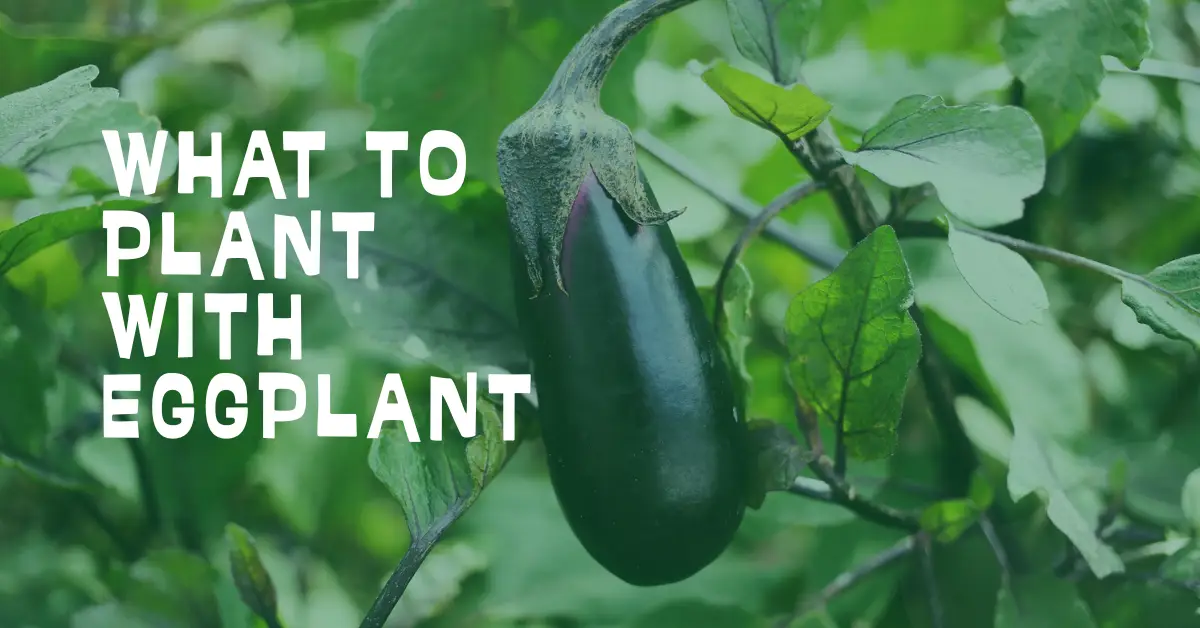
Eggplant is a warm-season vegetable that thrives when grown with the right companion plants. Companion planting is the practice of placing certain plants near each other to improve growth, deter pests, attract beneficial insects, and make better use of garden space.
Eggplants belong to the nightshade family and are known for attracting pests such as flea beetles, aphids, spider mites and hornworms. The right vegetables, herbs and flowers can help repel these pests naturally, while also encouraging pollinators and predatory insects that keep pest populations under control. Some companions also improve soil health by fixing nitrogen or acting as living mulch, helping eggplants maintain steady growth throughout the season.
Another benefit of companion planting with eggplant is matching growing needs. Eggplants prefer full sun, warm temperatures, well-draining soil and consistent moisture. Plants with similar requirements grow well alongside them without competing excessively for nutrients, water, or light. Low-growing companions can help shade the soil, while taller plants—if placed correctly—can offer wind protection without blocking sunlight.
Not all plants make good neighbors for eggplant. Some compete aggressively for nutrients, attract the same pests, or inhibit growth. This post is about to guide what to plant with eggplants (Vegetables, Herbs and Flowers) and Bad companion plants for eggplant.
What to Plant With Eggplant
Vegetables
- Beans
- Peppers
- Radishes
- Lettuce
Herbs
5. Basil
6. Oregano
7. Dill
8. Chives
Flowers
9. Marigolds
10. Nasturtiums
11. Calendula
12. Borage
Best Vegetable Companion Plants for Eggplant
Beans (Bush Beans or Pole Beans)
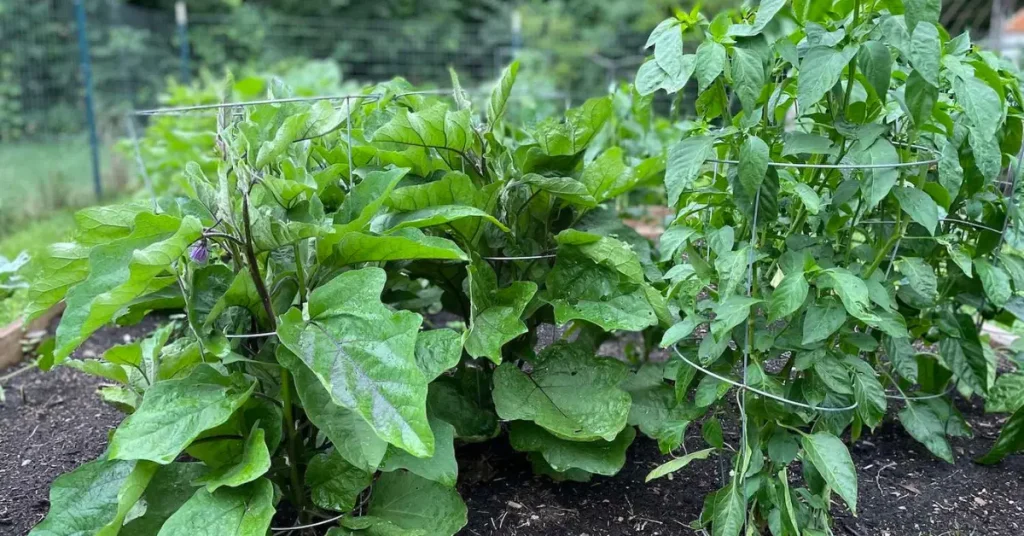
Beans are excellent vegetable companions for eggplant because they naturally improve soil fertility. Beans are annual plants and are native to Central and South America. Most bean varieties grow well in USDA hardiness zones 3–10, depending on the type. As legumes, beans fix atmospheric nitrogen in the soil through beneficial bacteria in their roots. This nitrogen supports strong vegetative growth in eggplants without the need for heavy fertilization.
Beans and eggplants have very similar growing requirements, which makes them easy to grow together. Both prefer full sun, warm weather and well-drained soil with regular watering. Bush beans are ideal for planting between eggplants because they stay compact and do not compete for light.
Pole beans also work well if they are trained on trellises and positioned so they do not shade the eggplants. When planted together, beans help improve soil structure while eggplants benefit from healthier, nutrient-rich soil.
Mistakes to avoid:
Do not plant beans too close to eggplants, as overcrowding can reduce airflow and increase the risk of fungal diseases. Avoid allowing pole beans to sprawl over eggplants or block sunlight.
Also, avoid excessive nitrogen fertilization when growing beans and eggplants together, as too much nitrogen can encourage leafy growth rather than fruit production of eggplants.
Peppers (Bell Peppers & Chili Peppers)

Peppers are strong companion plants for eggplant because they belong to the same nightshade family and share very similar growing requirements. Most peppers are grown as annuals, though they are technically short-lived perennials in warm climates. Peppers are native to Central and South America and grow best in USDA hardiness zones 9–11 as perennials, or zones 4–11 when grown annually.
Both peppers and eggplants prefer full sun, warm temperatures, fertile soil and consistent watering. Peppers also have a more upright growth habit, which allows good air circulation when planted correctly. This pairing works especially well in raised beds and containers where conditions can be closely controlled.
Mistakes to avoid:
Avoid planting peppers and eggplants too close together, as tight spacing can increase humidity and raise the risk of fungal diseases. Remember, both plants are heavy feeders, if improper nutrition given, it will result in poor fruit production. Also, rotate crops yearly to prevent the buildup of nightshade-specific pests and diseases such as verticillium wilt.
Radishes

Radishes are fast-growing annual vegetables that make excellent short-term companions for eggplant. They are native to Asia and Europe and grow well in USDA hardiness zones 2–10.
Radishes mature quickly, often in just 3–5 weeks, which allows gardeners to harvest them before eggplants reach full size.
Radishes grow well in full sun to partial shade and prefer loose, well-draining soil—conditions that match eggplant’s early growth stage. Radishes can help deter flea beetles, a common pest that damages young eggplant leaves. Their shallow roots also help loosen the soil surface without disturbing eggplant roots.
Mistakes to avoid:
Do not allow radishes to overcrowd young eggplants, as this can restrict airflow. Leaving radishes in the ground too long can cause them to become woody and compete unnecessarily for nutrients. Harvest radishes promptly to avoid competition as eggplants begin active growth.
Lettuce

Lettuce is a cool-season annual plant native to the Mediterranean region. It grows best in USDA hardiness zones 2–11. Lettuce works well as a companion for eggplant because it stays low to the ground and acts as a living mulch, helping to retain soil moisture and suppress weeds.
Although lettuce prefers cooler temperatures, it can still grow alongside eggplant when planted early or in partial shade. Eggplants provide light shade as they mature, which helps prevent lettuce from bolting too quickly. Lettuce requires similar soil conditions—well-draining, fertile soil with regular moisture—making it a compatible neighbor during the early and mid-growing season.
Mistakes to avoid:
Avoid planting lettuce too late in hot climates, as high temperatures can cause it to bolt rapidly. Lettuce should not be allowed to crowd eggplant stems, as excess moisture around the base can promote disease. Choose heat-tolerant lettuce varieties if growing in warm regions.
Best Herb Companion Plants for Eggplant
Basil
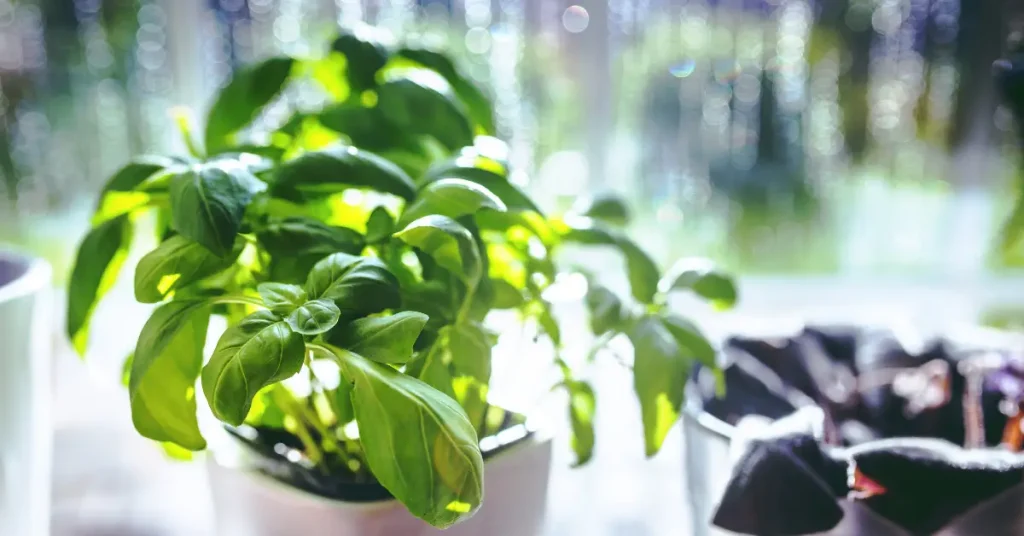
Basil is one of the best herb companions for eggplant due to its strong aroma and pest-repelling properties. Basil is an annual herb and is native to tropical regions of Central Africa and Southeast Asia. It grows best in USDA hardiness zones 10–11 as a perennial but is commonly grown as an annual in cooler zones. Basil’s fast growth and compact habit make it easy to integrate into eggplant beds or containers.
Both plants prefer full sun, warm temperatures, fertile soil and consistent moisture. Basil helps repel common eggplant pests such as aphids, thrips and spider mites while attracting beneficial insects like bees and predatory wasps. When planted around eggplants, basil can also improve airflow at the soil level and enhance overall garden biodiversity.
Mistakes to avoid:
Avoid planting basil in heavily shaded areas, as this reduces its aroma and pest-repelling effectiveness. Overcrowding basil too close to eggplant stems can restrict airflow and increase disease risk.
Read: Eggplant Growing Guide In Pots
Oregano
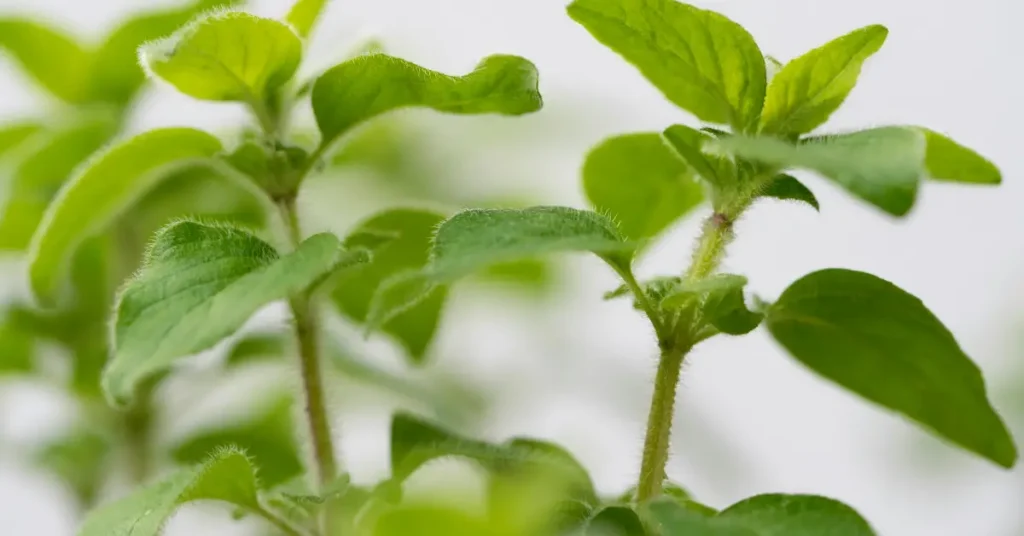
Oregano is a hardy perennial herb native to the Mediterranean region. It grows well in USDA hardiness zones 5–10 and is popular for culinary use. Oregano has a spreading growth habit and produces small flowers that attract beneficial insects, making it a strong companion for eggplant.
Both plants prefer full sun and well-drained soil, although oregano tolerates slightly drier conditions. When planted near eggplant, oregano acts as a natural ground cover, helping suppress weeds and reduce soil moisture loss. Its strong scent can also help deter pests such as aphids and spider mites.
Mistakes to avoid:
Avoid planting oregano too close to young eggplants, as its spreading habit can crowd smaller plants. Oregano should be trimmed regularly to prevent it from overtaking nearby crops. Overwatering oregano can lead to root rot, especially when grown in heavy or poorly drained soil.
Dill
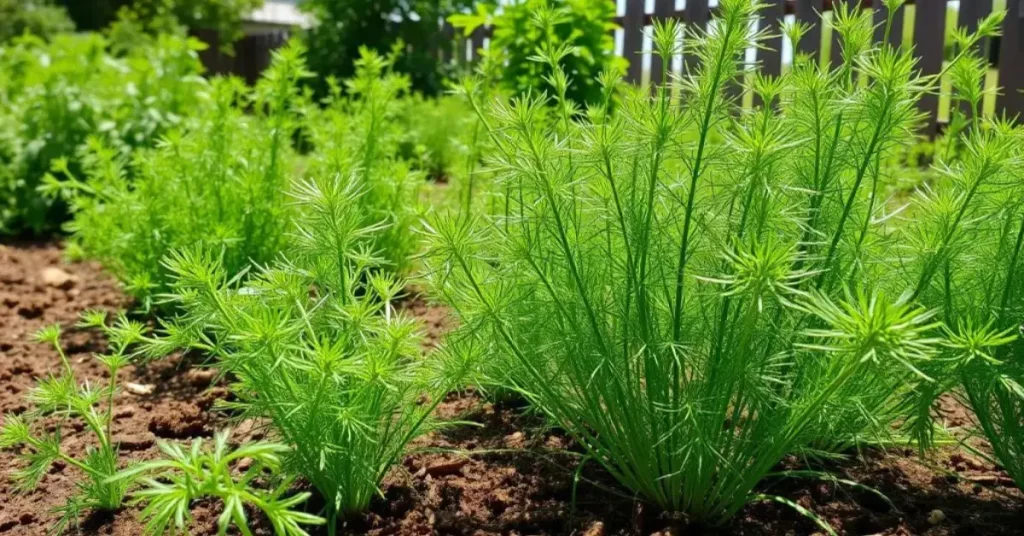
Dill is a fast-growing annual herb native to Western Asia and Eastern Europe. It grows best in USDA hardiness zones 2–11, depending on climate and season. Dill is especially valuable as a companion plant because it attracts beneficial insects such as ladybugs, lacewings, and parasitic wasps, which help control eggplant pests naturally.
Dill prefers full sun and loose, well-draining soil. When planted near eggplant, dill supports a healthy garden ecosystem by increasing pollination and reducing pest populations.
Mistakes to avoid:
Avoid transplanting dill once established, as it has a long taproot and does not tolerate disturbance well. Plant dill at a safe distance from eggplants so it does not compete for nutrients as it matures. Also, prevent dill from self-seeding excessively, which can lead to overcrowding.
Chives

Chives are a perennial herb native to Europe, Asia, and North America. They grow well in USDA hardiness zones 3–9 and are known for their mild onion scent and attractive purple flowers. Chives are good companions for eggplant due to their natural pest-repelling properties and ability to attract pollinators.
Chives prefer full sun to partial shade, fertile soil, and regular watering. Their compact growth habit makes them ideal for planting around eggplants without competing for space. Chives help deter aphids and other soft-bodied insects.
Mistakes to avoid:
Avoid letting chives grow too densely, as overcrowding can reduce airflow around eggplants. Divide chive clumps every few years to keep plants healthy. Do not allow soil to dry out completely.
Best Flower Companion Plants for Eggplant
Marigolds
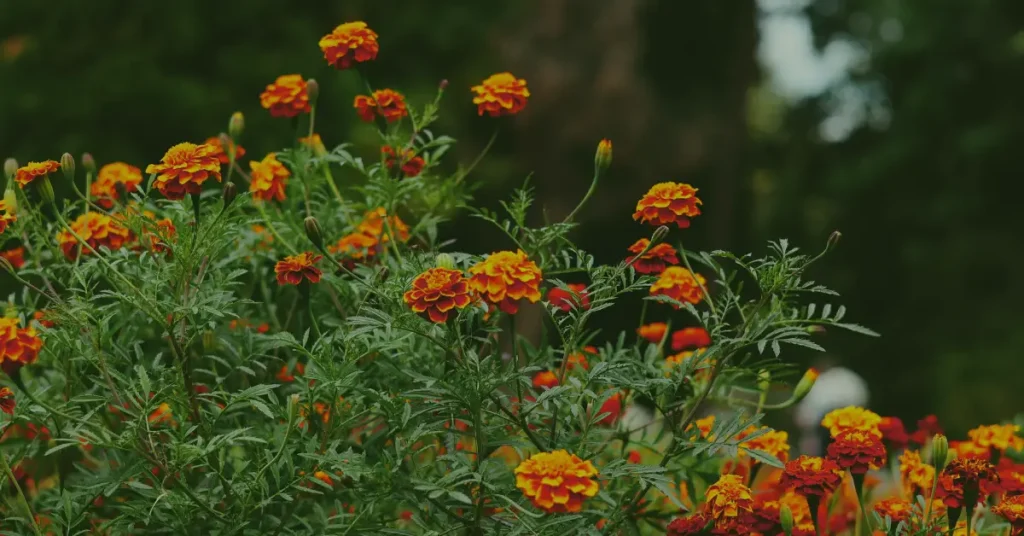
Most garden marigolds are grown as annual plants, though they can behave as short-lived perennials in warm climates. Marigolds are native to Mexico and Central America and grow well in USDA hardiness zones 2–11 as annuals. Their bright flowers not only add color to the garden but also play an important role in pest management.
Marigolds and eggplants share similar growing needs, making them easy to grow together. Both prefer full sun, warm temperatures and well-drained soil. Marigolds repel pests such as aphids, whiteflies, nematodes and flea beetles.
Their flowers also attract pollinators and beneficial insects that help keep pest populations under control. Planting marigolds around eggplants or along bed borders creates a natural protective barrier.
Mistakes to avoid:
Avoid planting marigolds too densely. Choose true marigold varieties (Tagetes species) rather than ornamental look-alikes that may not provide the same pest-repelling benefits. Also, do not rely solely on marigolds for pest control.
Nasturtiums

Nasturtiums are fast-growing annual flowers native to South and Central America. They grow well in USDA hardiness zones 2–11 when planted after the last frost. Besides, adding vibrant color to the garden, Nasturtiums are good companion plants for eggplant.
Their trailing or mounding growth habit works well as a ground cover beneath eggplants, helping suppress weeds and retain soil moisture. Nasturtiums attract aphids, flea beetles, and whiteflies away from eggplants, reduce pest pressure on the main crop. Their flowers also attract pollinators.
Mistakes to avoid:
Avoid over-fertilizing nasturtiums, as rich soil encourages excessive leaf growth with fewer flowers. Do not allow them to completely overrun eggplants, as dense growth can reduce airflow. Regular pruning helps keep them manageable and effective as companion plants.
Calendula (Pot Marigold)
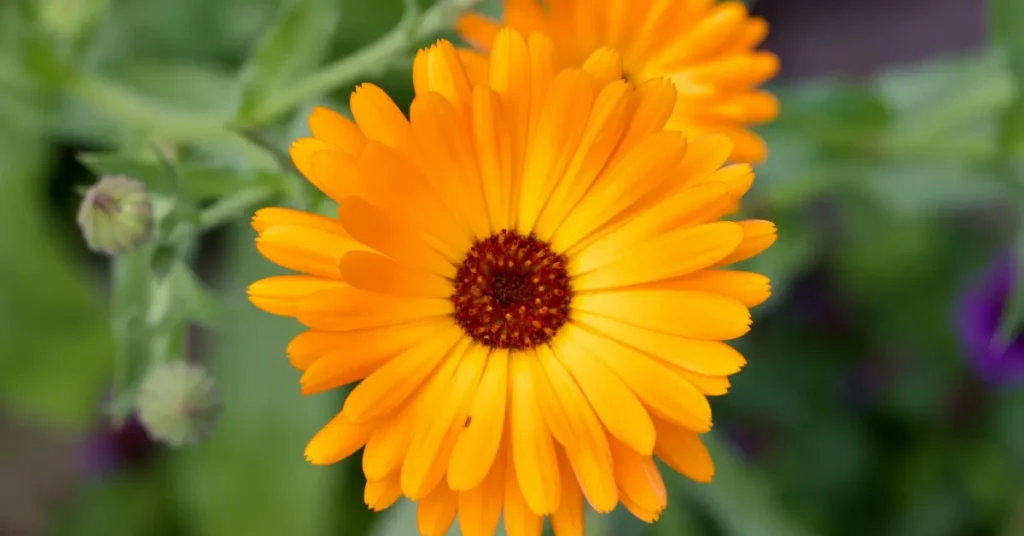
Calendula is a cool-season annual flower native to the Mediterranean region. It grows best in USDA hardiness zones 2–11. Calendula attract beneficial insects and help manage aphid populations around vegetable crops.
Calendula grows well in full sun to partial shade and prefers fertile, well-drained soil with moderate moisture—conditions that align well with eggplant, especially early in the growing season. Its bright orange and yellow flowers attract pollinators, hoverflies and predatory insects that feed on eggplant pests.
Calendula can be planted along borders or between eggplants.
Mistakes to avoid:
Avoid planting calendula in overly wet or poorly drained soil, as this can lead to root problems. In hot climates, calendula may struggle in peak summer heat, so planting it where eggplants provide some afternoon shade can help. Remove spent flowers regularly to encourage continuous blooming.
Borage
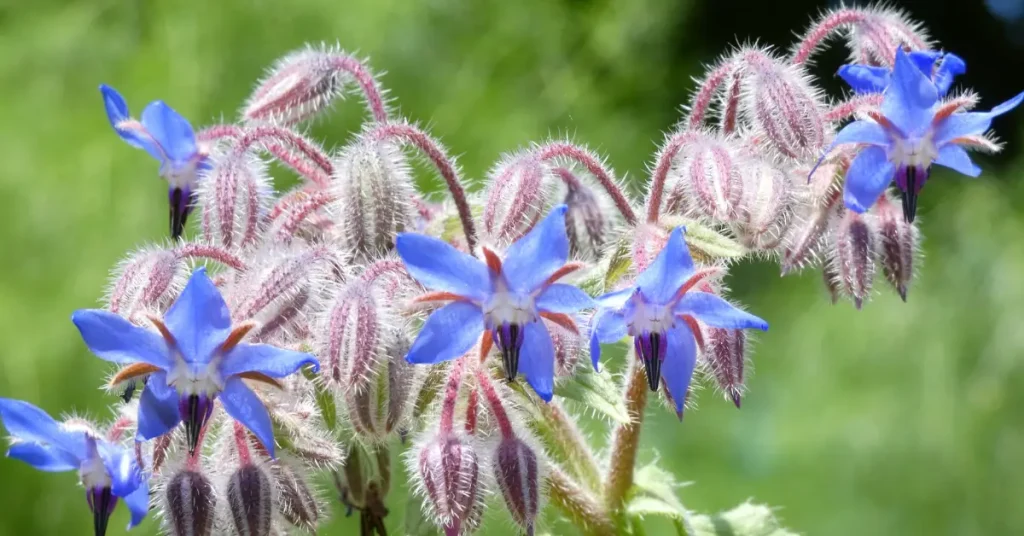
Borage is a fast-growing annual herb-flower native to the Mediterranean region. It grows well in USDA hardiness zones 3–10 and is popular for its star-shaped blue flowers and ability to attract pollinators. Borage is one of the best companion plants for fruiting vegetables.
Its deep roots help improve soil structure, while its flowers attract bees and beneficial insects that increase pollination and reduce pest pressure. Borage can also be used as a mulch plant when leaves are cut back and left on the soil surface.
Mistakes to avoid:
Avoid planting borage too close to eggplants, as it can grow large and shade nearby plants. Borage self-seeds easily, so remove flowers before they set seed if you want to control its spread. Also, avoid transplanting mature borage plants, as they do not handle root disturbance well.
Bad Companion Plants for Eggplant
Fennel

Fennel is a perennial herb in warm climates and a biennial in cooler regions. It is native to the Mediterranean region and grows best in USDA hardiness zones 4–9. Fennel is widely known as a poor companion for most vegetables, including eggplant, due to its allelopathic nature (it releases chemicals that inhibit the growth of nearby plants).
Fennel’s growing needs do not match well with eggplant. Fennel develops a deep and aggressive root system that competes for nutrients and moisture. When planted near eggplant, fennel can stunt growth, reduce flowering and weaken overall plant health.
Why to avoid:
Fennel should be grown in a separate area of the garden. Its growth-inhibiting compounds can negatively affect eggplants even when planted several feet away.
Corn

Corn is a fast-growing annual crop native to Central America and thrives in USDA hardiness zones 4–10. Although corn and eggplant both prefer warm weather and full sun, they are not good companions in the same garden bed.
Corn grows tall and can easily shade eggplants, reducing sunlight exposure that is critical for fruit production. Corn also attracts pests such as corn earworms, which are closely related to tomato hornworms—a major pest of eggplant.
Why to avoid:
Corn competes heavily for nutrients and water and can create shade that reduces eggplant yield. It also increases the risk of shared pest infestations.
Pumpkins and Other Large Vining Squash
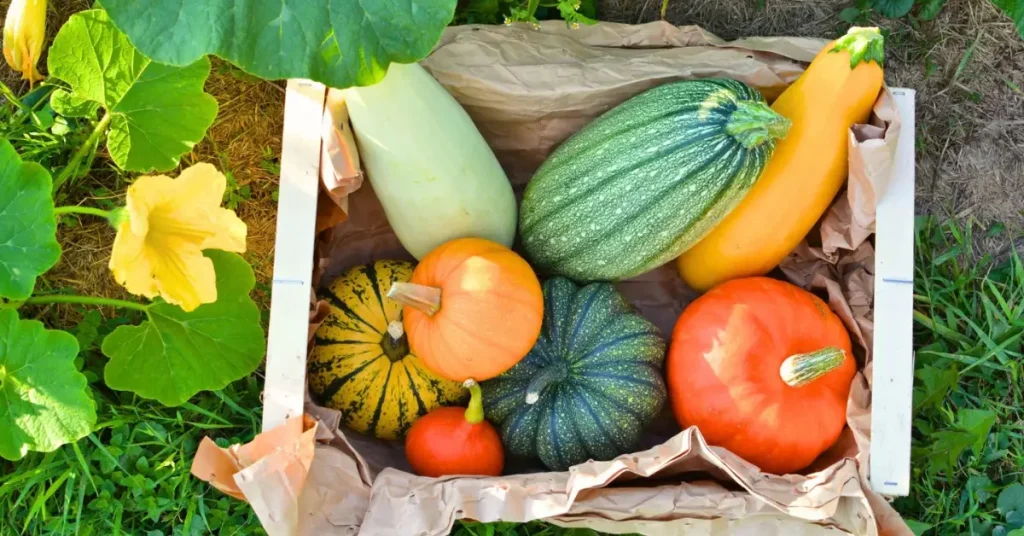
Pumpkins and winter squash are annual vining plants native to North America and grow best in USDA hardiness zones 3–9. These plants spread aggressively and take up significant space, making them bad companions for eggplant.
Why to avoid:
Large squash plants crowd eggplants, reduce airflow, and compete heavily for water and nutrients, leading to poor growth and lower yields.
Geraniums (Pelargonium)
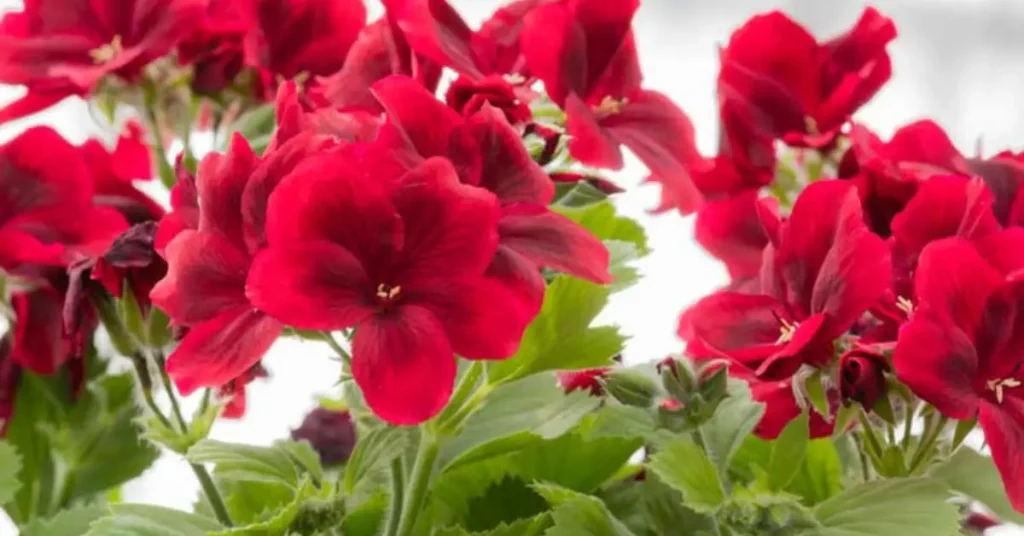
Geraniums are commonly grown as annual ornamentals, though they are technically perennials in warm climates. They are native to South Africa and grow best in USDA hardiness zones 9–11. Geraniums are not good companions for eggplant.
Why to avoid:
Geraniums can act as disease hosts and do not provide any beneficial support to eggplant growth.
Potatoes
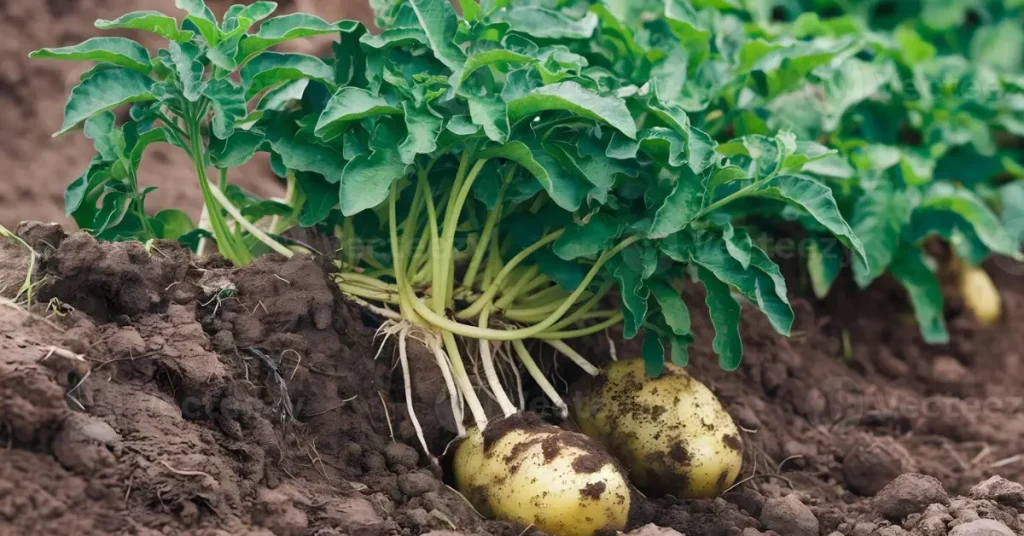
Potatoes are annual crops native to South America and grow well in USDA hardiness zones 3–10. Although potatoes and eggplants belong to the same nightshade family, but they are bad companion plants.
Both plants attract the same pests, such as Colorado potato beetles, aphids and flea beetles. They also share susceptibility to diseases like blight and verticillium wilt. Planting them together increases the likelihood of pest and disease outbreaks.
Final Tip
For best results, keep bad companion plants well away from eggplant beds and practice crop rotation each season. Choosing the right neighbors can significantly improve eggplant health, yield and overall garden success.