
How To Get Rid of Bugs in House (Guide to a Pest Free Home)
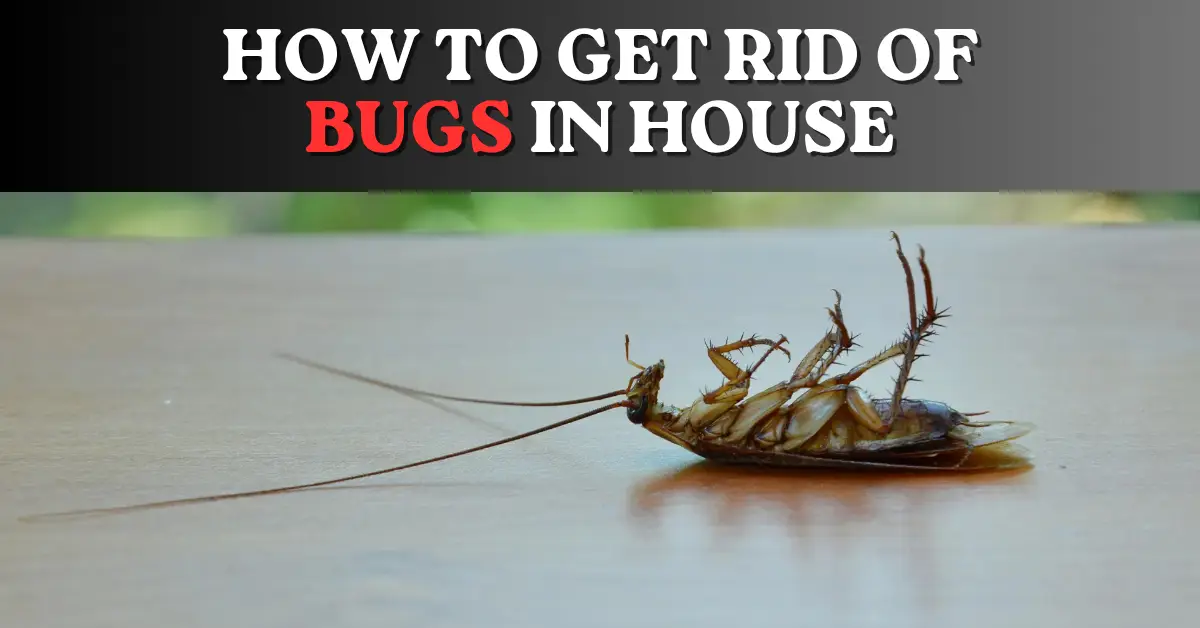
Just like you, bugs are looking for a comfortable place to live. They’re not picky, if your home offers food, water, and a warm corner to hide in, they’ll gladly move in without an invitation. And once they’re in, getting them out can feel like an uphill battle.
The most common uninvited guests include ants, cockroaches, silverfish, earwigs, spiders, house centipedes, firebrats, and flies. Pet owners often face the added headache of fleas and ticks hitching a ride indoors. Depending on where you live and what time of year it is, you might deal with one or several of these pests at once. Some thrive in summer humidity and some sneak in during cold winter months seeking warmth.
What makes a home attractive to bugs? Three things: accessible food, moisture, and shelter. A crumb under the fridge, a leaky pipe under the sink, a crack in the basement wall ,these small oversights are an open invitation. The troubling part is that most bugs are already living in your walls, floors, or yard long before you spot the first one crawling across your kitchen counter.
The good news is that most bug problems are preventable and treatable. Effective pest control doesn’t always mean reaching for a can of spray. It starts with knowing what you’re dealing with. Different bugs have different habits, food preferences, and entry points.
In this guide, we’ll walk you through the most common household bugs, what attracts them, and the most effective ways, natural and chemical, to get rid of them for good.
10 Most Common Household Bugs
- Bed Bugs
- Cockraoches
- Ants
- Termites
- Spiders
- Fruit Flies
- Silverfish
- Carpet beetles
- Centipedes
- Fleas
Bed Bugs
What Are Bed Bugs?
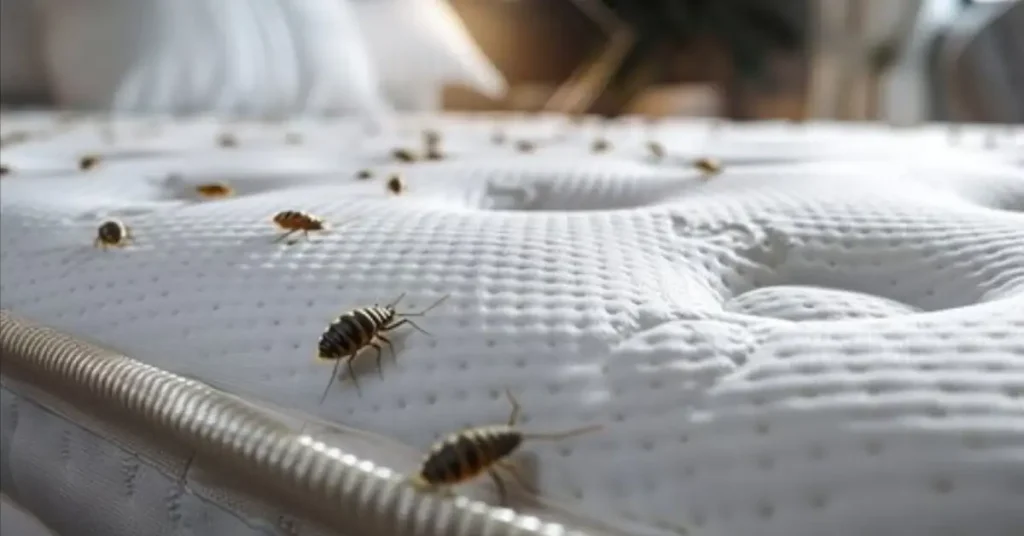
Bed bugs are tiny, reddish-brown, oval-shaped insects about the size of an apple seed. They don’t fly or jump, they crawl, and they’re surprisingly fast for their size. They are nocturnal by nature, which is exactly why most people don’t realize they have an infestation until it’s already well established. They feed exclusively on blood (human or animal) and can survive for months without a meal.
How Do You Get Bed Bugs?
Bed bugs are expert hitchhikers. They don’t come in through cracks or drains, they come in through you. Common ways they enter your home include:
- Staying at an infested hotel or Airbnb
- Buying second-hand furniture or mattresses
- Visiting someone whose home is infested
- Bringing in luggage after travel
- Public transport, movie theaters, or waiting rooms
Signs You Have Bed Bugs
- Small, itchy red bites, often in a line or cluster on exposed skin
- Tiny rust-colored stains on your sheets or mattress (from crushed bugs)
- Small dark spots on bedding or mattress seams (their droppings)
- A musty, sweet odor in the bedroom
- Pale yellow shed skins near mattress seams or furniture joints
How To Get Rid of Bed Bugs
Confirm the infestation: Before treating, make sure you’re actually dealing with bed bugs. Check mattress seams, bed frames, headboards, and nearby furniture with a flashlight.
Declutter and contain: Reduce hiding spots by decluttering. Place infested items in sealed plastic bags to prevent spreading bugs to other rooms.
Wash and heat-dry everything: Wash all bedding, pillowcases, curtains, and clothing in hot water (at least 60°C / 140°F). Dry on the highest heat setting for at least 30 minutes. Heat kills bed bugs at all life stages.
Vacuum thoroughly: Vacuum your mattress, box spring, bed frame, baseboards, and nearby furniture. Immediately seal and dispose of the vacuum bag outside your home.
Use a mattress encasement: Zip your mattress and box spring in bed bug-proof encasements. This traps any remaining bugs inside and prevents new ones from getting in.
Apply treatment
When it comes to actually killing bed bugs, you have several effective options depending on how severe the infestation is. One of the safest and most natural solutions is diatomaceous earth (a fine powder that damages the bug’s outer shell and slowly dehydrates them). Sprinkle it around bed legs, along baseboards, and in any cracks or crevices where bugs might be hiding. Leave it for several days before vacuuming it up.
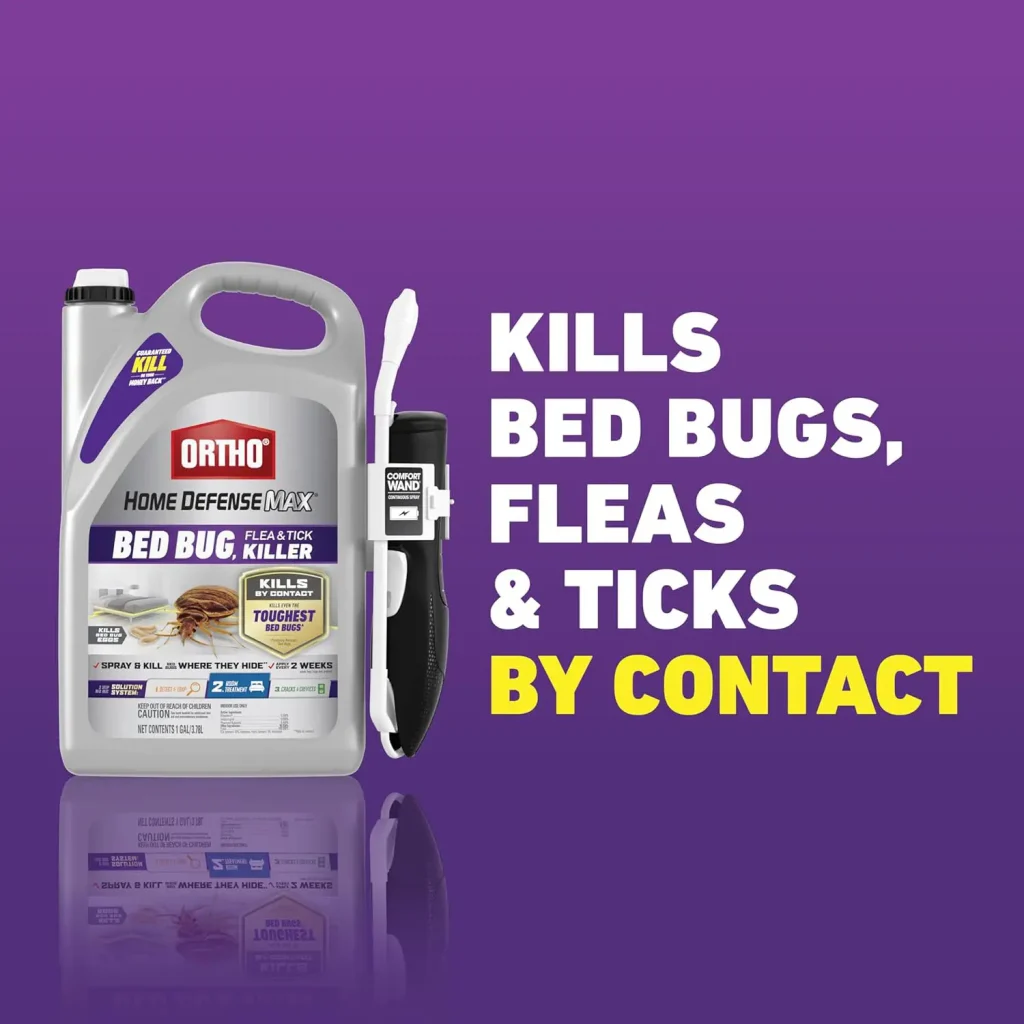
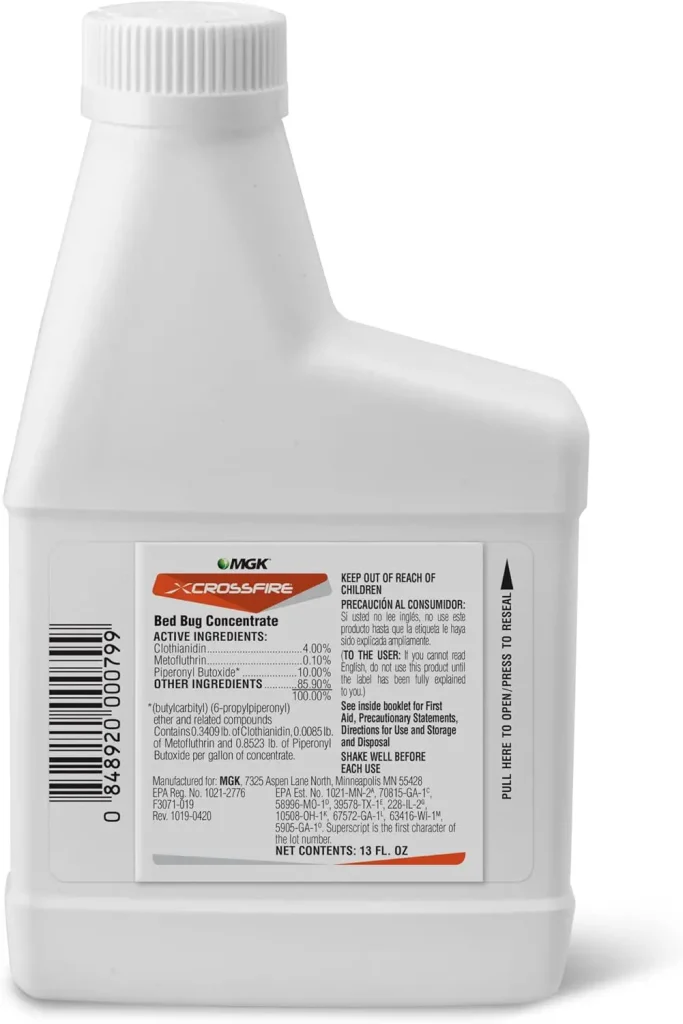
For a more direct approach, bed bug sprays containing pyrethrins or pyrethroids are widely available and effective when applied to mattress seams, furniture joints, and baseboards. Rubbing alcohol is another quick contact killer, spray it directly on bugs.
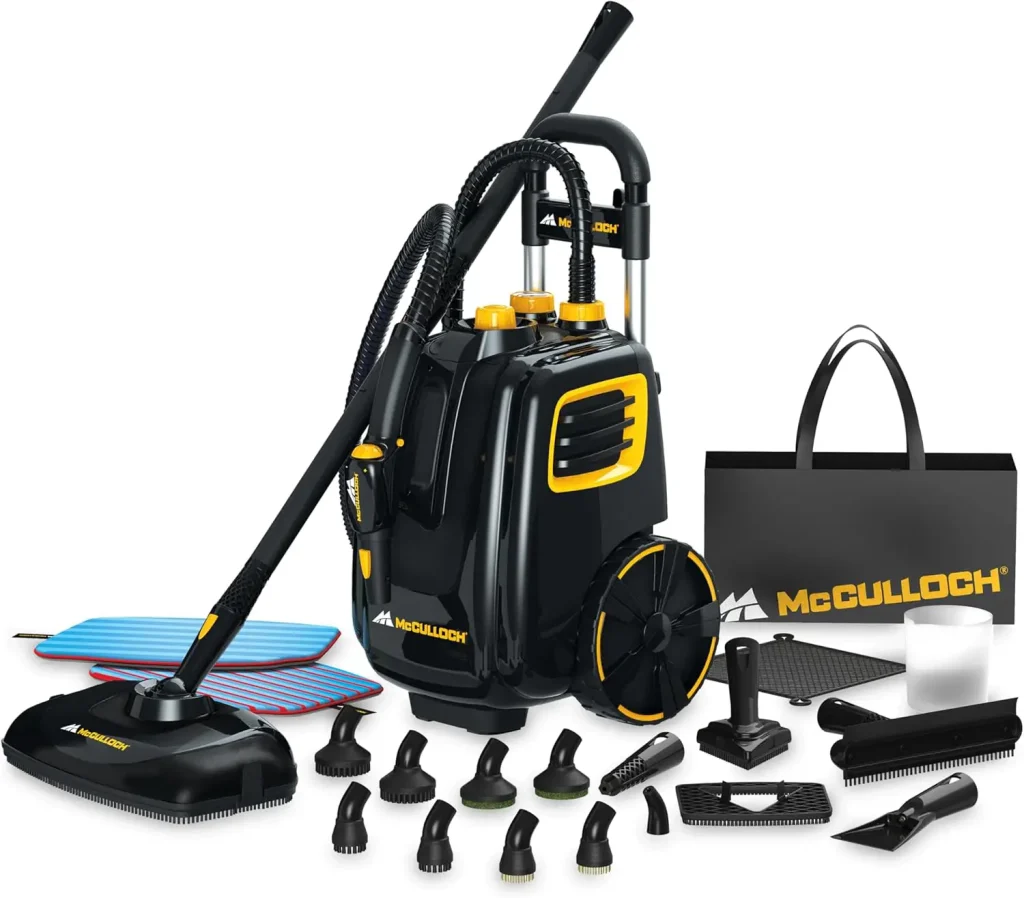
If you want to avoid chemicals altogether, a steam cleaner is one of the best tools you can use. The high heat penetrates mattress seams, fabric folds, and furniture crevices, killing both bugs and eggs on contact. Just make sure your steamer reaches at least 120°F (49°C) at the surface to be effective.
Monitor and repeat: Bed bugs are stubborn. Repeat treatments every 7–10 days for at least 3–4 weeks.
If the infestation has spread beyond one room, or if DIY treatments aren’t working after a few weeks, call a licensed pest control professional. Heat treatment (where the entire room is raised to 50°C / 122°F) is one of the most effective professional solutions and kills bugs at all life stages in a single session.
Cockraoches
What Are Cockroaches?
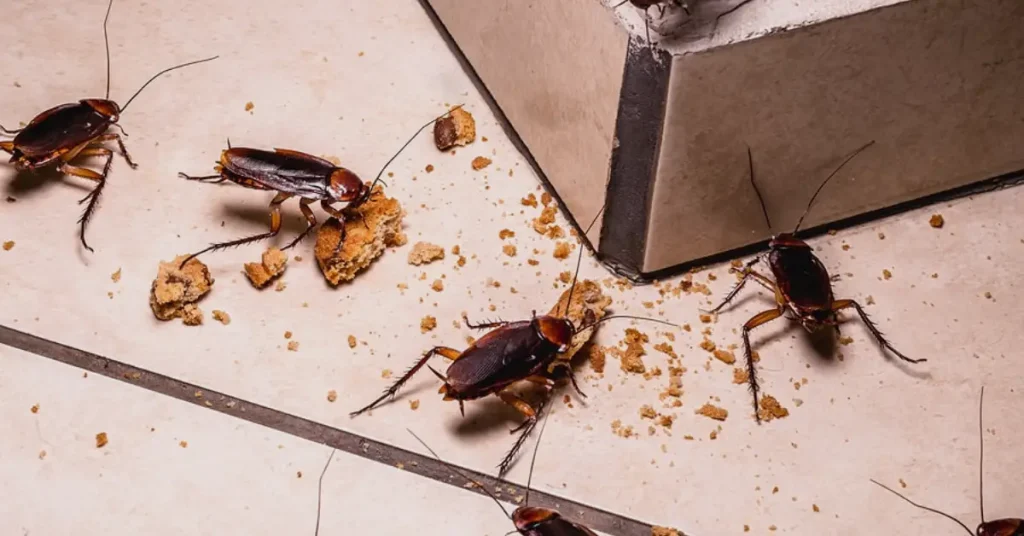
Cockroaches are among the most ancient and resilient insects on the planet. They’ve been around for over 300 million years, and their ability to adapt is exactly what makes them such a persistent household pest. The most common species found in homes are the German cockroach, American cockroach, Oriental cockroach, and Brown-banded cockroach. They range in size from half an inch to nearly two inches long, brown or reddish-brown, and have a distinctly flat, oval-shaped body that allows them to squeeze into impossibly tight spaces.
How Do You Get Cockroaches?
They don’t need much of an invitation, just the right conditions. They enter homes through gaps around pipes and drains, cracks in walls or foundations, grocery bags and cardboard boxes brought in from outside, and second-hand appliances or furniture. They can also travel between apartments through shared walls, which is why infestations in multi-unit buildings is difficult to control.
Signs You Have Cockroaches
- Seeing one during the day. Cockroaches are nocturnal, so a daytime sighting often means the infestation is large enough that they’re being pushed out of hiding.
- A strong, musty, oily odor that gets worse as the infestation grows.
- Small, dark, pepper-like droppings on countertops, inside cabinets, or along baseboards.
- Oval-shaped egg cases (called oothecae) tucked in dark corners or behind appliances.
- Shed skins in hidden areas like under the fridge or behind the stove.
How To Get Rid of Cockroaches
Deep clean your home: Cockroaches thrive where there’s food residue and grease. Start with a thorough cleaning of your kitchen, scrub behind and under appliances, clean out cabinets, wipe down countertops, and don’t forget the stove drip pans. Remove any food sources they might be feeding on.
Eliminate moisture: Cockroaches are drawn to water almost as much as food. Fix any leaky pipes under sinks, dry out wet areas in the bathroom, and avoid leaving standing water anywhere in the home. Even a damp sponge left by the sink overnight is enough to attract them.
Seal entry points: Use caulk to seal gaps around pipes, drains, and baseboards. Pay special attention to the areas under the kitchen sink and around bathroom plumbing.
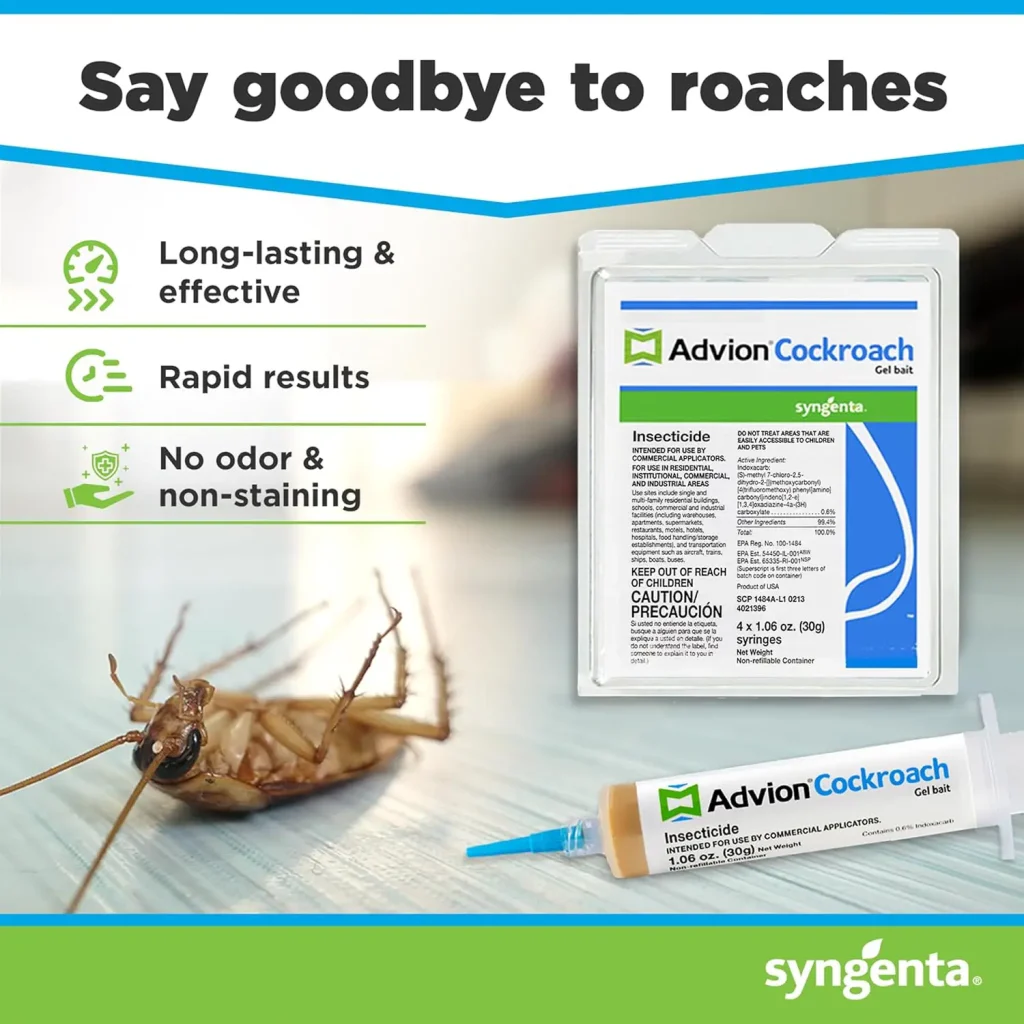
Set baits and traps: Cockroach gel bait is one of the most effective DIY treatments. Apply small dots of gel bait inside cabinets, under appliances, and along baseboards. The cockroach eats the bait, returns to its nest, and the poison spreads to others through contact and droppings. Sticky traps placed in high-activity areas help monitor the size of the infestation and catch stragglers.
Apply treatment
Boric acid is one of the oldest and most reliable cockroach killers, lightly dust it along baseboards, behind appliances, and inside cabinet hinges. It clings to the cockroach’s body and damages its digestive system when ingested during grooming. It works slowly but is highly effective over time.
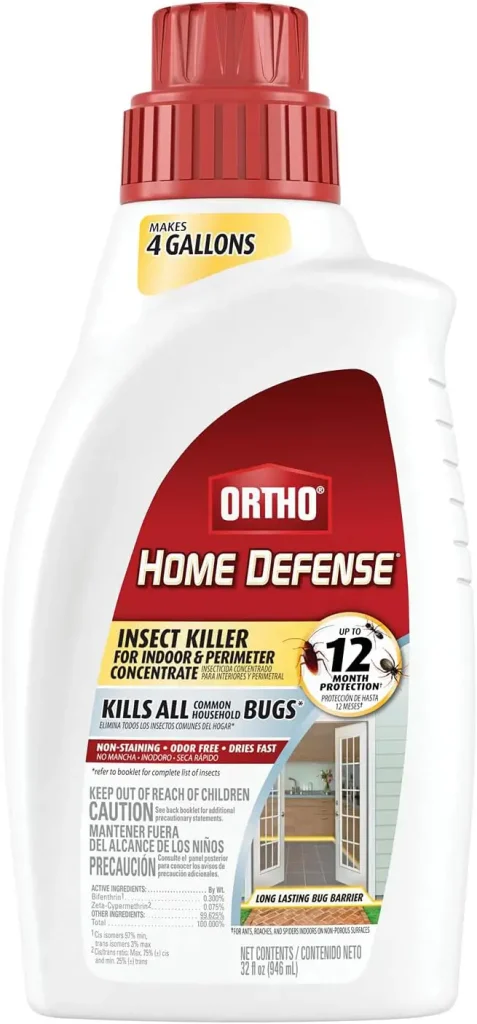
For faster results, insecticide sprays containing cypermethrin or deltamethrin can be applied along baseboards, behind appliances, and around entry points. These create a chemical barrier that kills roaches on contact. If you prefer a natural alternative, a mixture of equal parts boric acid, sugar, and flour rolled into small balls works as a homemade bait.
Diatomaceous earth is another chemical-free option worth using in tandem with other treatments. Sprinkle it in dry areas where cockroaches travel, and it will dehydrate and kill them over time. Whichever treatment you choose, consistency and reapplication are key.
Monitor and repeat: Check your traps and bait stations every few days. Cockroach infestations don’t disappear overnight, consistent treatment over three to four weeks is needed to fully break their breeding cycle.
Ants
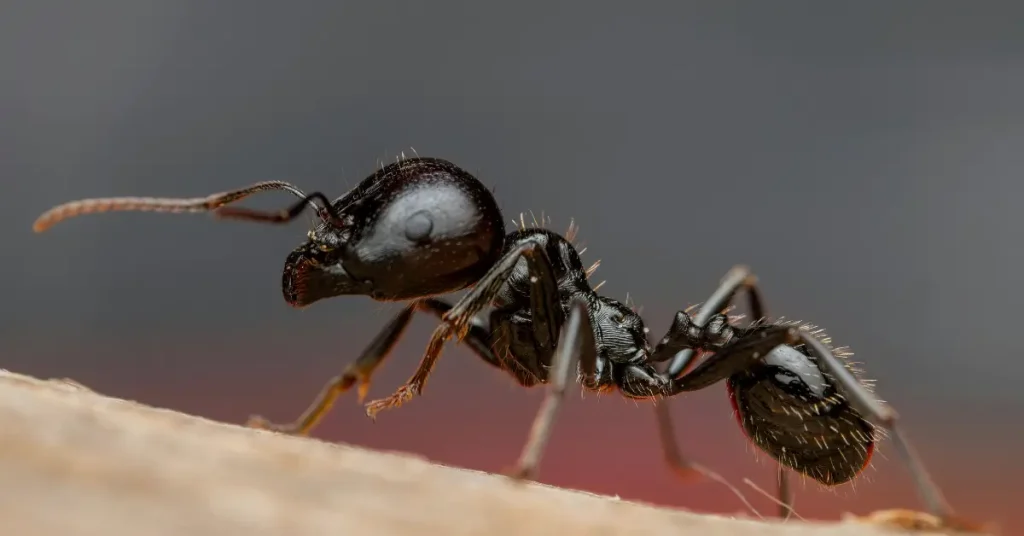
Ants are one of the most common and most frustrating household pests in the world. They are social insects, they live in large, highly organized colonies that can contain anywhere from a few hundred to several million individuals. The most common species found in homes include carpenter ants, odorous house ants, pavement ants, fire ants, and little black ants. Each species has slightly different behaviors and preferences, but they all share the same basic goal: finding food and water for their colony.
How Do You Get Ants?
Ants are relentless foragers. Scout ants roam far and wide searching for food, and once one finds a source inside your home, it leaves behind a chemical scent trail called a pheromone trail that guides the rest of the colony straight to it. They enter through the tiniest of gaps, cracks in the foundation, gaps around window frames, spaces around pipes, or even through potted plants brought in from outside.
Signs You Have Ants
- A visible trail of ants, often leading from a crack in the wall or floor to a food source in the kitchen or pantry.
- Small piles of fine sawdust near wooden structures (a sign of carpenter ants, which tunnel through wood).
- A faint musty or rotten coconut smell when ants are crushed, characteristic of odorous house ants.
- Rustling sounds inside walls particularly with larger carpenter ant infestations.
- Ant nests that look like small mounds of dirt near your home’s foundation or in the garden close to entry points.
How To Get Rid of Ants
Find and eliminate the food source: Ants don’t show up without a reason. Start by identifying what’s attracting them, it could be a spill behind the toaster, crumbs under the fridge, an open sugar bag in the pantry, or even a sticky residue on the countertop. Clean up thoroughly and store all food in airtight containers. Remove the food source and the trail loses its purpose.
Erase the scent trail: Simply sweeping or wiping away ants isn’t enough, the pheromone trail they leave behind will keep guiding new ants to the same spot. Clean the trail area with a mixture of white vinegar and water, or use a surface spray that disrupts chemical trails. This step is often overlooked and is one of the biggest reasons ant problems keep coming back.
Locate the entry points: Follow the ant trail back to where they’re entering your home. Common entry points include gaps around window frames, door thresholds, cracks in baseboards, and spaces around pipes under the sink. Once identified, seal these gaps with caulk or weatherstripping to cut off their access route.
Set baits: Ant bait is far more effective than sprays when it comes to eliminating the colony. Worker ants carry the bait back to the nest and share it with others including the queen. No queen means no colony. Gel baits and bait stations are widely available and work well when placed directly along active ant trails.
Apply treatment
For a natural approach, diatomaceous earth sprinkled along baseboards, entry points, and ant trails is highly effective, it penetrates their exoskeleton and dehydrates them without the use of harsh chemicals. A simple mixture of borax and sugar dissolved in water and soaked into cotton balls works as a powerful homemade bait.
Peppermint oil, cinnamon, and lemon juice are popular natural deterrents that disrupt ant trails and discourage them from crossing treated areas. For more stubborn problems, insecticide sprays or granules containing bifenthrin or permethrin can be applied around the perimeter of your home to create a chemical barrier. For carpenter ants specifically, a foam insecticide injected directly into suspected wall voids can reach the nest and eliminate the colony more effectively than surface treatments alone.
Ant colonies don’t collapse overnight. Check bait stations every few days and replace them when they run out. It can take one to three weeks for the bait to work its way through the entire colony. Keep monitoring entry points and trails to make sure new scouts aren’t establishing fresh routes into your home.
Read For More Detail: Get Rid Of Ants Fast
When To Call a Professional
If you’re dealing with a large carpenter ant infestation especially one inside your walls or wooden structures, professional help is strongly recommended, as these ants can cause structural damage over time. Similarly, if fire ants have established a colony near or inside your home, professional treatment is the safest and most effective option given their aggressive nature.
Termites
What Are Termites?
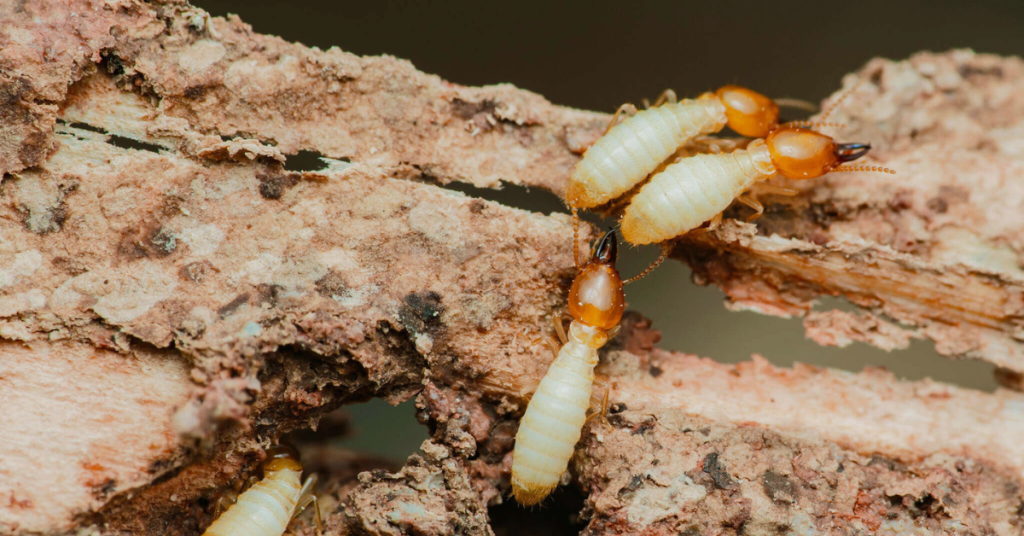
Termites are often called the “silent destroyers”. They chew through wood, flooring, and even wallpaper for months or years without making their presence known until the damage is already severe. They are small, pale, soft-bodied insects that live in highly organized colonies, much like ants.
There are three main types you might encounter: subterranean termites, which live in soil and are the most common and destructive species in the world; drywood termites, which live directly inside the wood they infest; and dampwood termites, which are attracted to moist, decaying wood.
Unlike cockroaches or ants, termites aren’t after your food, they eat cellulose, which is found in wood, paper, cardboard, and even some fabrics.
How Do You Get Termites?
Termites typically enter homes from the ground up. Subterranean termites build mud tubes from the soil to reach wood above ground, traveling through cracks in your foundation, gaps around pipes, or any point where wood makes direct contact with the earth. Drywood termites enter through exposed wood, attic vents, window frames, or cracks in the exterior. They can also be unknowingly brought in through infested furniture, lumber, or wooden décor items.
Signs You Have Termites
- Mud tubes, thin, pencil-width tunnels made of dirt and wood particles running along your foundation, walls, or crawl spaces.
- Hollow-sounding wood. Tap on wooden surfaces and listen for a papery, empty sound where solid wood should be.
- Discarded wings near windowsills, doors, or light fixtures.
- Small, pellet-shaped droppings called frass near wooden structures.
- Doors and windows that suddenly become difficult to open or close.
- Bubbling or uneven paint on walls that resembles water damage, termites produce moisture as they work through wood.
How To Get Rid of Termites
Confirm the infestation: Before taking any action, confirm that you’re actually dealing with termites and not ants, the two are often confused, especially during swarming season. Termites have straight antennae, a thick waist, and equal-length wings, while flying ants have elbowed antennae, a pinched waist, and unequal wings. If you’re unsure, collect a sample and consult a pest control professional for identification.
Identify the type of termite: Knowing whether you’re dealing with subterranean, drywood, or dampwood termites is crucial because each requires a different treatment approach. Subterranean termites need soil-based treatments, while drywood termites require wood treatments or fumigation. If mud tubes are present along your foundation, you’re almost certainly dealing with subterranean termites.
Eliminate moisture and wood-to-soil contact: Termites thrive in moisture. Fix leaky pipes, repair damaged gutters, ensure proper drainage around your foundation, and use a dehumidifier in crawl spaces and basements. Remove any wood-to-soil contact around your home, this includes wooden porch steps, deck posts, and firewood stacked against the house as these are the most common entry points for subterranean termites.
Remove termite food sources: Clear away dead wood, tree stumps, and decaying mulch from around your home’s perimeter. Store firewood at least 20 feet away from the house and off the ground. Remove any cardboard, paper, or wooden debris from crawl spaces and basements.
Apply treatment
For subterranean termites, use liquid termiticide to the soil around your home’s foundation. Products containing imidacloprid or fipronil create a chemical barrier in the soil that termites pass through, pick up on their bodies, and carry back to the colony eventually eliminating it. Termite bait stations are another effective option; they are installed in the ground around your home, and worker termites carry the slow-acting bait back to the colony, spreading it to others including the queen.
For drywood termites, localized wood treatments using orange oil or foam termiticides can be injected directly into infested wood to kill colonies within the affected area. Borate-based sprays and treatments applied to wood surfaces are also highly effective. Diatomaceous earth can be used in wall voids and crawl spaces as a supplementary measure, though it works slowly and is better suited as a preventive tool than a standalone cure.
For widespread or severe drywood termite infestations, tent fumigation, where the entire home is sealed and filled with gas, remains the most thorough and effective treatment available, though it requires vacating the property for several days.
Termite treatment is not a one-time fix. Inspect your home at least twice a year particularly around the foundation, crawl spaces, attic, and any wooden structures for signs of renewed activity. Bait stations need to be checked and replaced regularly.
When To Call a Professional
Unlike most other household pests, termites almost always warrant professional involvement. The structural damage they can cause is significant and expensive, the average termite infestation causes thousands of dollars in damage before it’s even detected.
If you find mud tubes, hollow wood, or swarming termites anywhere in or around your home, contact a licensed pest control professional immediately. Tent fumigation, soil treatment, and whole-structure heat treatment are all methods that require professional equipment and certification.
Spiders
What Are Spiders?
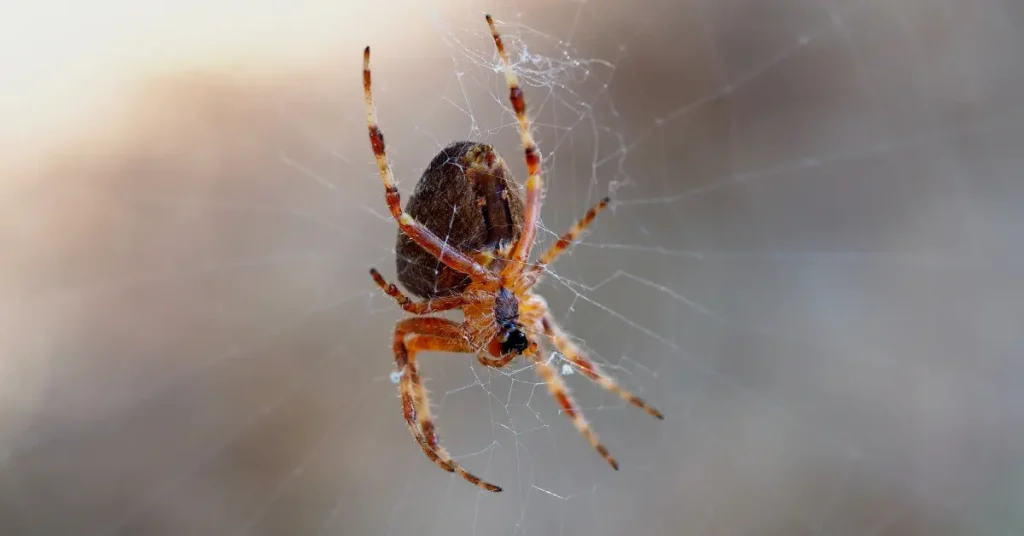
Spiders are one of the most misunderstood household pests. Technically speaking, they aren’t insects at all. They are arachnids, with eight legs, two body segments, and no antennae. Most people’s instinct is to panic at the sight of one, but the truth is that the vast majority of household spiders are completely harmless to humans and actually play a beneficial role by feeding on other insects like mosquitoes, flies, and cockroaches.
But, no one wants to share their living space with them, and species like the black widow and brown recluse can pose a genuine health risk. Common household spiders include the common house spider, cellar spider (daddy long-legs), wolf spider, jumping spider, brown recluse, and black widow.
How Do You Get Spiders?
Spiders follow their food source. If your home has an abundance of other insects, spiders will move in to hunt them. They enter through gaps around doors and windows, cracks in the foundation, torn window screens, and gaps around utility pipes.
They are particularly attracted to dark, undisturbed areas, cluttered garages, basements, attics, and the corners behind furniture are their favorite hiding spots. Some species also come indoors seeking warmth and shelter as temperatures drop in the fall.
Signs You Have Spiders
- Webs in corners, along ceilings, behind furniture, or in window frames
- Egg sacs. Small, silky pouches attached to webs or tucked in hidden corners, each containing dozens to hundreds of eggs
- Shed exoskeletons left behind as spiders grow
- Seeing spiders themselves, particularly at night when many species are most active
How To Get Rid of Spiders
Declutter and clean thoroughly: Spiders love undisturbed spaces. Start by decluttering your home especially storage areas like basements, attics, and garages. Remove cardboard boxes, old newspapers, and piles of clothing where spiders like to hide and lay eggs. Vacuum regularly, paying special attention to corners, behind furniture, under beds, and along ceiling edges where webs tend to form.
Remove webs and egg sacs: Use a vacuum or a long-handled broom to remove all visible webs and egg sacs throughout your home.
Eliminate their food source: Fix leaky pipes, seal food properly, and address any other pest issues you may have. Fewer insects means fewer reasons for spiders to stick around.
Seal entry points: Inspect your home for gaps around window frames, door thresholds, utility pipes, and foundation cracks. Seal them with caulk or weatherstripping. Install or repair window and door screens to prevent spiders from walking straight in.
Apply treatment
For a natural approach, Use peppermint oil. Mix 15 to 20 drops with water in a spray bottle and apply it along baseboards, window frames, and entry points. Spiders dislike the strong scent and tend to avoid treated areas. White vinegar works in a similar way and can be sprayed directly on spiders for a contact kill.
For more persistent problems, insecticide sprays containing cypermethrin or deltamethrin applied along baseboards, in corners, and around entry points create a residual barrier that kills spiders on contact for several weeks. Glue traps placed in corners, under furniture, and along walls are a non-toxic option that helps reduce the population and monitor activity levels.
If you have identified a dangerous species such as a black widow or brown recluse in your home, avoid handling them yourself, use a vacuum to remove them from a safe distance and consider targeted professional treatment.
Fruit Flies
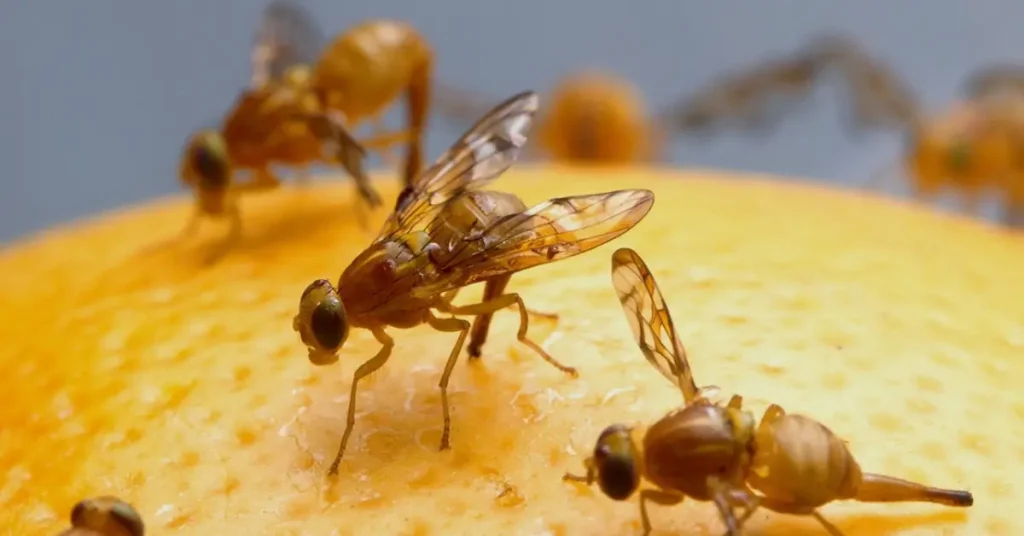
Fruit flies are tiny barely an eighth of an inch long. They are tan or brownish-yellow in color with bright red eyes, and they have an almost supernatural ability to detect fermenting organic matter from a considerable distance. What makes them particularly maddening is their reproductive speed, a single female can lay up to 500 eggs in her lifetime, and those eggs can hatch and reach adulthood in as little as eight days under warm conditions. A small fruit fly problem can become a full-blown infestation within a matter of weeks if left unchecked.
How Do You Get Fruit Flies?
Fruit flies are attracted to anything fermented or overripe, fruit left on the counter, vegetable scraps in the trash, spilled juice, wine residue in an empty bottle, a damp mop, or even the thin film of organic matter that builds up inside drains over time. They can enter your home through open windows and doors, through tiny gaps in screens, or even on the surface of fruit and vegetables you bring home from the grocery store or market.
Signs You Have Fruit Flies
- Small, slow-moving flies hovering around fruit bowls, trash cans, sinks, or recycling bins
- Tiny flies emerging from drains when you run the water or disturb the drain
- Clusters of flies near wine bottles, juice containers, or fermented foods
- Larvae, tiny white worms, visible on the surface of overripe or rotting fruit
How To Get Rid of Fruit Flies
Remove all breeding sources: This is the single most important step and without it, no trap or spray will give you lasting results. Throw out any overripe, damaged, or rotting fruit and vegetables. Check every corner of your kitchen, under the fridge, behind the trash can, inside the recycling bin for forgotten spills, food scraps, or organic residue. Empty and rinse your trash can thoroughly, and take out the garbage daily.
Clean your drains: The thin layer of organic buildup inside kitchen and bathroom drains is a perfect environment for fruit flies to lay eggs. Pour boiling water down the drain to flush out organic matter, followed by a mixture of baking soda and white vinegar to break down residue. For stubborn drain buildup, use a drain cleaning gel or an enzymatic drain cleaner and scrub the inside of the drain with a small brush.
Wipe down all surfaces: Wipe down all kitchen surfaces thoroughly with a disinfectant cleaner, paying close attention to areas around the stove, under appliances, and inside cabinets where spills often go unnoticed.
Set traps: Traps won’t solve the problem on their own but they are highly effective at reducing the adult population. Pour a small amount of apple cider vinegar into a glass or jar, add a drop of dish soap to break the surface tension, and cover the top with plastic wrap punctured with small holes. Fruit flies are drawn to the vinegar, enter through the holes, and cannot escape.
Apply treatment
For a fast and natural contact kill, a spray made from rubbing alcohol or a mixture of dish soap and water can be sprayed directly onto fruit flies to kill them on the spot, though this addresses adults only and does nothing for eggs or larvae already developing in drains or soil. Essential oils such as lemongrass, lavender, and eucalyptus are effective natural repellents that can be diffused in the kitchen or mixed with water and sprayed around the affected area.
Sticky fly traps hung near fruit bowls and trash cans are a non-toxic option that works well as a monitoring and population control tool alongside other treatments.
.Fruit fly problems are almost always a sign of a sanitation issue, once that’s resolved and maintained, they rarely return.
Silverfish
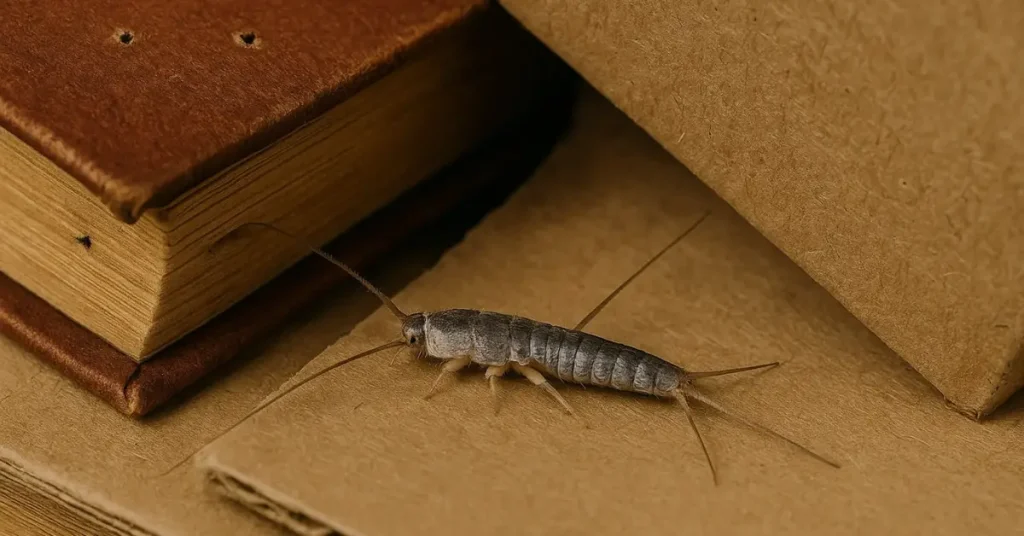
What Are Silverfish?
Silverfish are one of the oldest insects on Earth. They have been around for over 400 million years, predating even the dinosaurs, and their appearance hasn’t changed much since. They are small, wingless insects typically half an inch to one inch in length, with a distinctive teardrop-shaped body covered in silvery, metallic scales that shimmer as they move.
They move in a quick, wriggling, fish-like motion that many people find deeply unsettling, especially when one darts out from under a book or out of a dark cabinet unexpectedly. Despite their alarming appearance, silverfish do not bite, sting, or transmit disease. However, they are destructive, silently feeding on and damaging books, wallpaper, clothing, and stored food over long periods of time.
How Do You Get Silverfish?
Silverfish are moisture seekers above all else. They thrive in humid, dark, undisturbed environments and are most commonly found in bathrooms, kitchens, basements, attics, and laundry rooms. They enter homes through gaps in the foundation, cracks around windows and doors, and through boxes or bags brought in from storage units or second-hand stores.
They are nocturnal and can survive for months without food and this makes them resilient and difficult to fully eliminate.
Signs You Have Silverfish
- Seeing one scurrying across the floor at night, particularly in the bathroom or kitchen
- Irregular holes, notches, or surface etchings on paper, books, wallpaper, or cardboard
- Yellow stains or small pepper-like droppings on books, papers, or shelving
- Shed scales (tiny, silvery flakes left behind in areas where silverfish are active)
- Damage to stored clothing, particularly items made from natural fibers like cotton, silk, or linen
- A musty smell in enclosed storage areas where silverfish populations are large
How To Get Rid of Silverfish
Reduce humidity throughout your home: Use a dehumidifier in basements, crawl spaces, and any other damp areas of your home, to keep indoor humidity below 50%. Run bathroom exhaust fans during and after showers, fix any leaky pipes, and ensure proper ventilation in attics and laundry rooms. Without the moisture, silverfish will struggle to survive and reproduce.
Declutter and eliminate hiding spots: Silverfish love dark, undisturbed spaces filled with paper and cardboard. Go through your home and remove stacks of old newspapers, magazines, and cardboard boxes, particularly from basements, attics, and closets. Transfer important documents and books into sealed plastic containers.
Store food and pantry items properly: Silverfish feed on carbohydrates and starches (pantry items like flour, oats, cereals, and dried pasta). Transfer these items into airtight glass or hard plastic containers.
Seal entry points: Inspect your home for cracks around baseboards, window frames, and door frames, as well as gaps around plumbing pipes in the bathroom and kitchen. Seal these with caulk to cut off entry routes. Pay particular attention to the areas where pipes enter walls under sinks, these are among the most common silverfish highways into the home.
Apply treatment
Diatomaceous earth is one of the most effective and safest treatments for silverfish. Lightly dust it along baseboards, inside cabinet edges, around pipe entry points, and in any dark corners where silverfish are likely to travel.
Boric acid applied in the same areas works in a similar way.
Cedar is a well-known natural repellent for silverfish. Place cedar blocks, cedar hangers, or cedar sachets in closets, bookshelves, and storage areas to deter them. Cinnamon sticks and dried bay leaves placed on shelves and in cabinets are also effective natural deterrents that disrupt silverfish activity.
For faster results, insecticide sprays containing pyrethrin or bifenthrin applied along baseboards, in closets, and around entry points create a residual barrier that kills silverfish on contact.
Carpet beetles
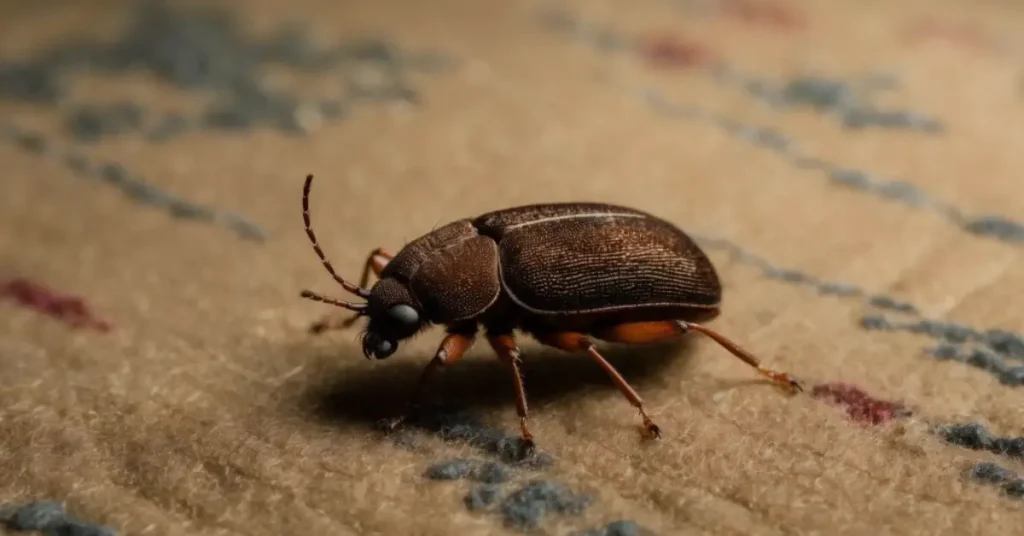
What Are Carpet Beetles?
Carpet beetles are small, rounded insects that are frequently mistaken for bed bugs due to their similar size and the damage but they are very different pests. Adult carpet beetles are one to four millimeters long and come in several species, the most common being the varied carpet beetle, the black carpet beetle, and the furniture carpet beetle. Adults are relatively harmless on their own, they feed on pollen and nectar outdoors and are often found near windows trying to get outside.
The real damage is done by their larvae, which are small, bristly, carrot-shaped creatures that feed voraciously on natural fibers, animal products, and stored food. Their damage is done slowly and silently, often in dark, undisturbed areas, and is frequently mistaken for moth damage until the infestation is already well established.
How Do You Get Carpet Beetles?
Adult carpet beetles commonly fly in through open windows and doors, attracted by light and the scent of flowers. They lay their eggs on or near natural fiber materials carpets, rugs, upholstered furniture, wool clothing, fur, leather, and even stored food products like dried grains and spices.
Once the eggs hatch, the larvae begin feeding immediately and can go undetected for months, as they prefer the underside of rugs, inside closets, and in stored clothing. They can also be brought into the home through cut flowers, second-hand furniture, or infested food products purchased from a store.
Signs You Have Carpet Beetles
- Irregular holes or bare patches in carpets, rugs, or upholstered furniture
- Damage to wool sweaters, silk scarves, fur coats, or leather items stored in closets
- Tiny, slow-moving larvae in closets, under furniture, or in stored clothing and food
- Adult beetles found near windows or on windowsills, trying to make their way outside
How To Get Rid of Carpet Beetles
Identify and locate the source: Carefully inspect all natural fiber items in your home, carpets, rugs, wool clothing, fur, feathers, leather, and stored pantry items like dried herbs, spices, and grains. Check dark, undisturbed areas first: the underside of rugs, inside closets and drawers, behind and under upholstered furniture, and in storage boxes containing natural fiber items.
Discard or isolate heavily infested items: Any item with significant larvae or damage should be placed immediately in a sealed plastic bag to prevent larvae from spreading to other areas of the home. Heavily infested items that cannot be treated such as badly damaged rugs or old stored clothing are best discarded entirely.
Wash and heat-treat salvageable items: Clothing, bedding, and fabric items that can be laundered should be washed in hot water and dried on the highest heat setting for at least 30 minutes.
Deep vacuum every surface: Vacuum every inch of carpet, rug, and upholstered furniture thoroughly, paying particular attention to edges, corners, and the areas under and behind furniture where larvae tend to concentrate. Vacuum along baseboards, inside closets, and under beds. After vacuuming, immediately seal and dispose of the vacuum bag outside your home.
Apply treatment
Diatomaceous earth dusted along baseboards, in closet corners, under furniture, and along carpet edges is a highly effective and chemical-free treatment for carpet beetles. It damages the larvae’s protective coating and dehydrates them over time. Boric acid applied in the same areas works in a similar way.
Use insecticide deltamethrin, bifenthrin, or cyfluthrin to carpets, rugs, baseboards, and closet interiors to kill larvae and adults on contact. Focus application on the areas where larvae were found rather than treating the entire home indiscriminately. Steam cleaning carpets and upholstered furniture is another highly effective treatment, the intense heat penetrates deep into fibers and kills larvae and eggs that vacuuming alone may miss.
Cedar blocks and cedar oil applied in closets and storage areas act as a natural repellent, discouraging adult beetles from laying eggs on stored items.
Centipedes
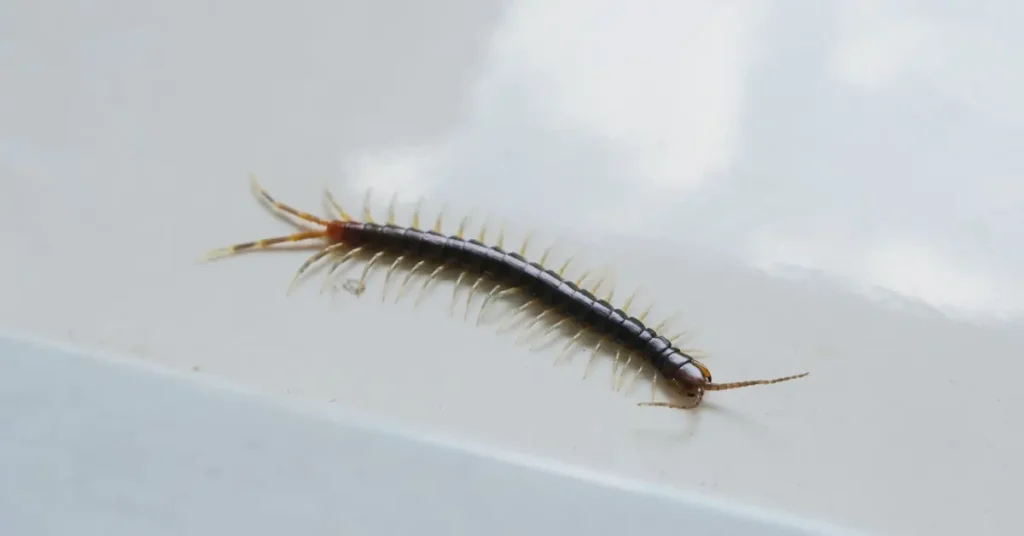
What Are Centipedes?
They are long, flattened, multi-legged creatures that move with startling speed across floors and walls, seemingly appearing out of nowhere and disappearing just as quickly. The house centipede, the species most commonly found indoors is yellowish-grey with up to 15 pairs of long, striped legs and can grow up to an inch and a half in length. Those long legs are what give them their unsettling, almost alien appearance, but they also make them incredibly fast and agile hunters.
Unlike most household pests, centipedes are predators, they feed on other insects and arthropods including cockroaches, silverfish, spiders, ants, and bed bugs. In that sense, their presence in your home is nature’s way of telling you that other pest populations are thriving indoors. They are venomous, they use modified front legs called forcipules to inject venom into their prey but for humans, a centipede bite is rare and typically produces nothing more than mild, localized pain and swelling similar to a bee sting.
How Do You Get Centipedes?
Centipedes are moisture lovers, much like silverfish. They require high humidity to survive and are most commonly found in damp areas of the home, basements, bathrooms, laundry rooms, and crawl spaces. They enter through gaps in the foundation, cracks around doors and windows, drains, and any other opening that provides access from the moist soil outside.
They are nocturnal, spend their days hiding in dark, damp crevices and emerging at night to hunt. Their presence indoors is almost always tied to two factors: excess moisture and an available prey population. Address both and you address the centipede problem at its root.
Signs You Have Centipedes
- Spotting one darting across the bathroom floor, basement wall, or kitchen at night — centipedes are fast and typically disappear before you get a good look at them
- Finding them in damp, dark areas such as under sinks, in drains, inside closets on ground level, or in basement corners
- A larger than usual population of other insects indoors — since centipedes follow their prey, an abundance of silverfish, cockroaches, or spiders often precedes a centipede problem
- Shed exoskeletons in hidden, damp areas where centipedes rest during the day
- Noticing them more frequently in autumn as temperatures drop and they seek warmth and shelter indoors
How To Get Rid of Centipedes
SReduce moisture throughout your home: Centipedes cannot survive without high humidity. Eliminate excess moisture. Run a dehumidifier in the basement and any other consistently damp areas, targeting indoor humidity below 50%. Fix leaky pipes and dripping faucets promptly, ensure bathroom exhaust fans are working effectively, and improve ventilation in crawl spaces. A dry home is an inhospitable home for centipedes.
Declutter damp and dark areas: Centipedes hide during the day in tight, dark, undisturbed spaces. Reduce available hiding spots by decluttering basements, bathrooms, and storage areas. Remove stacks of cardboard, old boxes, and piles of fabric or wood that provide ideal daytime shelter.
Apply treatment
Diatomaceous earth is one of the most effective chemical-free treatments for centipedes. Apply it generously along baseboards, in basement corners, around pipe entry points, and in any other areas where centipedes have been spotted. It works by damaging their soft underbody as they crawl through it, dehydrating and killing them over time.
For a natural repellent approach, essential oils such as peppermint, tea tree, and eucalyptus mixed with water and sprayed along baseboards, around drains, and in damp corners discourage centipedes from frequenting those areas.
For faster and more powerful results, use insecticide spray containing cypermethrin, bifenthrin, or lambda-cyhalothrin along baseboards, around drains, in basement corners, and around exterior entry points.
Fleas
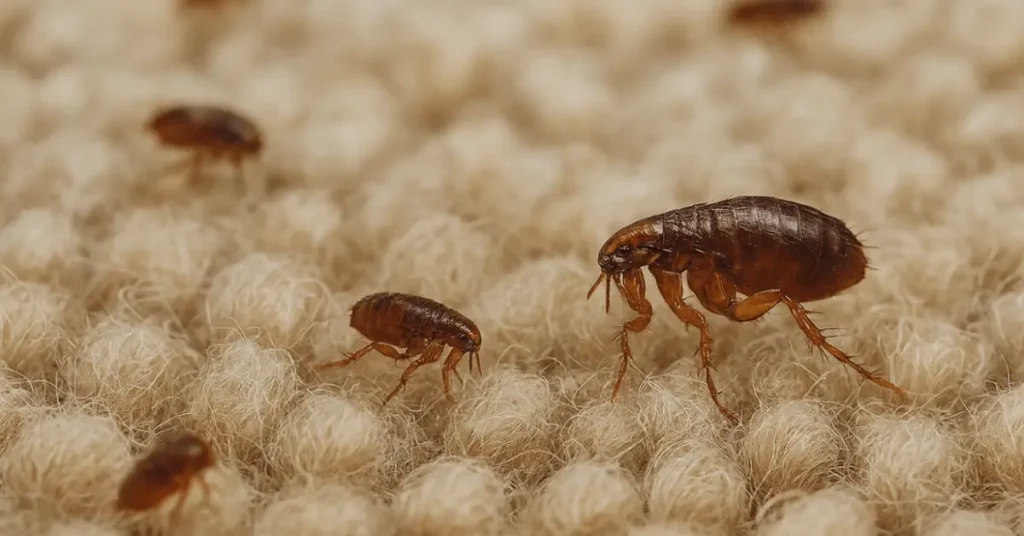
What Are Fleas?
Fleas are tiny, wingless, blood-sucking parasites that are most commonly associated with pets, but make no mistake, they are very much a household pest problem that goes well beyond your cat or dog. They are incredibly small, typically just one to three millimeters in length, with a hard, flattened reddish-brown body that is almost impossible to crush between your fingers.
Fleas are among the most impressive jumpers in the animal kingdom, capable of leaping up to 150 times their own body length, which is how they move between hosts and spread through a home so rapidly. There are several species, but the cat flea is by far the most common species found on both cats and dogs, as well as in homes. Fleas feed on blood and can bite humans too, causing itchy, red welts typically found around the ankles and lower legs.
How Do You Get Fleas?
The most common way fleas enter a home is on a pet that has picked them up outdoors from infested grass, soil, or contact with other animals. However, you don’t necessarily need a pet to get fleas. They can be brought in on clothing or shoes after walking through an infested area, or they can already be present in a home you have just moved into, lying dormant as pupae in carpets and upholstery for months, even up to a year, waiting for the vibration and warmth of a new host to trigger them to emerge.
Signs You Have Fleas
- Your pet scratching, biting, or grooming itself excessively and more than usual
- Tiny, fast-moving dark specks in your pet’s fur, particularly around the neck, belly, and base of the tail
- Flea dirt, small, reddish-black specks that look like ground pepper in your pet’s bedding, on carpets, or on your furniture.
- Itchy, red bite marks on your own ankles, lower legs, or feet.
- Seeing tiny, jumping insects on light-colored flooring, socks, or bedding
How To Get Rid of Fleas
Treat your pet first: Every effective flea treatment plan starts with the animal. Consult your veterinarian for the most appropriate flea treatment for your pet.
Vacuum every surface thoroughly: Vacuuming is one of the most powerful tools in flea control and should be done aggressively and repeatedly throughout the treatment process. Vacuum all carpets, rugs, upholstered furniture, mattresses, and curtains.
Apply treatment
For a natural approach, diatomaceous earth sprinkled generously over carpets, along baseboards, and in areas where your pet sleeps and rests is highly effective at killing flea larvae and adults. Leave it in place for at least 48 hours before vacuuming it up thoroughly. Salt works in a similar dehydrating way, sprinkle fine table salt over carpets, leave it for 24 to 48 hours, and vacuum thoroughly. Baking soda deep into carpet fibers with a brush before vacuuming also helps dislodge and kill flea eggs and larvae hiding in the pile.
For more powerful and comprehensive treatment, insect growth regulators commonly referred to as IGRs are one of the most important tools in flea control. Products containing methoprene or pyriproxyfen prevent flea eggs and larvae from developing into adults, breaking the breeding cycle at its source. They are available in spray form and should be applied to all carpets, rugs, upholstered furniture, and pet resting areas. Combine IGRs with an adulticide spray containing permethrin or pyrethrin to kill the adult fleas.