25 Dangerous Houseplants For Cats With Pictures
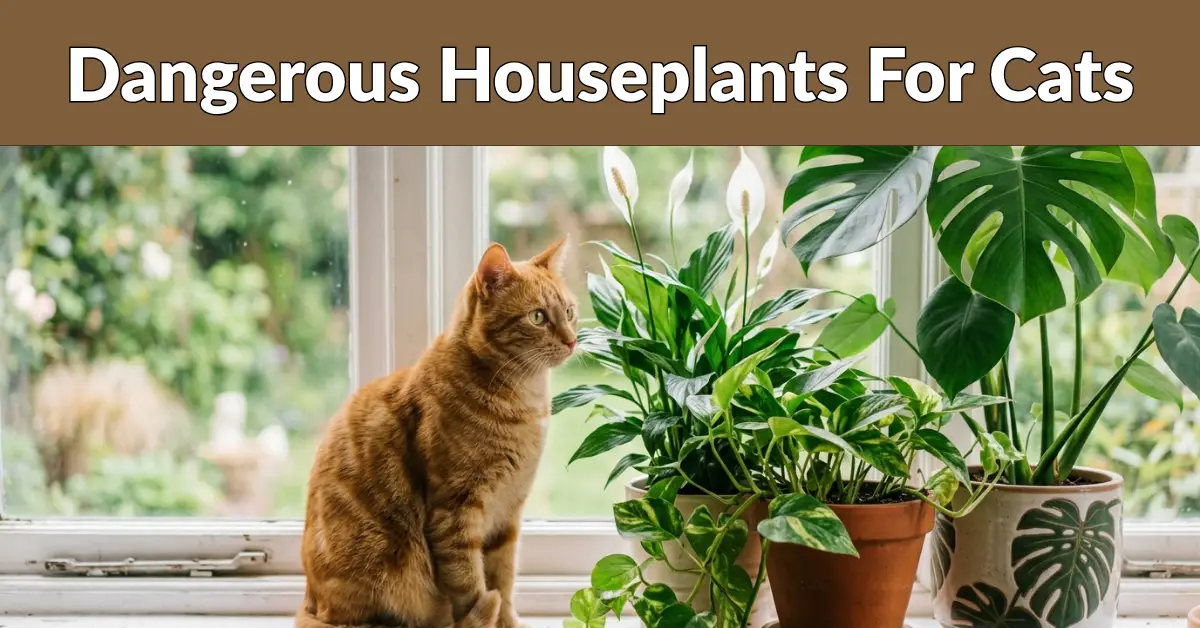
You picked out the perfect plant. It looks gorgeous on your shelf, it’s thriving, and honestly, it pulls the whole room together. The only problem? You have a beautiful cat and you don’t know, is this plant toxic for cat?
Cats are curious by nature, they chew on leaves, bat at hanging vines, and rub against flowers. What most cat owners don’t realize is that some of the most popular, most widely sold houseplants are genuinely dangerous to felines. We’re not talking about a little stomach upset. Some of these plants can cause kidney failure, liver damage, or worse, even in small amounts.
This guide covers 25 dangerous houseplants for cats, what makes them dangerous, what symptoms to watch for, and how serious the risk really is. Whether you’re a new cat owner or someone who just spotted a plant in your living room, this list is worth informative.
Lilies
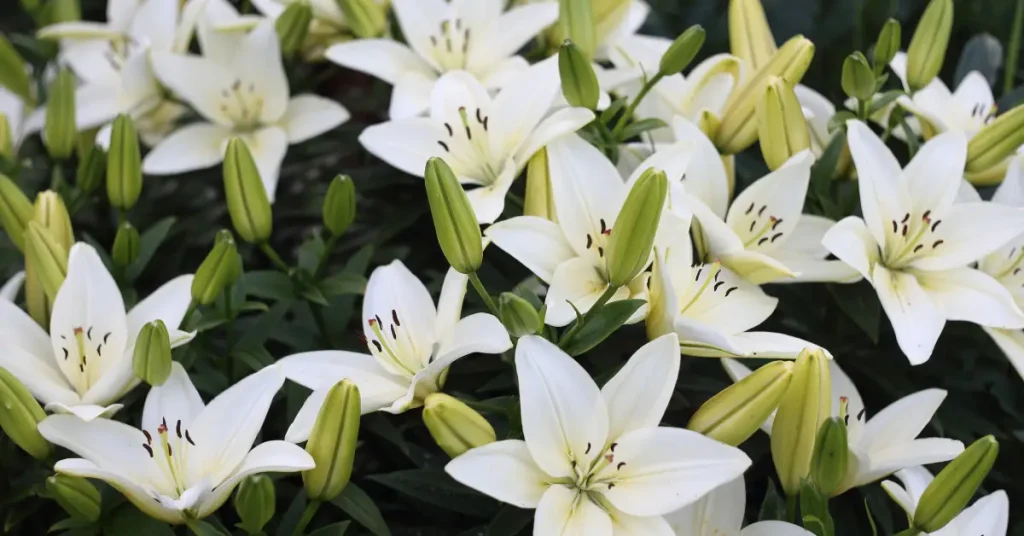
Toxic compound: Unknown nephrotoxin Severity: CRITICAL
If there’s one plant every cat owner needs to know about, it’s the lily. Easter lilies, Tiger lilies, Asiatic lilies, Stargazer lilies, Daylilies, virtually all true lilies are extremely toxic to cats, and the danger is far greater than most people expect.
Every single part of the plant is toxic, the petals, leaves, stem, pollen, and even the water in the vase. A cat doesn’t even need to eat the plant to be at risk. If pollen from a lily drifts onto your cat’s fur and they groom it off, that’s enough to trigger poisoning.
Symptoms of lily poisoning include vomiting, lethargy, and loss of appetite, and they typically appear within 2 to 6 hours of exposure. Without immediate veterinary treatment, acute kidney failure can develop within 24 to 72 hours and it can be fatal.
If you have a cat in your home, the safest rule is simple: no lilies. Not on the table, not in a high-up vase, not a plant in home.
Sago Palm (Cycas revoluta)
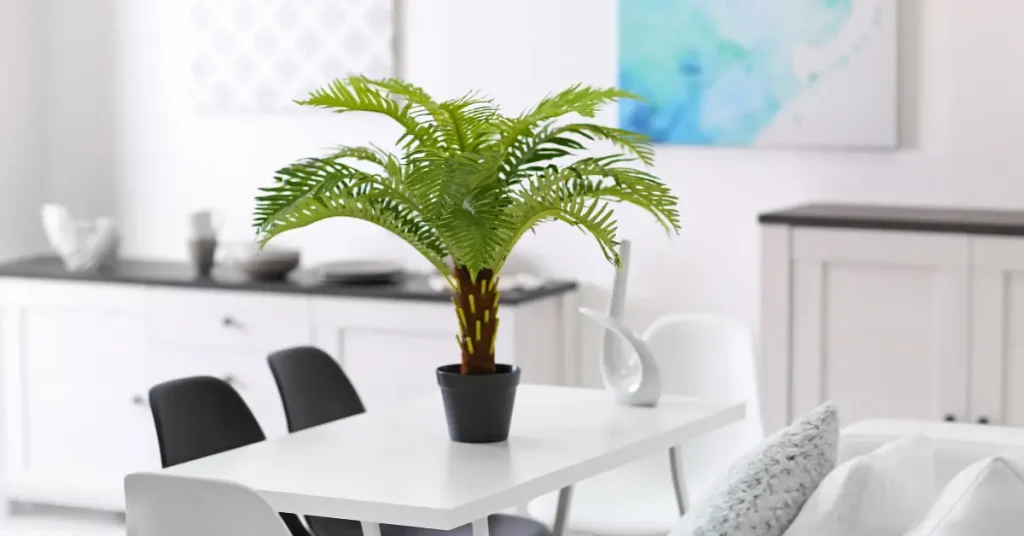
Toxic compound: Cycasin Severity: CRITICAL
The Sago Palm looks like a miniature tropical tree. It’s a popular choice for indoor décor and outdoor landscaping alike, which makes it one of the more dangerous plants to have around cats simply because it’s so common.
Every part of the Sago Palm is toxic, but the seeds (nuts) are by far the most lethal. They contain cycasin, a compound that causes severe liver failure. Symptoms typically appear within 15 minutes to a few hours and include vomiting, diarrhea, drooling, and lethargy, followed by more severe signs like jaundice, bloody stools, liver failure, and seizures as the toxin progresses.
The survival rate for Sago Palm poisoning is concerning even with treatment. This is not a “wait and see” situation. If you suspect your cat has chewed on any part of a Sago Palm, get to an emergency vet immediately.
Oleander (Nerium oleander)
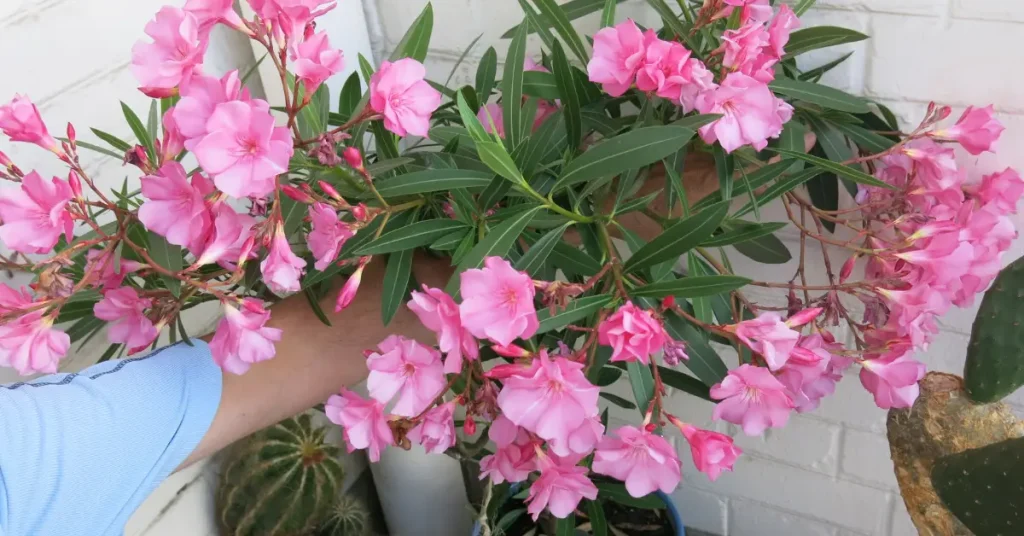
Toxic compound: Cardiac glycosides (oleandrin, neriine) Severity: CRITICAL
It’s a beautiful flowering shrub that is toxic to cats.
Oleander contains cardiac glycosides, compounds that directly affect the heart. Every part of the plant is toxic, including dried leaves and even the smoke from burning it. In cats, ingestion can cause drooling, vomiting, diarrhea, and abdominal pain, followed by abnormal heart rhythm, weakness, and in severe cases, collapse and death.
If you have oleander anywhere in or around your home, it should not be accessible to your cat.
Autumn Crocus (Colchicum autumnale)
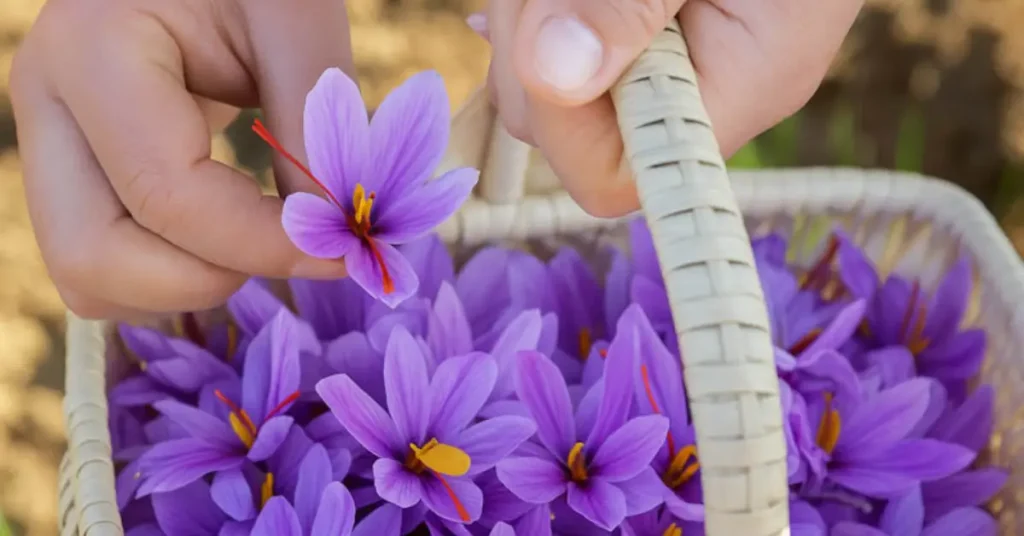
Toxic compound: Colchicine Severity: CRITICAL
The Autumn Crocus is a delicate, pretty flowering plant that is toxic to cats. It’s sometimes kept as a potted plant indoors, and it’s also a common feature in cut flower arrangements.
The culprit is colchicine, an alkaloid that interferes with cell division. Unlike some plant toxins that cause immediate oral irritation (which at least prompts a cat to stop chewing), Autumn Crocus poisoning can have a delayed onset, symptoms may not appear for several hours to days after ingestion. This delay makes it especially dangerous because by the time a cat seems unwell, significant internal damage may already be underway.
Symptoms include severe vomiting, gastrointestinal bleeding, diarrhea, difficulty breathing, seizures, kidney and liver damage, and bone marrow suppression. All parts of the plant are toxic, with the bulbs being the most concentrated source. This is not a plant to keep anywhere near a cat.
Daffodil (Narcissus spp.)
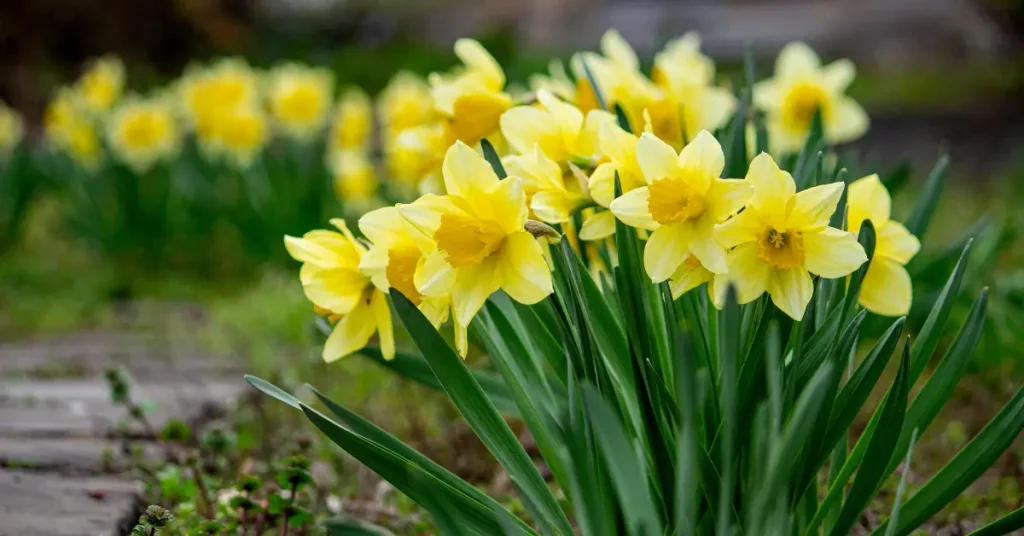
Toxic compound: Lycorine, calcium oxalate crystals Severity: CRITICAL
Daffodils are one of the most cheerful signs of spring, bright yellow, widely loved, and found in homes and gardens everywhere. They’re also genuinely dangerous to cats, particularly the bulbs, which contain the highest concentration of toxins.
The primary toxic agent is lycorine, an alkaloid that triggers intense vomiting shortly after ingestion. The bulbs also contain calcium oxalate crystals that cause burning and irritation in the mouth and throat. Beyond the immediate gastrointestinal reaction, daffodil poisoning can cause more serious effects including low blood pressure, tremors, convulsions, and abnormal heart rhythm.
Daffodil bulbs are a particular hazard in spring when gardeners bring them indoors to force blooms. If you’re a cat owner who loves spring flowers, this is one to admire from a distance or skip entirely. Don’t plant them in accessible outdoor spaces either if your cat roams the garden.
Dieffenbachia (Dieffenbachia spp.) “Dumb Cane”
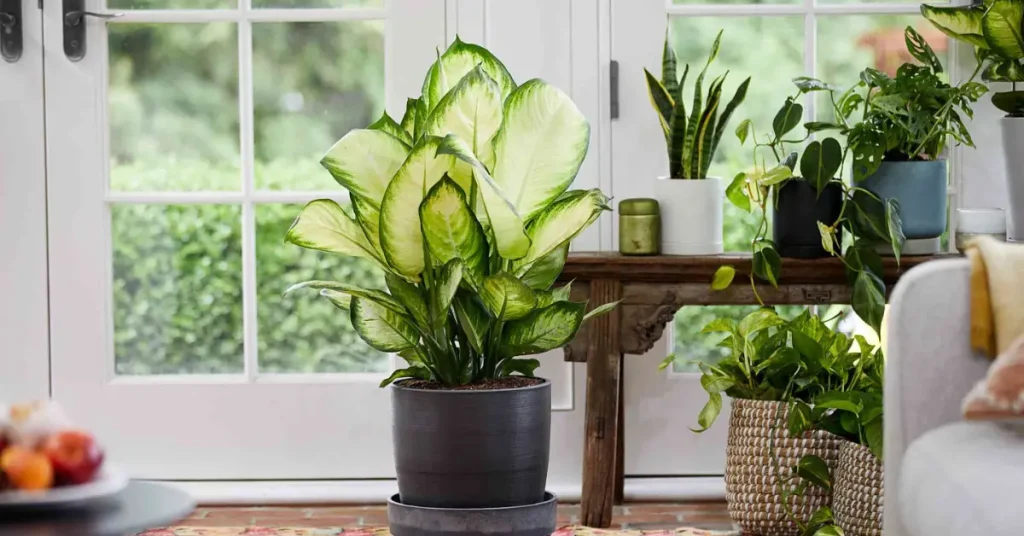
Toxic compound: Insoluble calcium oxalate crystals Severity: HIGH
Dieffenbachia is one of the most popular houseplants in the world, it’s lush, tropical-looking, low-maintenance, and widely available at every garden center.
The plant gets its common name “Dumb Cane” from what it does to humans who chew on it. The calcium oxalate crystals embedded in the plant’s tissues act like tiny needles, causing immediate and intense burning and irritation the moment a cat bites into a leaf. Symptoms include violent drooling, pawing at the mouth, crying out in pain, swelling of the tongue and lips, vomiting, and difficulty swallowing.
The reaction is so immediate that most cats stop chewing quickly but even brief contact is enough to cause significant discomfort. Given how easy it is to find cat safe alternatives that look just as lush, this one simply isn’t worth keeping in a cat household.
Philodendron (Philodendron spp.)
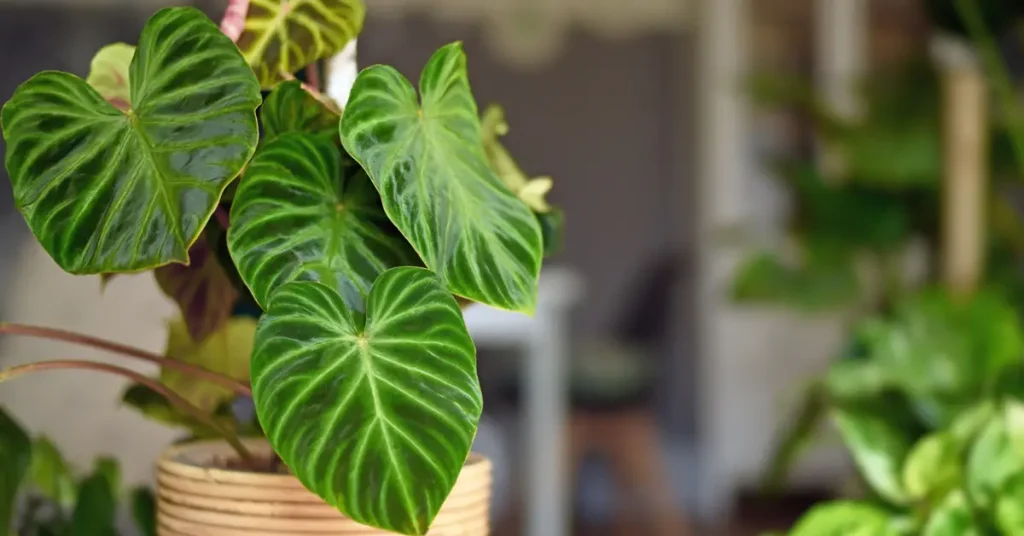
Toxic compound: Insoluble calcium oxalate crystals Severity: HIGH
Philodendrons are everywhere, trailing from bookshelves, climbing moss poles, hanging in macramé planters. They’re one of the most recommended beginner houseplants because they’re nearly impossible to kill, adapt to low light, and grow quickly.
Like Dieffenbachia, philodendrons are loaded with insoluble calcium oxalate crystals throughout their leaves, stems, and roots. The moment a cat chews on one, those crystals drive into the soft tissue of the mouth and throat like shards of glass.
The reaction is immediate, intense burning, excessive drooling, pawing at the face, and swelling of the mouth and tongue. Vomiting and difficulty swallowing typically follow.
If you have cats and are drawn to that tropical, leafy aesthetic, Calathea or prayer plants are a safer swap worth exploring.
Pothos (Epipremnum aureum) “Devil’s Ivy”
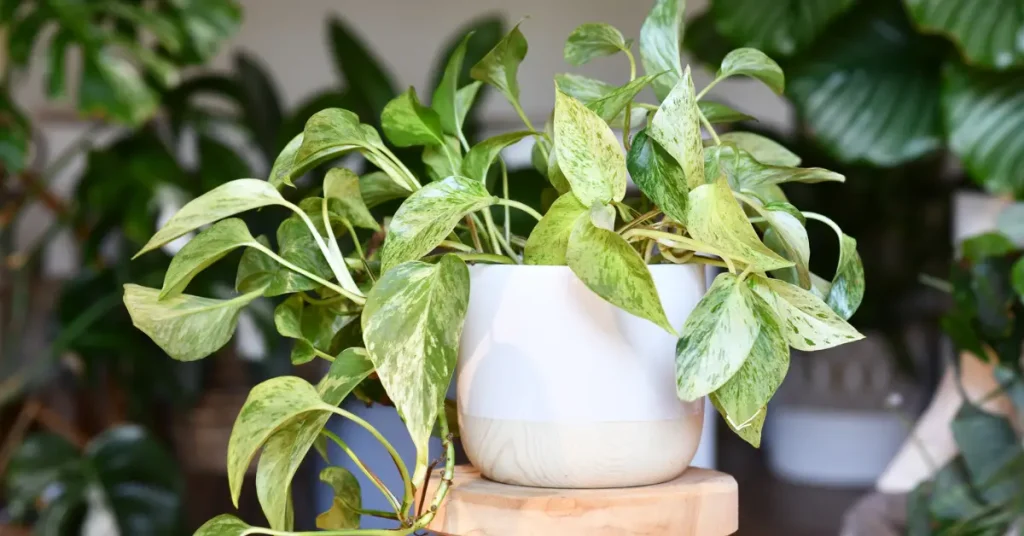
Toxic compound: Insoluble calcium oxalate crystals Severity: HIGH
If there’s one plant that appears in virtually every apartment, office, and dorm room, it’s pothos. It thrives on neglect, survives in almost no light, and trails beautifully from any surface. It also goes by Devil’s Ivy, a name that feels a little more fitting once you know what it does to cats.
Pothos contains the same insoluble calcium oxalate crystals found in philodendron and dieffenbachia, causing the same immediate and painful oral reaction.
Long, trailing vines hanging from high shelves feel like a safe placement but cats are climbers and jumpers, and a dangling vine is practically an invitation. Symptoms mirror those of other calcium oxalate plants: burning of the mouth and throat, drooling, vomiting, and swelling. The kidneys can also be affected with larger ingestions.
If you love the trailing vine look, Tradescantia (spiderwort) offers a pet-safer alternative with a similar cascading habit.
Read: Pothos Plant Care Guide
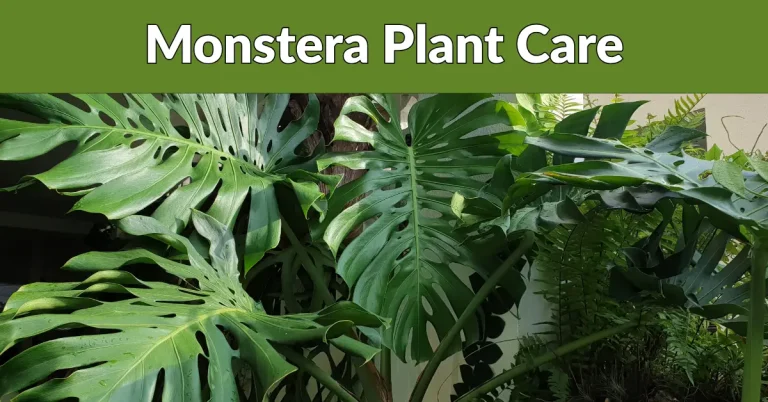
Monstera (Monstera deliciosa) “Swiss Cheese Plant”
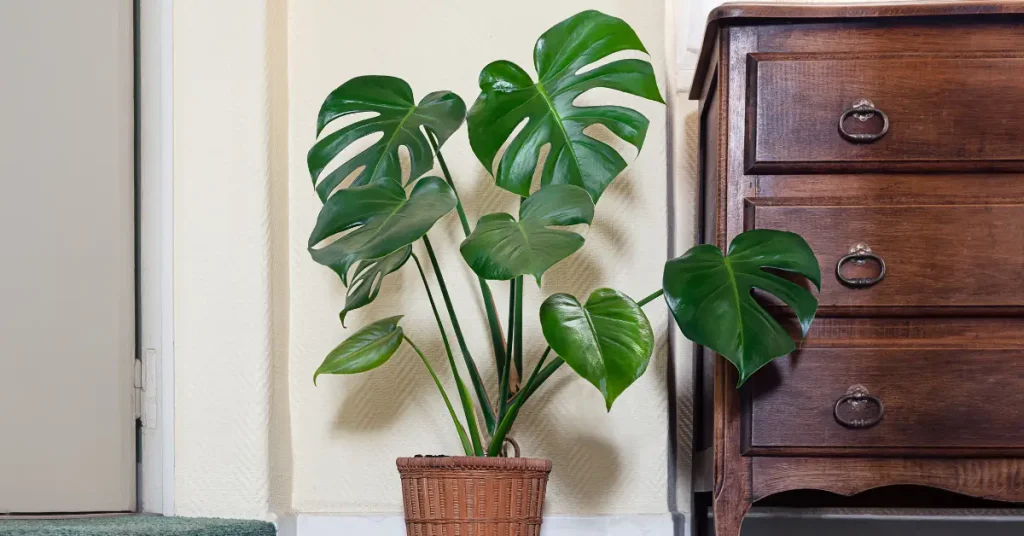
Toxic compound: Insoluble calcium oxalate crystals Severity: HIGH
The Monstera has become one of the defining houseplants of the last decade, its dramatic split leaves show up on everything from wallpaper to tote bags. It’s also toxic to cats, and its large size means there’s simply more plant for a curious cat to get into.
Monstera’s toxicity comes from the same calcium oxalate crystals found in its Araceae family relatives. Chewing on a leaf causes immediate oral pain, drooling, and swelling. Because Monstera leaves are so large, a cat that gets a good bite in may ingest more of the irritant than they would from a smaller plant. Vomiting and difficulty swallowing are common follow-on symptoms.
One thing that catches owners off guard with Monstera specifically is its sheer size, a mature plant can fill a corner of a room. Cats that like to climb can access even tall plants via nearby furniture. If you’re committed to keep your Monstera, secure it in a room your cat can’t access.
Peace Lily (Spathiphyllum spp.)
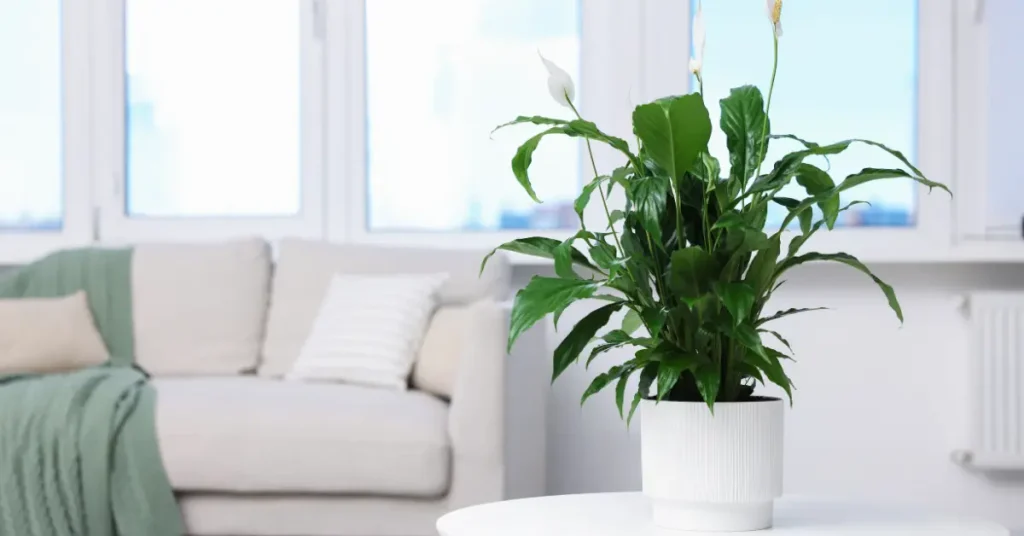
Toxic compound: Insoluble calcium oxalate crystals + saponins Severity: HIGH
The Peace Lily is one of the most gifted houseplants in the world, it’s elegant, low-maintenance, thrives in low light, and is often marketed as an air-purifying plant. It’s also one of the most frequently reported causes of plant poisoning in cats.
It contains a double threat, both insoluble calcium oxalate crystals and saponins. The crystals cause the immediate, painful oral irritation that’s characteristic of this plant family, while saponins add gastrointestinal disruption.
Symptoms include drooling, pawing at the mouth, vomiting, diarrhea, and in more serious cases, difficulty swallowing and loss of appetite that persists for days.
Despite sharing the word “lily” in its name, the Peace Lily is not a true lily and does not carry the same kidney-failure risk as Easter or Tiger lilies. It is still meaningfully toxic and should not be in a home with cats.
Kalanchoe (Kalanchoe spp.)
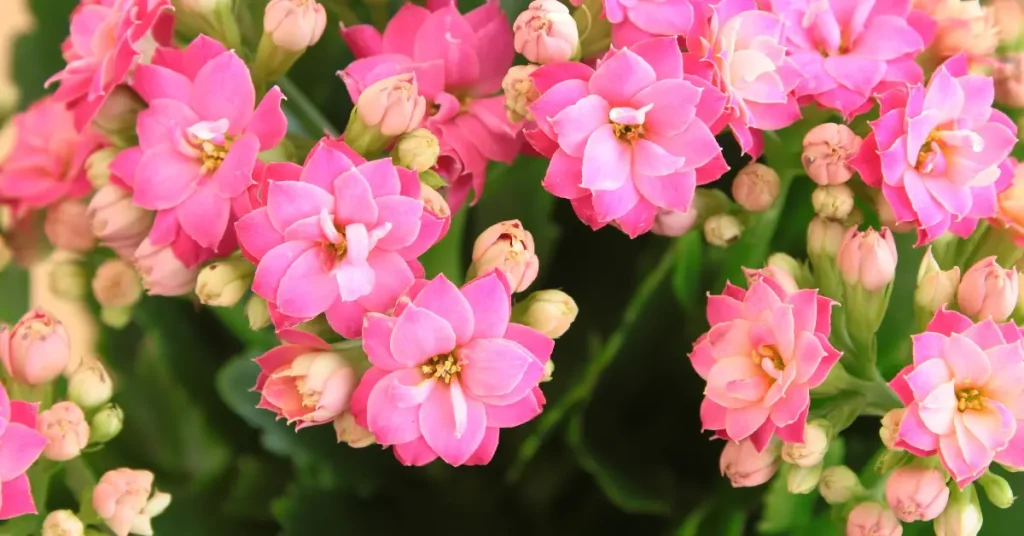
Toxic compound: Bufadienolides (cardiac glycosides) Severity: HIGH
Kalanchoe is a cheerful, flowering succulent that shows up in supermarkets, garden centers, and gift shops year-round, particularly around holidays. Its clusters of small, bright flowers in red, orange, yellow, and pink make it an easy impulse buy. For cat owners, though, it’s one to leave.
All parts of the Kalanchoe plant contain bufadienolides, a class of steroid compounds that affect the heart in a similar way to oleander and foxglove. In most cases of cat poisoning, the symptoms are gastrointestinal: vomiting, diarrhea, drooling, and lethargy. However, in cases where a cat ingests a larger amount, the cardiac effects become more concerning, abnormal heart rhythm, weakness, and collapse have all been reported.
It’s small, sits on windowsills, and its bright flowers attract a curious cat’s attention.
Aloe Vera (Aloe barbadensis miller)
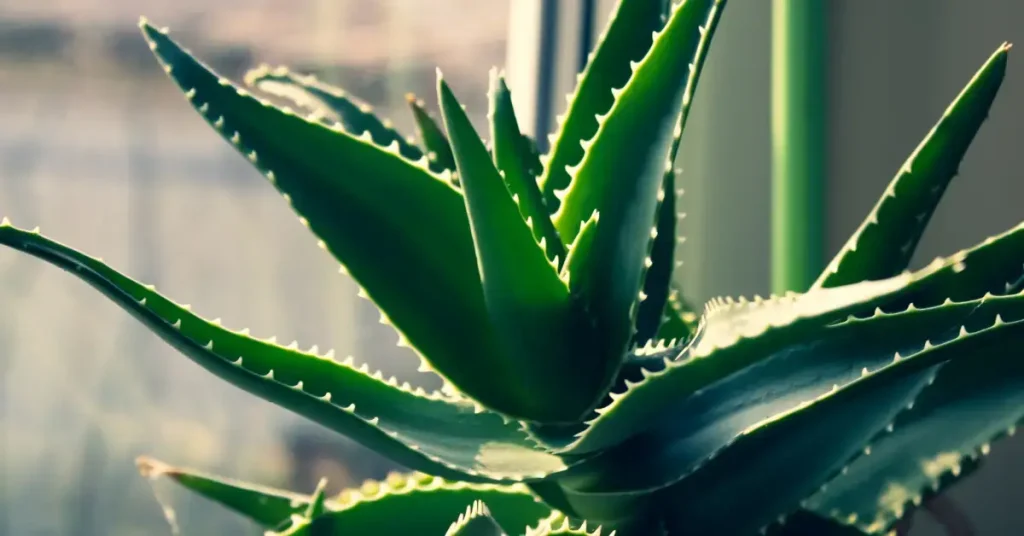
Toxic compound: Saponins, anthraquinones (aloin) Severity: HIGH
Aloe Vera is kept for its medicinal properties, used to soothe burns and skin irritation in humans, and generally thought of as a helpful, healing plant. For cats, it’s the opposite. The same compounds that give aloe its therapeutic qualities in humans are what make it harmful to felines.
The toxic components are saponins and aloin. When a cat chews on an aloe leaf and ingests the gel or latex, the result is gastrointestinal distress: vomiting, diarrhea (sometimes bloody), lethargy, loss of appetite, and tremors in more severe cases. The gel itself is less toxic than the latex layer.
It’s a plant many owners would never think to remove because of its reputation as a “natural remedy.” If you rely on aloe for your own skincare or first aid, keep it in a locked cabinet or a room your cat genuinely cannot access.
ZZ Plant (Zamioculcas zamiifolia)
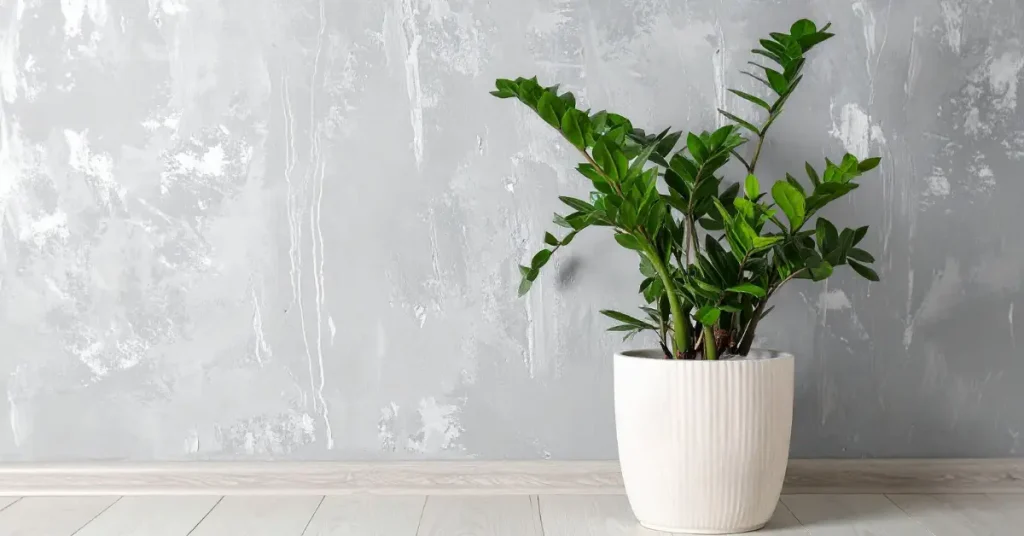
Toxic compound: Insoluble calcium oxalate crystals Severity: HIGH
The ZZ Plant has surged in popularity over the last few years becuase it tolerates low light, survives irregular watering, looks polished and architectural, and requires almost zero effort to keep alive. It’s become the go-to recommendation plant for people who claim they “can’t keep anything alive.”
ZZ Plant’s leaves are thick, waxy, and slightly glossy, some cats are drawn to chewing on them out of curiosity or boredom. Every part of the ZZ Plant, leaves, stems, roots, and rhizomes contains insoluble calcium oxalate crystals. Chewing on any part of the plant triggers the immediate oral burning, excessive drooling, pawing at the mouth, swelling, and vomiting.
ZZ Plant also has a mild skin irritant quality, handling it without gloves and then touching your eyes or mouth can cause irritation in humans too. For cats, the risk is purely from ingestion.
Arrowhead Plant (Syngonium podophyllum)
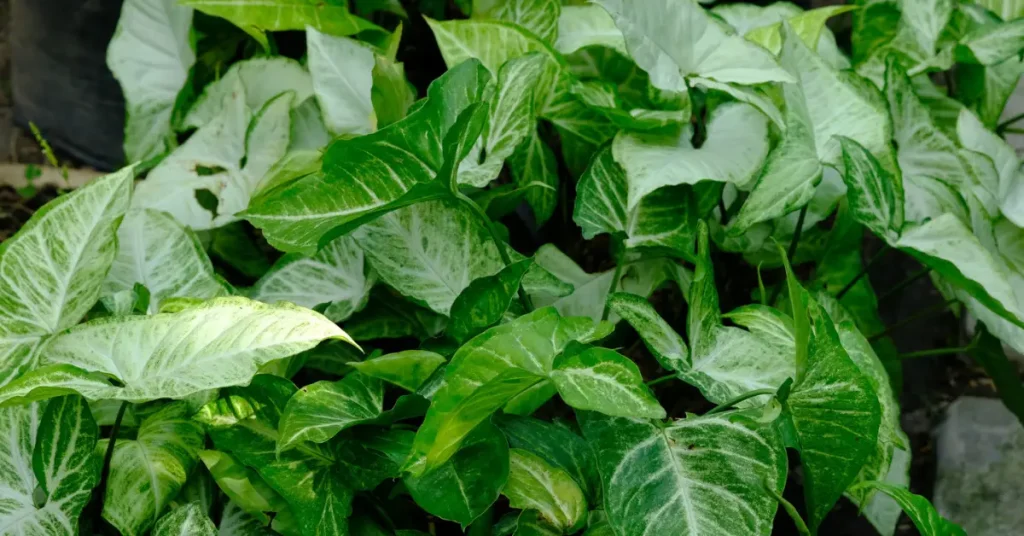
Toxic compound: Insoluble calcium oxalate crystals Severity: HIGH
The Arrowhead Plant is a tropical charmer. Its distinctive arrow-shaped leaves come in shades of green, pink, burgundy, and variegated patterns that make it a versatile choice for any room. It’s easy to care for, grows quickly, and looks great in both hanging baskets and upright pots.
Like its Araceae family relatives, philodendron, pothos, and monstera, the Arrowhead Plant is packed with insoluble calcium oxalate crystals. The symptoms of ingestion are consistent with the rest of the family: intense oral irritation, drooling, swelling of the mouth and throat, vomiting, and difficulty swallowing.
If you love the look of Arrowhead Plants, Calathea orbifolia offers a similarly striking, broad leaved tropical aesthetic without the calcium oxalate risk.
Alocasia (Alocasia spp.) “Elephant Ear”
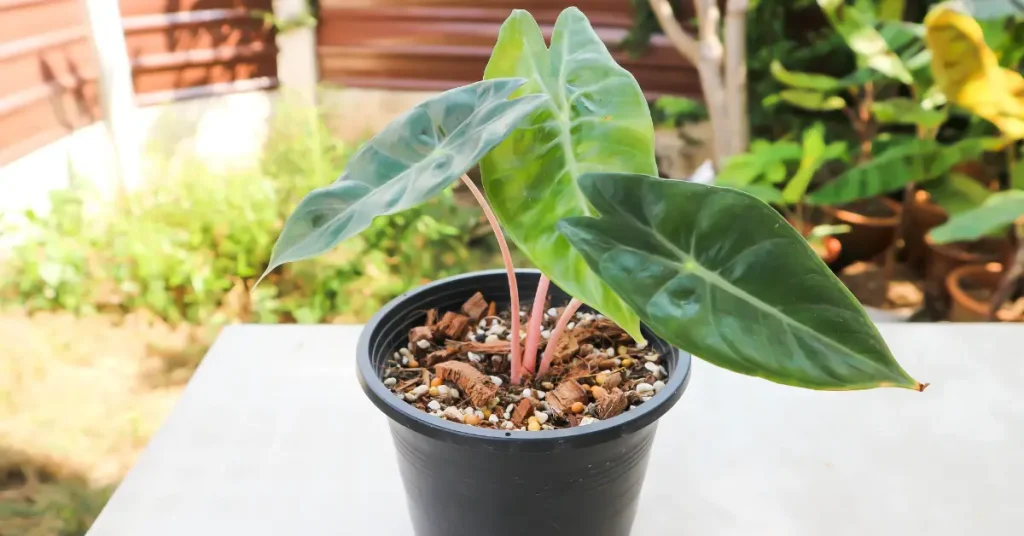
Toxic compound: Insoluble calcium oxalate crystals Severity: HIGH
Alocasia also has a quality that sets it apart from many other houseplants, it’s genuinely impressive looking, people tend to display it prominently and at floor level to show it off. Varieties like Alocasia ‘Polly’, Alocasia zebrina, and Alocasia macrorrhiza command real prices at plant shops, and their striking appearance makes them a centerpiece plant in many homes. They’re unfortunately, seriously toxic to cats.
All parts of the Alocasia plant contain insoluble calcium oxalate crystals, and the reaction is immediate and intense oral pain, burning, drooling, swelling, vomiting, and in some cases difficulty breathing.
That ground-level placement puts it directly in a cat’s world. For plant lovers who want that bold, tropical statement leaf, Strelitzia (Bird of Paradise) is a non-toxic alternative that delivers similar dramatic impact.
Snake Plant (Sansevieria trifasciata) “Mother-in-Law’s Tongue”
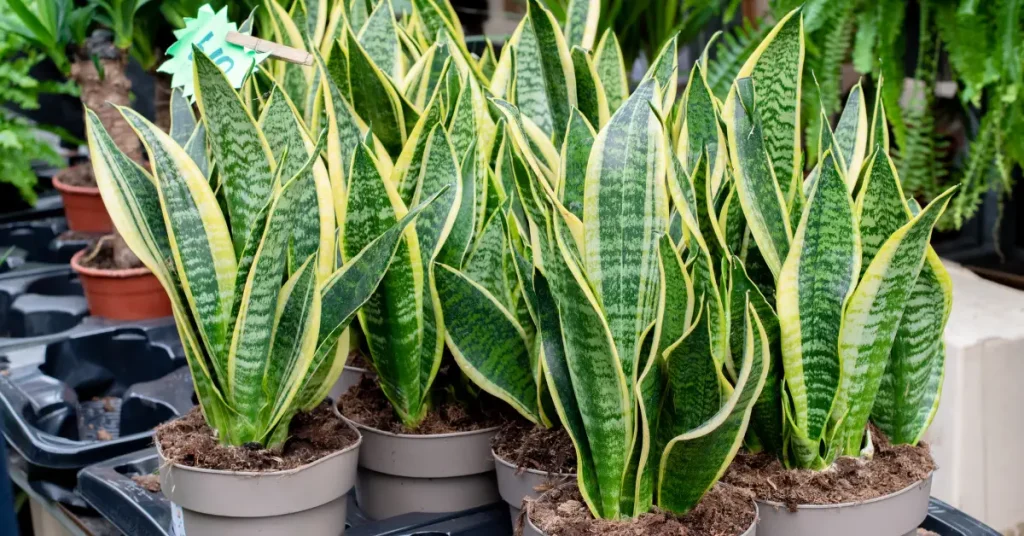
Toxic compound: Saponins Severity: MODERATE
The Snake Plant is arguably the most recommended beginner houseplant on the internet, it survives neglect, thrives in low light, purifies air, and looks clean in any space. However, it is toxic for cats.
The toxic compounds are saponins, which the plant produces naturally as a defense mechanism against insects and fungi. When a cat chews on the thick, fleshy leaves, saponins are released and cause gastrointestinal upset, nausea, vomiting, diarrhea, and drooling.
The reaction is generally not life-threatening but “not fatal” doesn’t mean harmless, a cat that’s vomiting and lethargic for hours after chewing a Snake Plant is having a genuinely miserable experience.
Haworthia is a visually similar succulent that’s non-toxic and a good safe plant for cats.
Rubber Tree (Ficus elastica)
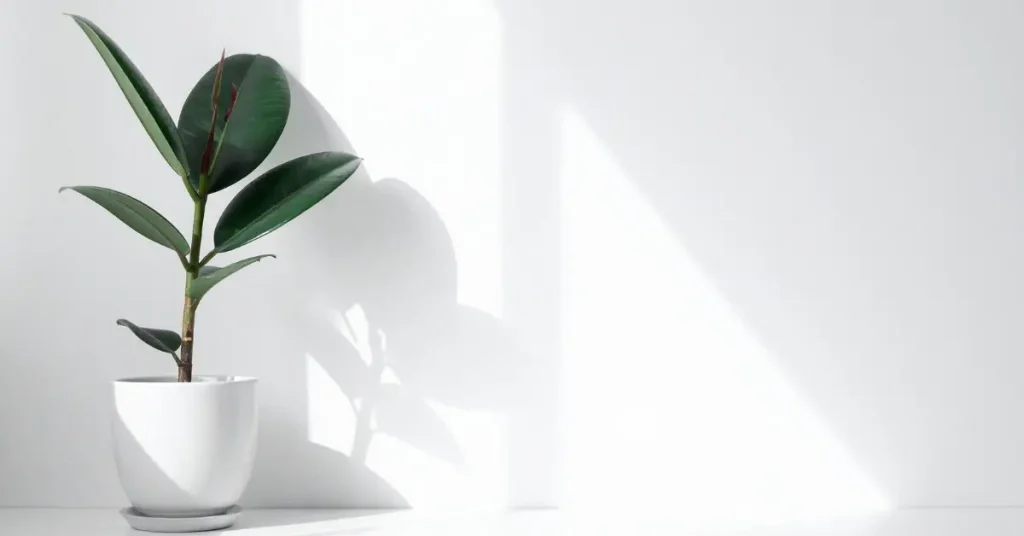
Toxic compound: Ficin, ficusin (latex sap) Severity: MODERATE
The Rubber Tree is a design favorite, its large, glossy, deep green leaves (or burgundy in some varieties) give it a bold, polished look that works equally well in minimalist and maximalist spaces. It’s become a staple of interior design and plant shop displays.
The danger comes from the milky latex sap the plant produces, which contains ficin and ficusin. When a cat chews on a leaf or stem, it can cause irritation to the mouth and gastrointestinal tract, leading to drooling, vomiting, diarrhea, and loss of appetite. The latex can also cause skin and eye irritation on contact, so a cat that rubs against a broken stem and then grooms itself can experience symptoms without ever directly chewing the plant.
Floor-level placement makes them accessible to cats at all times. If you love the bold, structured leaf look of the Rubber Tree, a Fiddle Leaf Fig alternative won’t solve your problem (it’s also toxic), but a large Bird of Paradise will give you similar dramatic height without the risk.
Weeping Fig (Ficus benjamina)
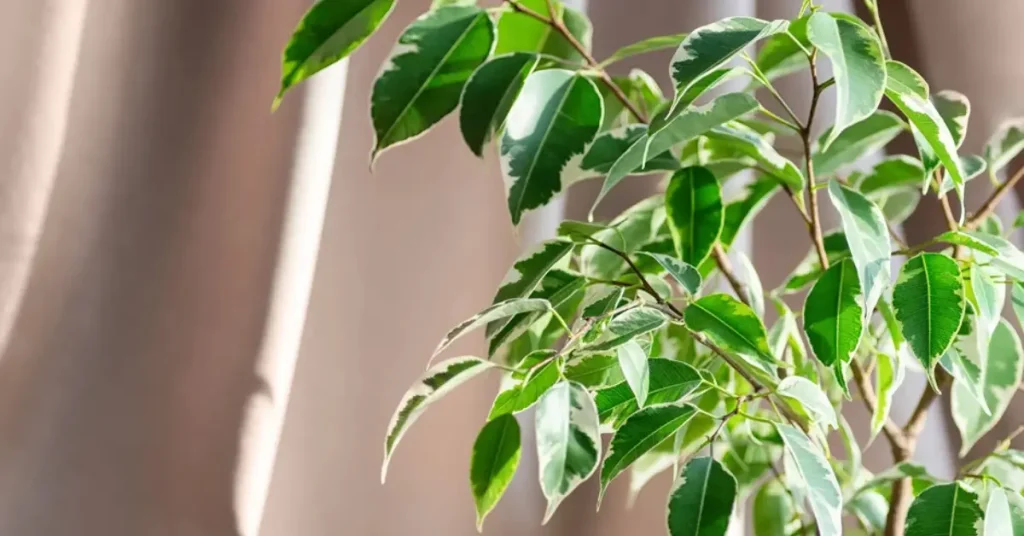
Toxic compound: Ficin, proteolytic enzymes (latex sap) Severity: MODERATE
It’s been a living room staple for decades. The Weeping Fig is the most widely sold indoor trees in the world. Its graceful, arching branches and small glossy leaves give it an elegant, almost bonsai-like quality that’s hard to replicate with other houseplants. Like its Ficus family relative the Rubber Tree, it produces a latex sap that’s irritating and toxic to cats.
Exposure to the sap whether through chewing or contact with broken leaves and stems causes oral irritation, excessive drooling, vomiting, and diarrhea. The Weeping Fig is also a known allergen, and repeated exposure can trigger skin reactions in both cats and humans.
One thing that makes it more hazardous is that it drops leaves constantly when moved or stressed by environmental changes. Those fallen leaves on the floor are easy pickings for a cat that likes to chew on things it finds lying around.
English Ivy (Hedera helix) “Sweetheart Ivy”
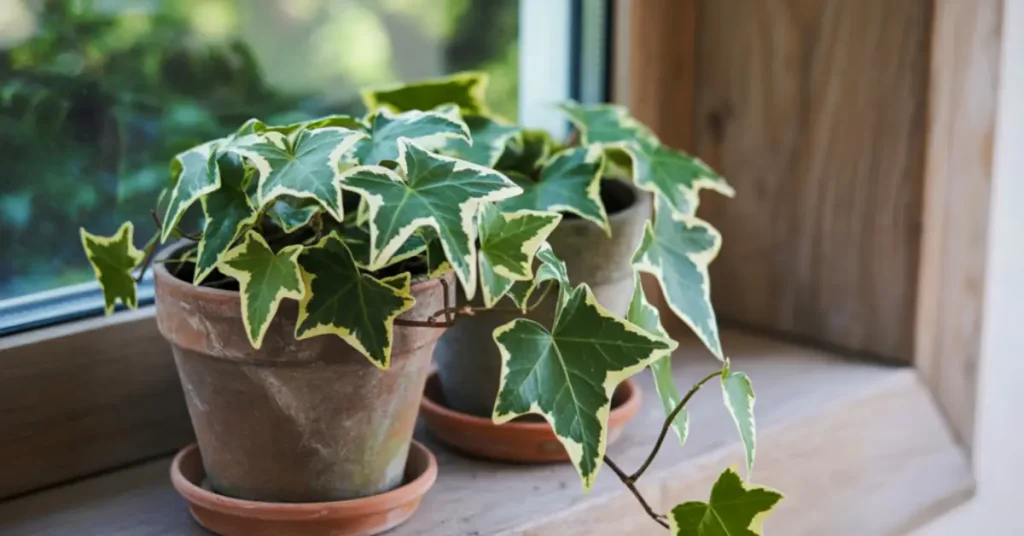
Toxic compound: Hederagenin, polyacetylene compounds Severity: MODERATE
English Ivy is a invasive grower. It vines quickly, it’s been trailing from hanging baskets and cascading down bookshelves for generations.
The toxic compounds in English Ivy are hederagenin and polyacetylene compounds, found throughout the plant but in higher concentrations in the leaves than the berries. When cats ingest the leaves, symptoms include excessive drooling, vomiting, abdominal pain, and diarrhea. In more significant exposures, weakness and difficulty breathing have been reported.
If you love the trailing, cascading look that Ivy provides, Tradescantia zebrina is a faster growing, equally dramatic, and cat-safer alternative.
Jade Plant (Crassula ovata)
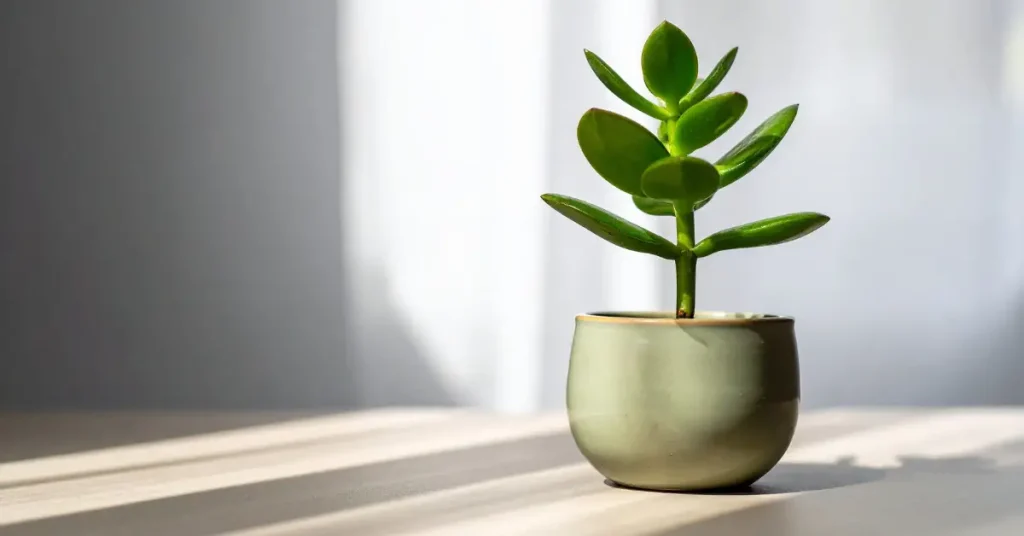
Toxic compound: Unknown — possibly related to alcohols or resins in the sap Severity: MODERATE
The Jade Plant is a beloved succulent with a long history as a houseplant. Their compact size makes them popular on windowsills, coffee tables, and desks. It’s also known as a good luck plant and symbol of prosperity in many cultures. The exact compound responsible for its toxicity to cats hasn’t been definitively identified.
What is known is that ingestion causes vomiting, lethargy, loss of coordination, and a slowed heart rate in cats. The severity appears to scale with the amount ingested.
Among succulents, Haworthia and Echeveria are non-toxic alternatives.
Anthurium (Anthurium andraeanum) “Flamingo Flower”
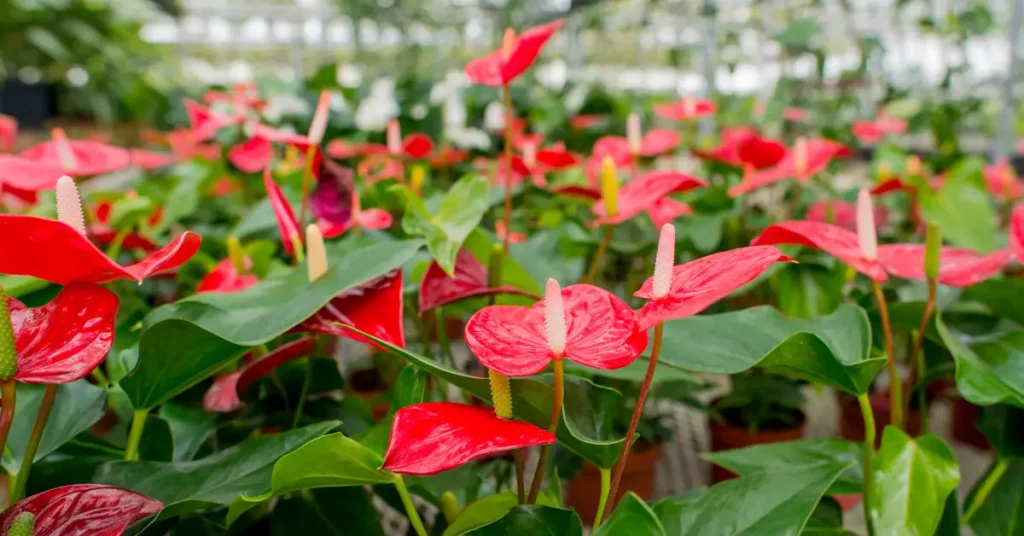
Toxic compound: Insoluble calcium oxalate crystals Severity: MODERATE-HIGH
The Anthurium is a decorative houseplant that is loved for its waxy, heart-shaped spathes in glossy red, pink, orange, or white look. It blooms almost continuously under the right conditions.
Anthurium contains insoluble calcium oxalate crystals throughout its leaves, stems, and flowers. Chewing on any part triggers the same painful response seen across the Araceae family, immediate burning and irritation in the mouth, intense drooling, pawing at the face, swelling of the lips and tongue, vomiting, and difficulty swallowing.
If you receive one as a gift and have cats, rehome it promptly or display it somewhere genuinely inaccessible.
Asparagus Fern (Asparagus aethiopicus)
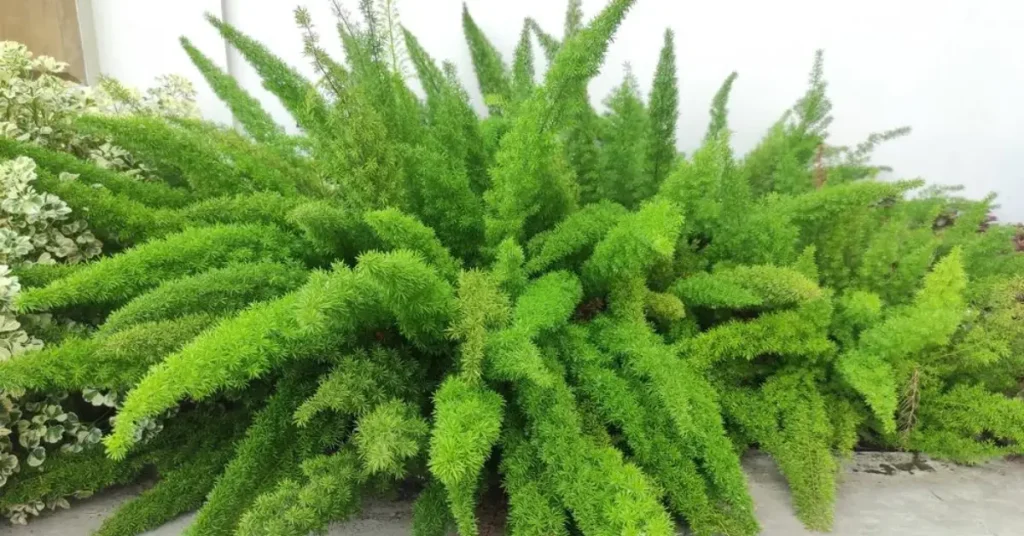
Toxic compound: Sapogenin (steroidal compound), skin-irritating oils Severity: MODERATE
Despite its name, the Asparagus Fern is not a true fern. It’s a member of the lily family, and it’s a popular choice for hanging baskets and floral arrangements due its feathery, delicate foliage.
The toxic compound it holds is sapogenin, a steroidal substance found throughout the plant. When a cat Ingest the berries causes vomiting, diarrhea, abdominal pain, and decreased appetite. The foliage itself is a skin irritant; repeated contact can cause allergic dermatitis in cats.
If you use it in floral arrangements, be careful that those arrangements in a vase should not be within reach of your cat.
Tulip (Tulipa spp.)
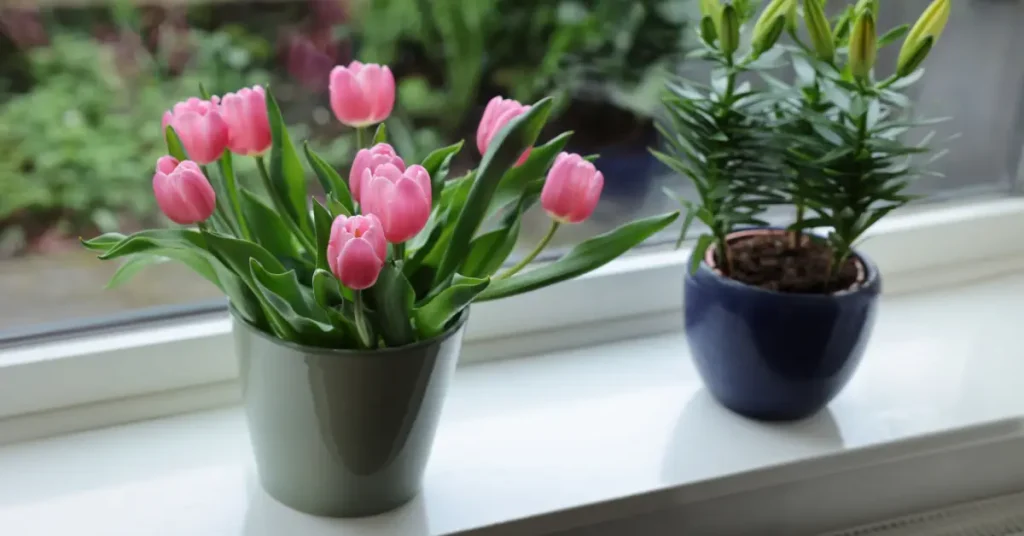
Toxic compound: Tulipalin A and B (allergenic lactones), calcium oxalates Severity: MODERATE-HIGH
Tulips are among the most universally loved flowers in the world, cheerful, colorful, and a reliable fixture in spring bouquets and floral arrangements. People love to keep a bunch of tulips on the kitchen table.
All parts of the tulip plant contain tulipalin A and B, allergenic lactones that are most heavily concentrated in the bulbs. Tulips pose a year-round hazard in two distinct ways: as cut flowers in a vase during spring, and as bulbs that gardeners bring indoors.
Symptoms of tulip ingestion in cats include intense drooling, vomiting, diarrhea, depression, and loss of appetite.
A bulb left on a potting bench or in an open bag is an accessible and dangerous temptation. Keep bulbs stored securely and cut tulip arrangements in rooms your cat cannot enter.
Eucalyptus (Eucalyptus spp.)
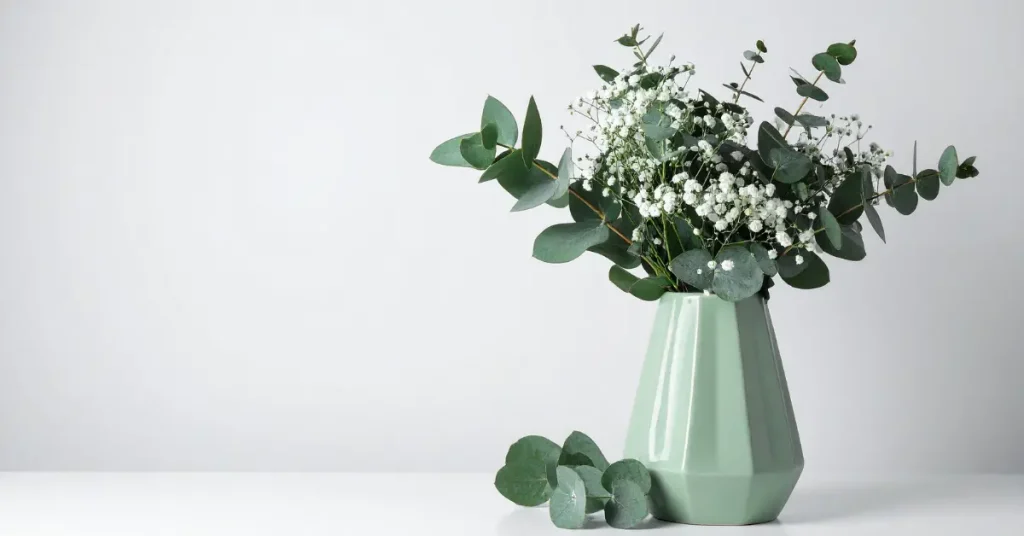
Toxic compound: Eucalyptol (1,8-cineole), essential oils Severity: MODERATE
Eucalyptus has a significant moment in interior design, dried eucalyptus stems tied to shower heads, fresh branches in tall vases, wreaths on front doors. Its silvery-green leaves and clean, medicinal scent make it a popular choice for both decoration and aromatherapy. Cats, however, cannot safely metabolize the essential oils it contains.
The active compound is eucalyptol, a powerful essential oil that cats lack the liver enzymes to process efficiently. Ingestion or in sensitive cats, even prolonged inhalation of concentrated essential oil diffusers can cause drooling, vomiting, diarrhea, lethargy, weakness, and in more serious cases, difficulty walking and low blood pressure. Fresh eucalyptus is more potent than dried, but dried branches still retain enough of the oil to be a concern if chewed.
If you use eucalyptus oil in a diffuser, ensure the room is well-ventilated and your cat can leave freely. Physical eucalyptus arrangements should be kept entirely out of reach.
Poinsettia (Euphorbia pulcherrima)
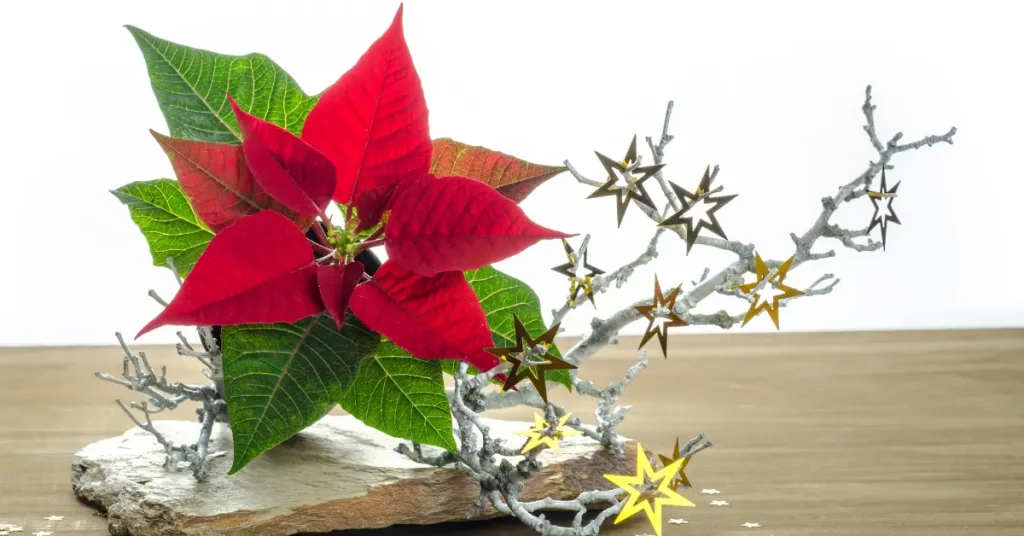
Toxic compound: Diterpenoid euphorbol esters, saponin-like compounds (latex sap) Severity: MILD-MODERATE
Poinsettia plant well known for its red and green foliage and is widely used in Christmas floral decorations. It is mildly toxic to cats.
The milky latex sap found in the leaves and stems contains diterpenoid euphorbol esters and saponin-like compounds that irritate the mouth, skin, and gastrointestinal tract. If a cat chews on a poinsettia, the most likely outcomes are drooling, vomiting, and diarrhea. Eye exposure to the sap can cause temporary irritation. Fatalities from poinsettia ingestion are extremely rare, and most cases resolve without veterinary intervention.