12 Raised Garden Bed Ideas for Vegetables, Herbs & Flowers
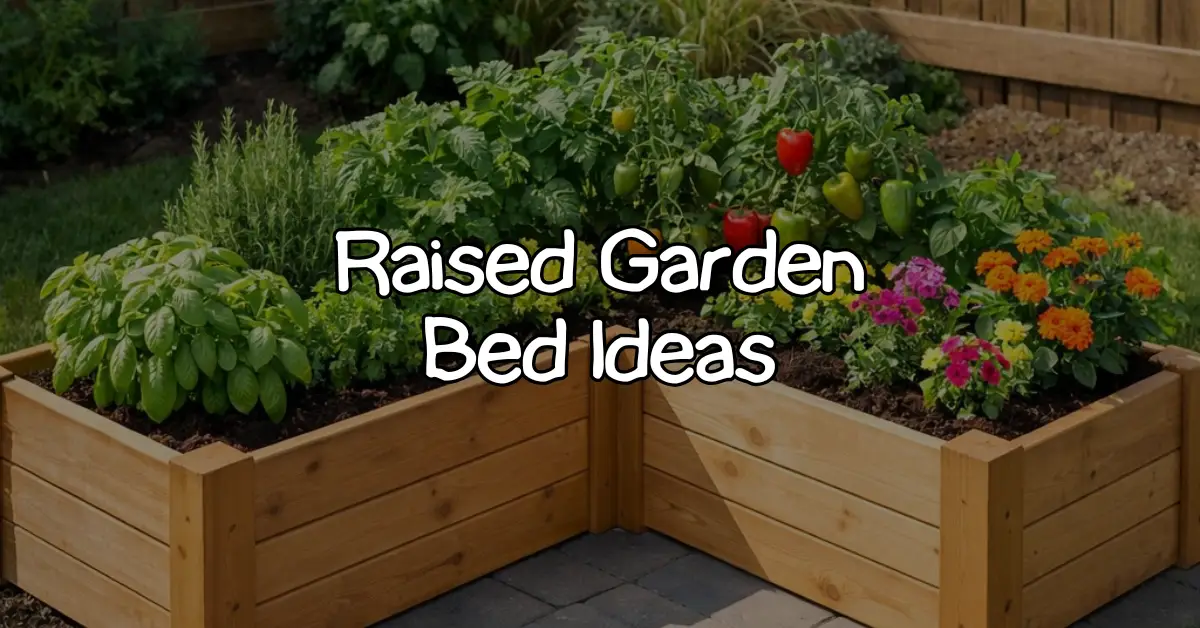
Raised garden beds are simply garden areas built above the natural ground level, usually framed with wood, metal, concrete blocks, stone, or other materials. Instead of planting directly into your yard’s soil, you fill these beds with a custom mix of good soil and compost. They can be as low as a few inches high or tall enough that you don’t need to bend over. They make gardening easier and more organized, especially in small yards, on patios, or where the native soil is poor, rocky, or full of clay.
Raised beds give you full control over the growing conditions. You can create perfect, rich soil that drains well and stays loose, which helps plants grow stronger and produce more vegetables, flowers, or herbs. The soil warms up faster in spring, so you can plant earlier and enjoy a longer growing season. They also reduce weeds and prevent soil compaction. For many people, especially older gardeners or those with bad backs, raised beds are the best ones because they save knees and back.
Raised garden beds are used for growing fresh vegetables like tomatoes and lettuce, colorful flowers, fragrant herbs and small fruit plants. You can place them on grass, concrete, or decks, turn a plain backyard into a neat and beautiful garden, or even create a raised bed garden on a rooftop or balcony.
In this post, I will give 12 best raised garden bed ideas with practical tips.
Wooden Raised Bed
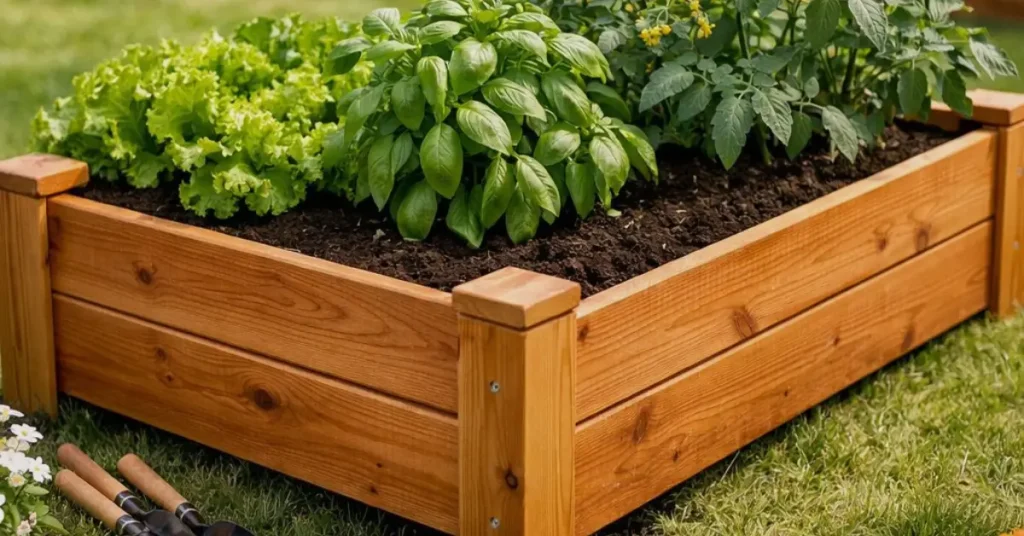
Cedar is one of the best choices for building raised garden beds. While no wood lasts forever, cedar stands up to rot and insects far better than most other types of lumber. It naturally contains oils that resist moisture and repel bugs, which helps the bed stay strong and healthy for many years with minimal maintenance.
Cedar gives your garden a warm and natural look that blends beautifully into almost any backyard style. It weathers gracefully to a soft silvery-gray over time, adding charm without looking harsh. Unlike pressure-treated wood, cedar is safe for growing vegetables and flowers because it doesn’t leach chemicals into the soil.
Building with cedar is surprisingly simple. You can use straight cedar planks for the sides and secure them with sturdy corner posts. The material is lightweight but strong, so you can easily create beds in any size from small herb boxes to large vegetable gardens.
For deeper soil, just stack two boards high.
Brick Bordered Raised Bed
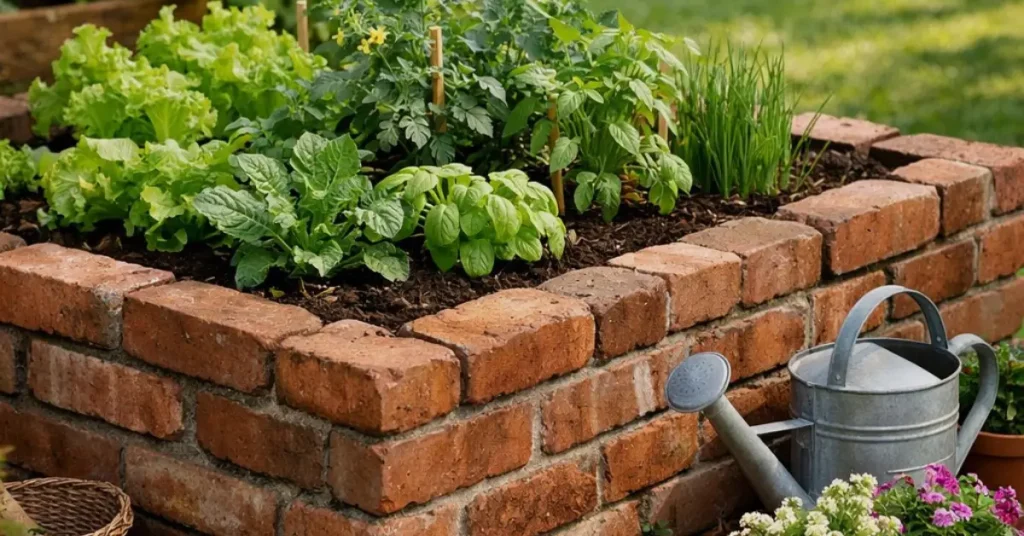
Bricks can be laid in straight lines for rectangular beds or curved for desired shapes. They come in classic red, weathered tones, or tumbled styles that blend nicely with stone or concrete.
They are durable and long-lasting. Unlike wood, bricks do not rot, warp, or get eaten by insects. They stand up well to weather, including rain, snow, and freeze-thaw cycles, lasting decades with almost no maintenance. The solid walls also help contain soil, reduce weeds creeping in from the lawn and create a neat, defined garden space.
Building a brick-bordered raised bed is a satisfying DIY project. Simply, dig a shallow trench, add a gravel base for stability and drainage, then stack bricks in your desired shape and height (usually 2 to 4 courses high for easy access). For taller beds, you may want to use mortar for extra strength, but many people create sturdy, mortar-free versions using interlocking landscape bricks.
Fill the inside with quality garden soil and compost and you’re ready to plant. These beds work wonderfully for growing vegetables, herbs, strawberries and colorful flowers.
Tiered Raised Beds For Vegetables and Herbs
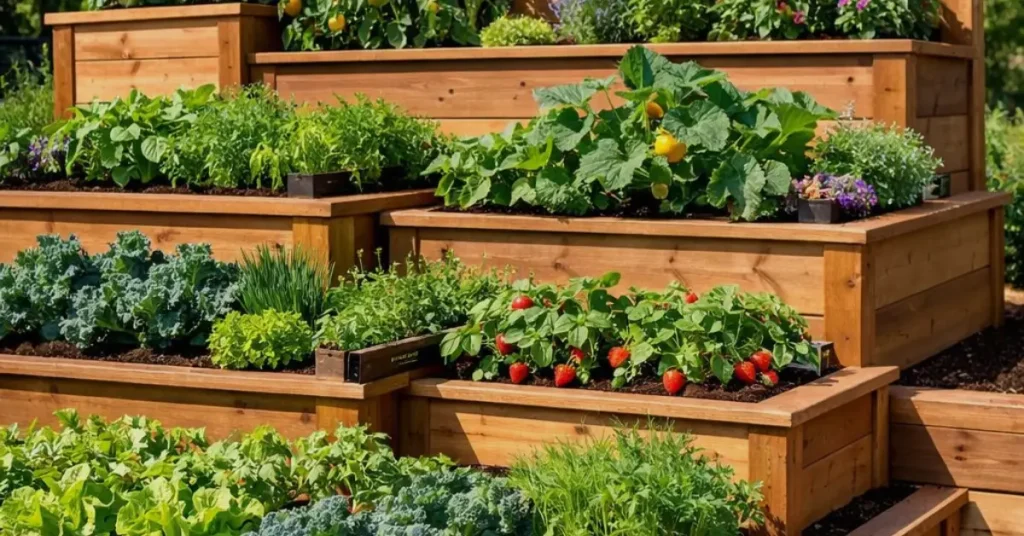
Tiered raised garden beds are a smart and stylish way to add height, drama, and extra growing space to your yard. Instead of one flat bed, these designs stack multiple levels like steps or a pyramid, so each tier sits higher than the one below it. This creates a beautiful cascading look while making gardening easier. They are perfect for small spaces, sloped yards, patios, or anyone who wants a productive yet decorative garden.
One of the most popular ideas is the simple wooden step-style tier. You build 2 to 4 rectangular boxes of decreasing size and stack them so the back is tallest and the front is lowest. This is good for growing vegetables on the lower wide tiers and herbs or flowers on the upper ones. Another idea is the pyramid or corner tiered bed, which looks like a wedding cake and fits neatly in a corner or against a fence. You can also create gentle curved tiers using flexible metal edging, brick, or stone.
They are useful on slopes because they turn uneven ground into usable planting space and help prevent soil erosion. They also provide different microclimates, the top tiers get more sun and dry out faster, while lower ones stay cooler and moister. Many gardeners add trellises or arbors to the back for climbing plants like tomatoes, beans, or flowering vines, turning the bed into a vertical garden. You can build them from cedar, pressure-treated lumber, concrete blocks, or even recycled materials.
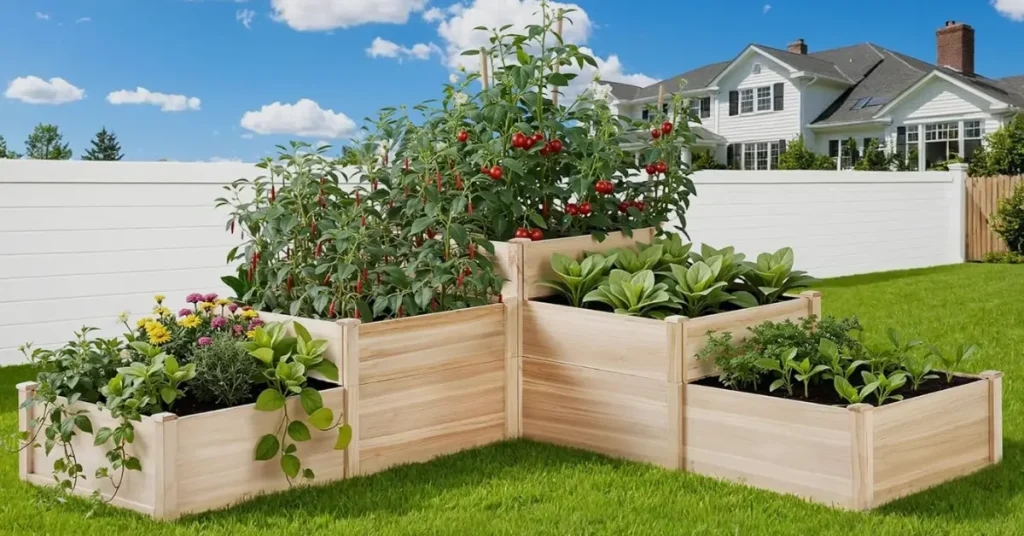
Recycled Pallet Raised Garden Bed
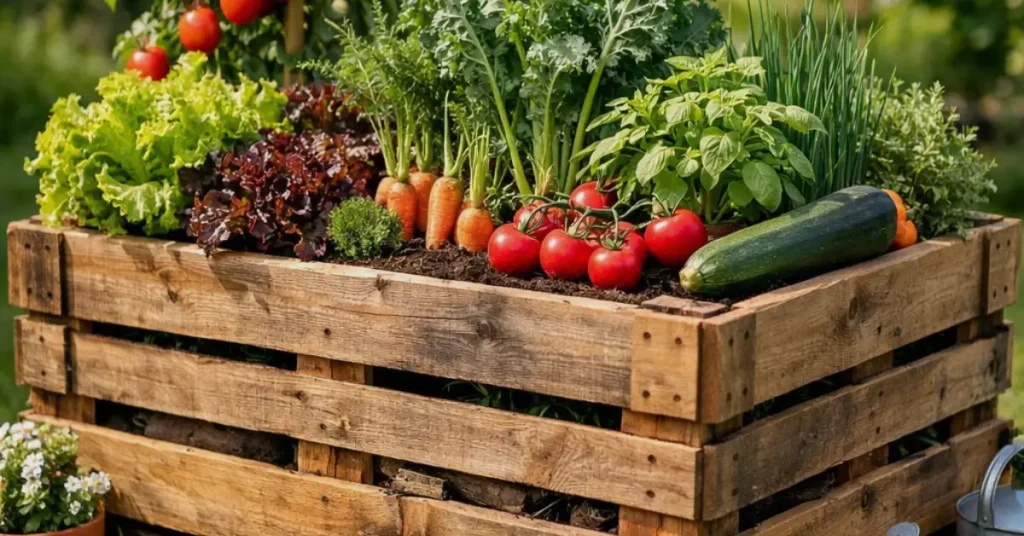
Instead of buying new lumber, repurpose free or cheap pallets that would otherwise end up in landfills. They are simple to build, environmentally friendly and strong when done right.
The best part is the cost, you can make a large raised bed for almost nothing. Pallets provide ready-made slats and frames, so you only need basic tools like a saw, drill, screws and sandpaper. You can break down the pallets and rebuild them into clean rectangular boxes, or use whole pallets standing upright for vertical planters or herb walls.
For safety, always choose heat-treated (not chemically treated) pallets marked with “HT” and avoid any with chemical spills or unknown markings.
Once made, you can grow vegetables, herbs, strawberries, and flowers.
Metal Frame Raised Bed
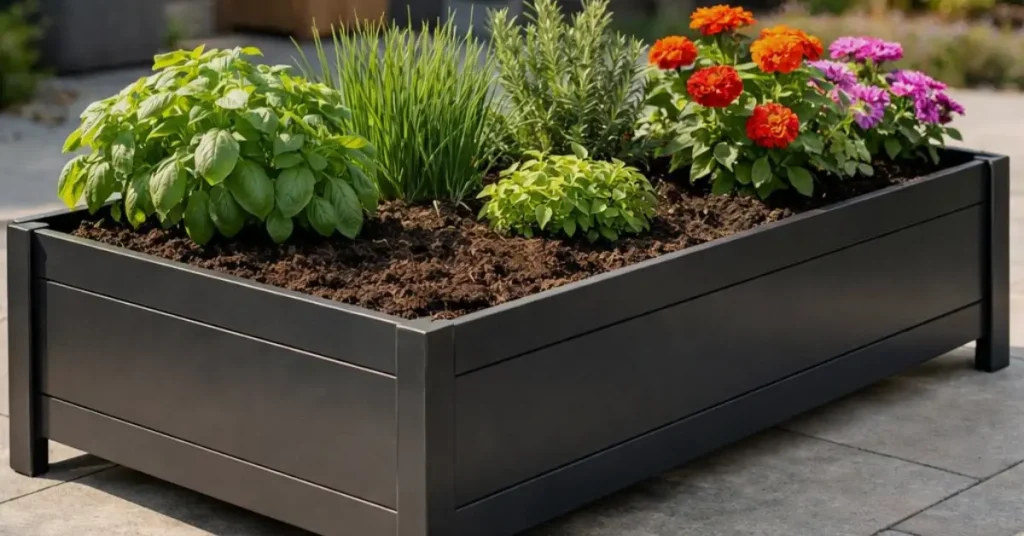
Made from galvanized steel, aluminum, or powder-coated metal, these beds have clean lines and a contemporary look that fits beautifully in both modern and traditional gardens. Unlike wood, metal frames do not rot, warp, splinter, or get eaten by insects.
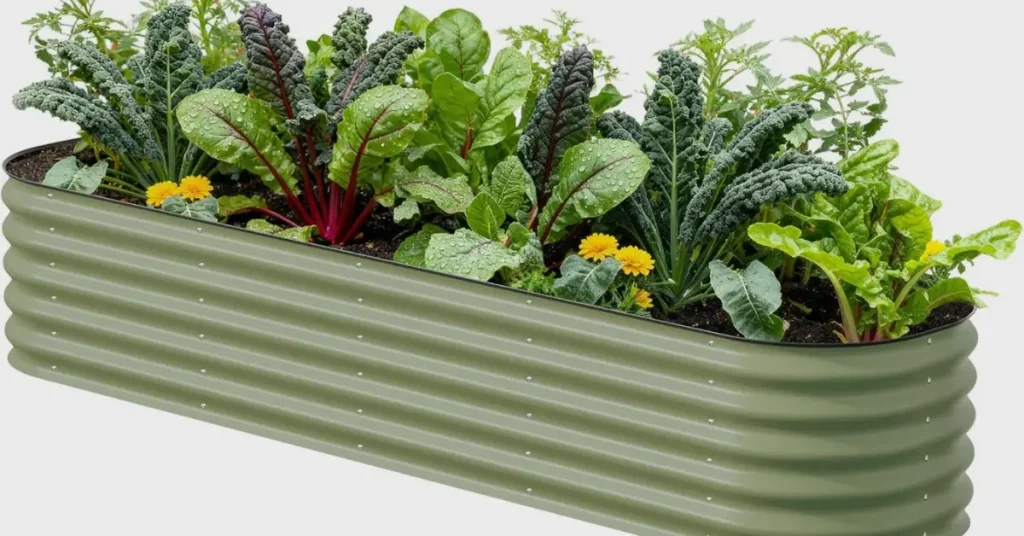
One of the biggest advantages of metal raised beds is their strength and longevity. High-quality galvanized or powder-coated steel can easily last 20 years or more. The metal also warms up quickly in the spring, helping the soil heat faster so you can plant earlier. Gardeners also love the industrial and elegant appearance, especially the popular corrugated metal sides that give a rustic-modern farmhouse feel.
They are lightweight compared to wood or stone, easy to move if needed. Most come in kits that assemble quickly with simple tools, and some even include built-in corner connectors. You can choose from neutral colors like gray, black, brown, or green to match your garden style.
Half-Moon Raised Bed
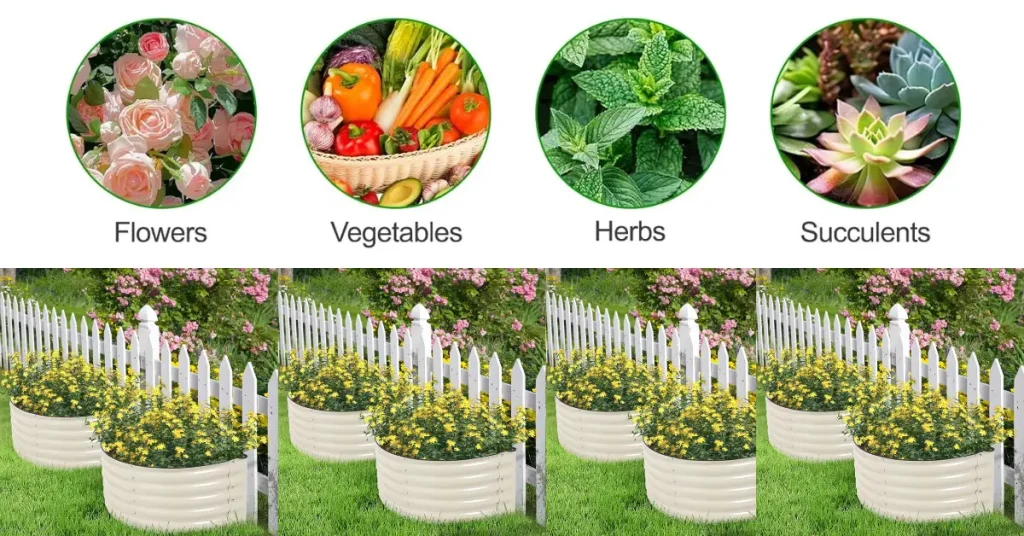
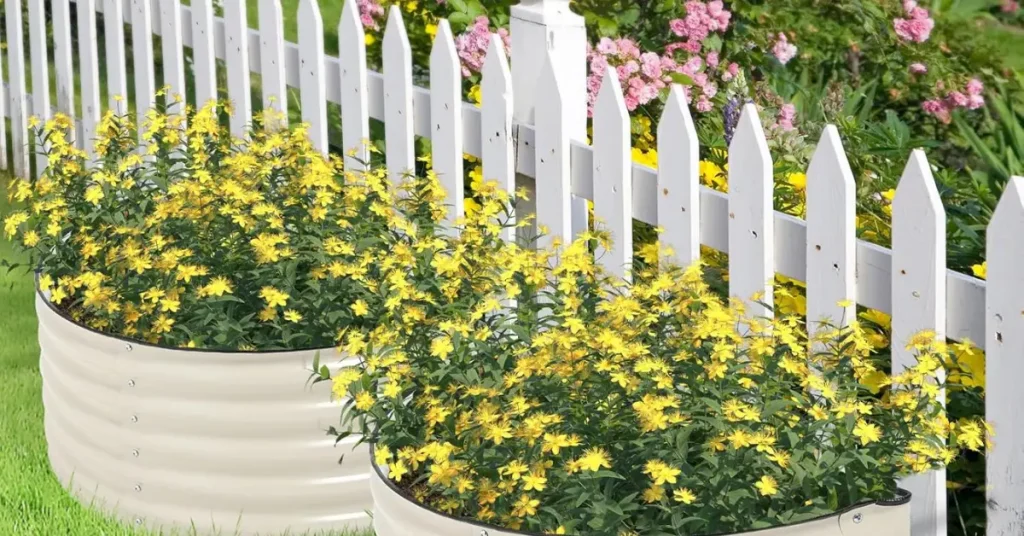
A half-moon raised garden bed (also called a semi-circular or crescent-shaped bed) is a beautiful and space-saving design that forms a graceful curved or D-shaped half circle. It is perfect for placing against a wall, fence, house foundation, or patio.
You can build them in different materials using brick, stone, concrete blocks, wood and modern metal edging. They work wonderfully for flowers, herbs, strawberries and low-growing vegetables. Because of their curved front, they are easy to reach from the outside without stepping on the soil. You can place a bench or seating area in front to enjoy the colorful display.
These beds are useful in small yards or tight corners. You can make a single half-moon against a wall or create a pair of matching half-moons that together form a full circle around a tree, birdbath, or small fountain.
L-Shaped Corner Raised Bed
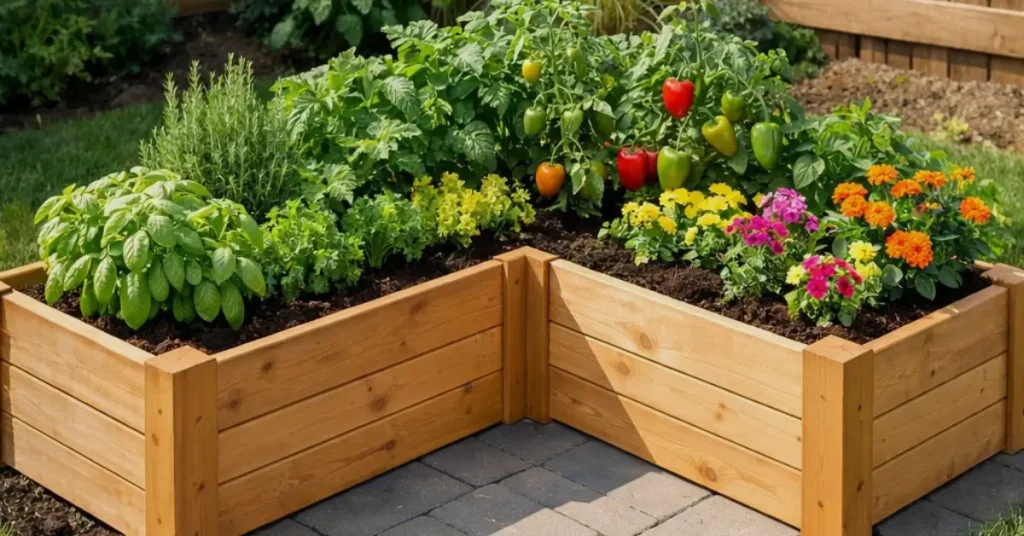
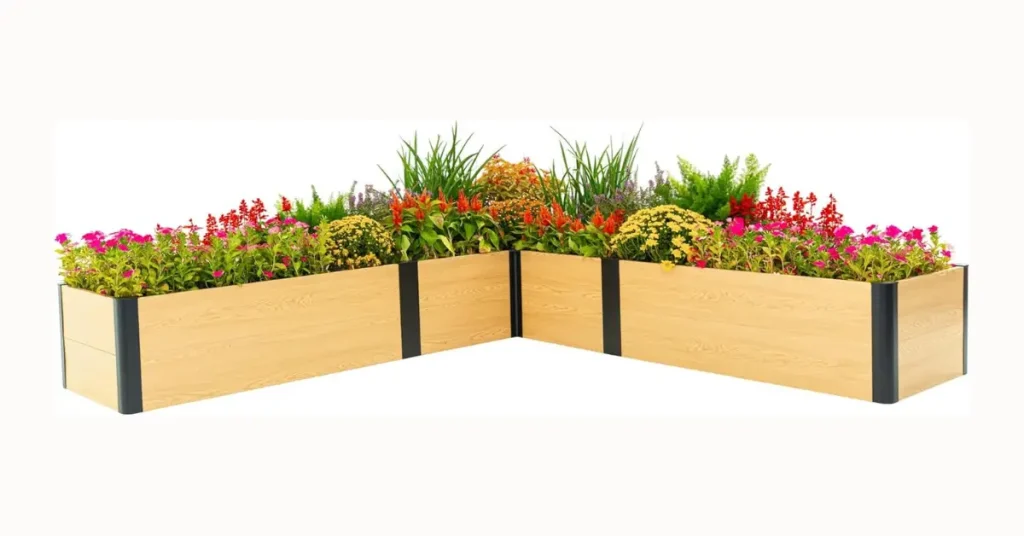
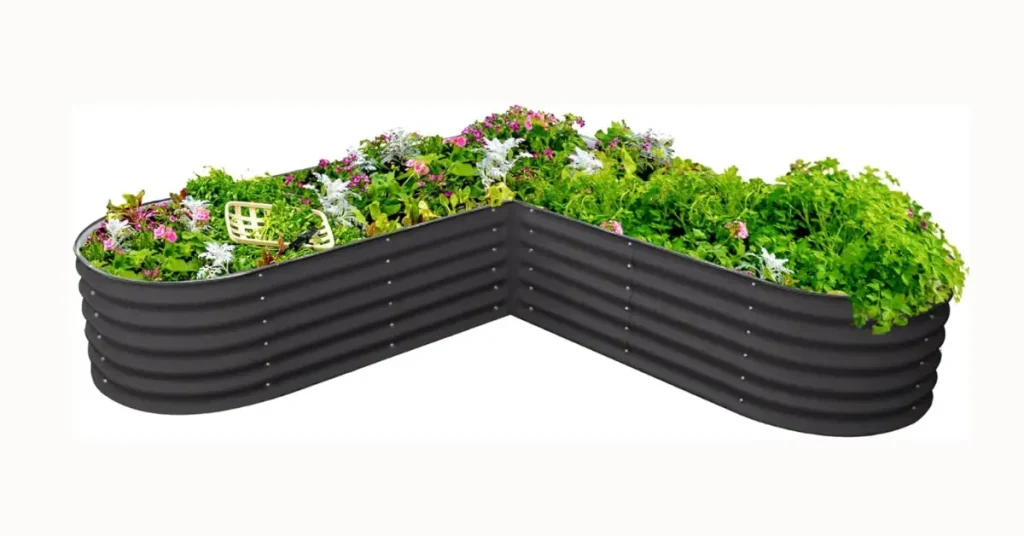
An L-shaped corner raised garden bed is a smart and attractive way to make the most of tight corners, fence lines, or the edges of a patio or deck. Instead of a straight rectangle, the bed wraps around a 90-degree corner, forming an L shape that hugs two walls or fences at once.
L-shaped beds are very practical. They allow you to garden from two sides, so every plant is easy to reach without stepping on the soil. You can grow vegetables and herbs along the longer arms and place flowers or strawberries in the corner section.
Building? You can build an L-shaped raised bed using many materials: cedar or pressure-treated wood for a warm natural look, brick or stone for a classic feel, or modern metal panels for a sleek, long-lasting finish.
Concrete Block Raised Beds
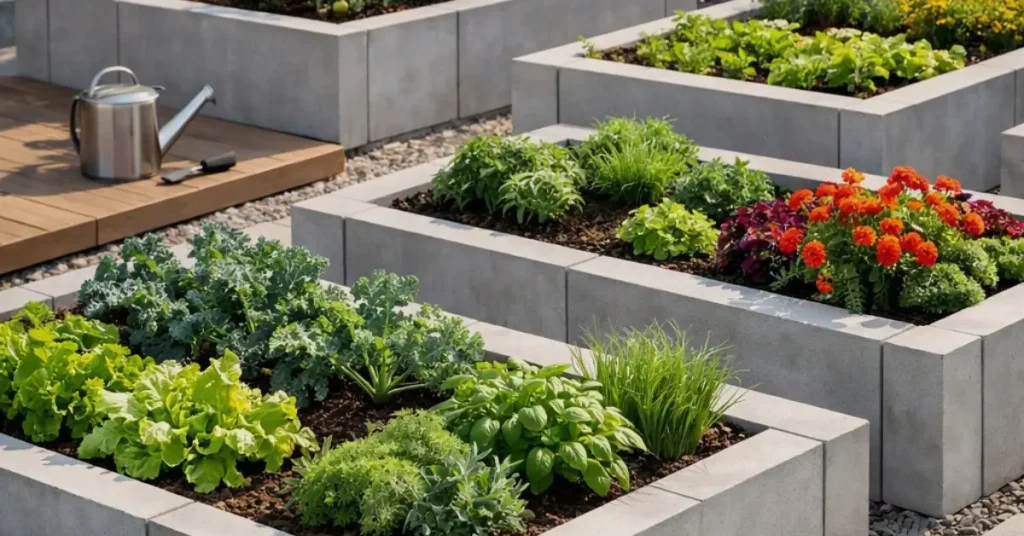
Concrete block raised garden beds are a strong, affordable, and long-lasting option for any backyard. Made from standard concrete cinder blocks (also called CMU blocks), these beds create clean, sturdy walls that can last for decades without rotting, warping, or needing replacement. They have a simple, modern look that works well in both casual and formal gardens.
Simply stack the blocks in your desired shape and height (usually 2 to 4 courses high) on a level gravel base. No mortar is needed for most home gardens, making it a true weekend DIY project. You can create straight rectangles, squares, L-shapes, or even gentle curves using half-blocks. Once built, line the inside with landscape fabric and fill with good garden soil and compost.
Mobile Raised Beds on Wheels
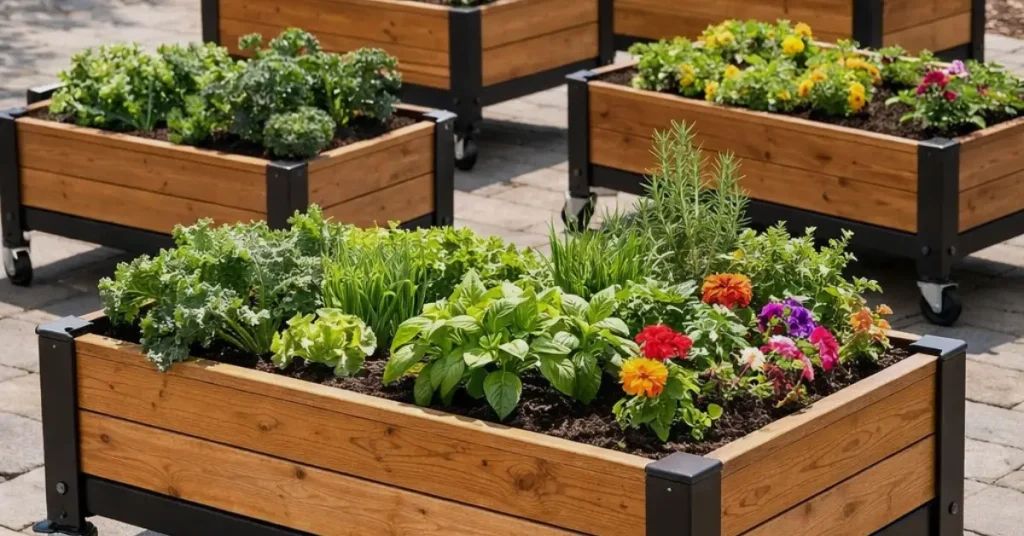
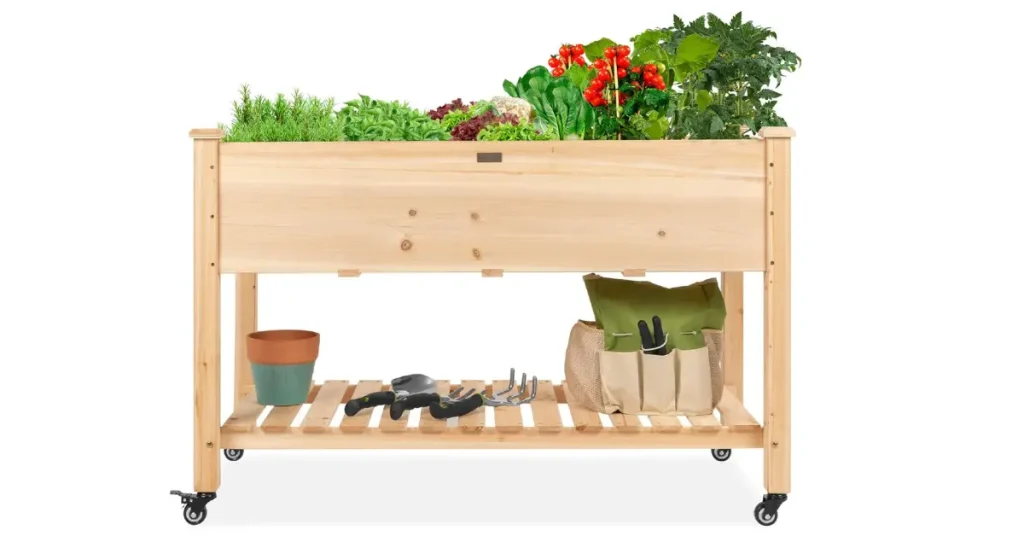
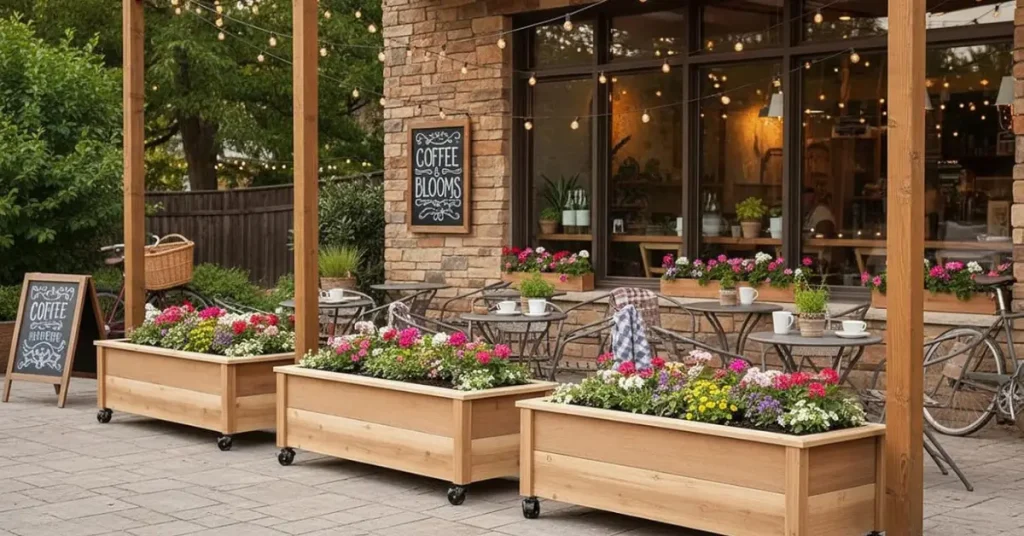
These raised beds are built on a sturdy frame with heavy-duty wheels or casters, allowing you to roll the entire garden bed to a sunnier spot, out of the wind, or onto a patio for better access. They are perfect for renters, small balconies and rooftops.
You can chase the sun as the seasons change, protect tender plants from frost by moving them closer to the house at night, or simply roll the bed out of the way when you need space for entertaining. Many designs include locking wheels so the bed stays firmly in place once positioned.
Building? Build mobile raised beds from wood, metal, or recycled materials. A popular size is 4×4 feet or 4×8 feet on four or six heavy caster wheels rated for several hundred pounds. Add a bottom with drainage holes.
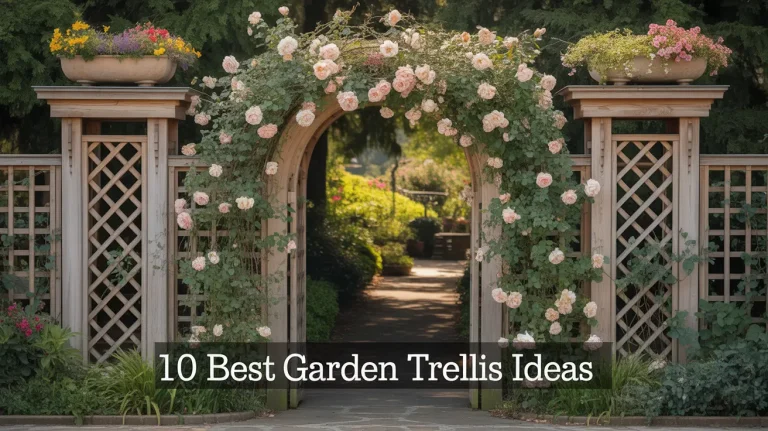
Raised Beds with Trellises
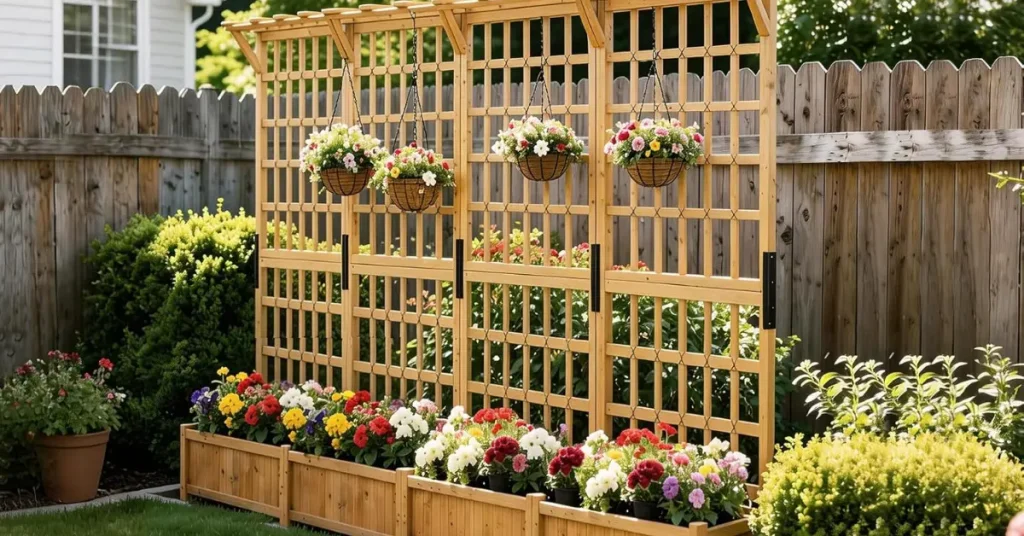
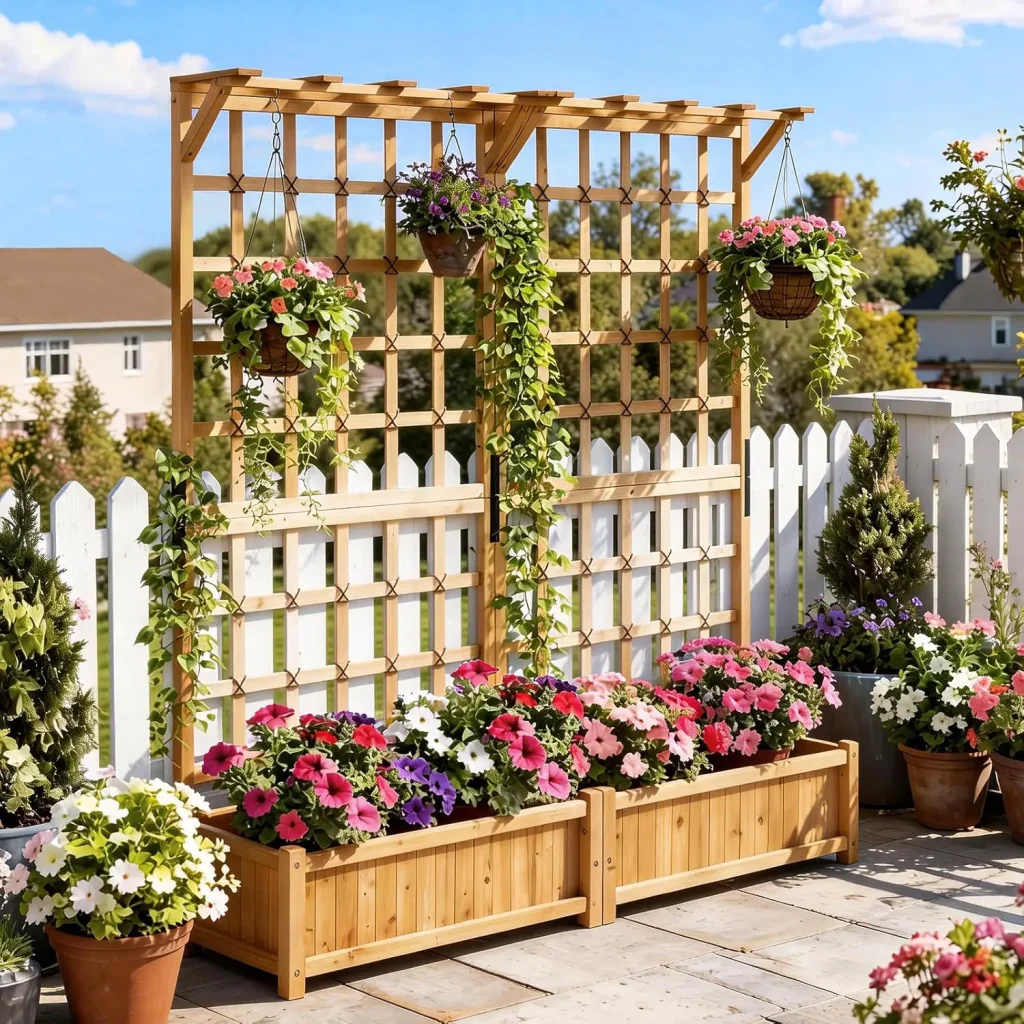
By combining a raised bed with a built-in trellis or vertical support, you create a space-saving vertical garden that maximizes growing area in a small footprint. The raised bed provides rich, well-drained soil at a comfortable height, while the trellis allows climbing plants to grow upward instead of spreading across the ground.
These beds are perfect for vining crops like tomatoes, cucumbers, beans, peas, squash, and even flowering vines such as morning glories, clematis, or passion flowers. The vertical growth improves air circulation, reduces disease, makes harvesting easier, and keeps fruits and vegetables clean and off the soil.
You can build the trellis from wood (cedar or pressure-treated lumber), metal cattle panels, wire mesh, bamboo, or decorative obelisks. A simple A-frame or arch trellis looks beautiful and creates a charming garden focal point. Some designs include a bench on the front for comfortable weeding and picking.
Half-Barrel Raised Beds
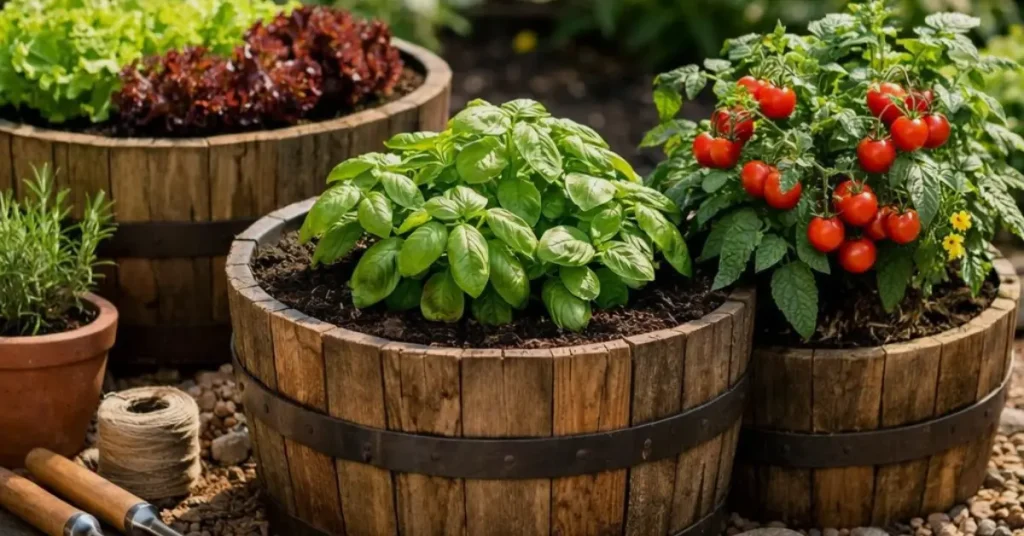
Have a wine barrel, whiskey barrel, or rain barrel? Simply cut a barrel in half (or buy a pre-cut one), drill a few drainage holes in the bottom, add a layer of gravel or broken pottery for better drainage, and fill it with quality potting mix or garden soil. Leave the natural wood look, paint or stain the outside to match the garden style.
These rustic beds have a classic, old-world look that adds instant character to any backyard, patio, or balcony. Their generous depth (usually 12–18 inches) provides plenty of room for roots and they are good for vegetables like tomatoes, peppers, lettuce, and carrots, as well as herbs, strawberries, flowers, and even small shrubs.
Self-Watering Raised Beds
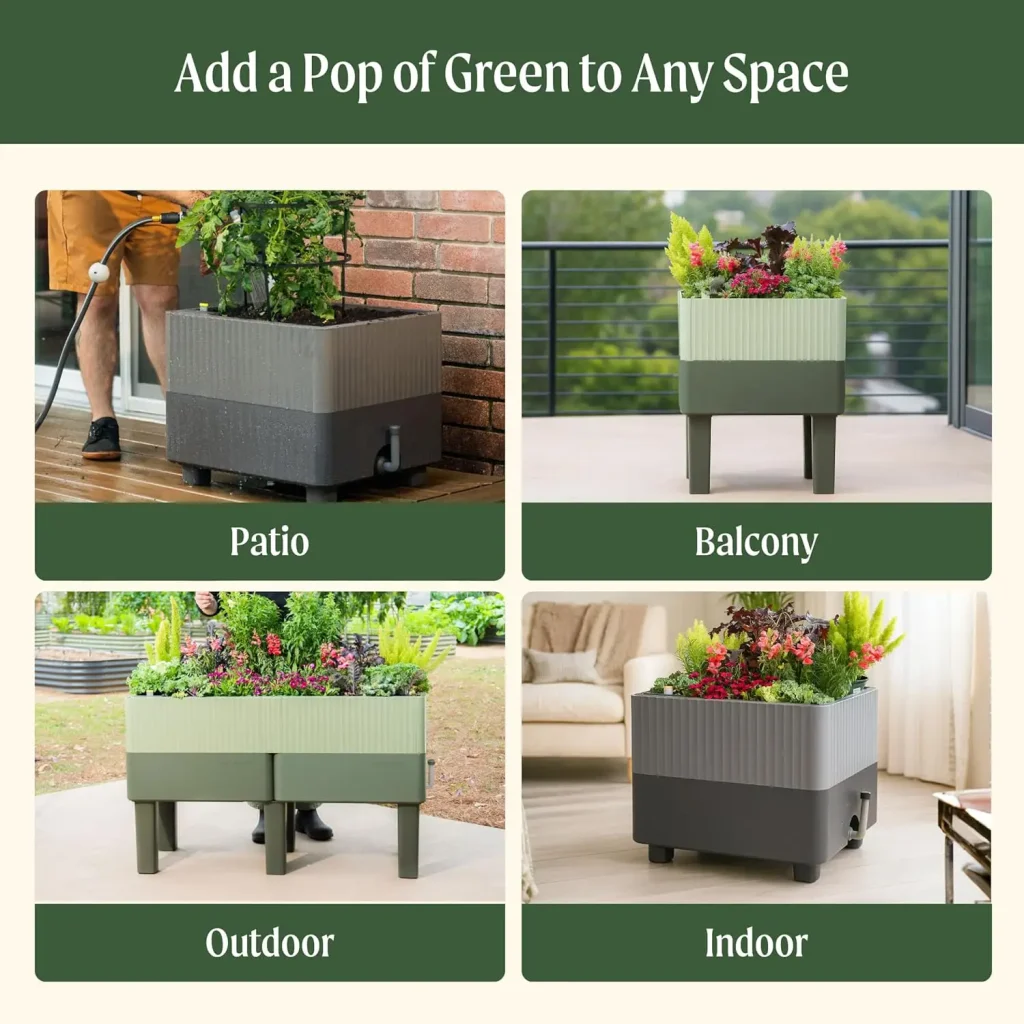
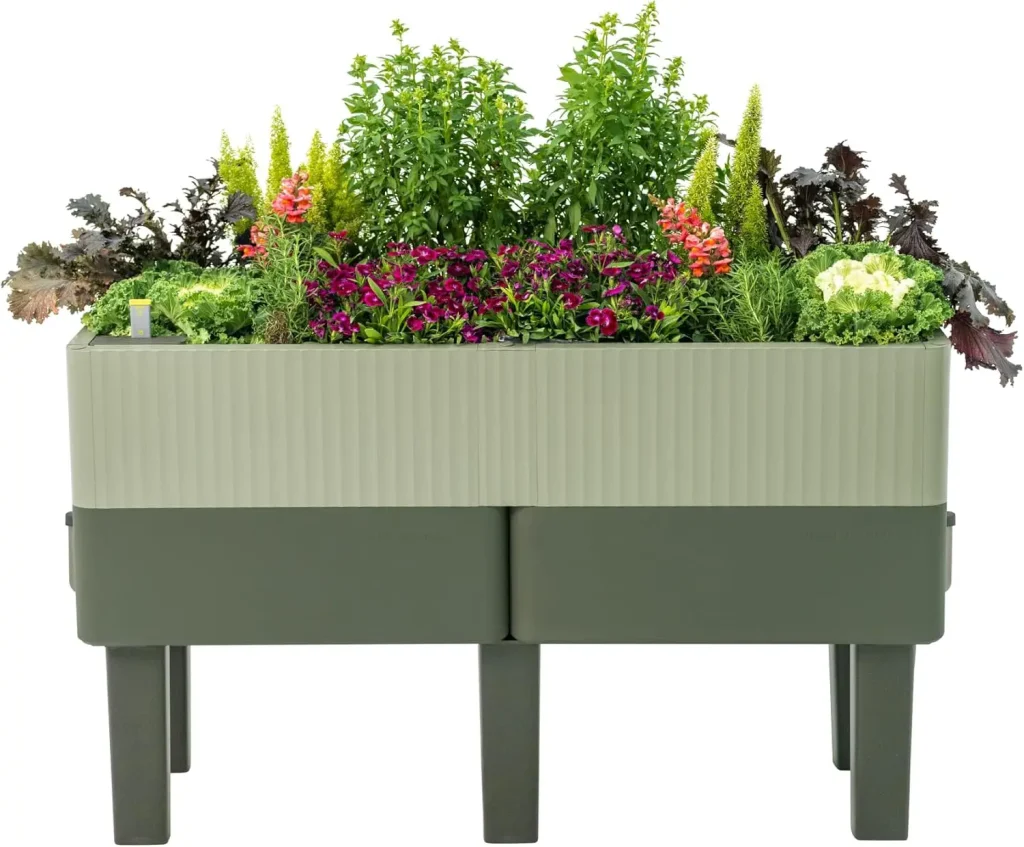
These raised beds have a built-in water reservoir that slowly releases moisture directly to the plant roots through wicking or capillary action. You only need to fill the reservoir every few days (or even once a week), and the plants take exactly the water they need.
Self-watering beds keep the soil evenly moist, which reduces stress on vegetables, herbs, and flowers. This leads to stronger growth, fewer diseases, and better harvests. They are especially useful during hot summer months, vacations, or in dry climates.
You can buy ready-made self-watering raised bed kits (often made from plastic, metal, or cedar) or easily convert a regular raised bed by adding a false bottom, drainage holes, and a water reservoir underneath.
I hope, it helped and you liked the raised garden bed ideas.