25 Inspiring Rock Garden Ideas

A rock garden is a type of garden or landscaped area that uses rocks, stones, boulders, and often gravel as the main structural elements, combined with plants suited to rocky conditions.
These gardens mimic natural rocky landscapes, such as mountain slopes, alpine regions, or scree fields, and typically feature:
- Rocks arranged naturally (or artistically) to create levels, crevices, slopes, and microclimates.
- Plants that thrive in well-drained, often poor soil with low water needs ,commonly alpine plants, succulents, dwarf conifers, hardy perennials, grasses, and small flowering species like saxifrages, sedums, or creeping thyme.
- Water features (small waterfalls, ponds) to enhance the natural feel.
In this guide, I will share 25 creative rock garden ideas that can help you design a unique and eye-catching outdoor space.
Rock Garden Ideas
Rock Garden With Flower Pockets

In this design, create small planting pockets between rocks and fill them with colorful flowers. I like using alpine plants, creeping phlox, or dwarf daisies. The rocks hold the soil in place and provide warmth, which helps some plants grow better.
This idea works especially well on slopes or raised areas. Arrange stones to form natural terraces and then plant flowers in the spaces between them. Over time, the plants spread and soften the rocky structure, creating a beautiful blend of stone and color.
Rock Edging Flower Bed Garden
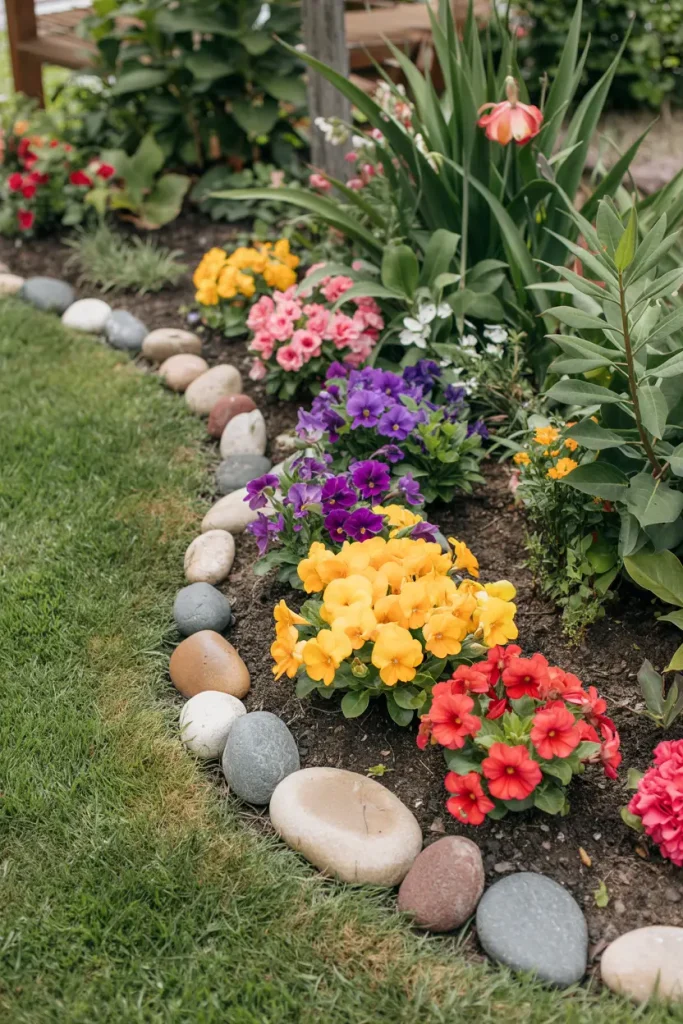
Another idea is creating a rock garden that borders a flower bed. Place smooth stones or river rocks along the edges to define the planting area. This simple design makes the garden look organized and neat while adding a natural decorative element.
Rock edging also has practical benefits. It helps keep soil and mulch in place and reduces weeds spreading into the flower bed. Combine colorful flowers with neutral colored rocks, the contrast makes the plants stand out even more, giving the garden a clean and attractive appearance.
Rock Garden With a Dry Creek Bed


A dry creek bed rock garden creates the look of a natural stream without water. I advice to design it by arranging smooth river rocks in a curved path across the garden. Larger stones go along the edges while smaller pebbles fill the center. This layout looks like a dried river channel flowing through the landscape.
I suggest planting ornamental grasses, creeping thyme, or small flowers along the sides of the creek bed. Besides looking beautiful, a dry creek bed can also help direct rainwater and improve drainage in the yard, making it both decorative and functional.
Zen-Inspired Rock Garden

Arrange different sizes of stones on a bed of fine gravel or sand. Then rake simple patterns around the rocks. This creates a calm and balanced look. You can add few small plants like dwarf shrubs or moss to keep the design minimal.
Don’t overcrowd it with plants. For this design, the beauty comes from simplicity. This type of garden works well in small spaces or corners of the yard where the purpose is a relaxing, meditation-like atmosphere. Zen rock gardens are also low maintenance because they require very little watering.
Succulent Rock Garden
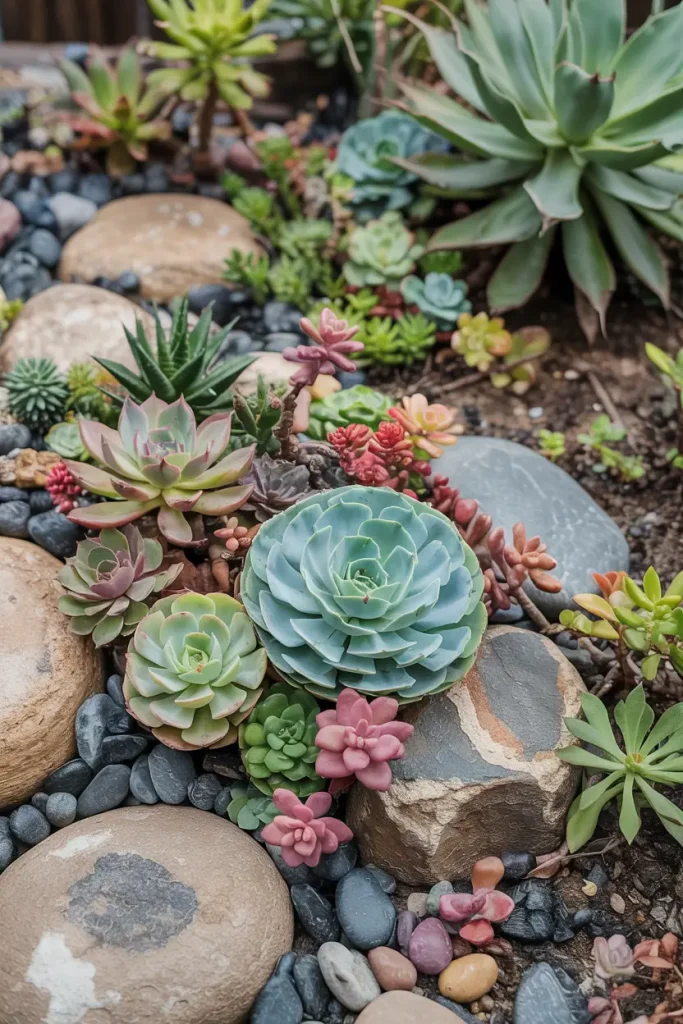
You want a drought-friendly and colorful design? Combine rocks with succulents like echeveria, sedum, or aloe. Place plants in small pockets between stones so they appear naturally growing from the landscape.
Mix rocks of different sizes to add depth. Large boulders act as focal points, while smaller stones fill the gaps. The contrast between the soft shapes of succulents and the rough texture of rocks makes the garden visually interesting. This idea works well in sunny areas.
Rock Garden Pathway
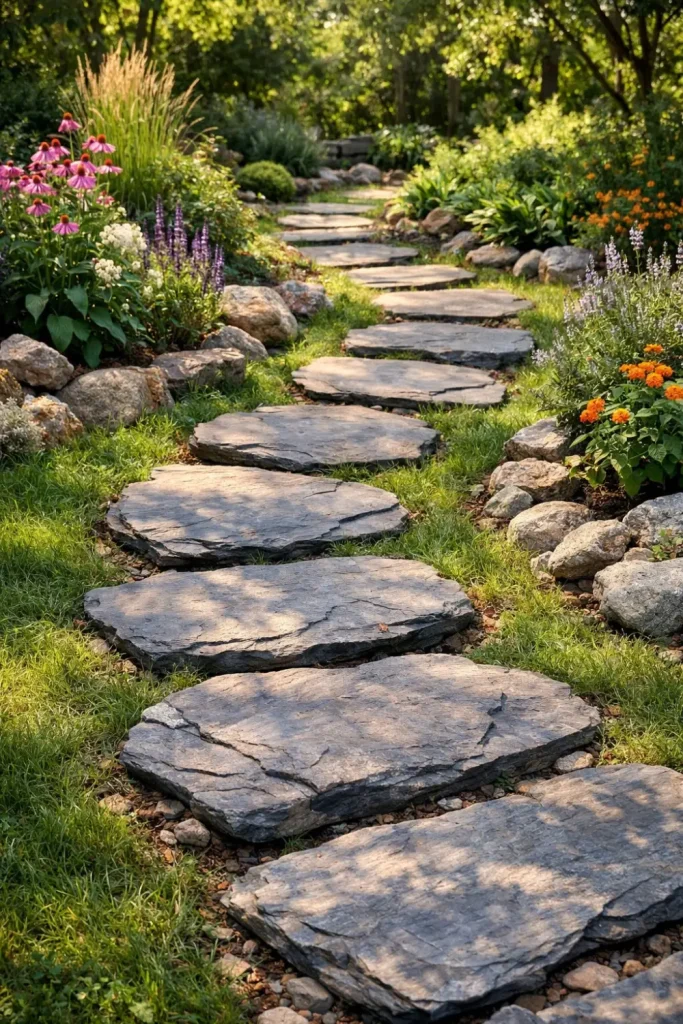
A rock garden pathway is one of the most beautiful idea you can try in outdoor spaces. Instead of plain concrete paths, place flat stepping stones or natural flagstones through a bed of gravel or small rocks. This creates a natural walking path that blends perfectly with the landscape.
To make the pathway more attractive, plant low-growing plants along the edges. Creeping thyme, dwarf grasses, or small flowering plants are good options. This idea works especially well in cottage gardens and rustic landscapes.
Rock Garden With a Fire Pit

A rock garden with a fire pit can turn a simple backyard into a cozy gathering space. Surround a small fire pit with large natural stones or boulders to create a rustic and natural design. The rocks look beautiful and also act as a safe barrier around the fire area.
Around the fire pit, you can add gravel ground cover and a few hardy plants that can tolerate heat and dry soil. Small shrubs, ornamental grasses, or succulents are good options in this type of setting. The combination of stone, fire, and plants creates a relaxing outdoor area where family and friends can gather in the evening.
Rock Garden With a Water Feature
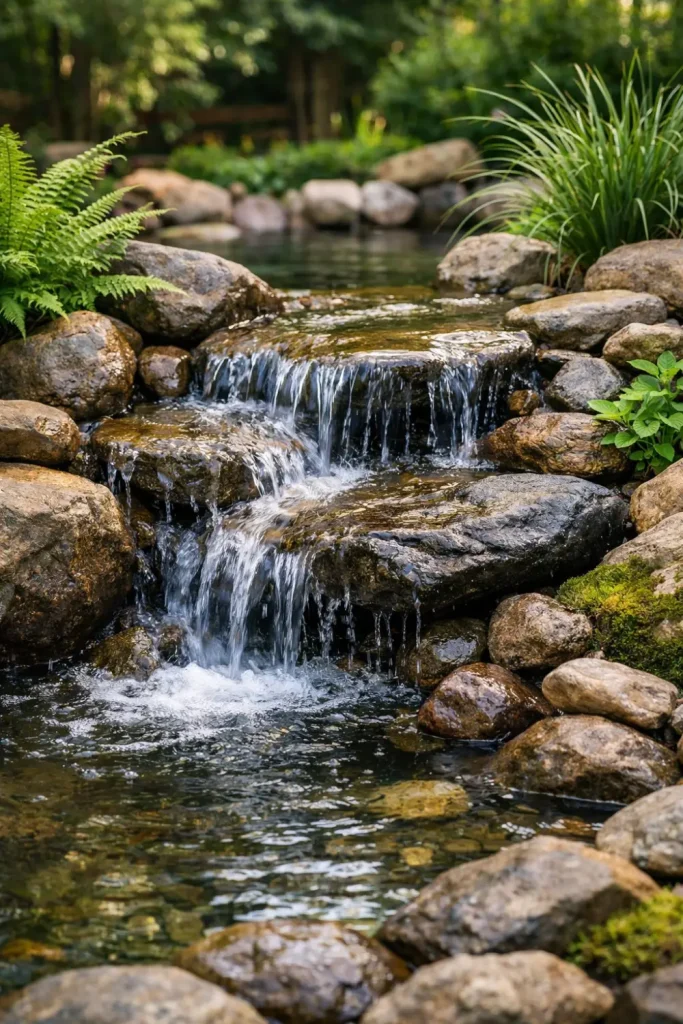
Adding a water feature can make a rock garden feel more peaceful and dynamic. Water flows gently over the stones, creating relaxing sounds that make the garden feel calm and inviting.
Plants around the water feature help soften the rocky structure. You can add ferns, ornamental grasses, or moisture-loving plants nearby.
Boulder Feature Rock Garden
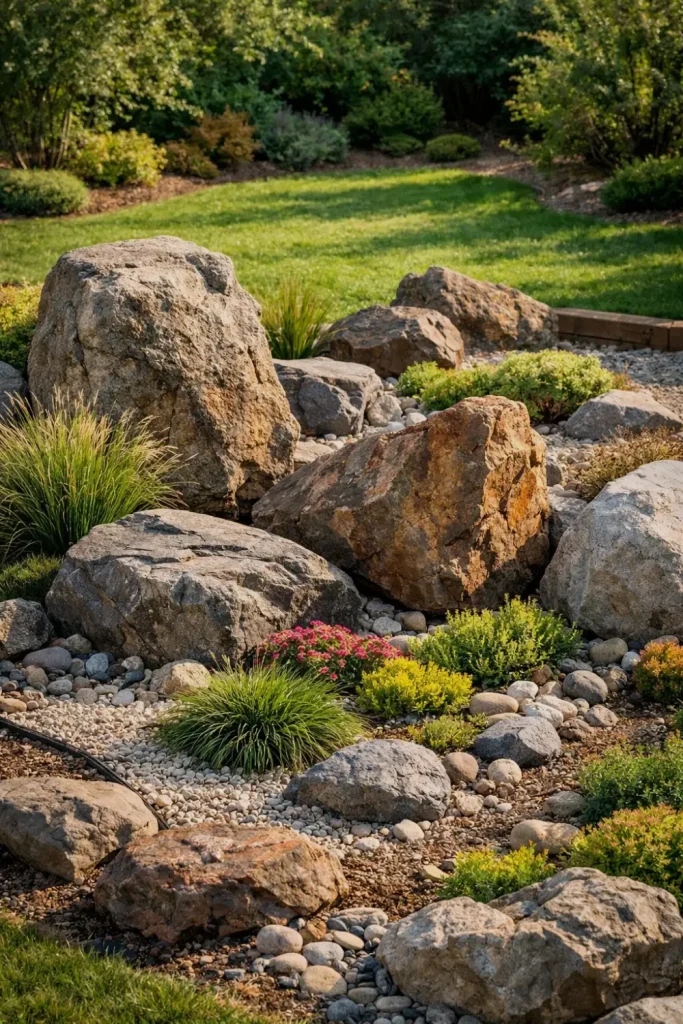
Sometimes the simplest rock garden idea is to use one or two large boulders as the main feature. Place a large natural boulder in the center of the garden and surrounding it with smaller rocks and plants. This creates a strong focal point that immediately draws attention.
You can add drought-tolerant plants like sedum, lavender, or ornamental grasses around the base of the boulder. This idea works well in both modern landscapes and natural-style gardens.
Gravel Patio Rock Garden
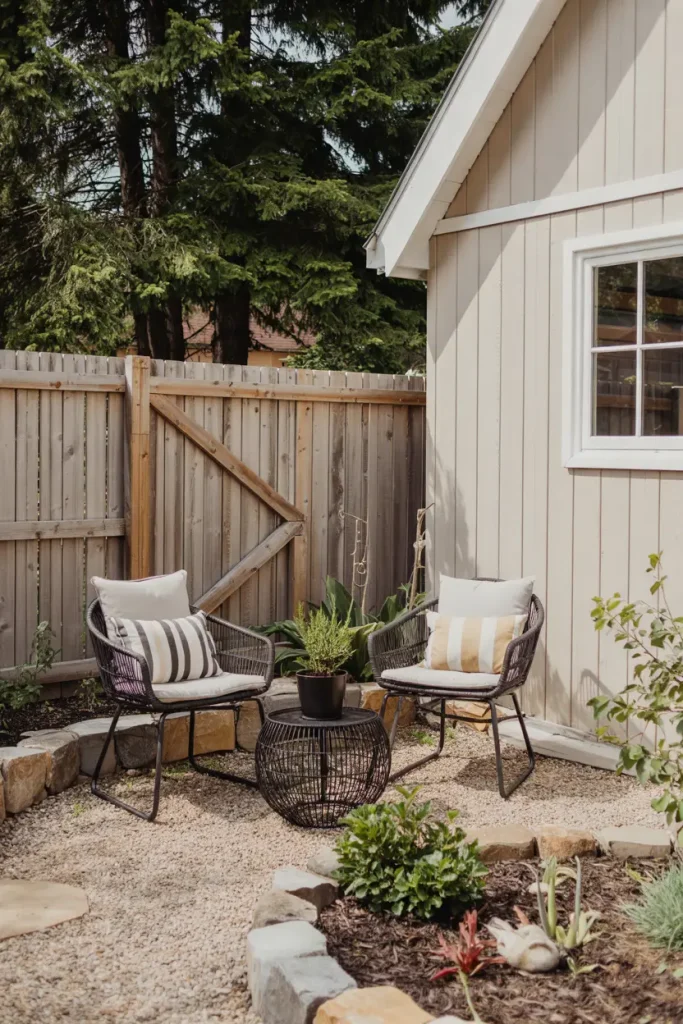
Instead of a traditional patio, cover the ground with decorative gravel and add a few rocks around the space. These stones act as natural borders and give the patio a rustic charm.
You can place potted plants or small shrubs around the edges of the gravel patio and add a simple bench or outdoor chairs so the area becomes a quiet place to sit and enjoy the garden. This design is simple to build and requires little maintenance compared to paved patios.
Cactus Rock Garden

A cactus rock garden is perfect for sunny and dry areas of the yard. Combine different types of cacti with gravel and large decorative rocks.
To add more visual interest, you can mix different shapes and heights of cacti. Tall columnar cacti, round barrel cacti, and small clusters of cactus plants create variety in the design.
Layered Rock Mound

A layered rock mound is a great way to add height and interest to a flat yard. Even a small mound can make the garden feel more dynamic and visually appealing. You can create by stacking rocks in layers to form a gentle hill. Small pockets of soil are left between the stones so plants can grow naturally within the structure.
This design allows different types of plants to grow at different levels. Low-growing groundcovers can be planted around the edges where they spread and soften the rocks. Slightly taller plants can be placed at the top to create a focal point. Rocks can also be arranged to form small steps or mini terraces, giving the mound a more natural and layered look.
Raised Rock Beds Garden

A raised rock bed garden gives your yard clean edges and neat planting spaces. The raised shape creates small pockets where different plants can grow comfortably. Succulents, alpine plants, and drought-tolerant perennials are good options.
Use flat stones when building the walls so the structure stays stable and doesn’t shift over time. Add some gravel behind the stones or small drainage gaps so water can flow out easily instead of collecting in the soil.
Rock Slate or Flagstone Slabs

Plastic chairs often wobble on gravel and rarely look great in a natural garden setting. Slate or flagstone slabs can create simple seating that blends much better with the surroundings. These natural stones give the space a relaxed and earthy feel while fitting perfectly into a rock garden design.
A few large, flat slabs placed close together can work as a bench or even a low table. Stacking a couple of slabs can create a small backrest, or a wooden plank can be placed across two stones for a bit of extra style. This kind of seating looks rustic and practical at the same time.
Choose slabs that are flat and similar in thickness so the seating stays stable and comfortable. Small plants like moss or creeping thyme can be tucked between the stones to soften the look and add a light fragrance when someone walks nearby.
The ground should be leveled first, and add base of compacted sand or gravel underneath the slabs.
Small Pond of Rocks

A small garden pond can completely change the feeling of a backyard. Even a tiny pond can attract birds and create a peaceful atmosphere much faster than a large fountain. The sound of gentle water and the reflection of stones make the space feel calm and relaxing.
A small pond liner or pre-shaped pond can be placed near a patio or under a tree. Smooth river stones can be arranged around the edges to hide the plastic and give the pond a natural look.
Plants like water lilies or rushes can be added around the pond to soften the edges and provide shelter for small wildlife.
Mossy Rock Garden
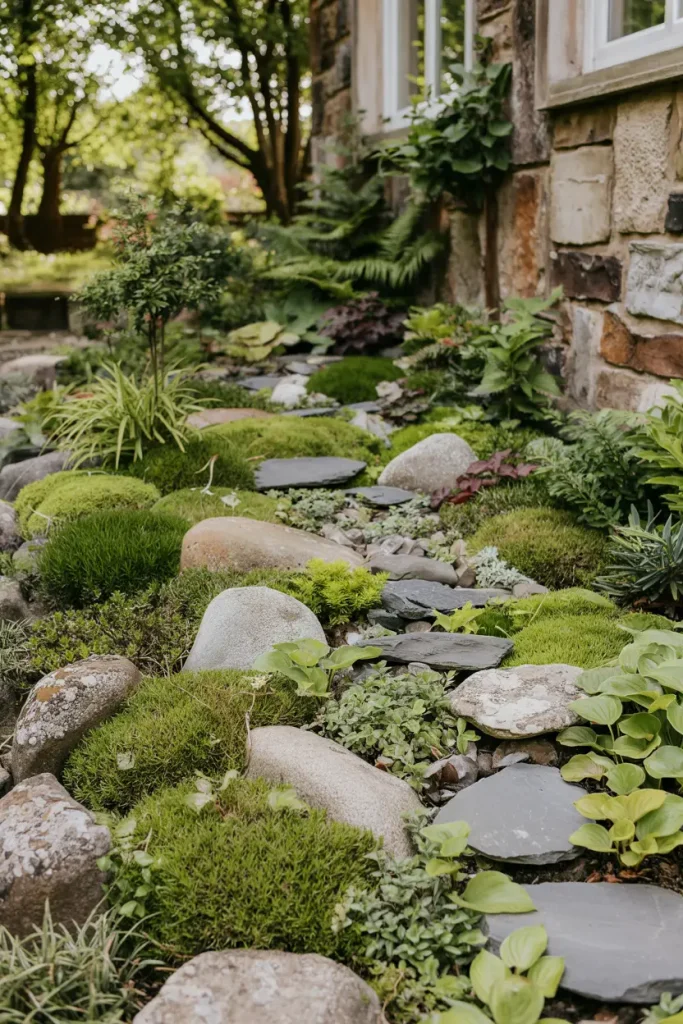
Moss grows well in shady, damp corners, making it perfect for areas under trees or near walls. Small stones and boulders can be left bare or partially covered, letting moss fill in the gaps and create a natural, forest-like vibe.
Adding low-growing ferns or woodland plants between the stones enhances the lush feeling. The combination of rough rocks and soft moss creates a peaceful, calming atmosphere that looks like it has been there for years. Moss also helps retain moisture in the soil.
Rock Garden With Driftwood

Using driftwood in a rock garden brings a rustic and artistic touch. Pieces of weathered wood can be placed among the rocks to act as natural sculptures or focal points. The rough texture of the wood pairs beautifully with stones, creating a garden that feels organic and wild.
Driftwood can also provide tiny shelters for small plants or moss to grow. Combine it with low-growing perennials or succulents to add color and softness around the wood.
Colorful Flower Rock Garden
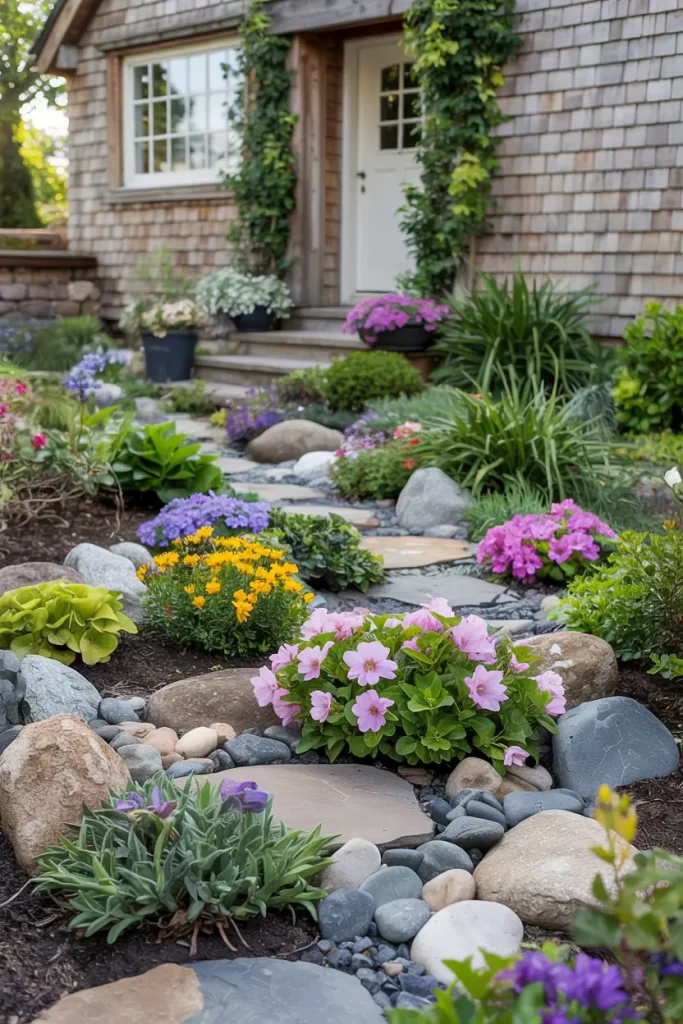
Plant a mix of hardy perennials, alpine flowers, and low-growing annuals between rocks. This combination produces bursts of color throughout the growing season.
Strategically placing flowers around boulders or in small pockets helps create natural layers and focal points. Combining different textures and bloom times ensures the garden looks attractive from spring to fall. The rocks also provide warmth for plants that like sun, helping them thrive and stand out.
Stone Patio With Greenery and Lanterns

A stone patio can create a cozy outdoor conversation area that feels both stylish and inviting. Using simple stone pavers keeps the design clean, while arbors draped with climbing plants add a touch of greenery and shade. Hanging lanterns along the structure brings soft, warm light in the evenings, making the space feel romantic and relaxing.
Use Light-colored furniture, such as white or neutral upholstery, paired beautifully with the pale stone to create a natural, earthy look. Add a few cushions and throws to soften the space even more perfect for casual gatherings or quiet evenings outdoors.
Rustic Front Yard With Stone Seat Wall
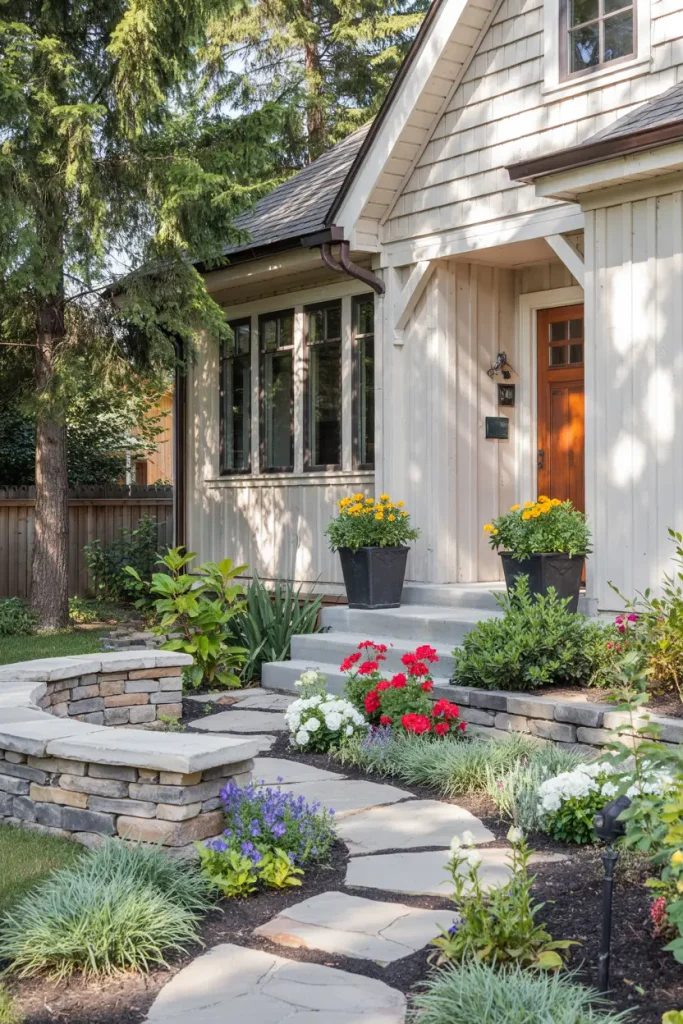
For a warm, rustic curb appeal, a front yard can be designed using natural stone along the porch, flower beds, and walkway. Larger stones can be arranged to form a low seat wall.
Pairing the stones with colorful flowers and greenery creates a welcoming, natural look.
Elevated Porch With Stone Accents

If a home sits slightly above ground level, adding stone along the front porch can enhance the yard’s appearance and make the exterior feel more complete. The natural texture of the stone helps fill in the extra height, creating a smooth transition from the yard to the porch.
Using stone in this way ties the front yard and porch together, giving the exterior a cohesive, polished look.
Brighten Spaces With Crushed Limestone

Crushed limestone can completely transform a yard without making it feel dull. Its light, pale color brightens pathways, seating areas, and planting beds while keeping everything looking neat and tidy.
Spreading limestone around plants or along paths act as ground cover, helps control weeds and improves drainage. The soft, neutral tone makes smaller yards feel more spacious and pairs beautifully with green foliage or darker stones. It’s low-maintenance, practical, and clean.
Alternating Light and Dark Stone Patterns

Use a mix of light and dark stones in a pattern to turn a simple path or patio into a striking feature.
Patterns can be applied to walkways, garden edges, or even seating areas to create contrast and rhythm in the landscape.
Volcanic Rock Garden
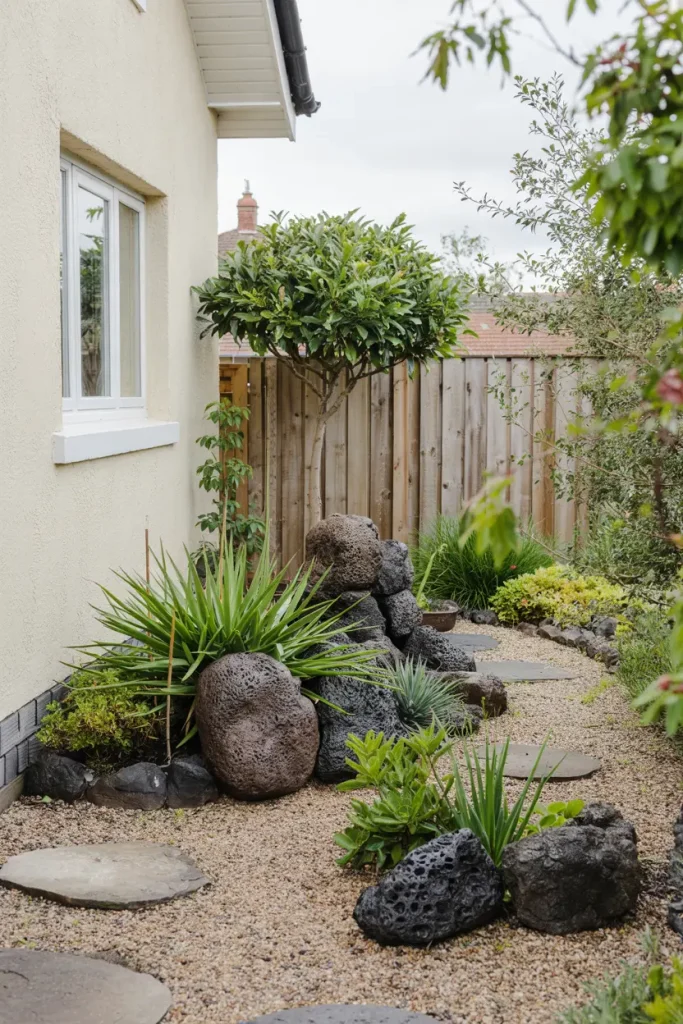
Volcanic rocks can give a garden a bold, textured look, adding a natural, earthy vibe. Their porous surface and deep colors make them perfect for creating contrast with greenery, flowers, or lighter stones.
Scatter volcanic rocks around planting beds, pathways, or decorative areas to add visual interest and a rugged, natural feel to any outdoor space.
Layered Stone Walls for Dimension

Layering stones is a simple way to add height and interest to a sloped yard or refresh a flower bed. Stacking stones creates natural terraces where soil can hold plants, giving the garden extra dimension and depth.
That’s all for today. I hope you liked the rock garden ideas.