10 Beautiful Trumpet Flowers For Home Gardens
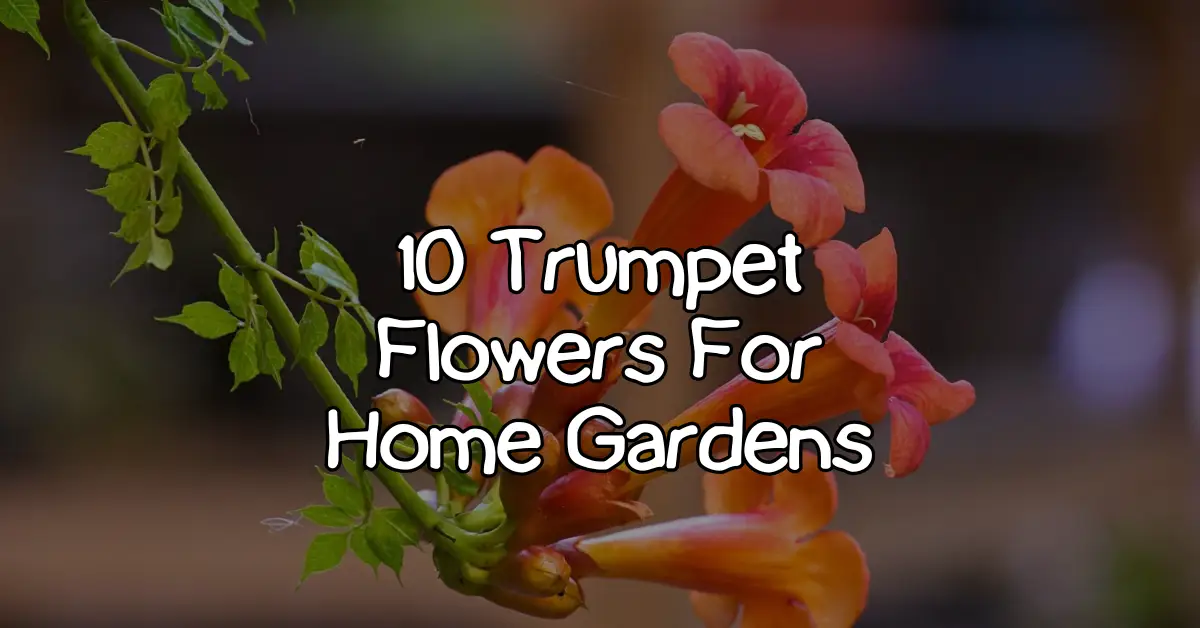
Trumpet flowers have a special shape that makes them easy to spot. They start with a long, skinny tube at the bottom and then open up wide at the top like a trumpet or horn. The wide part usually has five pointed tips or lobes around the edge, giving the flower a pretty, flared look.
The way the flowers hang or face depends on the plant. Angel’s trumpet (Brugmansia) flowers droop downward, hanging like big bells from the branches. Datura flowers (called jimsonweed) point upward or straight out. Trumpet vine flowers grow in bunches and face outward in bright groups.
These flowers can be really big, especially on angel’s trumpet plants (6 to 12 inches long), and some get even bigger. They come in beautiful colors like white, light yellow, peach, orange, pink, purple and red. Many of them smell very sweet and strong, especially at night. They attract humming birds and bees.
Before planting, it is important to know your hardiness zone, climate and available space. Some trumpet flowers grow as vines and some grow as shrubs or tall perennials. In this post, you will learn about 10 beautiful trumpet flowers to grow in home gardens. Continue reading.
Trumpet Flowers Names For Home Gardens
Before we explore each flower in detail, here’s a quick list:
- Brugmansia (Angel’s Trumpet)
- Campsis radicans (Trumpet Vine)
- Lonicera sempervirens (Trumpet Honeysuckle)
- Datura stramonium (Devil’s Trumpet)
- Ipomoea purpurea (Morning Glory)
- Digitalis purpurea (Foxglove)
- Tecoma capensis (Cape Honeysuckle)
- Tecoma stans (Yellow Bells)
- Petunia (Petunia)
- Zantedeschia (Calla Lily)
Brugmansia (Angel’s Trumpet)
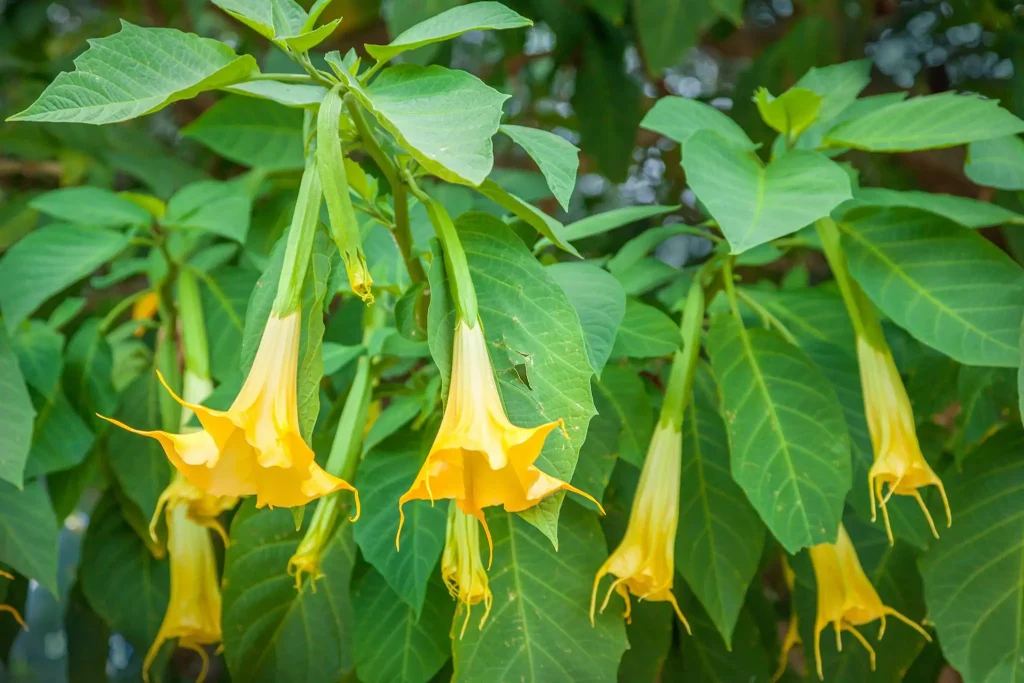
Angel’s Trumpet grows large, hanging trumpet flowers that look dramatic in any garden. I really like this plant for evening fragrance. The blooms release a strong scent at night.
Family: Solanaceae
Native to: South America
Plant type: Shrub or small tree
Hardiness zones: 8–11
Flowers: Large, pendulous trumpets
Fragrant or not: Very fragrant (especially at night)
Colors: White, cream, yellow, peach, pink
Angel’s Trumpet grows best in rich, well-draining soil that holds some moisture but does not stay soggy. The ideal soil pH ranges between 6.0 and 7.0, slightly acidic to neutral. If the soil is too heavy or clay-based, roots may struggle. Add compost to improve both drainage and nutrients.
For strong blooming, it needs at least 6 to 8 hours of direct sunlight daily. In extremely hot climates, light afternoon shade prevents leaf burn.
You can grow it outdoors in warm climates. In colder zones, I suggest growing it in a large container and moving it indoors before frost.
Toxicity: Highly toxic in all parts. Keep away from pets and children.
Campsis radicans (Trumpet Vine)
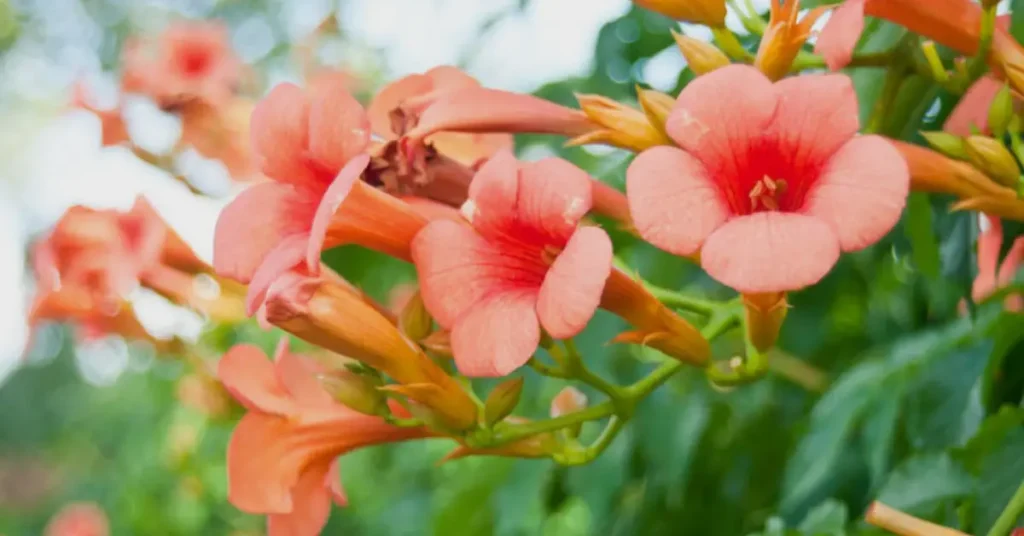
Campsis radicans, known as Trumpet Vine, is a fast-growing climber that quickly covers fences and pergolas. If you want bold color and hummingbirds in your garden, this vine does the job.
Family: Bignoniaceae
Native to: Eastern United States
Plant Type: Deciduous climbing vine
Hardiness Zones: 4–9
Flowers: Flared, tubular trumpet blooms
Fragrance: Not fragrant
Colors: Orange, red, orange-red
This vine is not picky about soil. It grows in average garden soil as long as it drains properly. A soil pH between 6.0 and 7.5 is good. It even tolerates slightly poor soil, which makes it low maintenance.
For heavy flowering, give it 6–8 hours of direct sun daily. Less sunlight will result fewer blooms. Plant it outdoors only, because it needs strong structural support and space to spread.
Toxicity: Mildly toxic if ingested. The sap may irritate sensitive skin.
Lonicera sempervirens (Trumpet Honeysuckle)
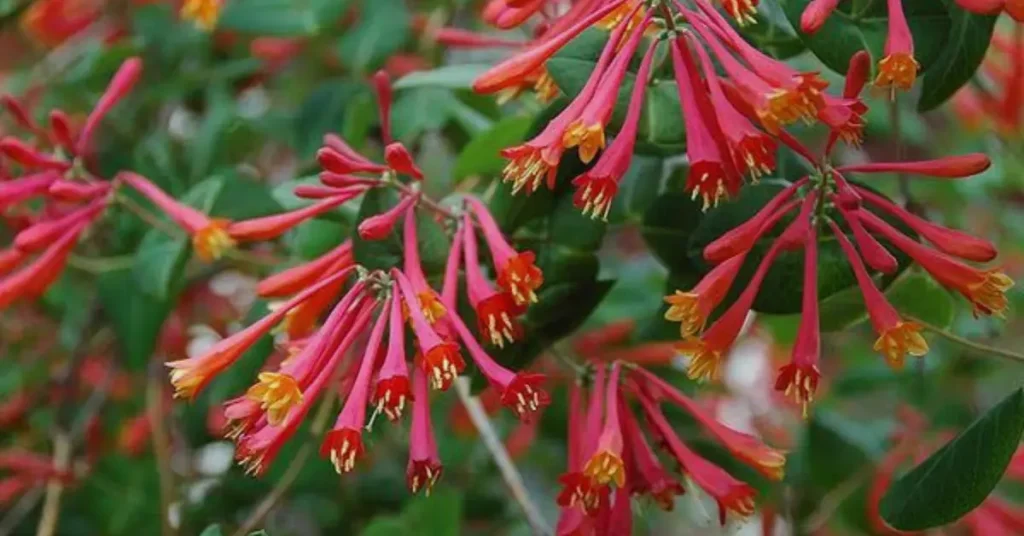
Lonicera sempervirens (commonly known as coral honeysuckle, trumpet honeysuckle, or scarlet honeysuckle) is a flowering plant species of honeysuckle. Trumpet Honeysuckle is native to Eastern and Central United States that attracts hummingbirds without becoming invasive. It has large, non-fragrant, narrow, trumpet-shaped flowers.
Family: Caprifoliaceae
Native to: Eastern and Central United States
Plant Type: Twining vine
Hardiness Zones: 4–9
Flowers: Slender tubular trumpets
Fragrance: Very light or no noticeable scent
Colors: Coral, red, orange with yellow throats
It prefers well-drained soil. A pH range of 6.0 to 7.0 suits it best. Extremely soggy soil may cause root problems.
For best blooming, plant it where it gets at least 6 hours of sunlight. It tolerates partial shade, but flowering becomes lighter. This vine is best grown outdoors on a trellis or arbor.
Toxicity: Generally considered non-toxic.
Datura Stramonium (Devil’s Trumpet)
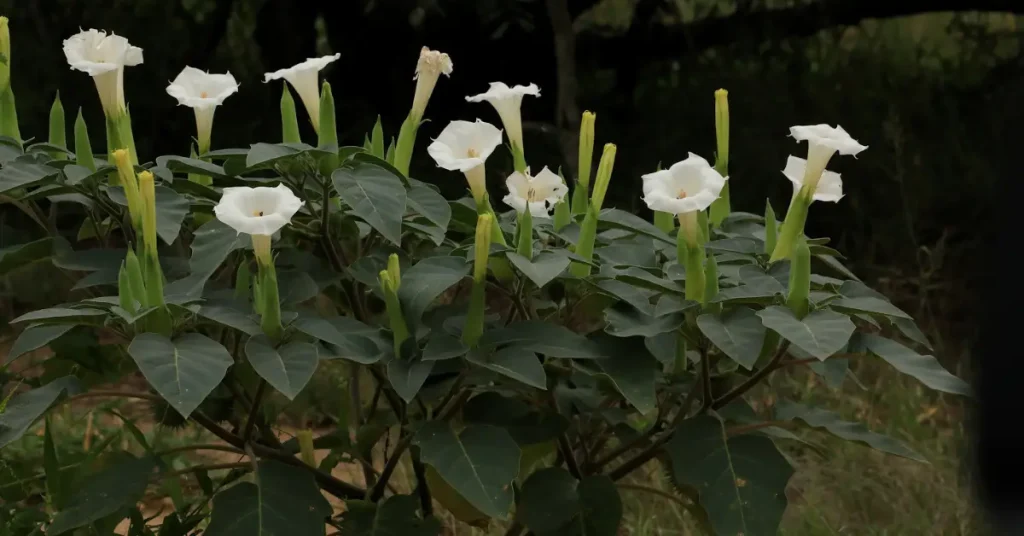
Datura stramonium, known by the common names thornapple, jimsonweed, or devil’s trumpet, is a poisonous flowering plant. Devil’s Trumpet produces bold, upright flowers that open wide like flared bells. Some varieties release a soft fragrance in the evening.
Family: Solanaceae
Native to: Central America (now naturalized widely)
Plant Type: Annual or short-lived perennial
Hardiness Zones: 7–11
Flowers: Upright trumpet blooms
Fragrance: Mild scent in some varieties
Colors: White, lavender, purple
Datura grows best in loose, well-draining soil with a pH between 6.0 and 7.5. It does not like heavy, waterlogged soil. Sandy or loamy soil works well.
It thrives in full sun and needs at least 6–8 hours of direct light daily. This plant is meant for outdoor growing where it receives warmth and airflow.
Toxicity: Highly toxic in all parts. Handle carefully and keep away from pets and children.
Ipomoea Purpurea (Morning Glory)
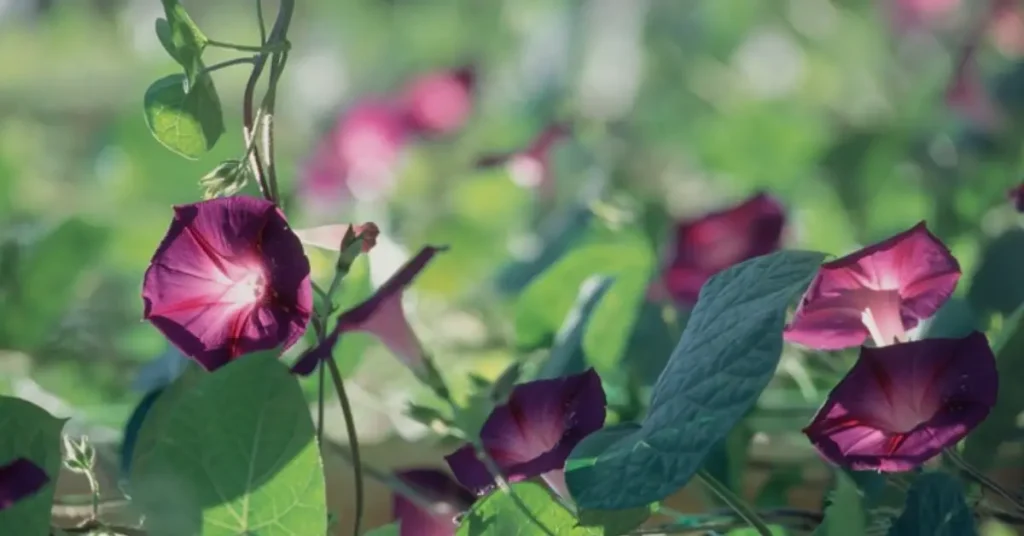
Ipomoea purpurea
Morning Glory is one of the easiest trumpet-shaped flowers to grow from seed. It climbs quickly and blooms throughout summer.
Family: Convolvulaceae
Native to: Mexico and Central America
Plant Type: Annual vine
Hardiness Zones: Grown as annual in most regions
Flowers: Funnel-shaped blooms
Fragrance: Non-fragrant
Colors: Blue, purple, pink, white
This vine grows in average garden soil as long as drainage is good. Ideal pH is 6.0 to 7.0. Overly rich soil may produce more leaves than flowers.
It loves full sun and performs best with 6–8 hours of direct sunlight. Plant it outdoors where it can climb on a fence or support.
Toxicity: Seeds are toxic if consumed.
Digitalis Purpurea (Foxglove)
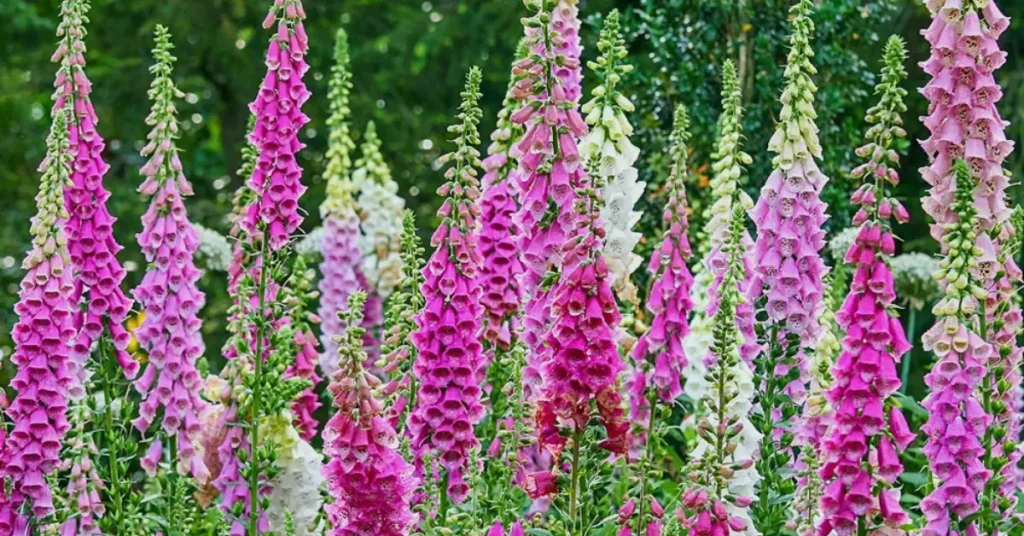
They are 2-3 inch long tubular flowers and come in multiple colors of white, pinks and purple with purple and white spots inside the petals. Foxglove adds vertical beauty to garden beds with tall spikes of tubular blooms.
Family: Plantaginaceae
Native to: Europe
Plant Type: Biennial or short-lived perennial
Hardiness Zones: 4–9
Flowers: Downward-facing tubular blooms
Fragrance: Not fragrant
Colors: Purple, pink, white, yellow
Foxglove prefers moist, well-draining soil. It grows best in slightly acidic soil with a pH of 5.5 to 7.0. Adding organic matter improves growth.
It grows well with 4–6 hours of sun, especially morning sun. In hot climates, partial shade helps prevent stress. Best grown outdoors in borders.
Toxicity: Highly toxic if ingested.
Tecoma Capensis (Cape Honeysuckle)
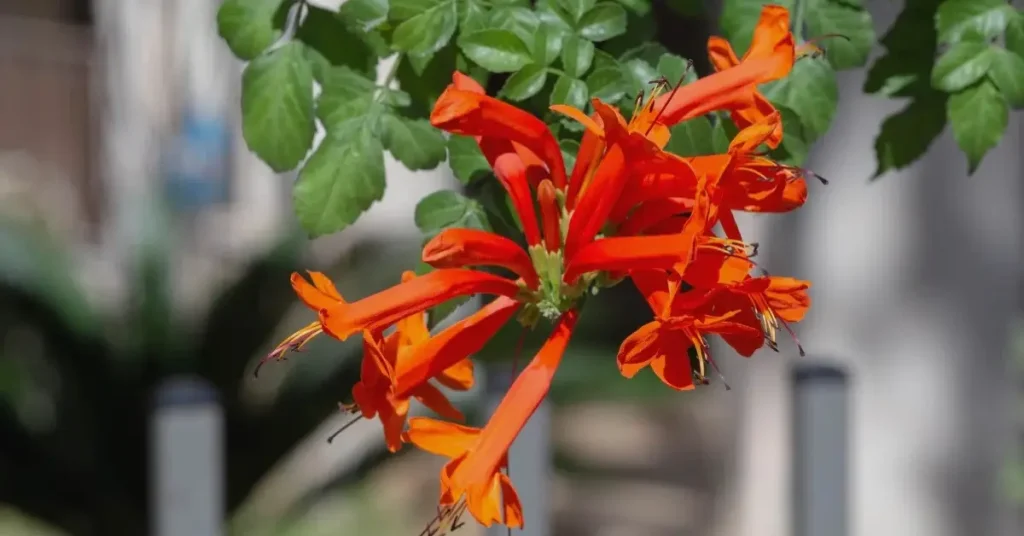
Tecomaria capensis, the Cape honeysuckle, is a species of flowering plant in the family Bignoniaceae, native to southern Africa. Cape Honeysuckle is a bright evergreen shrub covered in clusters of orange trumpet flowers.
Family: Bignoniaceae
Native to: South Africa
Plant Type: Evergreen shrub
Hardiness Zones: 9–11
Flowers: Clustered tubular blooms
Fragrance: Non-fragrant
Colors: Orange, red, yellow
It prefers well-draining soil and tolerates sandy or loamy types. A soil pH between 6.0 and 7.5 suits it well.
For heavy flowering, give it at least 6 hours of direct sunlight daily. It grows outdoors in warm climates and does not adapt well to indoor growing.
Toxicity: Generally considered non-toxic.
Tecoma Stans (Yellow Bells)
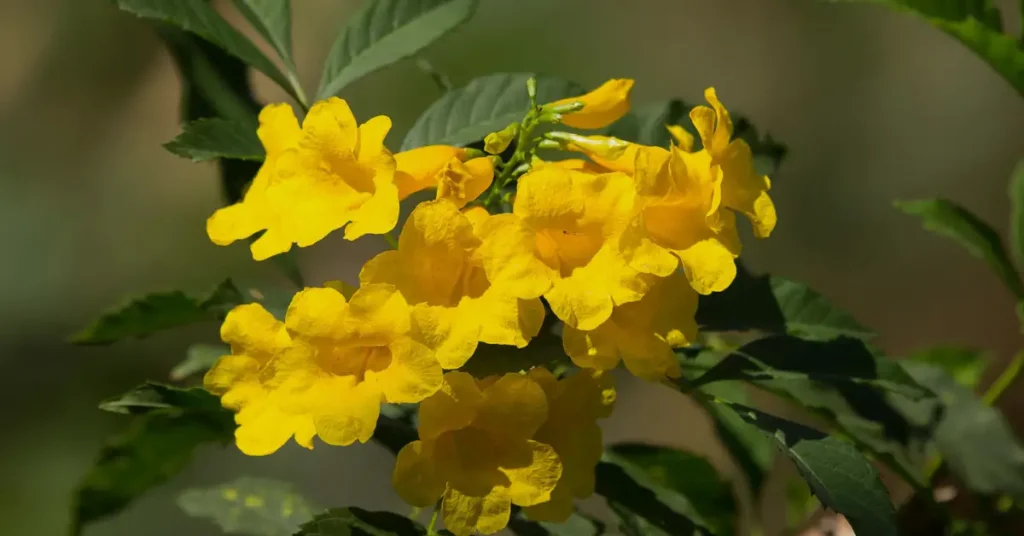
Tecoma stans is a pretty flowering shrub that belongs to the same family as trumpet vines. People call it yellow trumpetbush, yellow bells, yellow elder, or ginger Thomas. It grows naturally in the Americas, from parts of the southern United States like Texas and Florida, through Mexico and Central America, all the way to South America.
This plant is a semi-evergreen shrub or small tree that can reach up to about 30 feet tall, though it often stays smaller. It has a fast-growing habit with branches that spread out nicely. The leaves are bright green and divided into several leaflets with little teeth along the edges.
What makes Tecoma stans really special are its big, bright golden-yellow flowers shaped like trumpets. They grow in showy clusters at the ends of the branches and bloom a lot from spring through fall, sometimes even longer in warm places.
The flowers are eye-catching and attract bees, hummingbirds, and butterflies. Tecoma stans is the official flower of the United States Virgin Islands and the floral emblem of The Bahamas.
Family: Bignoniaceae
Native to: Southern United States, Mexico, Central and South America
Plant Type: Shrub or small tree
Hardiness Zones: 8–11
Flowers: Bright yellow trumpet-shaped blooms
Fragrance: Light or mild scent
Colors: Golden yellow
This plant grows best in well-draining soil with a pH of 6.0 to 8.0. It tolerates slightly alkaline soil better than many flowering shrubs.
It needs strong sunlight, ideally 7–8 hours daily. It performs poorly in shade. Best suited for outdoor landscapes in warm regions.
Toxicity: Mild toxicity if ingested.
Petunia (Garden Petunia)
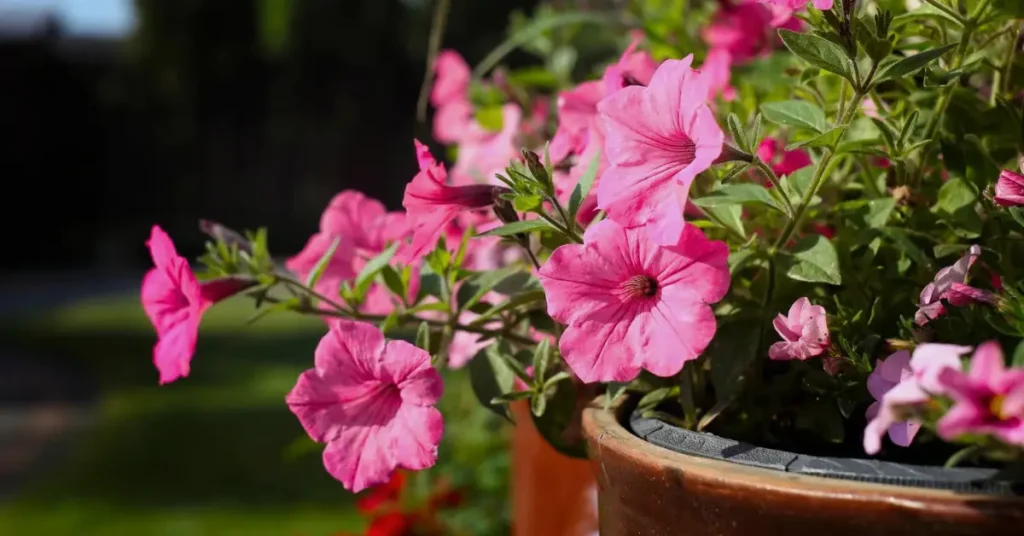
Petunia is a group of about 20 to 35 species of flowering plants in the nightshade family, which also includes things like tomatoes and potatoes. These plants come originally from South America, mostly from areas like Argentina, Brazil, Uruguay, and nearby regions. They are mostly tender perennials or annuals with pretty, funnel-shaped flowers.
The most popular petunia people grow in gardens is the common garden petunia, known as Petunia ×atkinsiana (sometimes called Petunia ×hybrida). This is a hybrid plant created from crossing wild species, and it’s not found naturally in the wild. Many have a sweet fragrance too. Gardeners love these for summer beds, hanging baskets, window boxes, and containers because they bloom nonstop from spring or early summer until the first frost.
Family: Solanaceae
Native to: South America
Plant Type: Annual
Hardiness Zones: Grown as annual in most climates
Flowers: Flared trumpet blooms
Fragrance: Some varieties are lightly fragrant
Colors: Purple, pink, red, white, yellow, multicolor
Petunias prefer fertile, well-draining soil with a pH between 6.0 and 7.0. Soil that stays soggy may cause root rot.
They need at least 6 hours of direct sunlight daily. Less light reduces flowering. They grow best outdoors in beds and containers, though they can grow indoors near a bright window.
Toxicity: Non-toxic to pets.
Zantedeschia (Calla Lily)
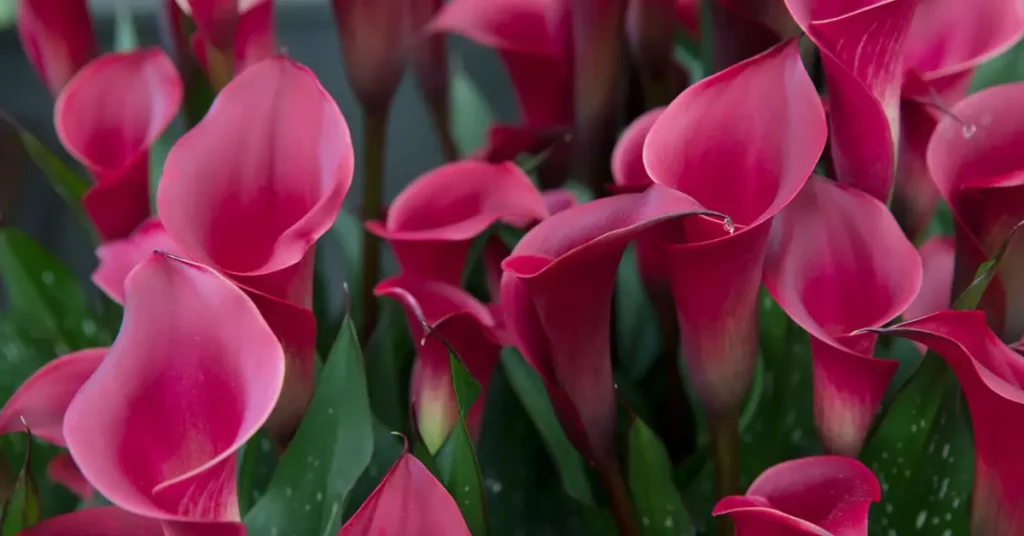
Zantedeschia aethiopica is a beautiful flowering plant commonly called calla lily or arum lily. It belongs to the Araceae family, which includes plants like jack-in-the-pulpit. This species comes from southern Africa, mainly places like Lesotho, South Africa, and Eswatini, where it grows naturally near streams, ponds, or wet areas.
This plant is a rhizomatous perennial, meaning it grows from thick underground stems called rhizomes. It forms clumps of large, shiny, dark green leaves that are arrow-shaped or heart-shaped, often reaching up to 18 inches long. The plant usually grows 2 to 3 feet tall, sometimes a bit more in shady spots. It stays evergreen in mild, wet climates but may lose leaves during dry seasons.
The flowers are the star of the show and very elegant. They appear in spring through summer (and sometimes fall) on tall, leafless stalks. Each “flower” has a large, pure white, funnel-shaped or trumpet-like bract called a spathe that wraps around a bright yellow, finger-like spike called a spadix.
The spadix holds the tiny true flowers and gives off a light, sweet fragrance. These classic white blooms are popular as cut flowers for bouquets and arrangements, and they add a graceful, sophisticated look to gardens.
Family: Araceae
Native to: Southern Africa
Plant Type: Rhizomatous perennial
Hardiness Zones: 8–10
Flowers: Funnel-shaped spathe around a central spike
Fragrance: Light scent in some varieties
Colors: White, pink, yellow, orange, purple
Calla Lilies prefer rich, moist but well-draining soil. The ideal soil pH is 6.0 to 6.5. They appreciate organic matter mixed into the soil.
They grow well with 5–7 hours of sunlight daily. In hot climates, partial shade during the afternoon keeps foliage fresh. They grow outdoors in warm zones and also perform well in bright indoor pots.
Toxicity: Toxic if ingested.