How To Grow Garlic At Home: From Planting to Harvest
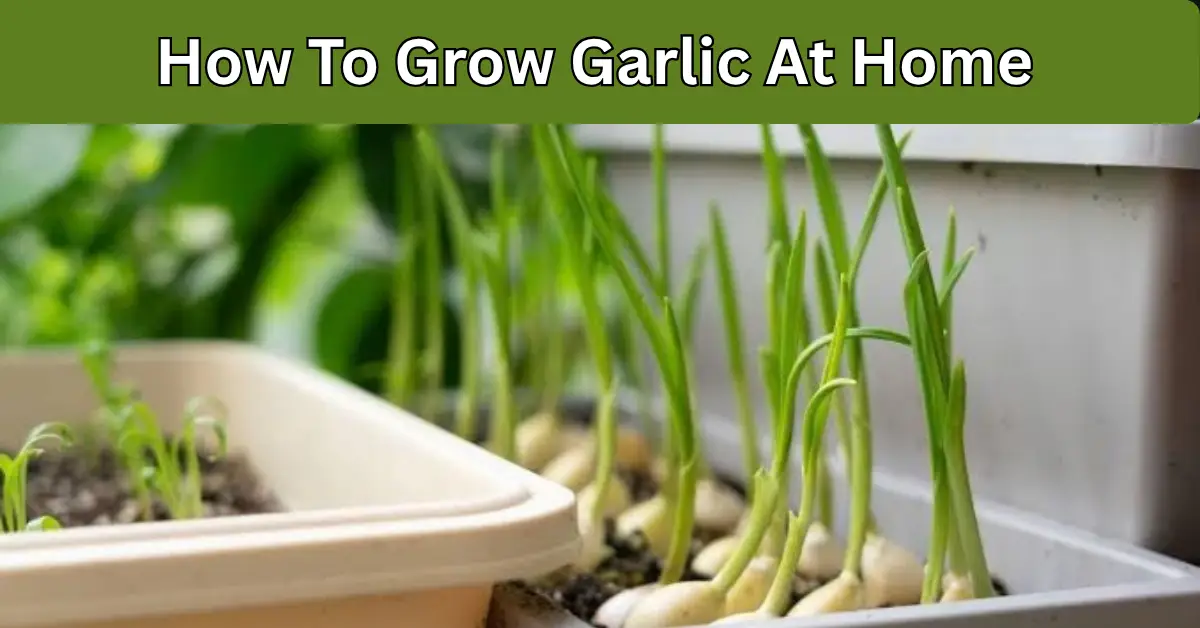
Growing garlic at home is easy, even if you have a small garden. You do not need a large space or special gardening tools. You can grow garlic in garden beds, pots, or containers on a balcony. With the right soil, enough sunlight, and regular care, you can grow fresh garlic at home.
Garlic is a useful plant for any home garden. Its bulbs add flavor to many dishes, and its green leaves are also used in cooking. You can grow garlic from cloves purchased from a grocery store or saved from your previous harvest. Each clove grows into a new garlic plant.
Garlic grows best when planted during the cooler months. It needs well-drained soil and at least six hours of sunlight each day. Garlic takes 8 to 10 months to reach full maturity from fall planting to summer harvest, although softneck varieties in warmer climates mature in 3 to 5 months. In this guide, you will learn:
- Which type of garlic to grow
- When and how to grow garlic
- How to care for it as it grows
- How to harvest, dry, and store your bulbs
Garlic Types
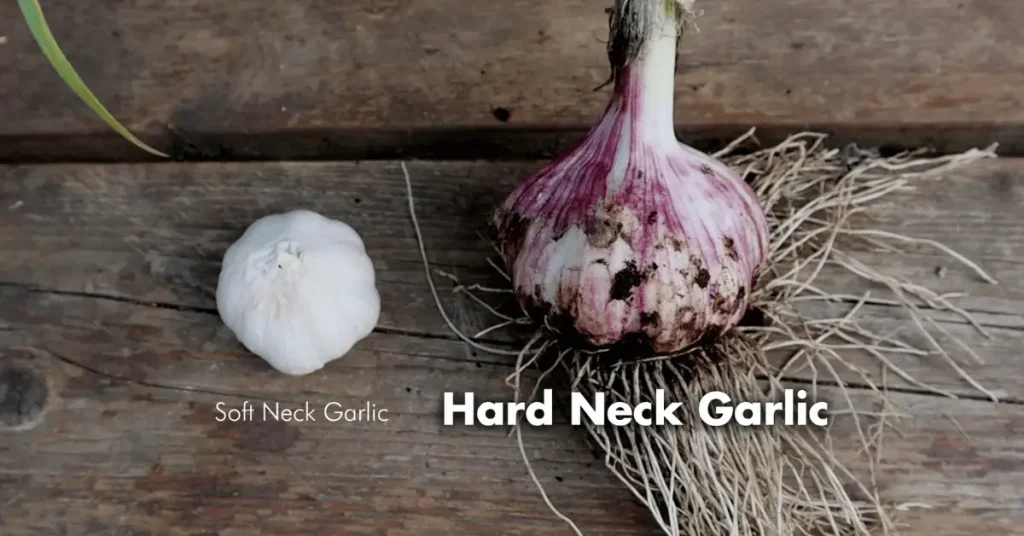
Before you plant, you need to pick a type. There are two main kinds of garlic: hardneck and softneck.
Hardneck Garlic
- Grows a stiff stem in the middle of the bulb
- Makes a “scape,” a curly flower stem you can cook and eat
- Handles cold winters very well
- Has a bold, rich flavor
- Stores for about 4 to 6 months
Softneck Garlic
- Has a soft, bendy stem, which makes it good for braiding
- Does not make scapes
- Grows best in mild winters
- Has a milder flavor
- Stores for 8 to 12 months
Comparison
| Parameters | Hardneck | Softneck |
|---|---|---|
| Best climate | Cold winters | Mild winters |
| Flavor | Bold and rich | Mild |
| Scapes | Yes | No |
| Storage time | 4–6 months | 8–12 months |
| Braiding | Not good for it | Great for it |
Which One Garlic To Choose?
If your winters are cold, pick hardneck. If your winters are mild, pick softneck.
When to Plant Garlic
Fall Is the Best Time
Plant garlic in fall, about 4 to 6 weeks before the ground freezes. This gives the cloves time to grow roots before winter. They then rest through the cold and start growing again in spring.
If you plant too early, the cloves send up leaves before winter and can get damaged by frost. If you plant too late, the roots won’t have time to settle in.
A good sign is when the soil has cooled down to about 60°F (15°C) or lower.
Planting Garlic Times by USDA Zone
| USDA Zone | Best Time to Plant |
|---|---|
| Zones 3–4 | Late September to early October |
| Zones 5–6 | Early October to early November |
| Zones 7–8 | Late October to November |
| Zones 9–10 | November to December |
These dates are a guide. Your own local frost date matters, so count back 4 to 6 weeks from it.
Warm climates (zones 9–10): Garlic needs some cold to form good bulbs. Put your seed garlic in the fridge for 4 to 8 weeks before planting, and choose softneck varieties.
Can You Plant Garlic in Spring?
Yes, but the results are not as good. Spring-planted garlic gives smaller bulbs because it gets less time to grow.
Choosing Garlic Cloves
Buy Seed Garlic
For the best results, buy seed garlic from a garden center, farm, or online seed shop. Here’s why:
- It is disease-free, so it won’t bring problems into your soil
- It is a variety suited to home growing
- It sprouts more reliably
Garlic from the grocery store is often treated to stop it sprouting. It can still grow, but the results are less reliable.
What to Look For
- Large, firm, plump bulbs
- No soft spots, mold, or dark marks
- Dry, papery skin that is still on the bulb
Preparing Your Cloves for Planting
- Split the bulb into cloves a day or two before planting. Do this by hand, and keep the papery skin on each clove.
- Choose the biggest cloves. Large cloves grow into large bulbs. Save the small ones for cooking.
- Throw away any damaged cloves. Skip any that are soft, shriveled, or moldy.
- Plant the same day you split them, or within a day or two. Don’t leave them out for long.
Optional tip: Some gardeners soak the cloves for a few hours in water mixed with a little liquid seaweed before planting. This isn’t required, but it can help them get started.
Where to Plant Garlic: Sun and Soil
Sunlight
Garlic needs full sun, at least 6 to 8 hours of direct sunlight each day. In shade, the plants grow slowly and the bulbs stay small.
Soil
Garlic likes soil that is loose, rich, and drains well. Heavy, soggy soil makes the cloves rot.
- Soil type: Loose and crumbly. Sandy loam is ideal.
- Soil pH: Between 6.0 and 7.0 is best.
- Before planting: Mix in 2 to 3 inches of compost or well-rotted manure. This feeds the plants through the season.
- Drainage: If water sits on your soil after rain, plant in a raised bed or on a small mound.
Tip: Don’t plant garlic where onions, leeks, or garlic grew in the last 2 to 3 years. This helps stop soil diseases from building up.
Growing Garlic in Containers
You can grow garlic in pots. Here’s what to use:
- A pot at least 10 to 12 inches deep, with drainage holes
- Good quality potting mix with some compost
- A sunny spot that gets 6 to 8 hours of light
Containers dry out faster than garden beds, so check the soil often.
How to Plant Garlic
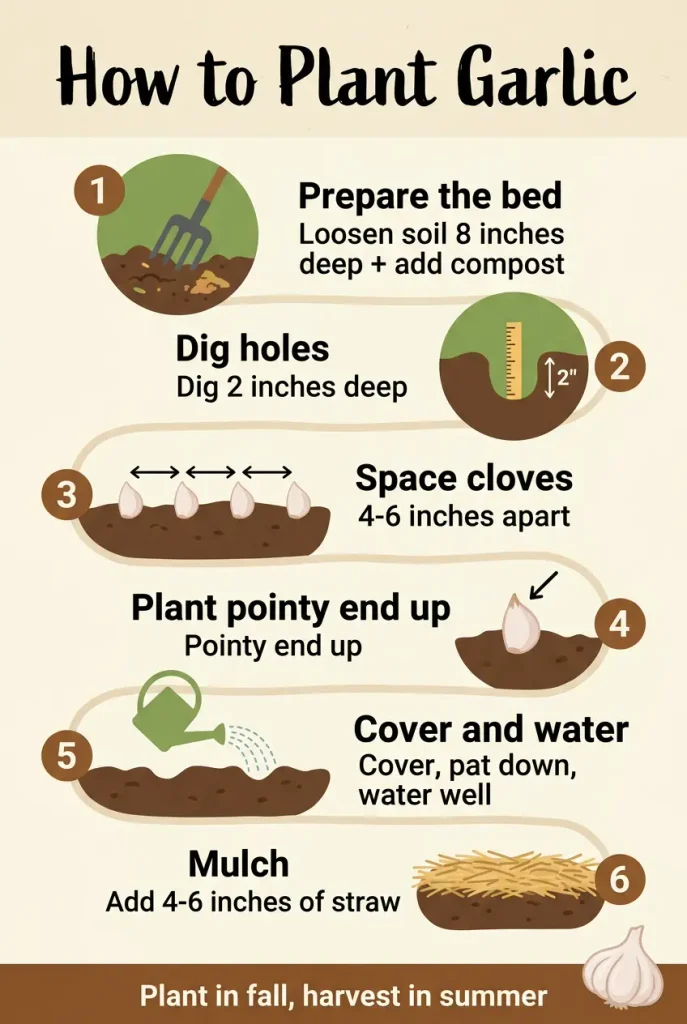
Prepare the bed
Loosen the soil about 8 inches deep. Remove weeds and rocks, then mix in compost.
Make the planting holes.
Each hole should be about 2 inches deep. In colder areas, go a little deeper, about 3 inches, to protect the cloves from frost.
Space the cloves.
Place cloves 4 to 6 inches apart. If you plant in rows, leave 10 to 12 inches between the rows.
Plant with the pointy end up.
The flat, root end goes down. If the clove is planted upside down, the shoot has to twist its way up, and the plant grows weaker.
Cover and press down gently.
Fill the holes with soil, then pat the surface lightly.
Water well.
Give the bed a deep watering to help the roots settle in.
Add mulch.
Spread 4 to 6 inches of straw, shredded leaves, or dry grass clippings over the bed. Mulch protects the cloves from freezing, keeps the soil moist, and stops weeds.
Garlic Care During the Season
Watering
- Fall: Water after planting so the roots can settle. After that, rain is usually enough.
- Winter: Garlic needs little or no extra water while it rests.
- Spring and early summer: This is when the bulbs grow. Give about 1 inch of water per week, including rain. Water deeply instead of a little each day.
- Before harvest: Stop watering about 2 to 3 weeks before harvest. Dry soil helps the bulbs mature and store well.
Feeding
Garlic is a hungry plant. Give it a boost in early spring, when the green shoots begin to grow fast.
- Use a nitrogen-rich fertilizer, such as blood meal, fish emulsion, or compost tea
- Feed again about 3 to 4 weeks later
- Stop feeding by late spring (around the end of May in many areas). Feeding too late can lead to small, poorly formed bulbs.
Weeding
Garlic does not compete well with weeds. Keep the bed clear, especially in spring. Pull weeds by hand, or use a shallow hoe, because the roots are close to the surface.
Cutting Scapes (Hardneck Garlic Only)
In late spring or early summer, hardneck garlic sends up a curly flower stem called a scape.
- Cut it off when it curls once or twice, before it straightens. This sends the plant’s energy into the bulb instead of the flower, so you get bigger bulbs.
- Don’t throw the scapes away. They taste mild and garlicky. Use them in stir-fries, pesto, soups, or grilled on their own.
Common Problems and Fixes
| Problem | Likely Cause | What to Do |
|---|---|---|
| Yellow leaves in spring | Nitrogen, or soil too wet | Feed with a nitrogen fertilizer, and improve drainage |
| Yellow tips in early summer | Natural ripening | No action needed. This is normal near harvest. |
| Small bulbs | Crowding, weeds, little water in spring, or small cloves planted | Space plants properly, weed often, water in spring, plant big cloves |
| No bulb forming | Planted too late, too little cold, or too much shade | Plant in fall, give it full sun, and chill seed garlic first in warm areas |
| Rust (orange spots on leaves) | Fungus in cool, damp weather | Remove badly affected leaves, space plants for airflow, and avoid watering from above |
| White rot (white fuzzy mold on bulbs, yellowing leaves) | Soil fungus that is hard to remove | Pull and throw away affected plants (not in compost), and don’t grow garlic or onions in that spot for several years |
| Onion maggots or other pests | Flies laying eggs near the plants | Cover plants with row cover, and rotate crops each year |
| Aphids | Small sap-sucking insects | Spray off with water, or use insecticidal soap |
Preventing Most Problems
A few habits stop garlic problems before they start:
- Buy disease-free seed garlic
- Plant in well-draining soil
- Rotate crops. Don’t plant garlic in the same spot two years in a row.
- Keep the bed weed-free
- Give plants enough space so air can move between them
When and How to Harvest Garlic
When Is Garlic Ready?
Garlic is usually ready in mid-summer, about 8 to 9 months after fall planting. In many areas this falls between late June and August.
Watch the leaves. Harvest when:
- The lower 3 to 4 leaves have turned brown and dry
- The top 5 to 6 leaves are still green
Each leaf stands for one layer of paper wrapping around the bulb. If you wait until all the leaves are brown, the wrapping splits and the bulb stores poorly. If you pick too early, the bulbs are small and the cloves are not fully formed.
Tip: Dig up one test bulb first. The bulb should be full, with cloves that fill out their papery skins.
How to Harvest
- Stop watering 2 to 3 weeks before harvest, and pick a dry day.
- Loosen the soil around the plants with a garden fork or spade, a few inches away from the bulbs.
- Lift the bulbs gently. Don’t pull them by the stem, because it can snap off.
- Brush off loose soil with your hand. Don’t wash the bulbs, and don’t knock them around, because bruised bulbs rot faster.
- Keep the leaves and roots on for now. They help the bulbs dry.
Curing and Storing Garlic
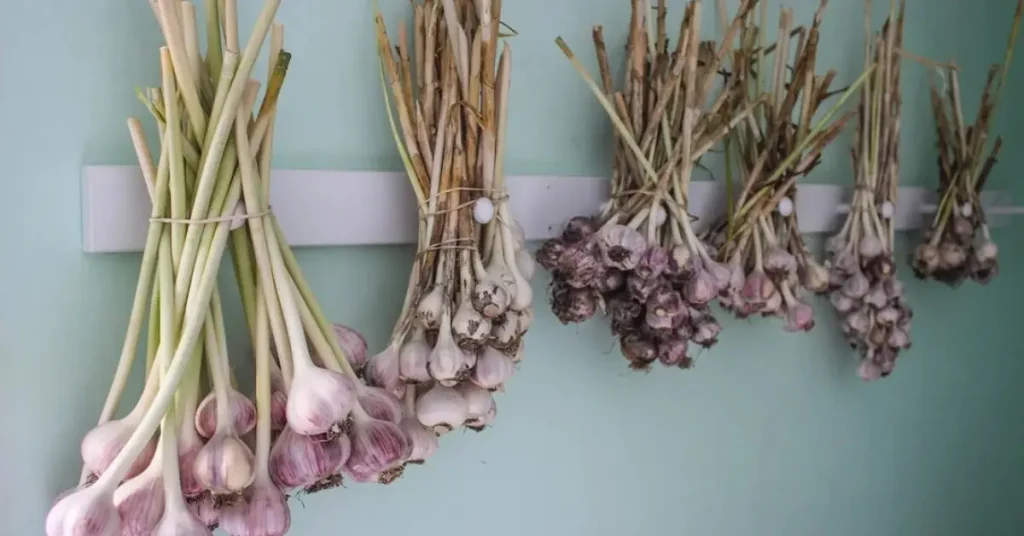
Curing
Curing means drying the garlic so it lasts months in storage. It takes 2 to 4 weeks.
- Tie the plants in small bunches of 5 to 10, or lay them in a single layer on a rack
- Hang or place them in a dry, shaded, airy spot, such as a porch, garage, or shed
- Keep them out of direct sun and rain
- Garlic is cured when the outer skins feel papery, the roots are dry and stiff, and the stem is dry and hard when you cut it near the bulb
Cleaning and Trimming
- Cut the roots to about 1/4 inch
- Cut the stems to about 1 inch for hardneck garlic. For softneck garlic, you can leave the stems on and braid them.
- Rub off dirt gently, and leave the papery layers on
Storing
The best conditions are cool, dry, and dark with some airflow, around 60–65°F (15–18°C).
- Use mesh bags, baskets, or paper bags
- Don’t use plastic bags or airtight containers, because they trap moisture
- Don’t store in the fridge, as it can make the cloves sprout
| Type | How Long It Keeps |
|---|---|
| Hardneck | About 4–6 months |
| Softneck | About 8–12 months |
Check your stored garlic now and then, and use up any bulbs that go soft or start sprouting.
Save Seed Garlic for Next Year
Set aside your biggest, healthiest bulbs and plant them in fall. Over a few years, your garlic gets better suited to your garden. You don’t need to buy seed garlic again.
FAQs
Can I grow garlic from a grocery-store clove?
Yes, it sprouts. But store-bought garlic may be treated to stop sprouting, and it can carry diseases. For the best results, buy seed garlic.
Can I grow garlic indoors or in pots?
Yes. Use a pot at least 10 to 12 inches deep, in a spot with 6 to 8 hours of sun. Outdoor pots usually work better than indoor ones, since garlic needs a cold rest period.
How long does garlic take to grow?
About 8 to 9 months from fall planting to summer harvest.
Why did my garlic not form bulbs?
Common reasons are planting too late, too little cold, too much shade, too much nitrogen late in the season, or crowded plants.
Is garlic an annual or perennial?
Garlic is a perennial plant, but gardeners grow it as an annual. Plant it, harvest it, and plant again the next fall.
Can I eat garlic leaves and scapes?
Yes. Young green garlic leaves and scapes both taste mild and garlicky, and are good in cooking.
Conclusion
Growing garlic is simple. Plant good cloves in fall, give them sun and loose soil, mulch for winter, feed them in spring, and harvest in summer. After that, dry them well and they last for months.