How to Grow Cucumbers in Pots: A Complete Guide
Cucumbers are wonderful plants that will grow well in a summer garden, but if you’re short on space, they do just as well in pots and containers. This makes them a convenient option and a particularly good starting point for novice gardeners.
Growing cucumbers in a container does require a slightly different approach than growing them in the ground, but it also comes with some real advantages. You get to choose exactly where to place your pot, whether that’s a balcony, patio, or deck, positioning it wherever the sun is best and where watering is easy. You also have full control over the soil, which matters most. Many of the diseases that affect cucumbers are soil-borne, so starting with fresh, clean potting mix gives your plants a much better chance of thriving than if they were planted directly in the ground.
Follow our expert advice below on how to grow cucumbers in pots. With the right variety, right pot, the right soil, and a little attention, a generous harvest is well within reach.
Cucumber Varieties For Containers
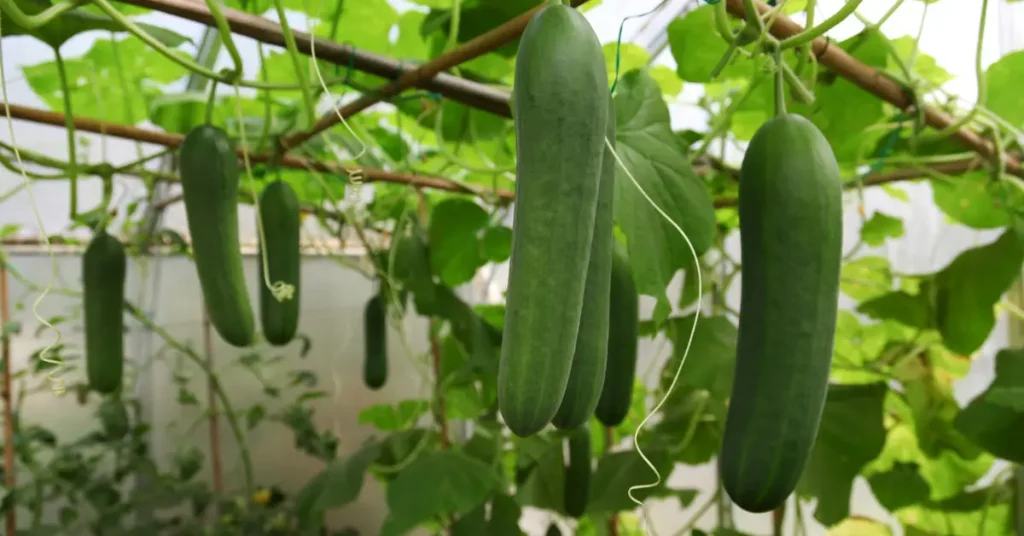
Not all cucumbers are good in containers, so variety selection matters.
Bush cucumbers are the easiest choice for pots. They stay compact, don’t need elaborate support structures, and produce well in a confined root space. Good options include Bush Pickle, Bush Slicer, and Spacemaster.
Vining cucumbers grow longer and need vertical support, but they’re not off the table. If you have a balcony railing or a trellis, varieties like Diva or Suyo Long can work. Remember, they’ll need more management.
For hot climates, look for heat-tolerant varieties. Marketmore 76 and Armenian cucumber handle high temperatures better than most. If summers in your area are intense, this is worth paying attention to.
Picking the Right Pot
The pot you choose has a direct impact on how well your cucumber grows.
Size: Go with at least a 24-inch diameter pot, or roughly 15 to 20 gallons in volume. Cucumbers have large root systems and need room to spread. Smaller pots dry out faster, stress the plant, and reduce your yield.
Pots Comparison:
- Plastic pots retain moisture well and are lightweight. A good everyday choice, especially in hot weather where terracotta dries out too fast.
- Terracotta pots are breathable and look great, but they lose water quickly. If you use terracotta, you’ll be watering more often.
- Fabric grow bags offer excellent drainage and air pruning of roots, which keeps the root system healthy. They dry out fast though, so check moisture daily in summer.
- Self-watering pots have a water reservoir at the bottom and are ideal if you travel or tend to forget to water. They maintain consistent moisture, which cucumbers love.
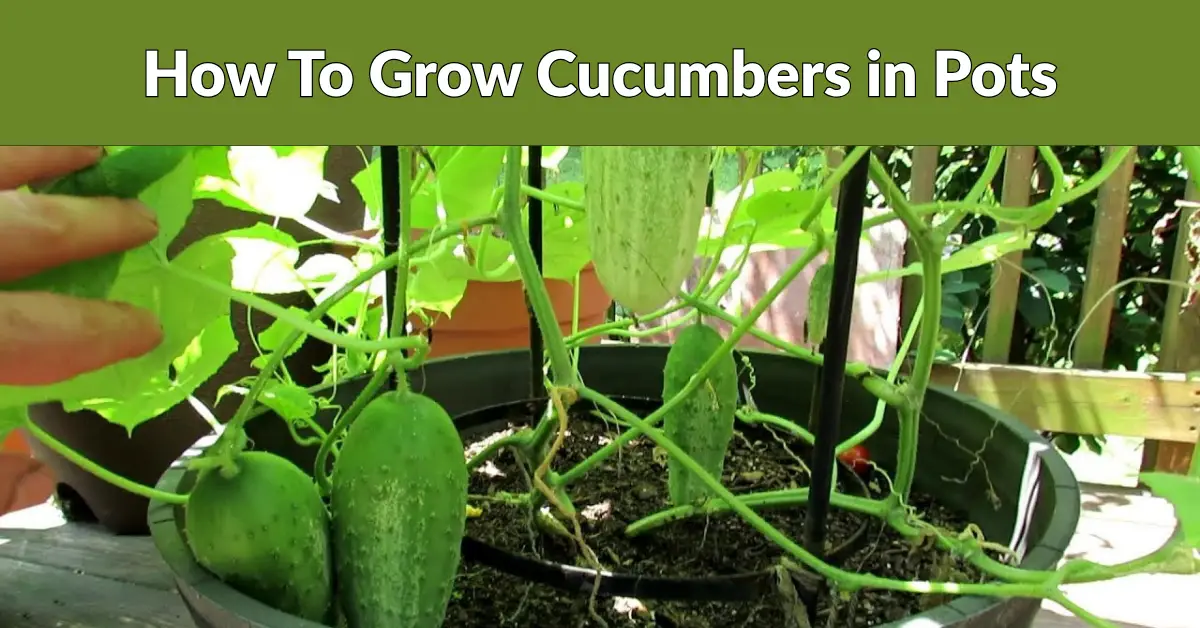
- Cucumber Planter with Trellis is the best choice. By giving vines a structure to climb, a trellis helps maximize growing space while keeping plants off the ground, making it ideal for patios, balconies, and compact gardens. It also improves air circulation and keeps fruit cleaner as it develops.
Drainage: Whatever pot you use, it must have drainage holes. Sitting in waterlogged soil will rot cucumber roots quickly. If you’re repurposing a container like a bucket or crate, drill five or six holes in the bottom before planting.
Getting the Soil Mix Right
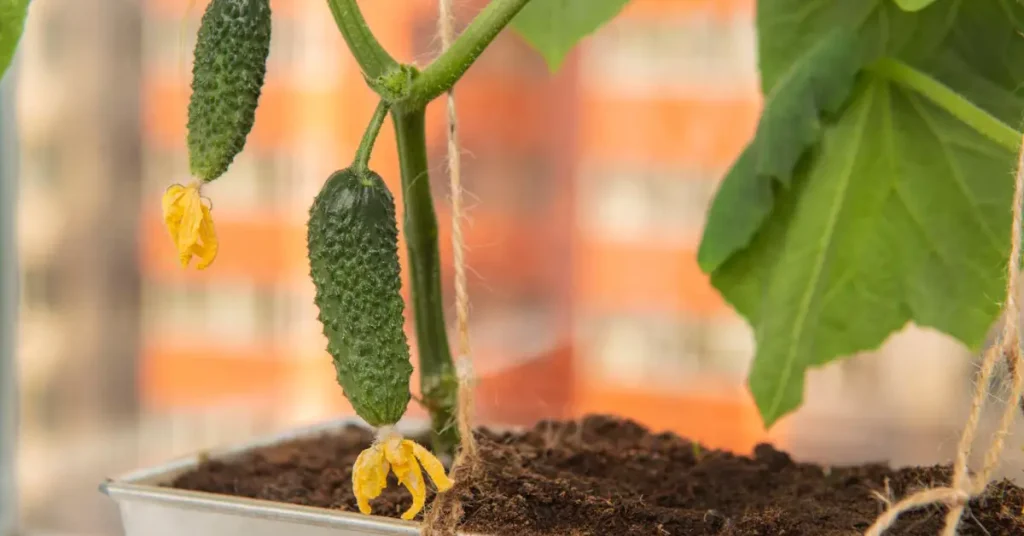
Garden soil alone won’t work in a pot. It compacts over time and doesn’t drain well enough for containers.
A reliable mix is 50% good quality potting mix and 50% compost. The potting mix keeps things light and airy. The compost adds nutrients and helps retain just enough moisture without waterlogging.
Cucumbers prefer a slightly acidic to neutral soil, around pH 6.0 to 7.0. If your water is very alkaline, you may see yellowing leaves and slow growth. A cheap soil pH meter is worth having if you plan to grow vegetables regularly.
Avoid peat-heavy mixes. They can become hydrophobic when dry.
Planting Cucumbers
When to plant: Cucumbers are warm-season vegetables. They don’t tolerate frost and struggle in cold soil. Wait until nighttime temperatures are consistently above 60°F (15°C) before planting outside.
Direct sowing: Push seeds about half an inch deep into moist soil, two or three seeds per pot. Once they germinate and you can see which seedling is strongest, thin down to one plant per pot. Cucumbers typically germinate in 5 to 10 days in warm conditions.
Transplanting seedlings: If you started seeds indoors or bought seedlings, transplant them once they have at least two true leaves and the weather is warm enough. Handle the root ball gently.
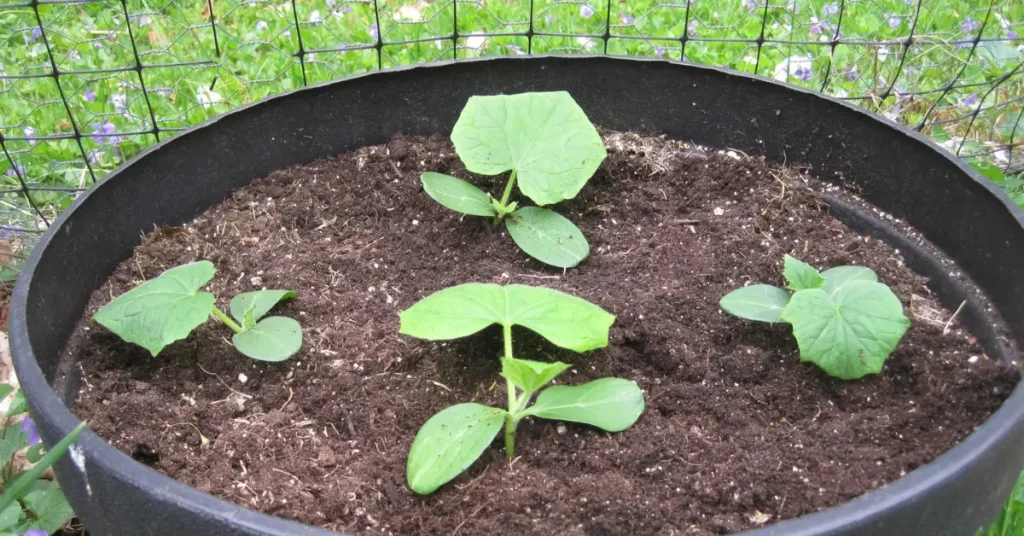
What healthy germination looks like: First you’ll see two round seed leaves (cotyledons) emerge. The true cucumber leaves come after, with their distinctive jagged shape. Once you see two or three true leaves, the seedling is established.
Sunlight and Placement
Cucumbers need 6 to 8 hours of direct sunlight daily. This is non-negotiable for good fruit production.
One advantage of growing in pots is that you can move them. In spring, when the sun is mild, place them in the most exposed spot you have. As summer heats up, if temperatures regularly exceed 95°F (35°C), move the pot somewhere that gets morning sun but is shaded in the afternoon. Intense afternoon heat can stress the plant and cause flowers to drop without setting fruit.
On a rooftop or balcony, reflected heat from walls and floors can make conditions hotter than the actual air temperature. If you notice the leaves wilting by midday even with adequate water, that’s usually the cause. A slightly shaded afternoon spot will help.
Watering Potted Cucumbers
Potted cucumbers dry out faster than those in the ground. In peak summer, you have to give watering once or even twice a day.
The finger test: Push your finger an inch into the soil. If it feels dry at that depth, it’s time to water. If it still feels moist, wait.
How to water: Water deeply until it runs freely from the drainage holes. This ensures the entire root zone gets moisture. Shallow watering, just wetting the top inch, encourages roots to stay near the surface, making the plant more vulnerable to heat and drought.
Signs of overwatering: Yellowing lower leaves, soggy soil that never seems to dry, and a sour smell from the pot. Overwatering is just as damaging as underwatering.
Signs of underwatering: Underwatered cucumber plants show signs like wilting, drooping, and dry, crispy, curled leaf margins. The plants look stressed during hot, dry days, with slow growth, stunted development, and bitter-tasting fruits.
Self-watering spikes: If you find it hard to keep up with watering, terracotta self-watering spikes inserted into the soil can help maintain consistent moisture. They’re inexpensive and work well for busy gardeners.
Drip systems: For multiple pots, a basic drip irrigation system on a timer is worth setting up. It takes the guesswork out of watering and keeps moisture consistent, which is important for preventing bitter cucumbers.
Feeding and Fertilizing
Cucumbers are heavy feeders. A soil mixed with compost gives them a good start, but they’ll need regular feeding throughout the season.
Early growth stage (seedling to first flowers): Focus on nitrogen. It supports leafy, vigorous growth. A balanced granular vegetable fertilizer mixed into the soil at planting works well for this phase.
Flowering and fruiting stage: Shift to a fertilizer higher in potassium and phosphorus. Too much nitrogen at this stage pushes leafy growth at the expense of fruit. Look for a fertilizer labeled for tomatoes or fruiting vegetables.
Signs of nutrient deficiency: Pale yellow leaves (nitrogen), purple-tinged leaves (phosphorus), and brown leaf edges (potassium) are the most common nutrient deficiencies symptoms.
Support and Training
Support is necessary for climbing vegetables. Without it, the plant sprawls, stems can break under the weight of fruit, and airflow decreases.
Tomato cage: The simplest option. Push it into the pot at planting time and let the plant grow up through it naturally.
Vertical trellis: Better for vining types. Attach a trellis to a wall behind the pot or tie vertical strings from an overhead bar. Train the main stem upward and tie it loosely every few inches as it grows.
Training tips: Use soft ties or strips of cloth. Never wire or anything that cuts into the stem. Guide the main vine upward and pinch off side shoots that grow below the first few leaf nodes to keep the plant’s energy focused on upward growth and fruiting.
Pollination
This is where many container growers run into problems.
Cucumbers produce male and female flowers separately on the same plant. Male flowers appear first and have a thin stem. Female flowers come a week or two later and have a tiny immature cucumber at the base.
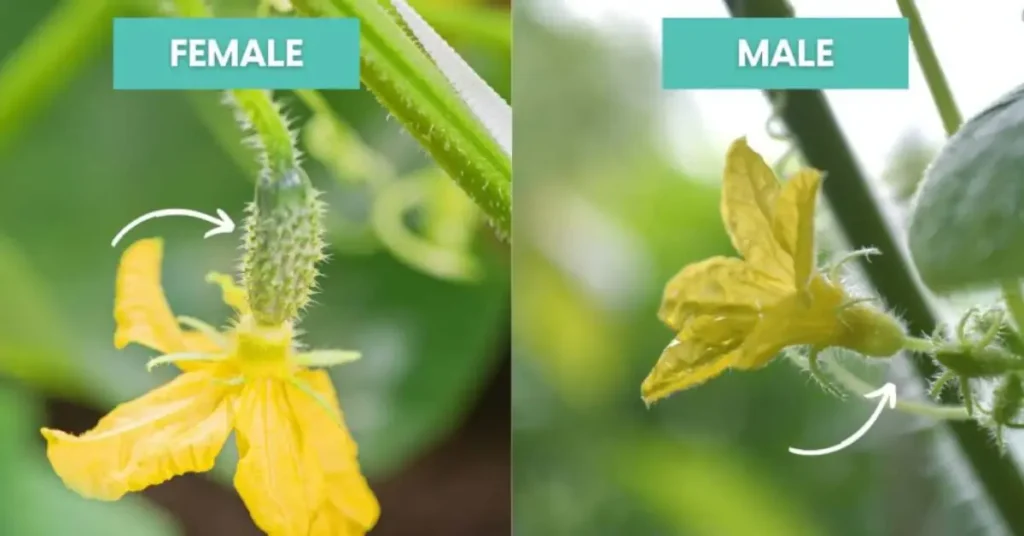
Pollination happens when insects carry pollen from male to female flowers. In a garden, bees handle this. On a balcony or rooftop, especially in urban areas, there may not be enough bee activity.
How to hand-pollinate:
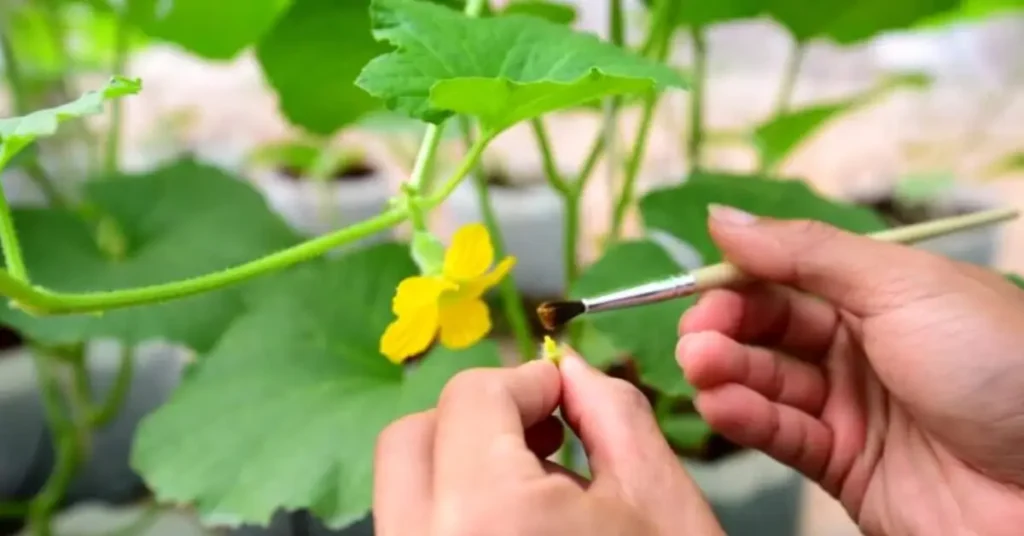
- Identify an open male flower (thin stem, no mini cucumber at base).
- Pick it or use a small paintbrush to collect pollen from its center.
- Dab that pollen directly onto the center of an open female flower.
- Do this in the morning when flowers are freshly open.
If you skip this and notice lots of flowers but no cucumbers forming, failed pollination is almost certainly the reason. Hand-pollinating takes two minutes and makes a real difference.
Common Problems and How to Fix Them
Yellow leaves
- Lower leaves yellowing is often normal as the plant matures.
- Widespread yellowing usually points to overwatering, nitrogen deficiency, or root bound conditions (the plant has outgrown its pot).
Bitter cucumbers
- Caused by stress, inconsistent watering, heat spikes, or the plant being left too long before harvest.
- Keep watering consistent and harvest on time to avoid this.
Aphids
- Small soft insects clustered on new growth and under leaves.
- Blast them off with water or spray with diluted neem oil. Check daily until they’re gone.
Spider mites:
- Tiny dots on leaves, fine webbing underneath. Common in hot, dry conditions.
- Increase humidity around the plant, remove affected leaves, and spray with neem oil or insecticidal soap.
Cucumber beetles:
- Yellow-green beetles with black spots or stripes. They chew leaves and spread disease.
- Hand-pick them off in the morning when they’re sluggish, or use row covers early in the season.
Powdery mildew:
- White powdery coating on leaves, usually appearing in late season.
- Improve airflow around the plant, avoid wetting the leaves when watering, and remove affected leaves. A diluted baking soda spray (1 teaspoon per liter of water) can slow its spread.
Harvesting
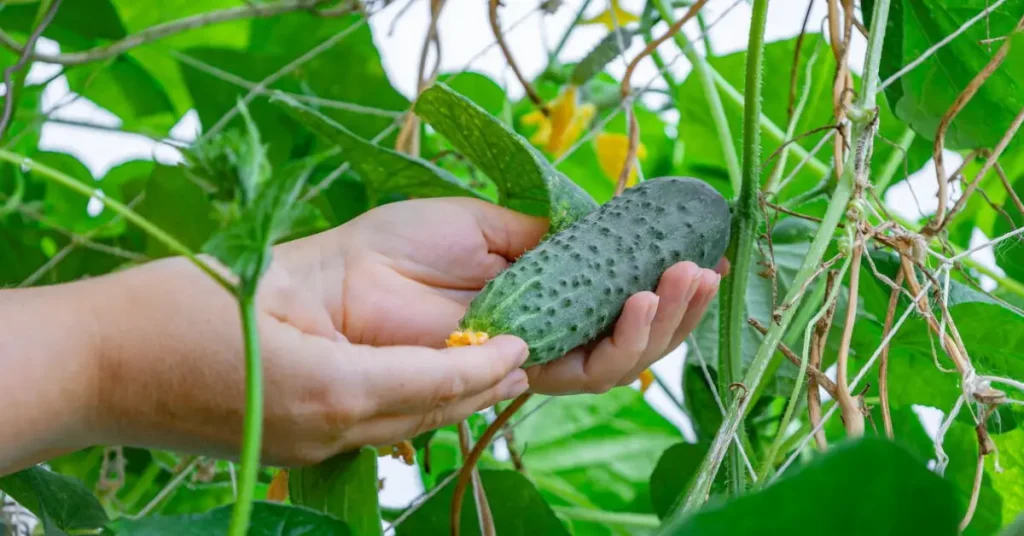
Cucumbers are ready to pick usually 50–70 days after planting. Most varieties are ready when they reach 6 to 8 inches long and have an even green color. Harvest cucumbers when they are firm, bright green, and before they turn yellow.
Check your plants every day or two once fruiting starts. Cucumbers grow fast and can go from perfect to overripe in a matter of days.
Use scissors or a sharp knife to cut the cucumber from the vine rather than pulling.
Succession Planting for a Continuous Harvest
A single pot of cucumbers typically fruits well for four to six weeks, then slows down. After that, the plant puts less energy into new fruit.
To keep harvesting longer, plant a second container about four weeks after the first. By the time your first plant winds down, the second will be hitting its stride.
If your growing season allows it, a third container planted four weeks after the second extends your harvest further. This simple method called succession planting.
Final Thoughts
Growing cucumbers in pots is easy once you understand what the plant needs. Good variety, good drainage, consistent watering, enough sun, and regular feeding cover most of the basics. The things that catch people off guard, pollination problems, bitter fruit, pest infestations, are all fixable once you know what to look for.
Start with one pot, one plant, and one good variety. Pay attention to how it responds and how it rewarded. By harvest time, you’ll have a clear picture of what to do differently or better next season.