The Beginner’s Guide To Monstera Watering
Monstera are tropical plants native to the rainforests of Central America, where warm temperatures, high humidity, and regular rainfall are just part of daily life. As a houseplant, monstera thrives when you bring a little of that environment indoors, consistent moisture in the soil, some added humidity in the air, and a watering routine that matches the rhythm of the plant. Monstera are not overly demanding when it comes to water, but they do need the right amount at the right time. Water too often and the roots suffer. Water too little and the leaves will tell you about it.
In this post, you will learn about monstera watering in detail.
How Often to Water Monstera
The short answer: water your monstera when the top two inches of soil feel dry to the touch. But the longer answer is that frequency varies quite a bit depending on the season, your home environment, and the plant’s age. Rather than picking a day of the week and sticking to it, make a habit of checking the soil every few days and letting that be your guide. A moisture meter takes the guesswork out entirely and is especially useful for new plant owners still learning to read their monstera’s cues.
How Watering Needs Change by Season
Monstera doesn’t need the same amount of water year-round, and adjusting with the seasons is one of the simplest things you can do for its long-term health.
Spring and Summer
This is when monstera grows most actively. Warmer temperatures, longer days, and stronger light all speed up how quickly the soil dries out. During peak growing season, most monsteras need watering every 5 to 7 days. Check the soil frequently and water as soon as the top inches feel dry.
Fall and Winter
Growth slows considerably once daylight shortens and indoor temperatures dip. A monstera in winter dormancy may only need water every 2 to 3 weeks. The temptation to keep a regular schedule is understandable, but watering too often during this period is one of the most common causes of root rot. When in doubt, wait a few more days, a slightly underwatered monstera bounces back easily; a rotted one is a much harder fix.
Factors That Affect How Often You Should Water
Beyond the calendar, a handful of conditions in your specific home will influence how quickly your monstera’s soil dries out.
Soil Type
A well-draining, airy tropical mix is ideal for monstera. Chunky, perlite-heavy soils drain fast and will dry out more quickly. Dense or compacted soils hold onto moisture longer, which sounds convenient but can suffocate roots over time.
Pot Material and Size
Terracotta pots are porous and breathable, they wick moisture away from the soil, so plants dry out faster and need watering more often. Plastic and glazed ceramic retain moisture, stretching the time between waterings. Pot size matters too: a pot that’s too large for the plant holds excess moisture the roots can’t use, setting the stage for rot.
Light
Monstera thrives in indirect light and does not do well with prolonged direct sun exposure. Too much direct sunlight not only risks burning the leaves but also dries the soil out faster than usual, meaning your plant will need water more often than it otherwise would.
Temperature and Humidity
A warm, dry home pulls moisture from the soil much faster than a cool, humid one, which means your watering schedule in summer could look very different from winter. Monstera adapts well to typical home conditions, it genuinely responds to added humidity with livelier, more vibrant leaves.
Aim to keep temperatures between 65 and 85 degrees Fahrenheit, and consider a humidifier or pebble tray if your space runs dry, your monstera will need less water and look better for it.
Does Water Quality Matter?
It does. Tap water in many municipalities contains chlorine and fluoride, and over time these minerals accumulate in the soil and show up as brown tips and edges on the leaves. The fix is simple: let tap water sit in an open container overnight before using it, which allows chlorine to dissipate. Filtered water or collected rainwater are better options if you have them.
Temperature matters too. Cold water straight from the tap can shock a tropical plant’s roots. Room-temperature water is the safest.
How to Water Monstera
Top Watering
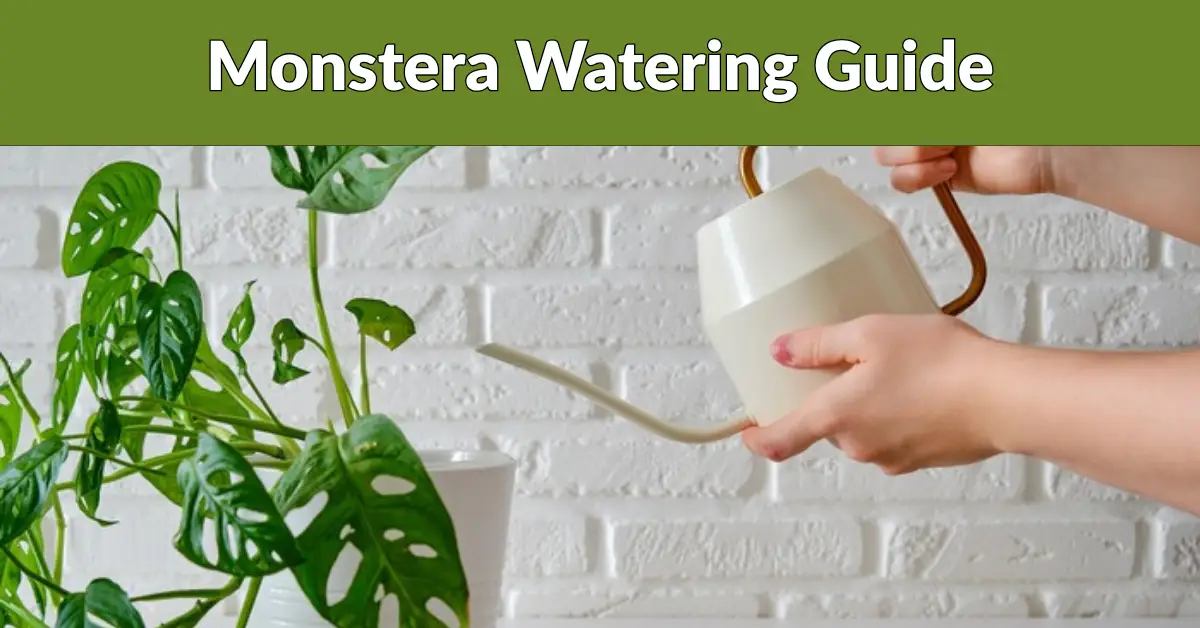
The most common approach. Pour water slowly and evenly over the soil surface, not the leaves, until it flows freely from the drainage hole. This ensures the entire root zone is getting moisture.
Don’t let your plant stand in water; drain the cachepot or saucer after 30 minutes if any excess water remains.
Bottom Watering
Some gardeners prefer bottom watering because it encourages the plant to take up water through its roots, which can help develop a stronger root system. To do this, fill a shallow tray or dish with water and place the monstera plant, still in its container, into the water.
Read: Monstera Plant Care
Watering Young vs. Mature Monsteras
A newly propagated cutting or a small, recently purchased monstera has a limited root system that can’t absorb large amounts of water at once. Keep the soil lightly and evenly moist during this stage.
Mature, well-rooted monsteras are much more forgiving. They can handle the full soak-and-dry cycle well, and their larger root systems are better to manage brief periods of drought. As your plant grows, you can water more generously and confidently.
What to Do About Aerial Roots
Monstera produces thick, cord-like aerial roots that emerge from the stem. These are completely normal and a sign of a healthy plant, don’t cut them off. They don’t need to be watered the way soil roots do, but they do need humidity. A light misting every now and then is enough, or you can tuck them into a moss pole where they’ll draw moisture naturally.
Avoid submerging aerial roots in water or keeping them perpetually wet, they can rot just like soil roots. If they’re growing in a direction you don’t love, you can gently guide them toward a support or tuck them back into the pot.
Adjusting Watering After Repotting
Repotting disrupts the root system, and your monstera will need a little extra care in the weeks that follow. Water thoroughly immediately after repotting to help the fresh soil settle around the roots and ease the transition. After that, ease off slightly, the plant is focused on recovery, not growth, and doesn’t need heavy watering.
Hold off on fertilizing as well until you see new leaf growth, which signals the roots have settled and the plant is ready to thrive again. Once that growth appears, you can return to your normal watering routine with confidence.
Signs Your Monstera Needs Water
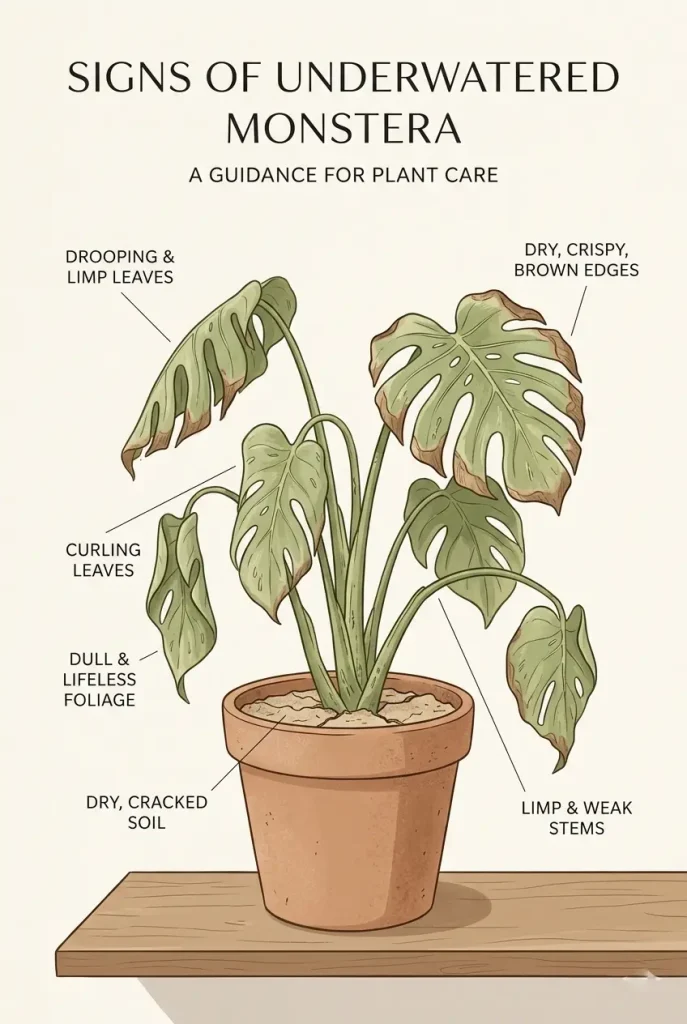
A thirsty monstera usually makes itself known. Leaves that droop, curl slightly, or feel less firm than usual are early signs. Brown, crispy edges or tips especially when the soil is dry, point to underwatering. “Don’t assume that because the leaves are green and not browned, all is well,” , lackluster foliage can signal the plant needs more water even before visible damage sets in.
Signs Your Monstera is Being Overwatered
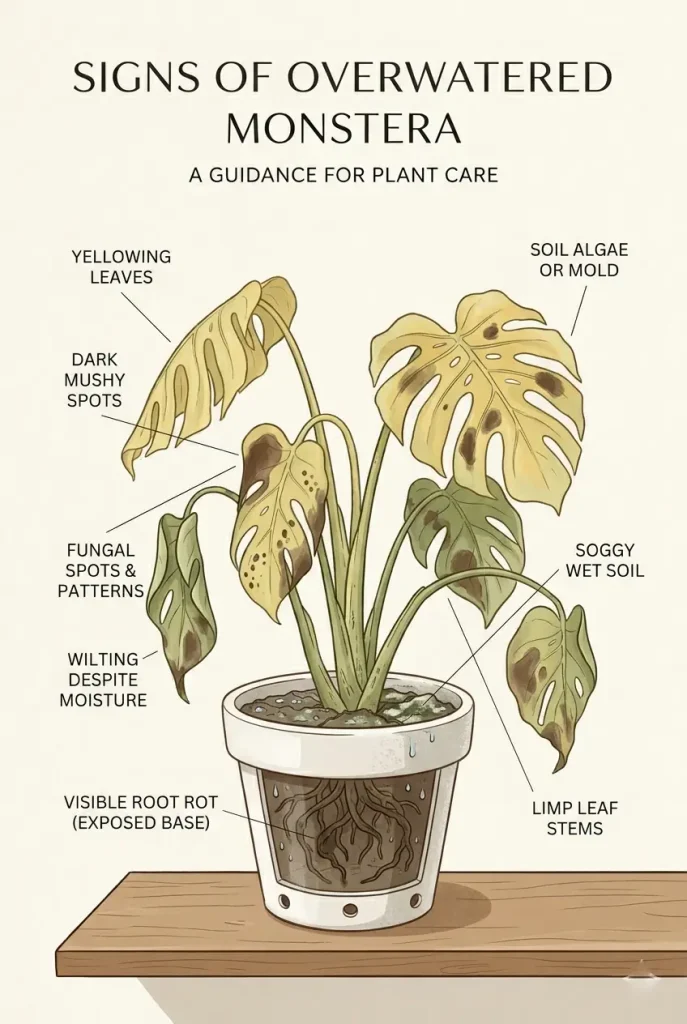
Overwatering is the more dangerous extreme. Yellow, soft leaves are a classic sign the plant is too wet. If the soil feels moist but the plant is still wilting, root rot may already be present. “If your potting mix is moist, but the plant is wilted, that would be an indication that the roots have rotted,”.
If you catch it, act fast: unpot the plant, trim away any dark or mushy roots with clean scissors, let the root ball air out briefly, and repot into fresh, well-draining soil. Ease up on watering as it recovers, and it has a good chance of bouncing back.