
Calendula vs Marigold: What’s the Difference?
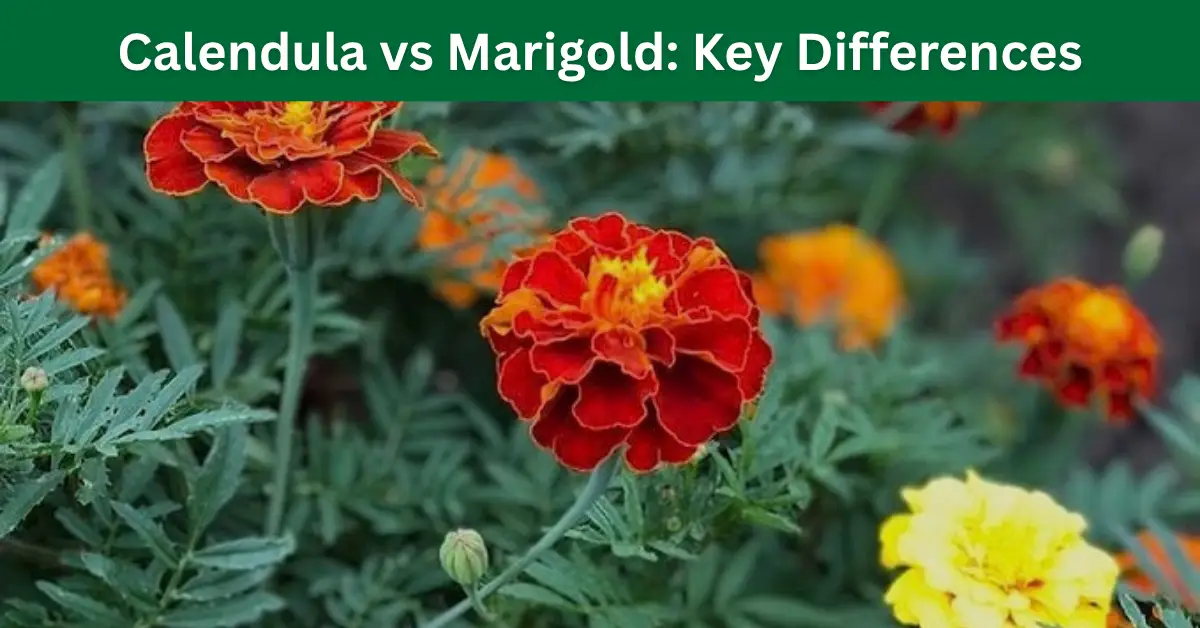
Calendula and marigold are confused with each other. Their flowers look similar at first glance. Both have yellow, orange, or golden blooms. Both are also members of the daisy family, Asteraceae.
However, calendula and marigold are not the same plant. Calendula usually refers to Calendula officinalis. Garden marigolds belong mainly to the Tagetes genus. They have different flowers, leaves and growth habits.
The confusion comes partly from the name “pot marigold, English Marigold and Scotch Marigold”. These are common names for calendula. It makes people think that calendula is one of the same marigolds grown in gardens. It is not.
Knowing the difference is useful when buying seeds or choosing flowers for the garden. It also matters if you plan to use the flowers for food or herbal preparations. Not every flower sold as a marigold has the same uses as calendula.
In this guide, we will compare calendula and marigold. We will look at their appearance, seeds, benefits, tea, growing needs and common uses. Continue reading calendula vs marigold.
Calendula vs Marigold
| Feature | Calendula | Marigold |
|---|---|---|
| Botanical name | Calendula officinalis | Tagetes spp. |
| Common name | Pot marigold | Garden marigold |
| Plant family | Asteraceae | Asteraceae |
| Flower colors | Yellow, orange, cream | Yellow, orange, red, gold, bicolor |
| Flower shape | Daisy-like, with a simple center | rounded, layered, or daisy-like |
| Leaves | Soft, oblong to lance-shaped | Usually divided or finely cut |
| Scent | Mild, sometimes resinous | Often strong and distinctive |
| Common garden use | Flower beds, borders, containers | Beds, borders, containers, vegetable gardens |
| Culinary use | Petals are commonly used as a garnish or food coloring | Some species have edible petals |
| Herbal use | Commonly used in traditional herbal preparations | widely used in natural medicine |
| Tea | Calendula flowers are commonly used for herbal tea | Some Tagetes species are used in herbal teas |
| Seed appearance | Curved, hooked, or crescent-shaped | Long, narrow seeds, often with a dark body and lighter tip |
| Genus | Calendula | Tagetes |
| Main reason for growing | Flowers, culinary use, traditional herbal use | Ornamental flowers and garden planting |
Is Calendula the Same as Marigold?
No, calendula and marigold are different plants. Calendula belongs to the Calendula genus. The plant most people call a garden marigold belongs to the Tagetes genus.
Calendula is commonly known as pot marigold. This name is the main reason for the confusion. The word “marigold” appears in both names, but the plants are not the same.
Calendula officinalis is the species most often grown as calendula. It has simple, daisy-like flowers. The blooms are usually yellow or orange. The petals can be used in some foods and traditional herbal preparations.
Garden marigolds include several Tagetes species. French marigold (Tagetes patula) and African marigold (Tagetes erecta) are two common examples. Their flowers are often fuller and more rounded than calendula flowers.
The plants also have different leaves. Calendula leaves are broader and softer. Marigold leaves are usually divided into many narrow sections. Marigold foliage also has a stronger scent.
So, calendula is not the same as the garden marigold found in the Tagetes genus. They are related because both belong to the Asteraceae family, but they are separate plants.
What Is Calendula?
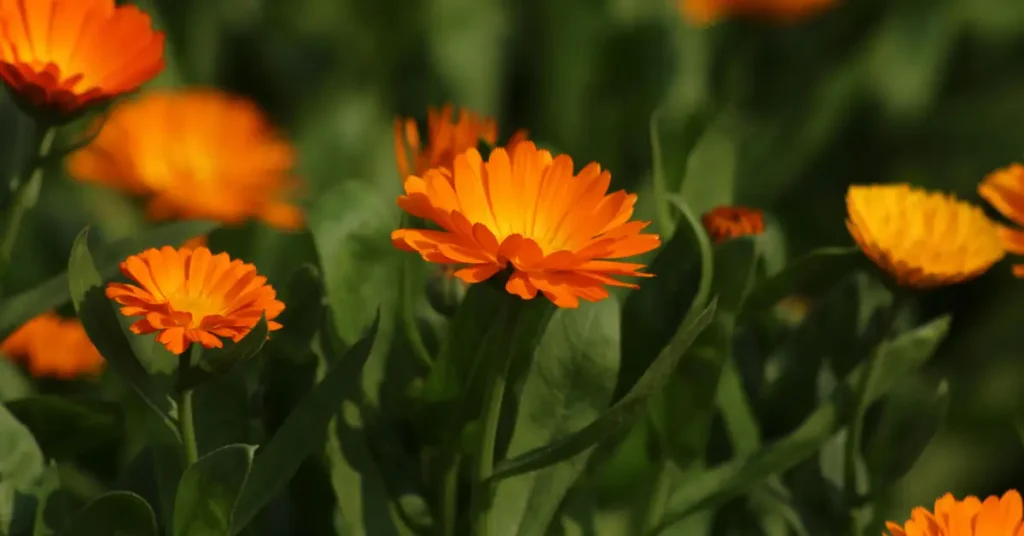
Calendula is a flowering plant in the Calendula genus. The species most often grown in gardens is Calendula officinalis. It is also called pot marigold.
Calendula produces flowers in shades of yellow and orange. The blooms have a daisy-like appearance. Some varieties have single flowers, while others have more layers of petals.
The leaves are green and usually have an oblong or slightly lance-shaped form. They feel softer than the finely divided leaves of many garden marigolds.
Calendula is grown as an ornamental flower, but it has other uses too. Its petals can be used as a colorful addition to some foods. The flowers are also used in traditional herbal preparations and skincare products.
Calendula is commonly grown from seed. The seeds have a curved or hooked shape. This makes them quite different from the long, narrow seeds of many Tagetes marigolds.
In the garden, calendula can be planted in flower beds, borders, containers, and other sunny areas. Depending on the climate, it may be grown as an annual or behave as a short-lived perennial.
What Is a Marigold?
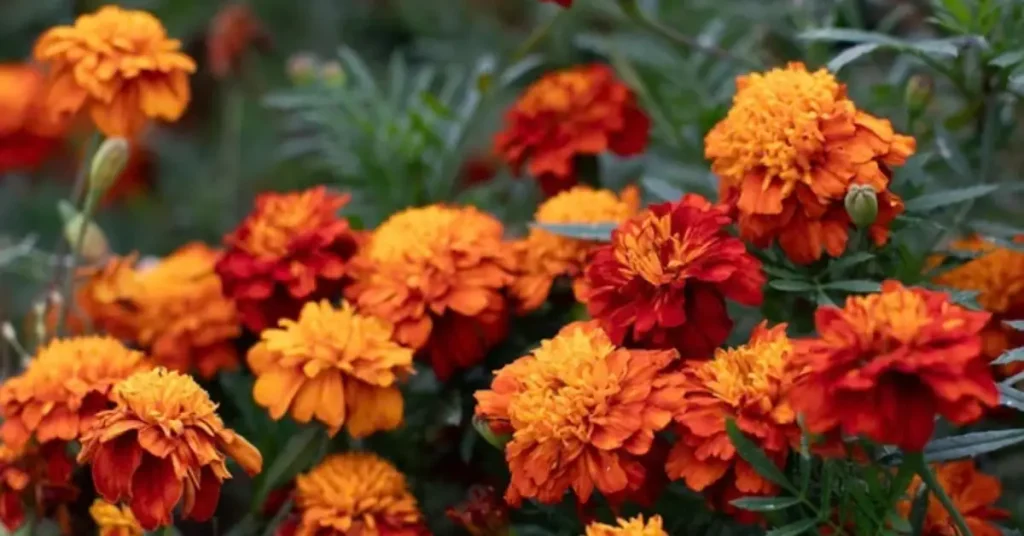
Marigold is the common name used for flowering plants in the Tagetes genus. These plants are popular in home gardens because of their bright flowers and long flowering period.
There are several types of garden marigolds. French marigold (Tagetes patula) usually stays more compact. African marigold (Tagetes erecta) can grow taller and produces large, rounded flowers. Signet marigolds (Tagetes tenuifolia) have smaller flowers and finely divided leaves.
Marigold flowers come in yellow, orange, red, gold, and mixed shades. Some flowers have a single row of petals. Some have many layers that give them a fuller appearance.
Marigold leaves are divided into narrow sections. They also have a noticeable scent when the leaves are crushed.
Marigolds are commonly planted in flower beds, borders, containers and vegetable gardens. They are also grown from seed.
Calendula vs Marigold: How to Tell Them Apart
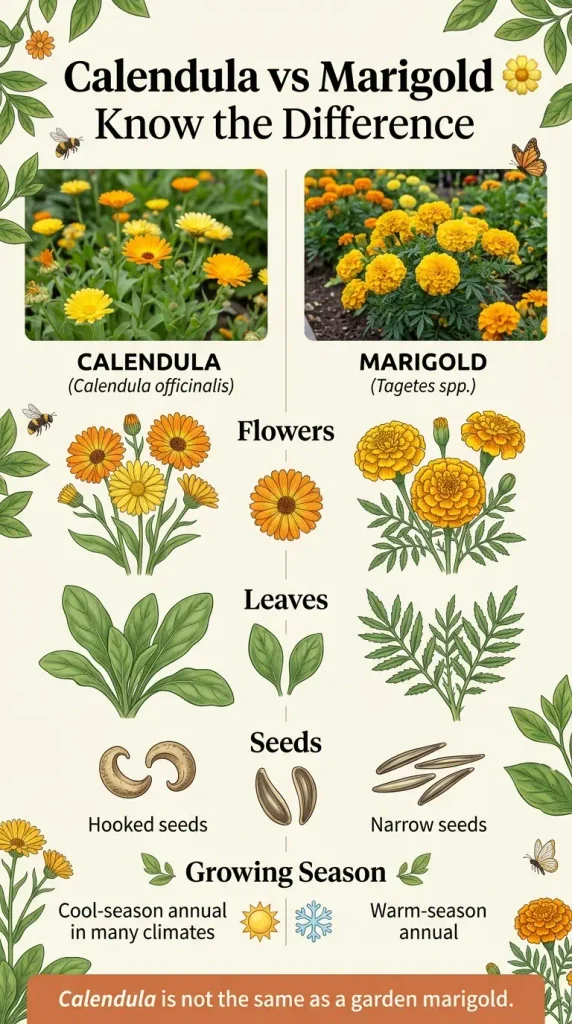
Marigolds are warm-season annuals. They bloom from early summer until the first hard frost. Calendula are cool-season hardy annual flowers. Their flowers, leaves, plant shape, and seeds have several noticeable differences.
Flowers
Calendula flowers usually have a simple daisy-like form. The petals spread outward from the center. Yellow and orange are the most common colors.
Marigold flowers look very different depending on the type. Some have simple, daisy-like blooms. Others have dense layers of petals and a rounded shape.
Leaves
Calendula leaves are broader and have a soft, slightly hairy texture. They are not deeply divided.
Marigold leaves are more finely divided. They have narrow leaf sections that give the foliage a feathery appearance.
Plant Shape
Calendula forms a low, spreading clump. Its flower stems rise above the foliage.
Marigolds vary in size. Some types stay short and compact, while others grow much taller. African marigolds are known for their larger plants and flowers.
Scent
Calendula has a mild plant scent. Marigold foliage has a stronger and more noticeable aroma.
Seeds
Calendula seeds are curved and look like small hooks or crescents. Marigold seeds are usually long, narrow, and straight.
The seeds are one of the easiest ways to distinguish. This difference is also useful when buying or saving seeds.
Calendula vs Marigold Seeds
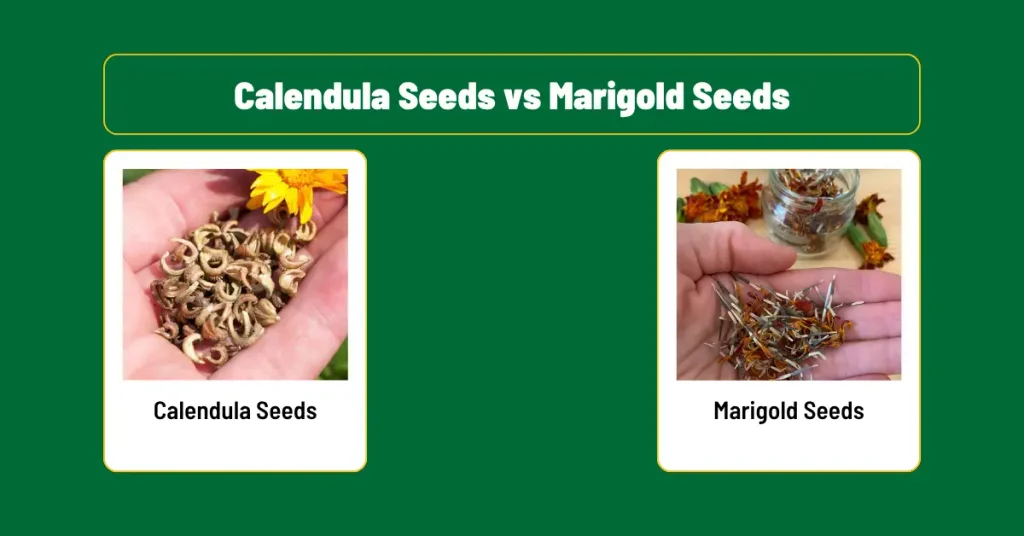
Calendula and marigold seeds look quite different.
What Do Calendula Seeds Look Like?
Calendula seeds are curved and irregular. They look like small hooks, claws, or curved pieces. Some seeds are more tightly curled than others.
The seeds are usually brown or grayish-brown when mature. They develop inside the dried flower head after flowering.
Calendula seeds are easy to collect once the flower heads have dried. The mature seeds can then be stored in a cool, dry place until planting time.
What Do Marigold Seeds Look Like?
Marigold seeds are usually long, thin, and narrow. They look more like small straight sticks than the curved seeds of calendula.
Marigold seeds have a darker body with a lighter, sometimes pale tip. The exact appearance can vary between Tagetes species and varieties.
Marigold seeds also develop in the dried flower heads.
Calendula vs Marigold Seeds: Main Differences
| Feature | Calendula Seeds | Marigold Seeds |
|---|---|---|
| Shape | Curved or hooked | Long and narrow |
| Appearance | Irregular and crescent-like | Straight and slender |
| Color | brown or gray-brown | Usually dark with a lighter tip |
| Easy identification | Curved shape is a useful clue | Long, thin shape is a useful clue |
| Plant genus | Calendula | Tagetes |
When buying seeds, check the botanical name on the packet. Look for Calendula officinalis if you want calendula. For garden marigolds, look for a Tagetes species such as Tagetes patula or Tagetes erecta.
Calendula vs Marigold Benefits
Calendula and marigolds have different uses. Calendula has more culinary and traditional herbal uses. Marigolds are mainly grown as ornamental garden plants, although some Tagetes species also have culinary and traditional uses.
Calendula Benefits
Calendula is valued for its bright flowers and several traditional uses. The petals are added to salads, rice dishes, soups, and other foods for color. They have also been used as a natural coloring ingredient.
Calendula flowers are used in traditional herbal preparations. They are also found in some creams, lotions, and other skincare products. These uses are based on traditional practices and commercial formulations, rather than meaning that calendula can treat a medical condition.
Calendula also has value in the garden. Its flowers add color to beds and borders. The blooms attract bees and other flower-visiting insects. Calendula is grown as trap crop.
Marigold Benefits
Marigolds are mainly valued for their colorful flowers. They come in many shades and flower forms, so they are used in beds, borders, containers, and other garden spaces.
Marigolds also provide flowers for pollinators. Smaller-flowered types attract bees and other insects while they are in bloom.
Some Tagetes species are used in cooking and traditional preparations. For example, signet marigolds have edible petals.
Marigolds are also planted around vegetable gardens. They are good companion plants. The release a substance that suppress nematodes.
Calendula vs Marigold Tea
Calendula and marigold tea are not the same thing. The plant used to make the tea matters. “Marigold” can refer to several Tagetes species, while calendula usually refers to Calendula officinalis.
Calendula Tea
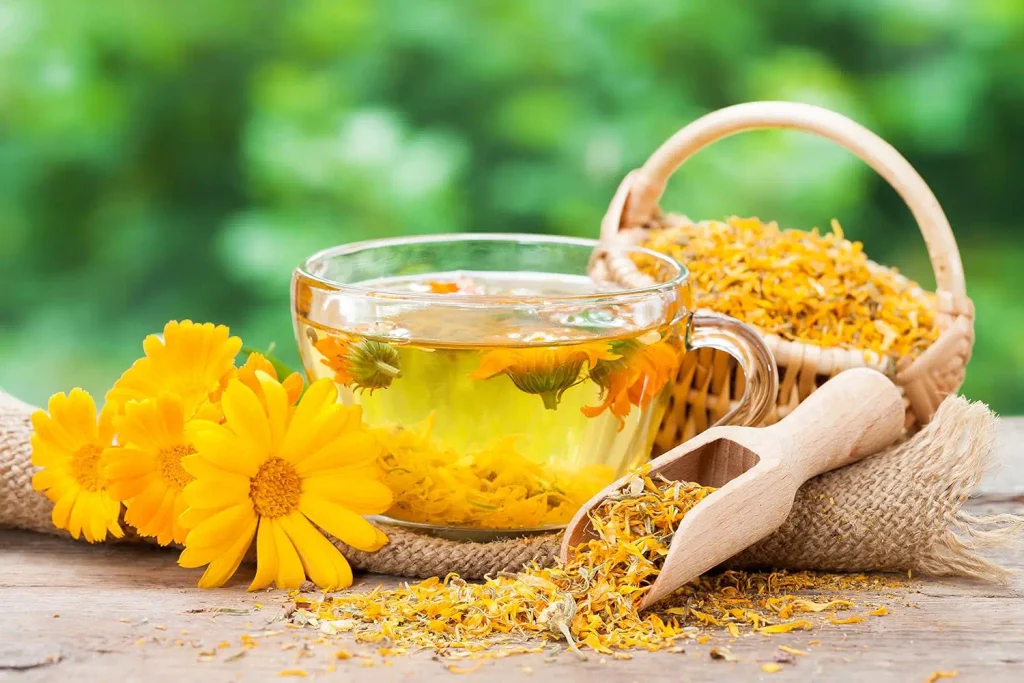
Calendula petals or dried flower heads are used to prepare herbal tea. The drink has a mild flavor and a yellow to golden color.
Calendula tea is also part of traditional herbal practices. However, traditional use does not mean it can treat or prevent a disease. People with allergies to plants in the daisy family may also need to be cautious.
Marigold Tea
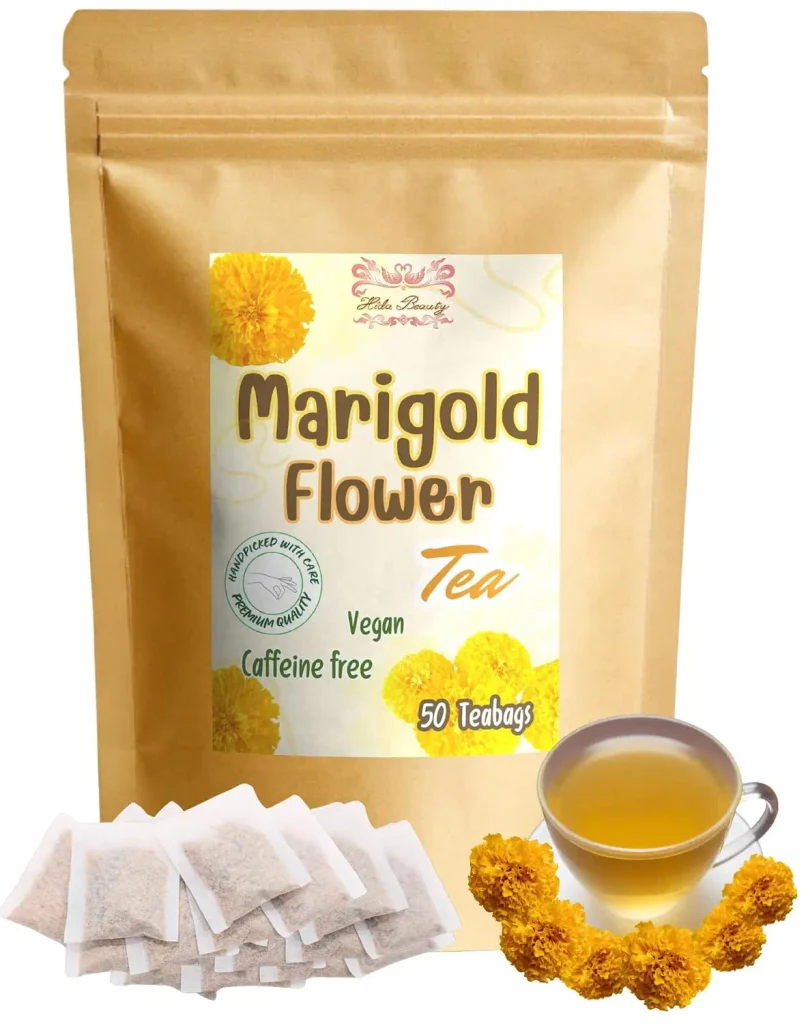
Some Tagetes species are used to prepare herbal drinks. The flavor and aroma can differ depending on the species.
Can You Substitute Marigold for Calendula Tea?
It is better not to substitute them without knowing the exact plant. Calendula and Tagetes are different genera. They also have different chemical profiles and traditional uses.
If you are buying dried flowers for tea, check the botanical name on the package. For calendula, look for Calendula officinalis. For a Tagetes product, check the listed species and instructions for use.
Calendula vs Marigold Tea
Calendula tea: Usually made from Calendula officinalis and has a mild, floral taste.
Marigold tea: Made from certain Tagetes species and can have a different taste and aroma.
The main point is simple: calendula tea and marigold tea should not be treated as identical just because calendula is called pot marigold.
Are Calendula and Marigolds Edible?
Calendula and some marigold species have edible flowers. But they should not be treated as the same plant. The exact species matters.
Can You Eat Calendula?
Yes, calendula (Calendula officinalis) is commonly grown for its edible petals. The petals are removed from the flower and added to salads, soups, rice dishes, desserts, and other foods.
Calendula petals have a mild taste. They are used more for their color than for a strong flavor. Fresh petals are also used as a garnish.
Can You Eat Marigolds?
Most of the marigolds are toxic and inedible. Some marigold species have edible flowers. Signet marigolds, for example, are known for their edible petals. Their flavor range from citrus-like to spicy, depending on the variety. Other edible marigolds are Tagetes lucida and Tagetes minuta.
A marigold bought as a decorative plant should not be considered safe to eat.