Cosmos Flowers (Meaning,Varieties and Growing Guide)

Cosmos flowers are cheerful, daisy-like blooms that bring a wild, carefree beauty to gardens from summer through fall. Their name comes from the Greek word “kosmos,” meaning “order,” “harmony,” or “beautiful”.
Native to Mexico and parts of Central America, cosmos (especially Cosmos bipinnatus and Cosmos sulphureus) have become garden favorites worldwide. They feature single or semi-double flowers up to 4 inches across, with a bright yellow center surrounded by delicate petals in shades of pink, white, magenta, orange, red, and even bicolors. The feathery, fern-like foliage adds airy texture, swaying gently in the breeze.
These easy-to-grow annuals are perfect for beginners. They thrive in full sun, bloom nonstop once started, and self-seed happily for more flowers next year. Butterflies, bees, and other pollinators love them. They’re also excellent for cutting; the long stems last well in vases, add a light, whimsical touch to bouquets.
In this guide, you will learn about the meaning of cosmos flowers, the best varieties to grow in gardens, and how to grow cosmos successfully.
Cosmos Meaning and Symbolism
Cosmos symbolizes order, harmony, and balance, reminding us of the universe’s structured beauty and encouraging inner peace amid life’s chaos. It stands for peace, tranquility, innocence, modesty, joy, and new beginnings.
Different colors represent different meanings:
- Pink cosmos represent mother’s love, gentle affection, femininity, and emotional warmth.
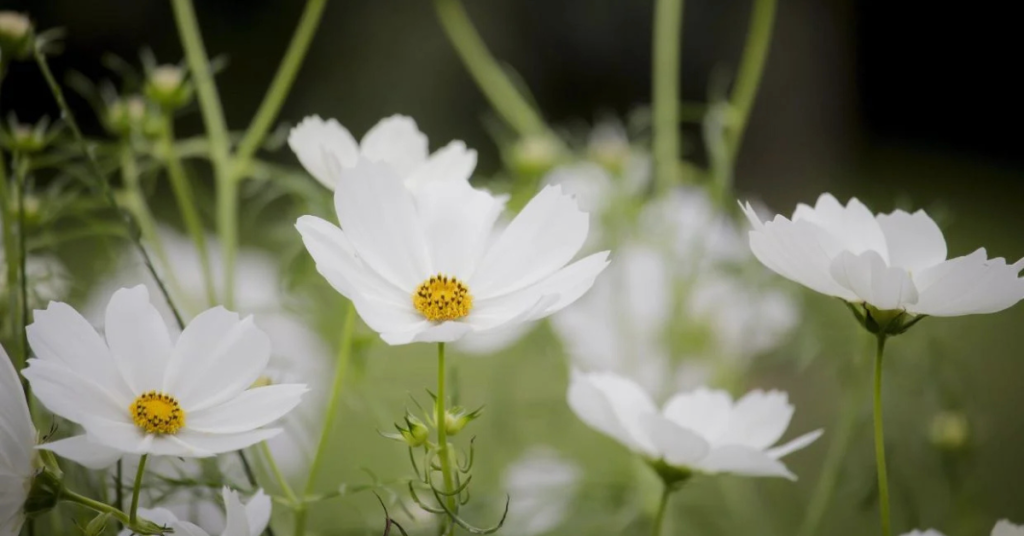
- White cosmos symbolize purity, innocence, peace and new starts.
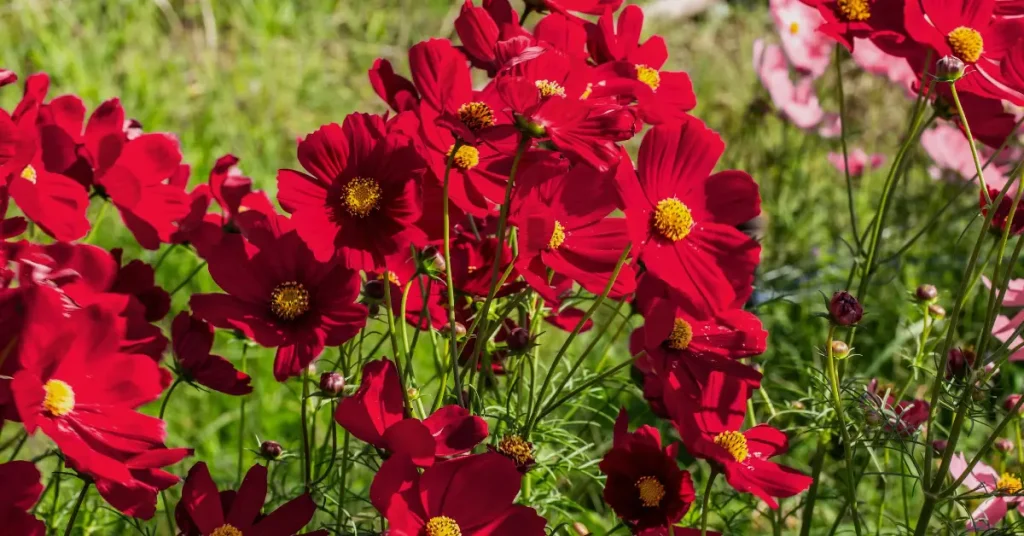
- Red or deep magenta cosmos stand for passion, strength, and vitality.
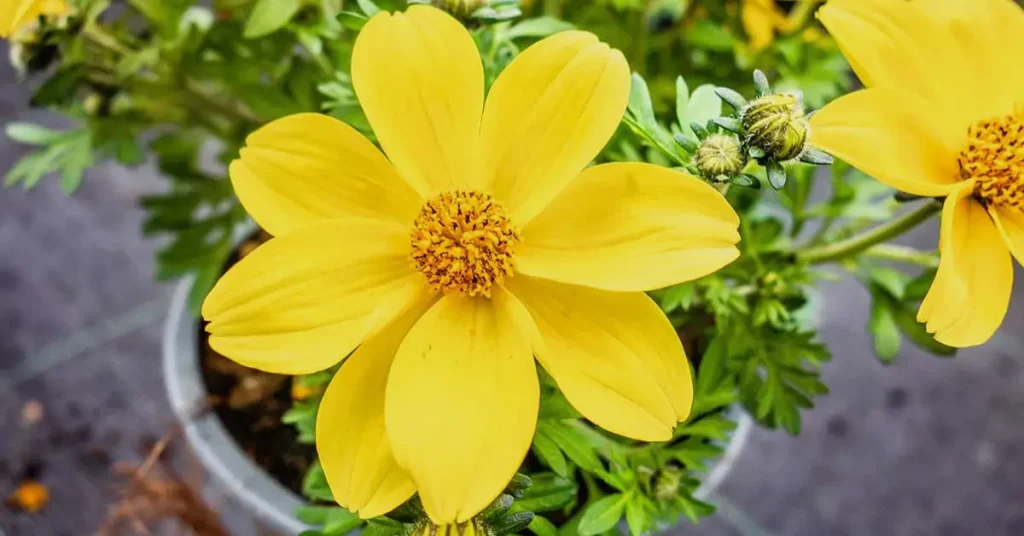
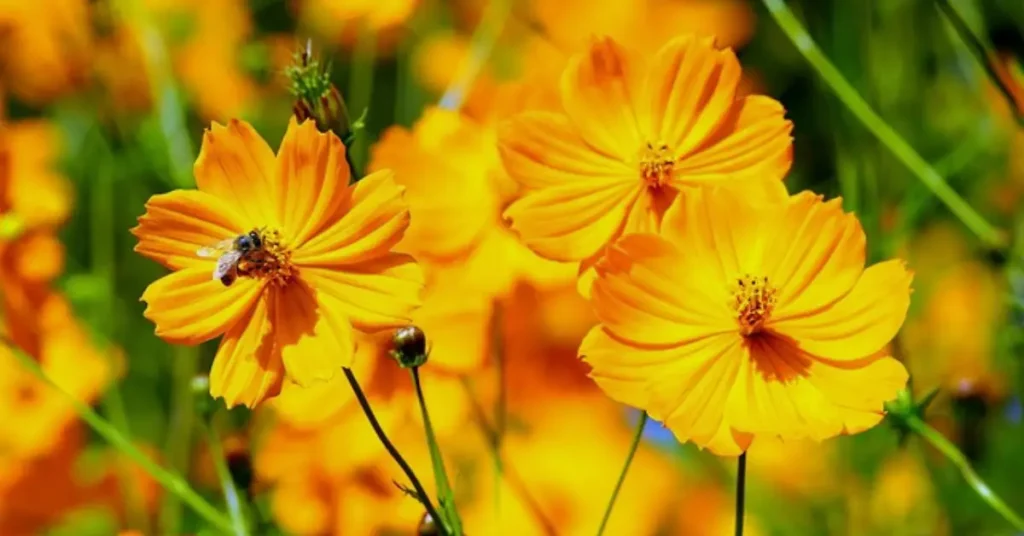
- Orange or yellow cosmos evoke joy, energy, resilience and healing.
- Purple cosmos tie to introspection, wisdom and spiritual growth.
Across cultures, the meanings vary beautifully. In Japan, they’re called “akizakura” (autumn cherry blossoms), symbolizing the fleeting beauty of seasons and quiet appreciation. In Korea, they represent simplicity and sincerity.
In Mexico (their native home), they’re linked to peace and harmony. Some traditions see them as emblems of self-reliance, resilience, kindness and even infinity.
Cosmos Flower Colors
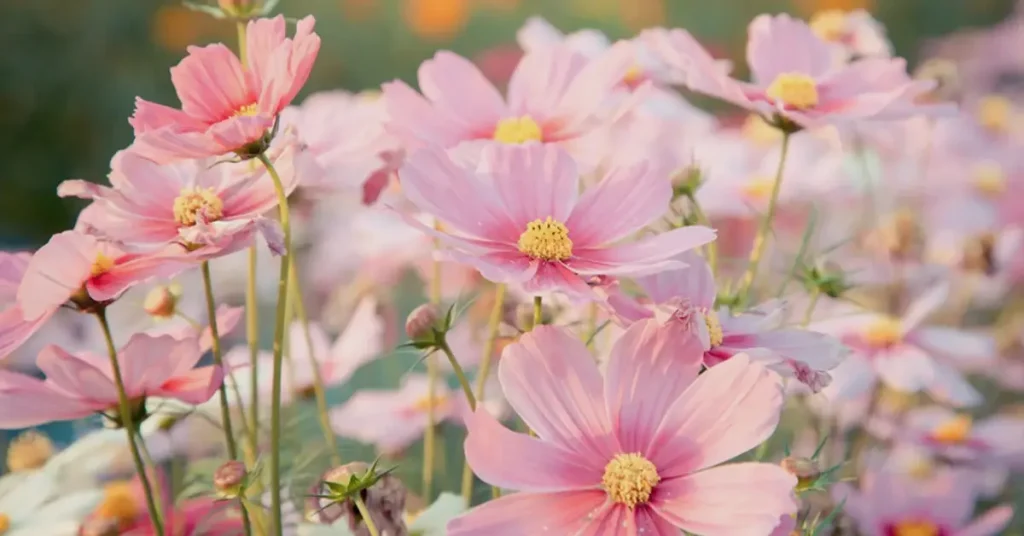
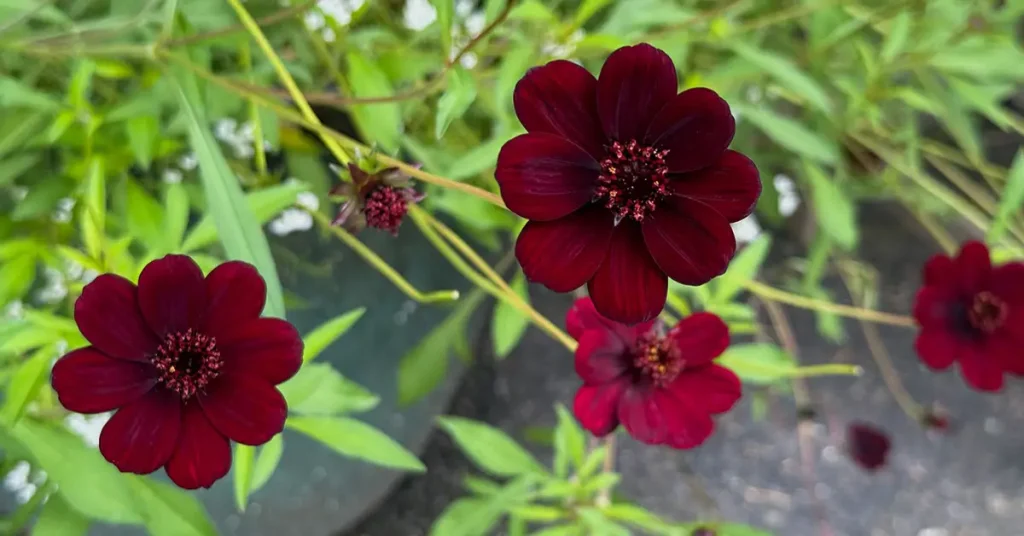
Cosmos come in a variety of colors. Popular colors include pink, white, red, maroon, yellow, and orange.
Pink Cosmos
White Cosmos
Red Cosmos
Maroon Cosmos
Yellow Cosmos
Orange Cosmos
5 Best Cosmos Flower Varieties For Gardens
There exist 25 to 48 varieties of cosmos but only a handful of species are commonly grown as ornamental flowers. Here are the 5 best cosmos flower varieties to grow in gardens.
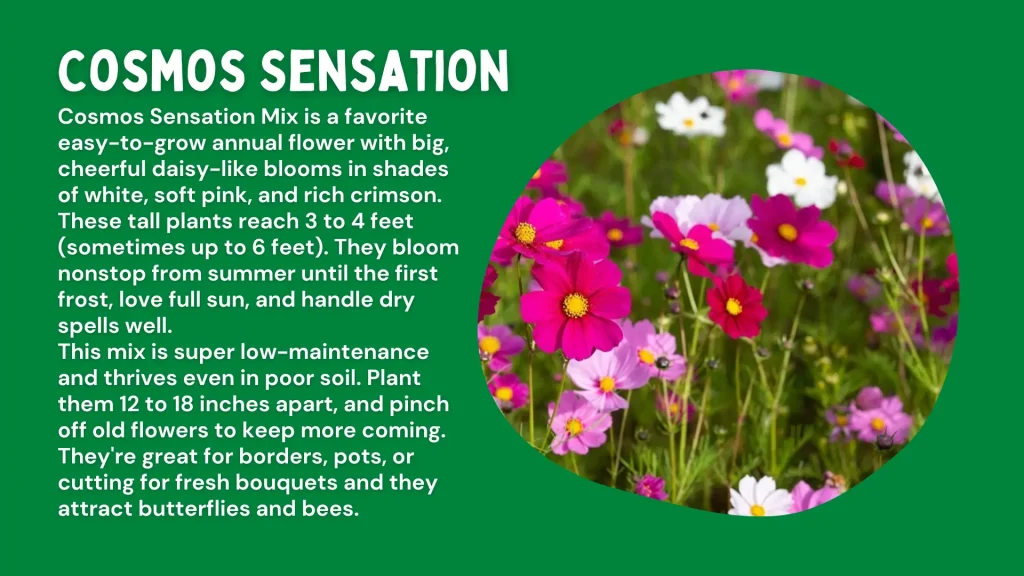
Cosmos Sensation Mix
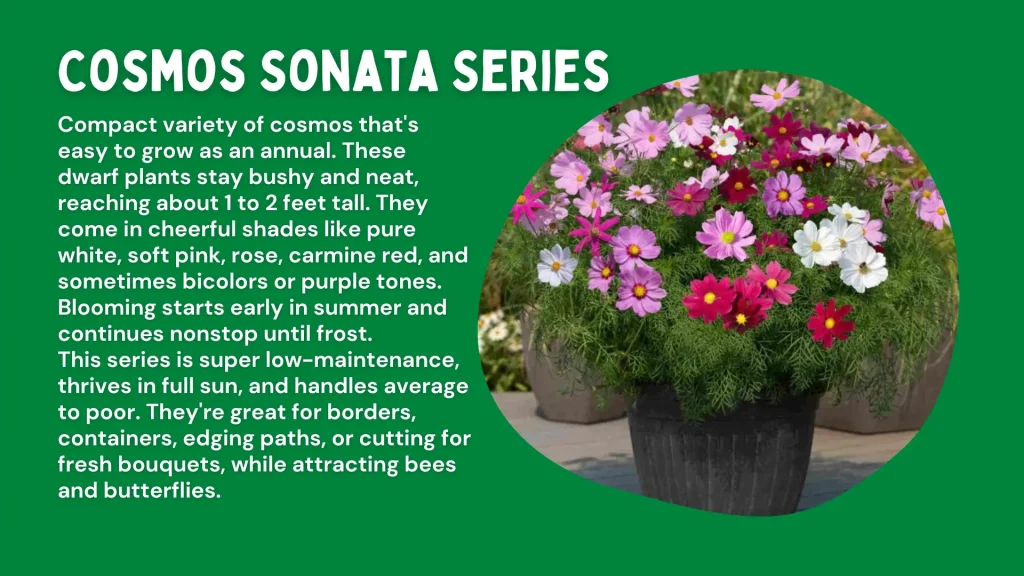
Cosmos Sonata Series
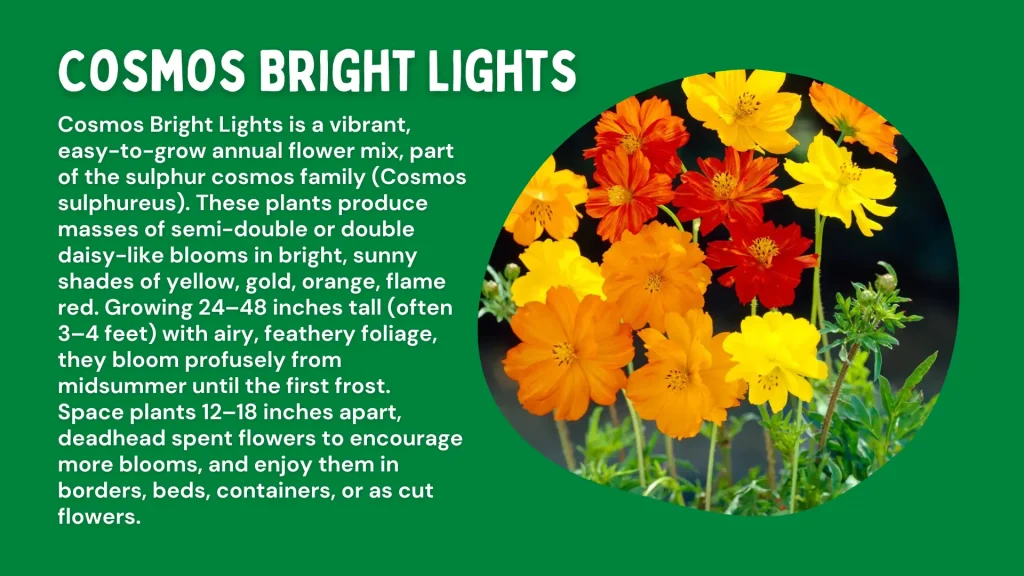
Cosmos Bright Lights
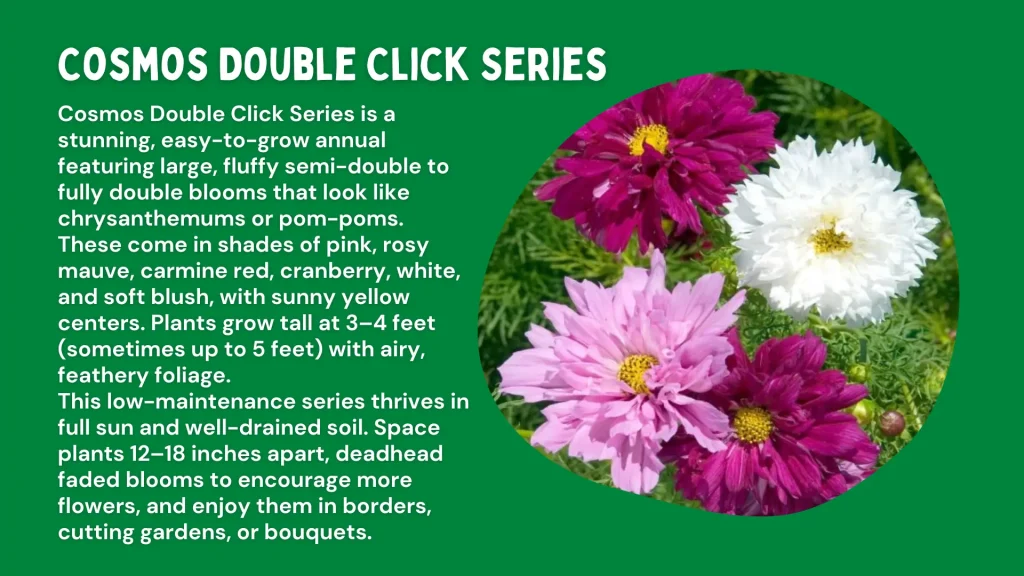
Cosmos Double Click Series
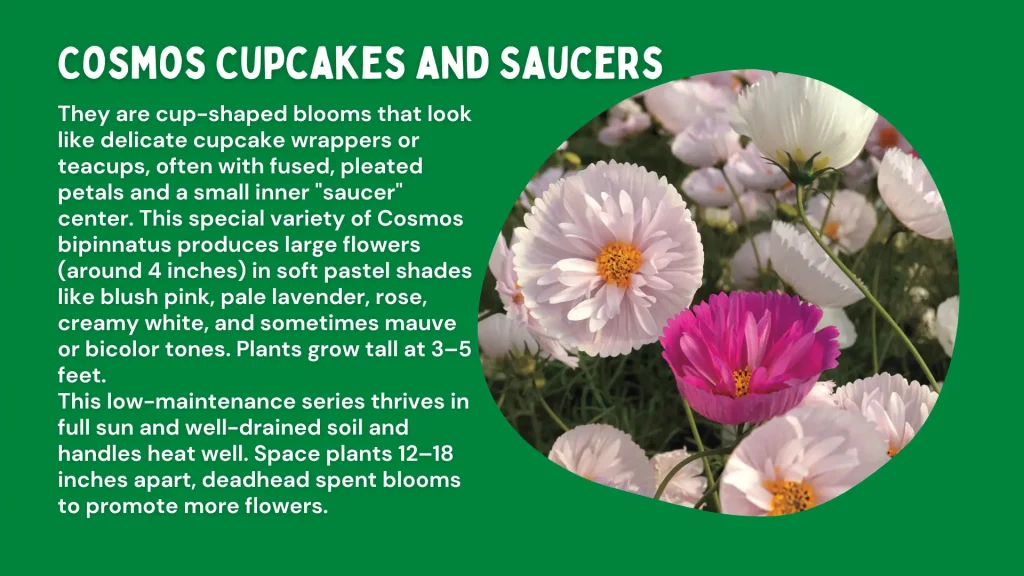
Cosmos Cupcakes and Saucers
How To Grow Cosmos
Direct Sowing Cosmos Seeds on the Ground
This is the simplest way to grow these cheerful flowers. They are tough annuals, germinate quickly in warm soil and love this easy method, creating a natural, wildflower look. It’s perfect for beginners and works great in borders, meadows, or sunny patches.
The best time to scatter cosmos seeds directly on the ground is after your last spring frost, when soil temperatures stay above about 60°F (15–16°C)—usually late spring to early summer (May–June in many areas). Here’s a simple step-by-step guide:
Choose an area with full sun (6–8+ hours daily) and well-drained soil. Cosmos thrive even in poor or average ground and no need of fertilizer (too much makes them leggy with fewer blooms).
Rake or loosen the top 2–4 inches of soil to remove weeds and big clumps. Add a thin layer of compost if your soil is very heavy.
Sprinkle seeds evenly over the surface like you’re salting food. Keep spacing of about 2–6 inches apart. Don’t bury them deep, just lightly rake or press them into the soil about ¼ inch deep (or cover with a very thin dusting of soil). For a natural meadow look, broadcast casually over a larger area.
Use a fine mist or watering can with a rose head to moisten the soil without washing seeds away. Keep the ground evenly moist (not soggy) until seeds sprout in 7–14 days.
Once baby plants are 2–4 inches tall, thin them to 12–18 inches apart. This gives room for bushier growth and more flowers. Pinch the tips of young plants for extra branches and blooms.
Water during dry spells, but they’re drought-tolerant once established. Deadhead spent flowers to encourage nonstop blooming until frost.
How To Grow Cosmos in Pots
Cosmos are perfect for growing in pots.They bring bright, daisy-like blooms to patios, balconies, or small spaces with little effort. These annuals require full sun (at least 6–8 hours daily) and do best in well-drained containers. Choose shorter or compact varieties like Sonata Series (1–2 feet tall), Apollo Series, or dwarf types.
Pick a pot at least 12 inches wide and deep with drainage holes to prevent rot. Use a lightweight, well-draining potting mix. Sow seeds directly in the pot after the last frost: scatter thinly, cover lightly with ¼–½ inch of soil, and keep moist until they sprout (7–10 days). Thin seedlings to 8–12 inches apart when 4 inches tall for bushier growth. Or start indoors 4–6 weeks early and transplant once frost-free.
Water when the top 2 inches of soil feel dry. They’re drought-tolerant once established, so don’t overwater. Pinch tips when young for more branches and blooms, and deadhead spent flowers regularly to keep them flowering nonstop until frost. No heavy fertilizer needed.
Place pots in a sunny, sheltered spot, and enjoy waves of butterflies, bees, and colorful flowers all summer long. With these simple steps, your potted cosmos will thrive and add joyful color anywhere.