10 Trees With Pink Flowers That Make Gardens Pink Paradise
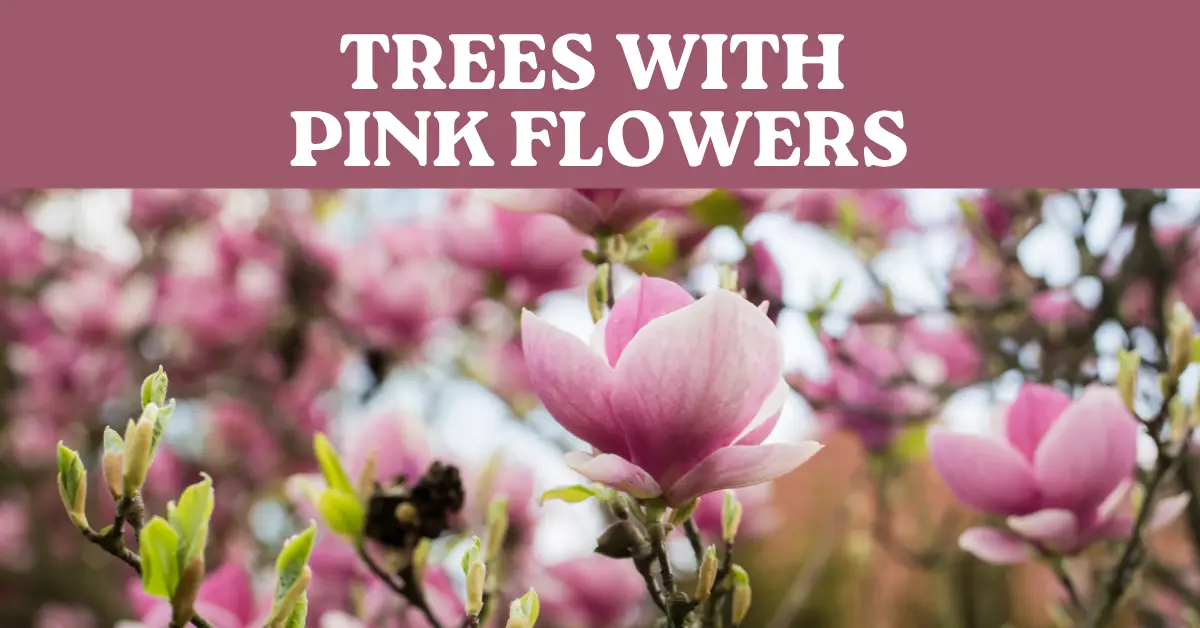
Trees are amazing living things on our planet. They give us shade, clean air, and a home for birds and butterflies. But some trees do something extra special, they put on a breathtaking show of flowers that can stop you in your tracks.
Flowering trees are nature’s own decorators. Whether they grow in a backyard, along a street, or in a big open park, these trees turn ordinary spaces into something out of a fairy tale. People all over the world plant flowering trees to make their gardens more beautiful. And when spring arrives, these trees wake up and show off their colors like they have been waiting all year just for that moment.
Pink is one of the most loved colors in nature. It feels warm, cheerful, and full of life. Pink flowering trees do not just look pretty, they also attract bees, butterflies, and birds, make gardens a lively and buzzing little world.
In this blog, we are going to explore 10 gorgeous trees with pink flowers. Whether you want to plant one in your yard or just learn about them, you are in for a worth reading post. Let’s dive in!
List of 10 Popular Trees with Pink Flowers
- Cherry Blossom (Prunus species)
- Eastern Redbud (Cercis canadensis)
- Magnolia (Magnolia spp.)
- Crape Myrtle (Lagerstroemia indica)
- Pink Dogwood (Cornus florida var. rubra)
- Tabebuia rosea (Pink Trumpet Tree)
- Silk Tree (Albizia julibrissin)
- Flowering Almond (Prunus triloba)
- Desert Willow (Chilopsis linearis)
- Bauhinia (Orchid Tree)
Cherry Blossom (Prunus species)
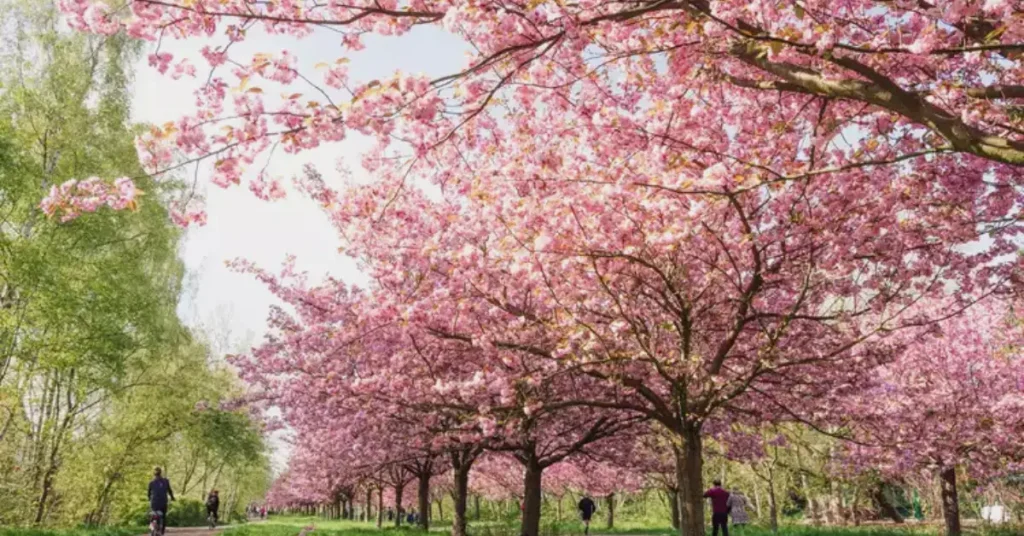
If there is one tree that the whole world stops to admire, it is the Cherry Blossom. Every spring, these trees explode into clouds of soft pink flowers that look too beautiful to be real. In Japan, people have a special tradition called Hanami, which means “flower viewing.” Families and friends gather under cherry blossom trees to eat, laugh, and enjoy the flowers together. The blooms do not last long, just one to two weeks, but that is exactly what makes them so special. They remind us to enjoy beautiful moments while they last.
🌍 Native to: China, Japan, and Korea
🌱 Growing Tips:
- USDA Zones: 5 to 8
- Soil: Well-drained, slightly acidic soil. Does not like soggy or waterlogged ground
- Sunlight: Full sun — at least 6 hours of direct sunlight per day
- Time to Bloom: Takes about 3 to 5 years after planting to start blooming well. Some grafted varieties bloom sooner, in just 1 to 2 years
Eastern Redbud (Cercis canadensis)
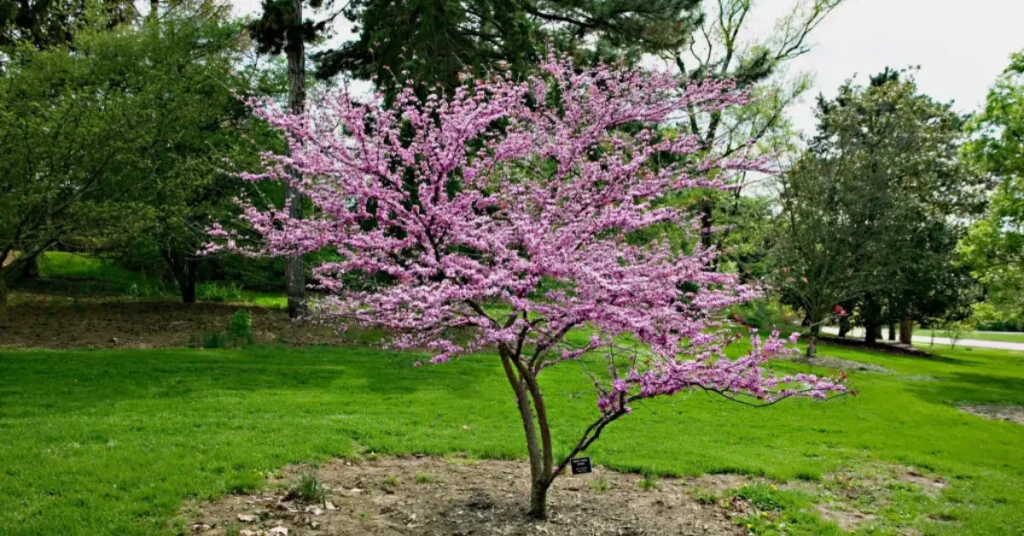
The Eastern Redbud is one of spring’s most beloved trees. Before its leaves even appear, the branches burst into prolific clusters of tiny, pink-purple flowers that look like someone painted the whole tree overnight. Its heart-shaped leaves are just as charming, and in fall, they turn into brilliant shades of yellow and orange. With its graceful, vase-shaped spreading structure, the Redbud adds instant beauty and elegance to any landscape.
The best part? It is low-maintenance, not picky about soil, and once established, it practically takes care of itself. Whether you plant it in a woodland setting, a mixed border, a native garden, or along a street, this resilient little tree always finds a way to shine. Its flowers last several weeks in spring and attract bees, butterflies, and other early season pollinators — making your garden feel alive and buzzing.
🌍 Native to: Eastern and Central North America, from New Jersey all the way to Nebraska and down to northern Florida
🌱 Growing Tips:
- USDA Zones: 4 to 9
- Soil: Moist, well-drained soil. Adapts well to clay, loam, or sandy soil — it is quite flexible
- Sunlight: Full sun to partial shade — it actually does beautifully with a little afternoon shade in hot climates
- Time to Bloom: Takes about 3 to 6 years to begin blooming. Grafted varieties may bloom in 1 to 2 years
Pink Magnolia (Magnolia spp.)
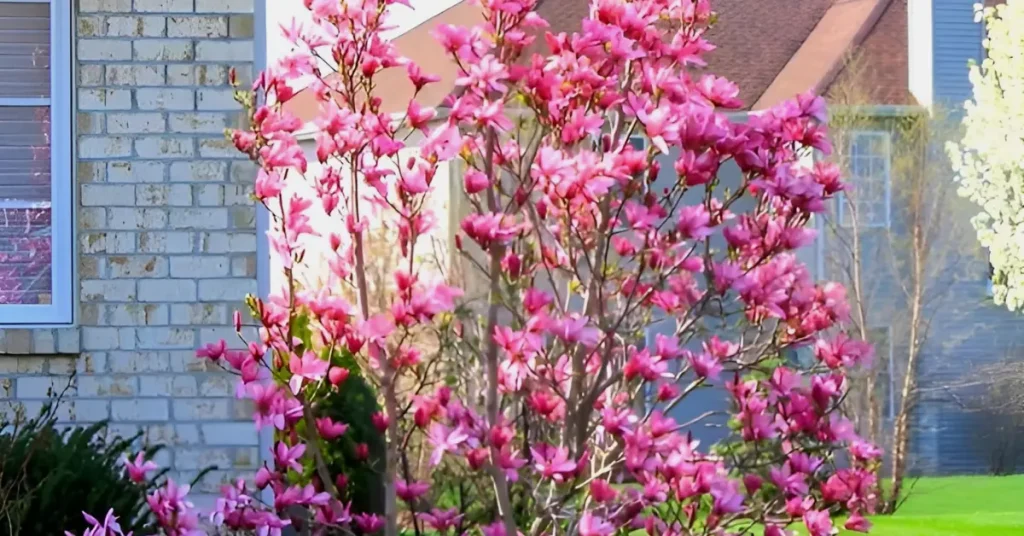
Magnolia trees are the true royalty of the flowering tree world with big, bold, and absolutely jaw-dropping flowers. Some magnolia blooms are as large as a dinner plate! These trees have been around for millions of years, one of the oldest flowering plants on Earth. Before bees even existed, Magnolias were being pollinated by beetles!
They also carry a light, sweet fragrance that drifts through the air and fills your whole garden. Whether you plant a small variety near your front door or a large one as a centerpiece, a Magnolia always makes a lasting impression on everyone who sees it.
🌍 Native to: East Asia particularly China and Japan and parts of North and South America
🌱 Growing Tips:
- USDA Zones: 4 to 9 depending on the variety
- Soil: Rich, moist, well-drained soil with a slightly acidic pH. Magnolias do not like dry or compacted ground
- Sunlight: Full sun to partial shade. Full sun produces the best and most abundant blooms
- Time to Bloom: Seed-grown trees can take 10 to 15 years to bloom. Grafted or nursery-bought trees bloom much sooner, usually in 2 to 3 years
Crape Myrtle (Lagerstroemia indica)
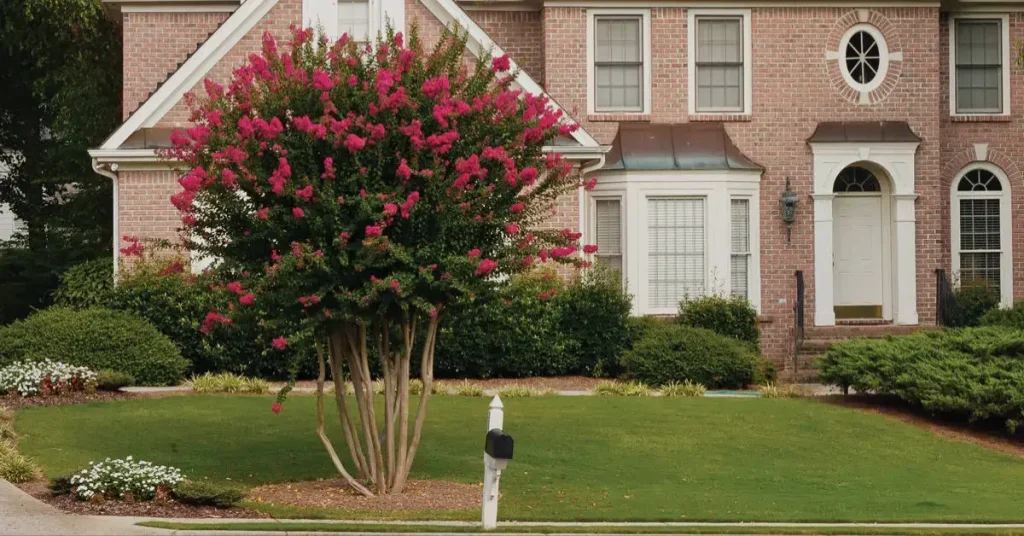
Most flowering trees bloom in spring and then they are done for the year. This pink tree keeps producing clusters of ruffled, crepe-paper-like pink flowers all through summer and into early fall, giving you months of color when most other trees have already finished their show. Its smooth, peeling bark adds year-round visual interest, and in autumn, the leaves turn beautiful shades of red, orange, and yellow before they fall.
What do i like is that Crape Myrtles come in many sizes, from small shrub-like varieties to tall, elegant trees, so every gardener has option to grow crape myrtle. They are tough and drought-tolerant once established, making them one of the most popular and low-maintenance flowering trees in warm climates around the world. If you want a flowering tree that looks gorgeous, requires low maintenance, and keeps giving you flowers all season long, the Crape Myrtle is an absolute must-have for your garden.
🌍 Native to: China, Korea, Japan, and Southeast Asia
🌱 Growing Tips:
- USDA Zones: 6 to 10
- Soil: Well-drained soil of almost any type, it is very adaptable. Slightly acidic soil gives the best results
- Sunlight: Full sun (needs at least 6 to 8 hours of direct sunlight daily for best blooming).
- Time to Bloom: Young nursery-bought trees typically begin blooming in their first or second year after planting. Full maturity is reached in about 5 to 7 years
Pink Dogwood (Cornus florida var. rubra)
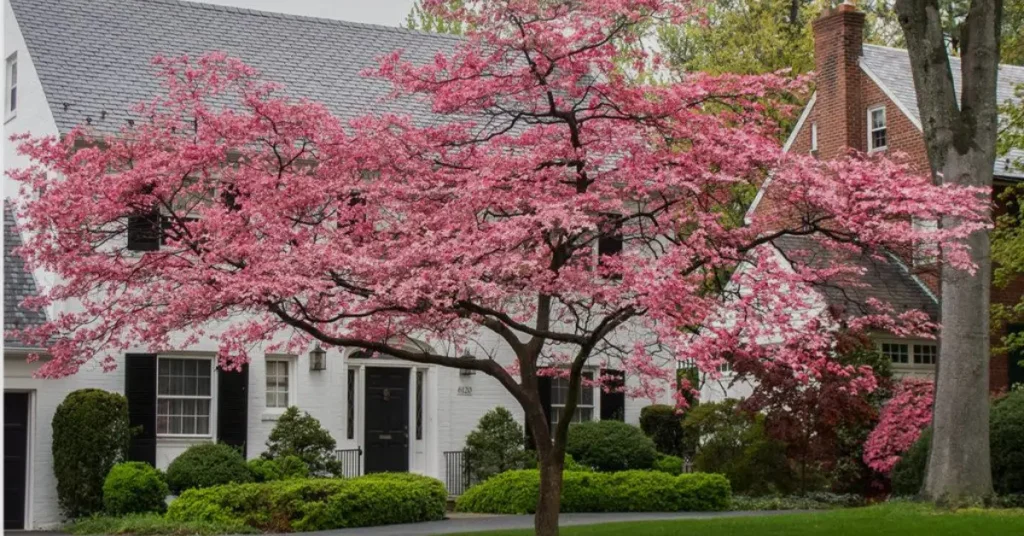
The Pink Dogwood is one of the most charming and graceful trees you will ever have in your garden. Every spring, before the leaves even open up, the entire tree dresses itself in soft, four-petaled pink flowers that have a gentle, romantic beauty unlike any other tree. Each petal has a slightly ruffled edge with a small notch at the tip, giving the blooms a delicate, refined look that is hard to forget.
Pink Dogwood does not stop at spring, in summer it offers dense, cool green shade, and in fall it puts on another spectacular show with bright red berries that birds love and rich, wine-red leaves glow in the autumn sun. It is truly a four-season tree. Trees are perfect in size, not too big and not too small, an ideal choice for front yards, garden borders, or planting near a patio.
🌍 Native to: Eastern North America — from Maine down to northern Florida and as far west as Kansas
🌱 Growing Tips:
- USDA Zones: 5 to 9
- Soil: Moist, rich, and well-drained soil with a slightly acidic pH. Avoid heavy clay or poorly drained ground as Dogwoods do not like wet feet
- Sunlight: Partial shade to full sun — it actually thrives beautifully under the light shade of taller trees, just like it grows naturally in the wild
- Time to Bloom: Nursery-bought trees typically begin blooming in 2 to 3 years after planting. Full maturity is reached in about 10 to 15 years
Tabebuia Rosea (Pink Trumpet Tree)
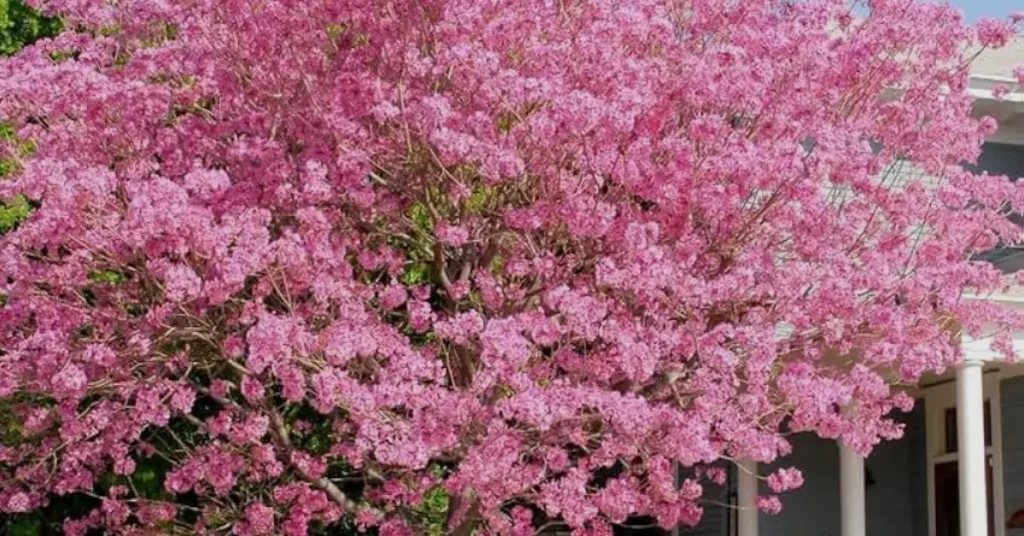
Do you love trumpet flowers?
The Tabebuia Rosea is a show-stopping flowering tree and it is truly unforgettable the way it blooms. When its branches are completely bare, with not a single leaf in sight, the whole tree bursts into thousands of trumpet-shaped pink flowers all at once. From a distance, it looks like a giant pink cloud floating above the ground. Up close, each flower is a work of art, soft pink petals with a golden yellow throat, delicate and beautiful.
In many tropical countries, Tabebuia Rosea is planted along roadsides and city avenues, turn entire streets into stunning pink corridors. It blooms not just once, sometimes two to three times a year depending on the climate. If you live in a warm region and want a tree that turns heads and fills your garden with pure tropical drama, the Pink Trumpet Tree is the best for your space.
🌍 Native to: Central America and South America, from Mexico down to Venezuela and Ecuador
🌱 Growing Tips:
- USDA Zones: 10 to 11. It loves warm, tropical, and subtropical climates
- Soil: Well-drained soil of almost any type (sandy, loamy, or even slightly rocky soil). It is quite adaptable once established.
- Sunlight: Full sun. This tree loves bright, direct sunlight all day long and blooms best when it gets plenty of it.
- Time to Bloom: Nursery-bought trees typically begin blooming in 3 to 5 years after planting. In ideal tropical conditions, some trees bloom even sooner
Silk Tree (Albizia julibrissin)
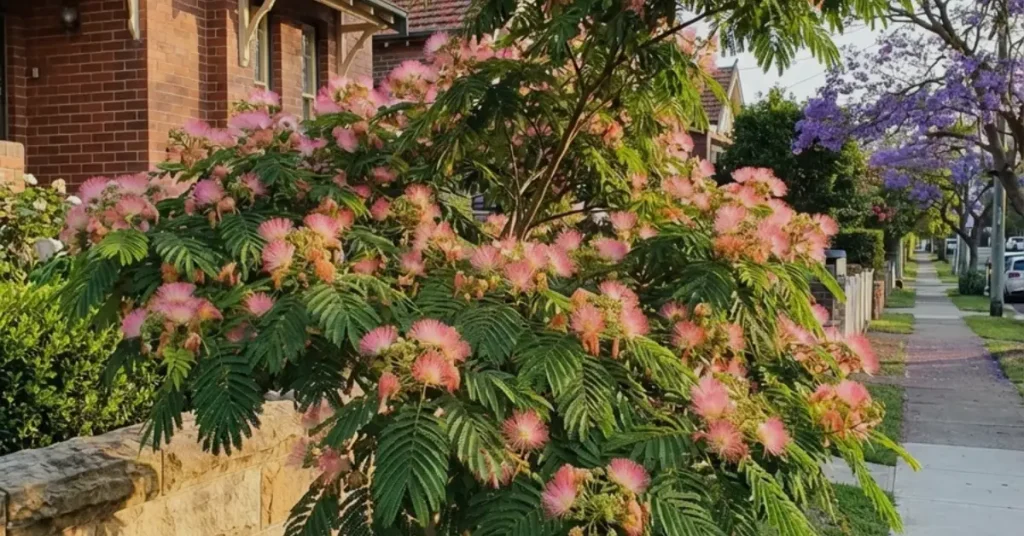
Also known as the Persian Silk Tree or Mimosa Tree, this fast growing pink tree has wide, umbrella-like canopy that spreads out gracefully and provides lovely dappled shade on hot summer days. Instead of regular petals, its flowers look like tiny, fluffy powder puffs made of pink and white silk threads, soft, feathery, and absolutely enchanting.
When the whole tree is in full bloom during summer, it looks like it has been decorated with hundreds of little pink brushes. The Silk Tree also has long, feathery leaves that fold up gently at night and open again in the morning, almost like the tree itself goes to sleep. Hummingbirds, butterflies, and bees are absolutely wild about this tree, so planting one tree turns your garden into a lively little wildlife paradise.
🌍 Native to: Southwestern and Eastern Asia, from Iran and Turkey all the way to China, Japan, and Korea
🌱 Growing Tips:
- USDA Zones: 6 to 9
- Soil: Well-drained soil of almost any type (sandy, loamy, or even poor dry soil).
- Sunlight: Full sun. It needs at least 6 hours of direct sunlight daily and grows and blooms best in bright, open spaces.
- Time to Bloom: One of the fastest growing flowering trees, young trees typically begin blooming in just 2 to 3 years after planting and can grow up to 5 feet per year
Flowering Almond (Prunus triloba)
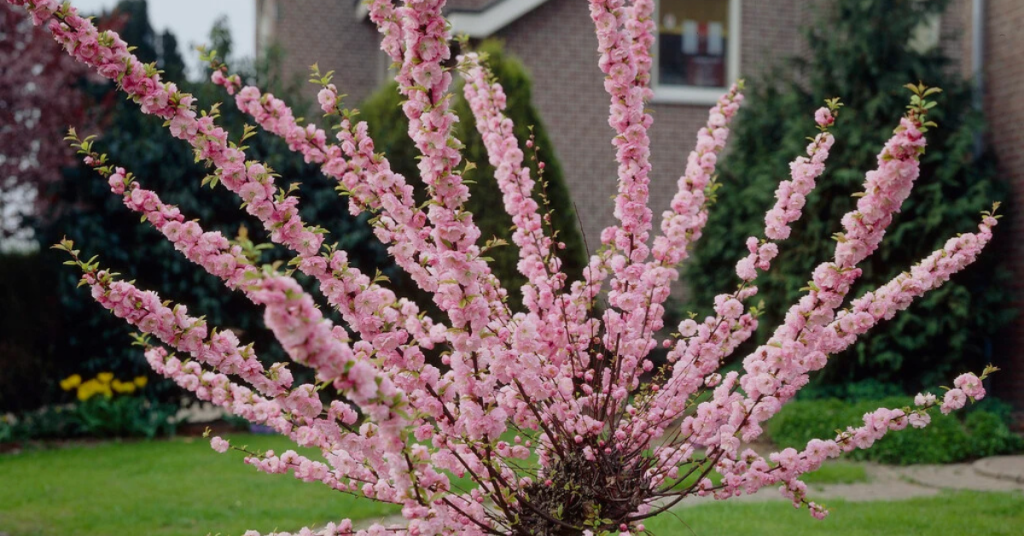
The flowering almond (Prunus triloba) is a small pink flowering tree that grows as a small tree or a large shrub. It can grow about 8 to 12 feet tall. Its branches spread out and make a round shape. In early spring, the flowers come out before the leaves. When it blooms, the branches are covered with soft pink flowers, almost like little roses. The blooms are so thick and full that you can barely see the branches underneath.
When most of the garden is still bare and brown from winter, this cheerful little tree is already bursting with pink, announcing that warmer days are finally on their way. It is a tree that brings hope and happiness at the end of a long, cold winter. Its good to plant along a fence, in a small garden bed, as a border tree, or even in a large decorative pot on your patio.
🌍 Native to: Northern China and Mongolia
🌱 Growing Tips:
- USDA Zones: 3 to 7. One of the most cold-hardy pink flowering trees making it perfect for gardens with harsh winters
- Soil: Well-drained, moderately fertile soil.
- Sunlight: Full sun, at least 6 hours of direct sunlight daily for the best and most abundant blooms
- Time to Bloom: A wonderfully fast bloomer, nursery-bought trees typically begin flowering in just 1 to 2 years after planting. It is one of the quickest rewarding flowering trees you can grow
Despite the common name flowering almond, this species of Prunus doesn’t produce valuable fruit. The fruit is small, red, or brown, and it’s not edible, so flowering almond remains cultivated mainly for its ornamental characteristics.
Weigela (Weigela florida)
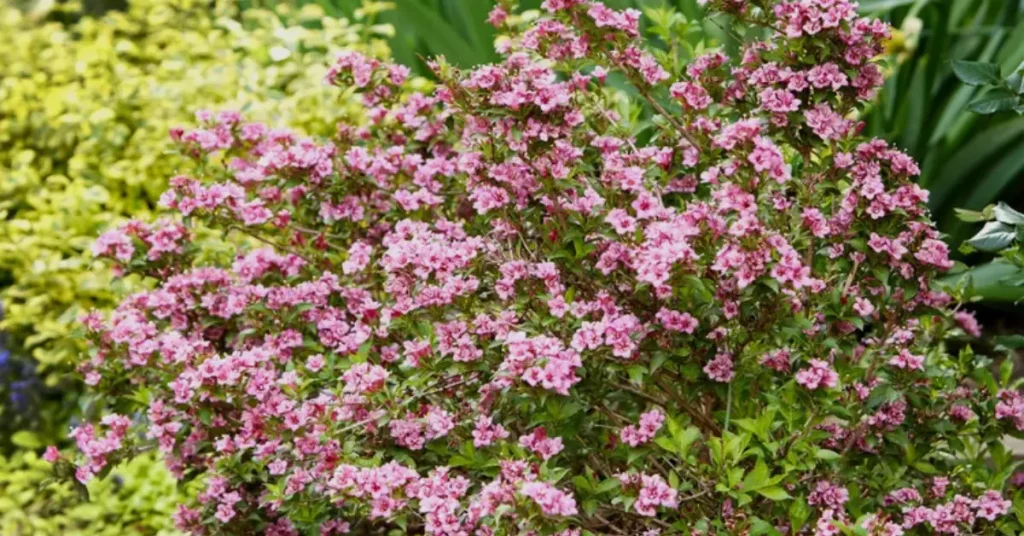
The weigela (Weigela florida) is a beautiful flowering plant that can grow like a small tree or a bush. It is loved for its bright pink flowers that bloom in late spring. The flowers are shaped like little trumpets and grow all along the branches. They can make any garden look colorful and lively.
This plant usually grows about 6 to 10 feet tall. It spreads out wide and has a soft, rounded shape. Its leaves are green and sometimes have a hint of red or purple. After the first big bloom, it may flower again later in summer.
It attracts hummingbirds, planting a Weigela is like setting up a hummingbird feeding station that nature built itself.
Weigela grows best in full sun, where it can get plenty of light. It can also grow in light shade, but it may not bloom as much. It likes soil that drains well and does not stay too wet. Water it regularly, especially when it is still young.
🌍 Native to: Northern and Central China, Korea, and Japan
🌱 Growing Tips:
- USDA Zones: 4 to 8, a wonderfully cold-hardy choice that handles freezing winters with ease
- Soil: Moist, well-drained soil of almost any type, loamy, sandy, or clay.
- Sunlight: Full sun to partial shade. It blooms most abundantly in full sun but tolerates a few hours of shade without complaint.
- Time to Bloom: Fast growing tree. Nursery-bought plants typically begin blooming in their very first or second year after planting
Bauhinia (Orchid Tree)
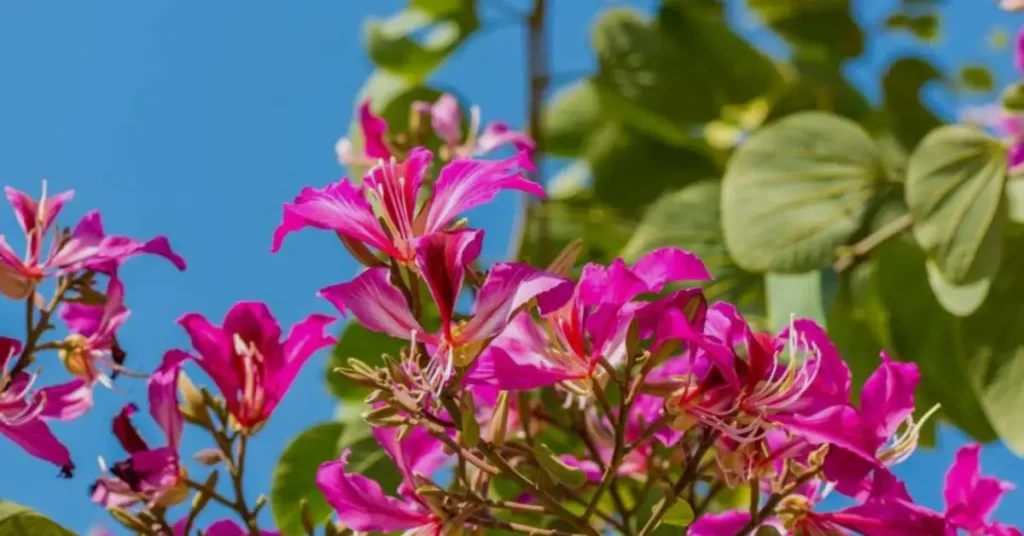
Last but absolutely not least, meet the Bauhinia, one of the most exotic and elegant flowering tree. One single glance at its flowers and you will instantly understand why it earned the nickname “Orchid Tree.” Its large, showy blooms are so strikingly similar to orchid flowers with five broad, overlapping petals in gorgeous shades of pink, rose, and magenta.
Its leaves are equally fascinating and completely unique in the tree world, each leaf is shaped like a butterfly, with two perfectly rounded lobes that look like a pair of delicate wings spread open in flight. Depending on the variety and climate, it can bloom for several months, filling your garden with color and a gentle, sweet fragrance for a long season. It grows at a good pace, provides lovely shade with its broad canopy, and thrives in warm weather with very little fuss.
🌍 Native to: Southern China, Southeast Asia, and the Indian Subcontinent including India, Pakistan, and Sri Lanka
🌱 Growing Tips:
- USDA Zones: 9 to 11. Thrives in warm, tropical, and subtropical climates.
- Soil: Well-drained, moderately fertile soil.
- Sunlight: Full sun, at least 6 to 8 hours of sunshine daily.
- Time to Bloom: Nursery-bought trees typically begin blooming in 2 to 3 years after planting. In ideal warm conditions, some varieties bloom even sooner and continue flowering on and off for most of the year.
I hope you liked these 10 trees with pink flowers.