20 Backyard Walkway Ideas Using Stone,Wood and More
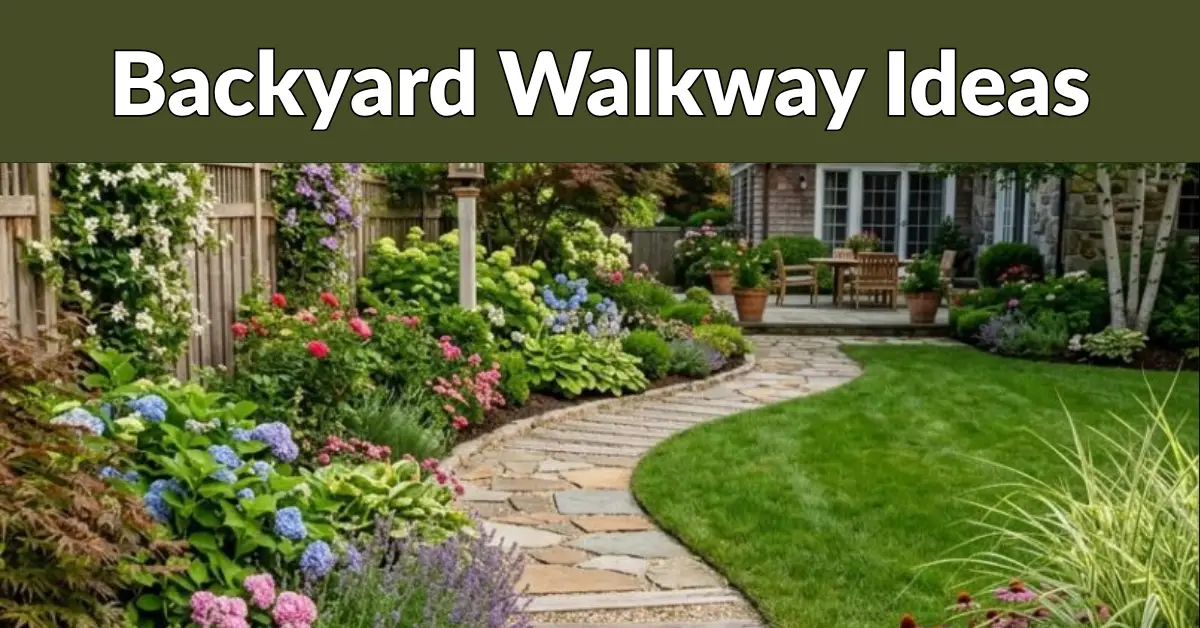
Backyard walkways often end up shaping the way a space is actually used. A simple path can turn a patchy yard into something easier to move through, while also adding a bit of flow between different areas.
Some designs lean more clean and structured, others feel loose and relaxed, like they’ve always been part of the garden. The material choice plays a big role too, stone, wood, gravel, or concrete each brings a different mood.
This collection brings together a mix of walkway ideas that fit different kinds of backyards, from simple everyday paths to more layered garden routes.
Check 20 backyard walkway ideas.
Concrete Slab Walkway
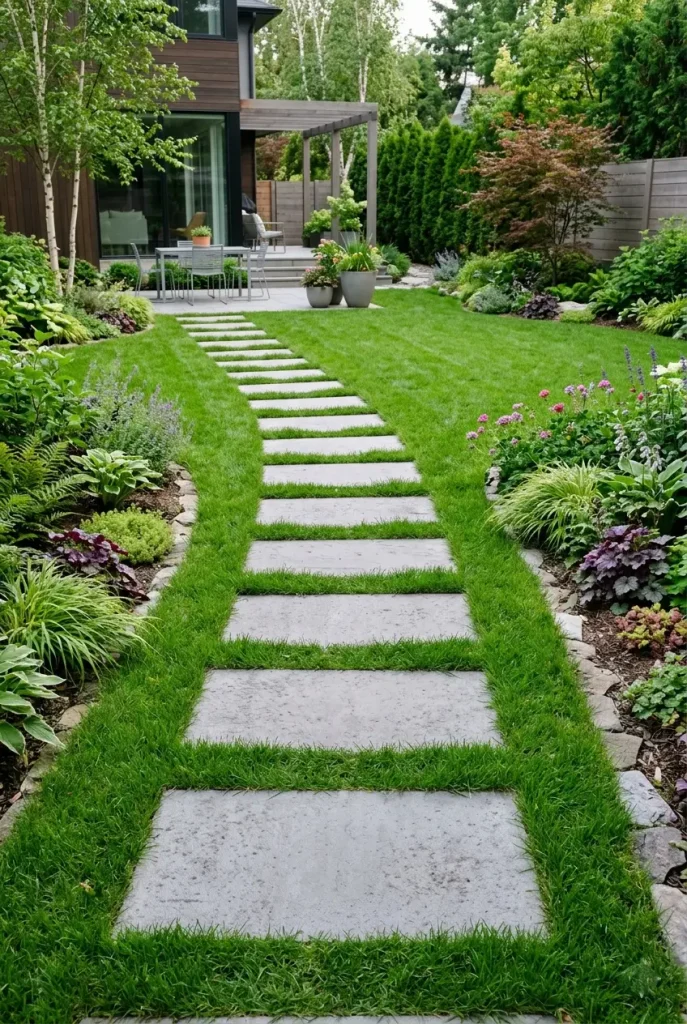
Concrete slab walkways are one of the simplest ways to create a clean path in a backyard. You place large concrete pieces with small gaps between them, and those gaps can be filled with grass, gravel, or even tiny plants.
It gives a calm, open feel instead of one solid path. It also feels a bit more relaxed, not too formal.
You can use square slabs, rectangular ones, or even mix sizes a little. Some people keep them evenly spaced, while others slightly offset them so it feels more natural when walking.
If your yard has grass, placing slabs directly into it creates that “floating step” look. If your yard is more dry or dusty, gravel between slabs gives a neat contrast.
Maintenance is pretty low. Just keep the gaps clean and occasionally adjust anything that shifts.
Rustic Bluestone Walkway
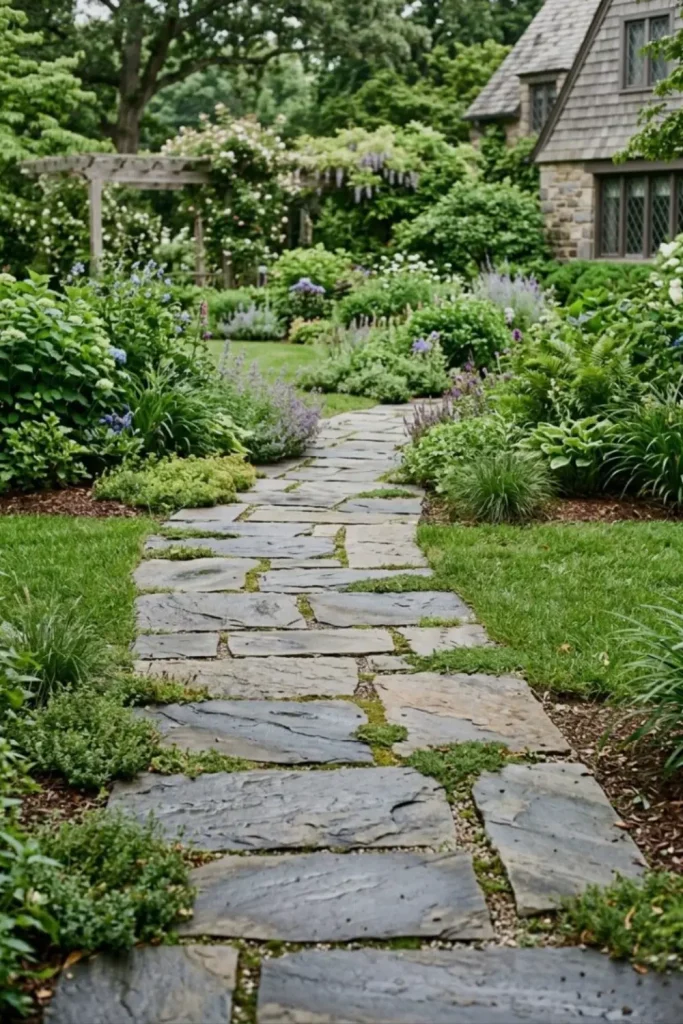
Bluestone is a solid, low-key choice for a walkway. The uneven edges give the path a natural feel, like it was always meant to be there.
This style works well in relaxed gardens or around older homes. It does not look too formal or out of place. You can space out larger stones for a bold look, or place them closer together for something more compact and neat.
Bluestone goes well with shrubs, grasses, and flower beds of different heights. The cool color of the stone sits nicely next to green plants and colorful blooms.
It is an easy, no-fuss option that works in most outdoor settings without much effort.
Herringbone Brick Walkway
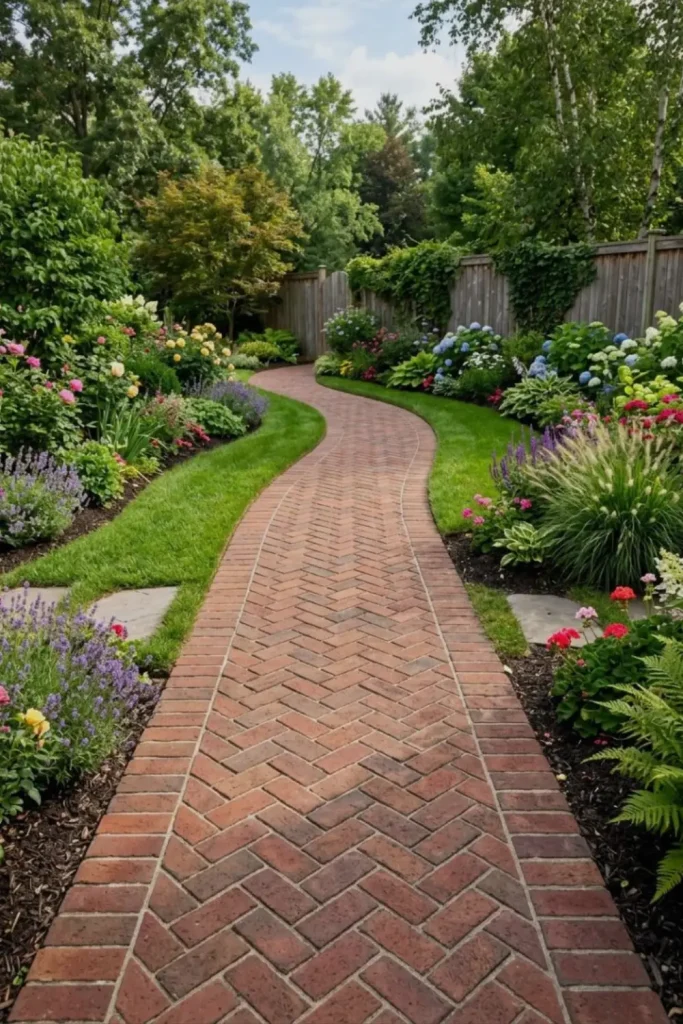
Laying bricks in a straight line can look flat and boring, like a school hallway. The herringbone pattern fixes that. It adds visual movement and also makes the path stronger since the bricks lock into each other at angles.
The soldier course border around the edges pulls the whole thing together. Without it, the path looks unfinished. With it, the path looks deliberate and clean.
This style suits classic homes, front entry paths, and gardens that want a traditional feel. It is not modern or trendy.
Brick has a warm, earthy color that goes naturally with brick houses, wooden fences, and green leafy plants. Everything ties together without any extra effort.
Mosaic River Pebble Walkway
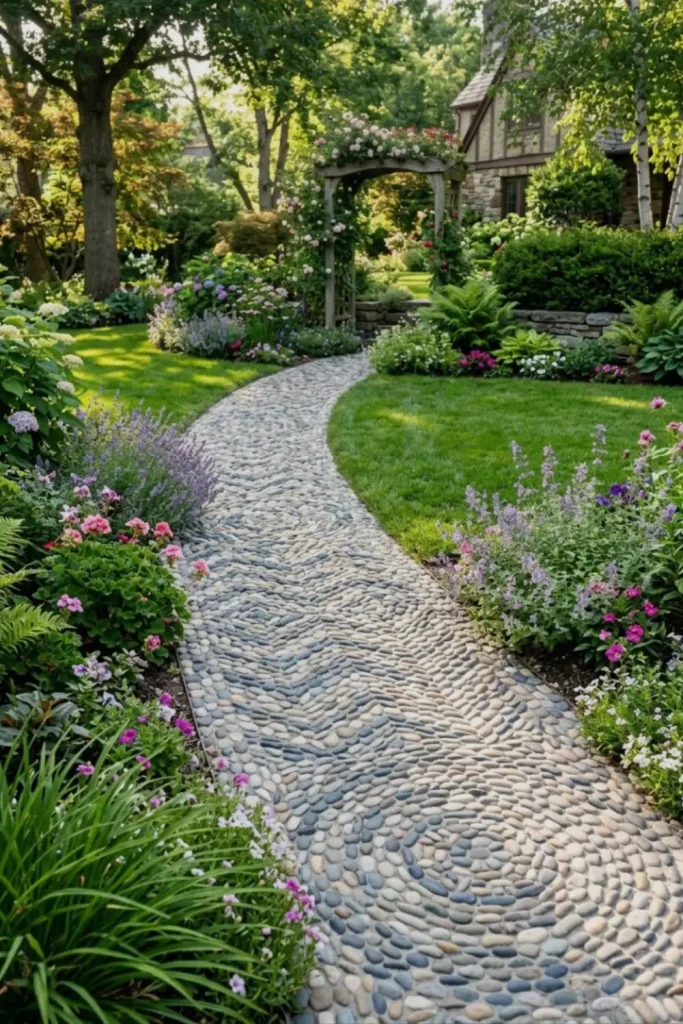
Pebble paths usually look random and messy. But arrange those same river stones into a geometric pattern and the whole thing changes. It looks intentional, like someone laid outdoor tile by hand.
The texture is interesting up close and the pattern gives your yard a bit of personality. It does not look like every other garden path.
Keep this one for smaller spots. A tight garden corner or a cozy courtyard is where it works best. In a big open space, the detail gets lost and the effort goes to waste.
Surround it with simple plants like petunias, zinnias, ferns and let the stonework do the talking. Too many busy plants around it and you lose the whole effect.
Gravel Walkway Idea
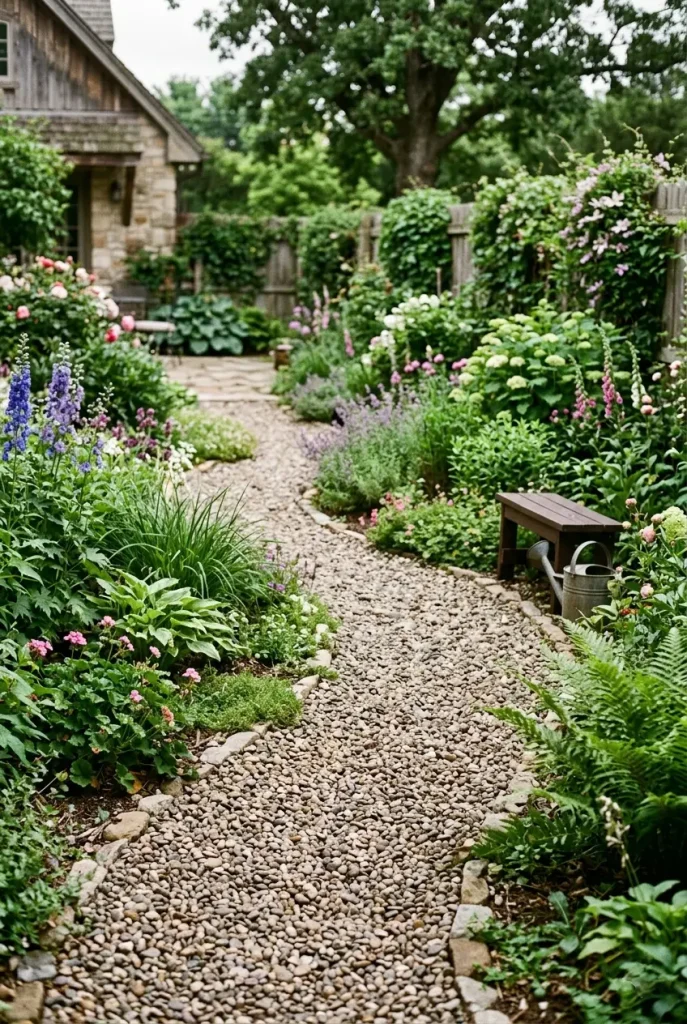
Gravel paths have that easy, no-pressure feel. Nothing too stiff, nothing too planned. Just a path that kind of settles into the space and does its thing.
That soft crunch underfoot adds a bit of character without trying too hard. It’s one of those small details people notice without thinking about it.
Edges can be kept loose for a more natural look, or tightened up with brick or stone if the space needs a bit of structure.
This style fits nicely in casual backyards, garden paths, or spaces that don’t want to feel too polished.
Just keep the gravel topped up and roughly in place so it doesn’t wander off over time.
Stepping Stone Backyard Walkway Idea
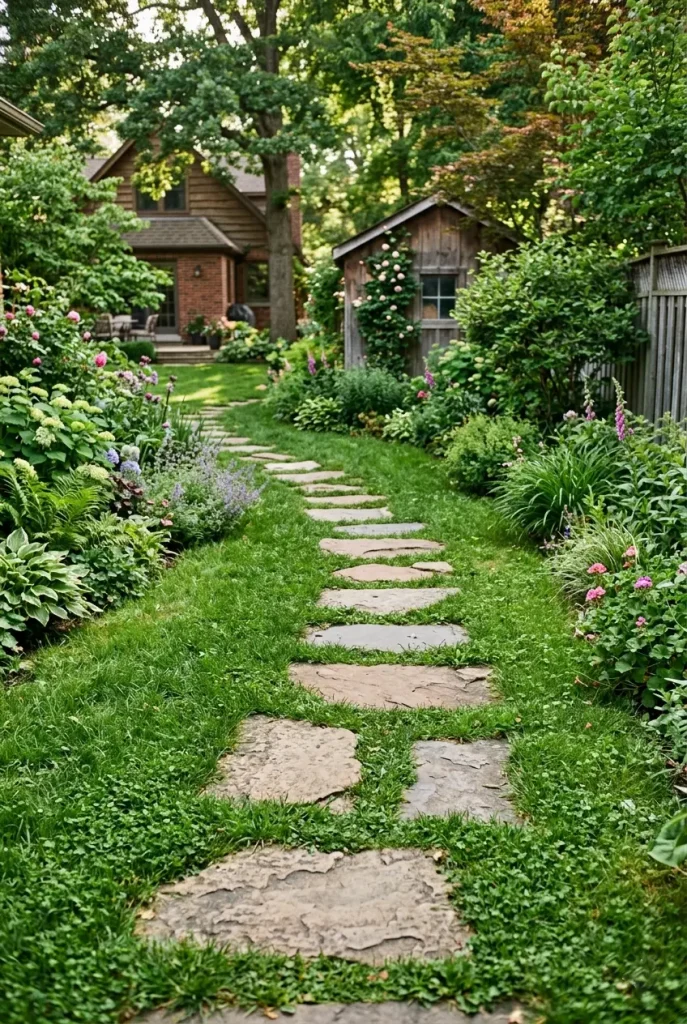
Not every path needs to be fully filled in. Stepping stones break things up in a way that feels lighter and a bit more playful.
Each step gives a small pause, instead of one continuous stretch. It changes how the space is walked through, slows things down just enough.
Stone shapes can stay uneven for that natural look, or be cut clean if the yard leans more modern. Grass or ground cover in between softens everything and keeps it from feeling too hard.
This style fits nicely in gardens, side yards, or spots that don’t need a heavy walkway.
Just keep the stones level so nothing shifts around over time.
Brick Walkway Idea
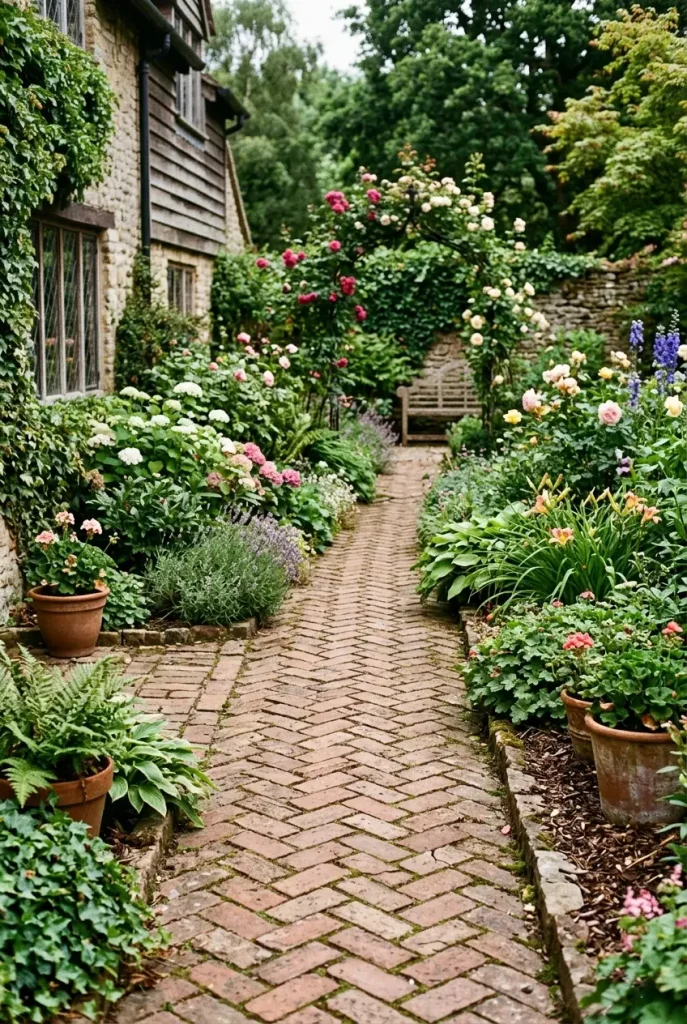
Brick paths carry that old, settled-in feel. Like the path has been there longer than everything around it.
The warm tones bring a bit of coziness, especially when the bricks start to show slight wear over time. Straight layouts feel neat, while patterns like herringbone or basketweave add a bit more movement underfoot.
It doesn’t have to be perfect either. Slight color variation or uneven edges can make it feel more real, less staged.
This style fits nicely with traditional homes, garden paths, or spaces that lean a little classic.
Just keep weeds from creeping into the joints so the pattern stays clear.
Gravel Walkway With Belgian Block Edging
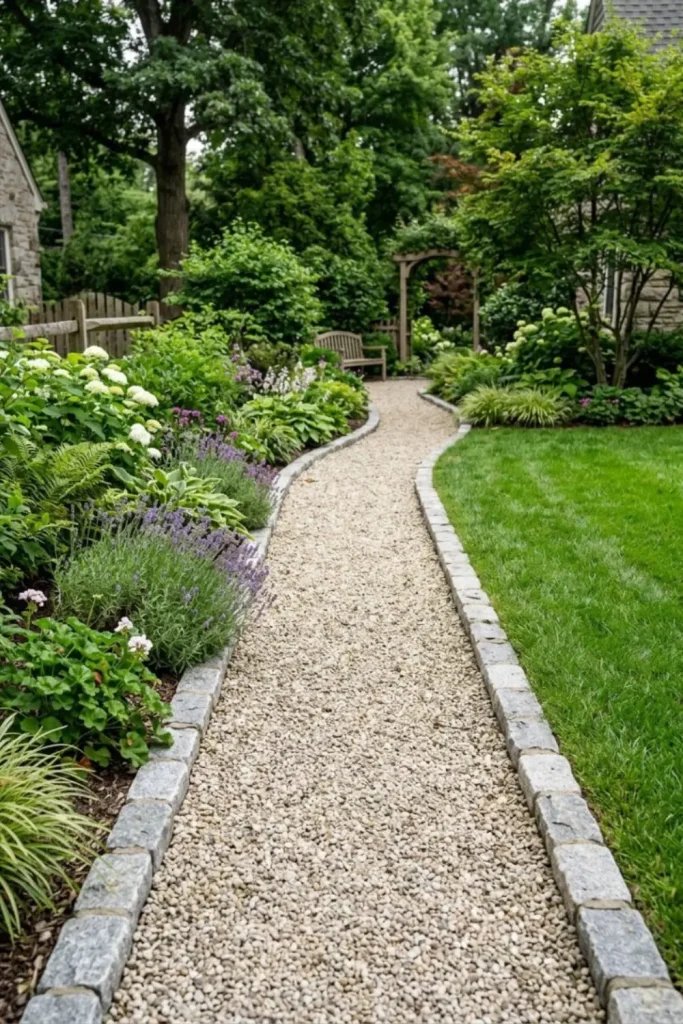
Gravel can feel loose on its own, but adding a solid edge changes the whole look. Belgian block edging frames the path with a bold outline, keeping the stones in place so everything feels more intentional.
That mix of loose gravel and strong stone border brings a balanced look, simple, but still structured. It can follow curves easily or run in straight lines depending on the layout.
This setup works well for quick pathways, areas that need good drainage, or yards where flexibility matters.
It also blends in nicely with driveways or older stone features without feeling out of place.
Travertine Paver Walkway Around Backyard Pool
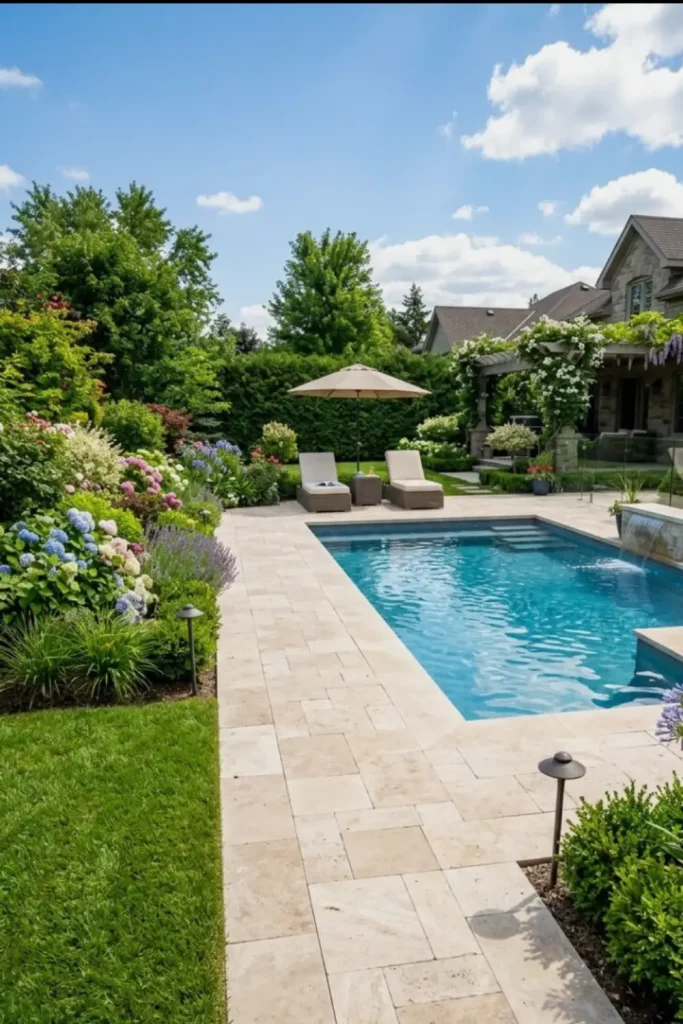
Pool areas need to feel safe first, but they should looking inviting too. Travertine pavers bring in a soft, natural look, and they tend to stay cooler underfoot compared to darker stone, which really helps during hot days.
The surface has that slightly aged, natural feel that sits nicely around water. Nothing too sharp or loud, just a calm, steady look that blends into the surroundings.
This material works well around pools, patio edges, or lounge corners where the space is meant to feel relaxed and open. It also pairs nicely with greenery, stone accents, and flowing water features.
Broom-Finished Concrete Walkway
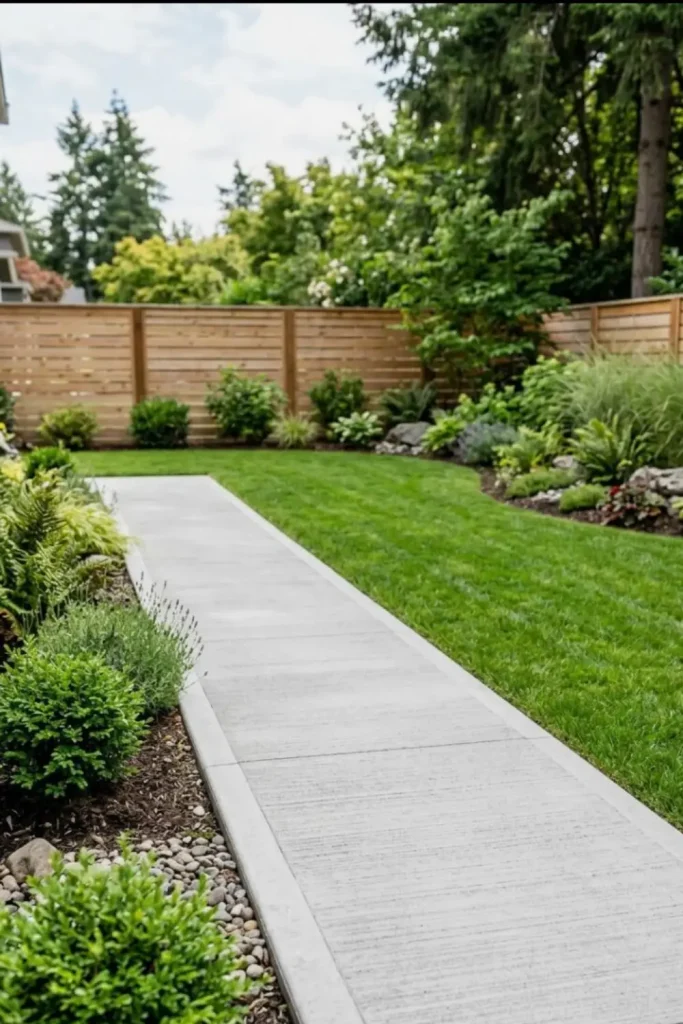
Broom-finished concrete has that steady, no-nonsense feel. The light texture gives good grip underfoot, while the clean, straight lines keep everything looking neat and ordered.
It doesn’t try to stand out, but still holds its own in a quiet, confident way. Simple surface, clear edges, nothing extra getting in the way.
This kind of finish fits well with modern homes and utility walkways.
Cobblestone Path Filled With Moss
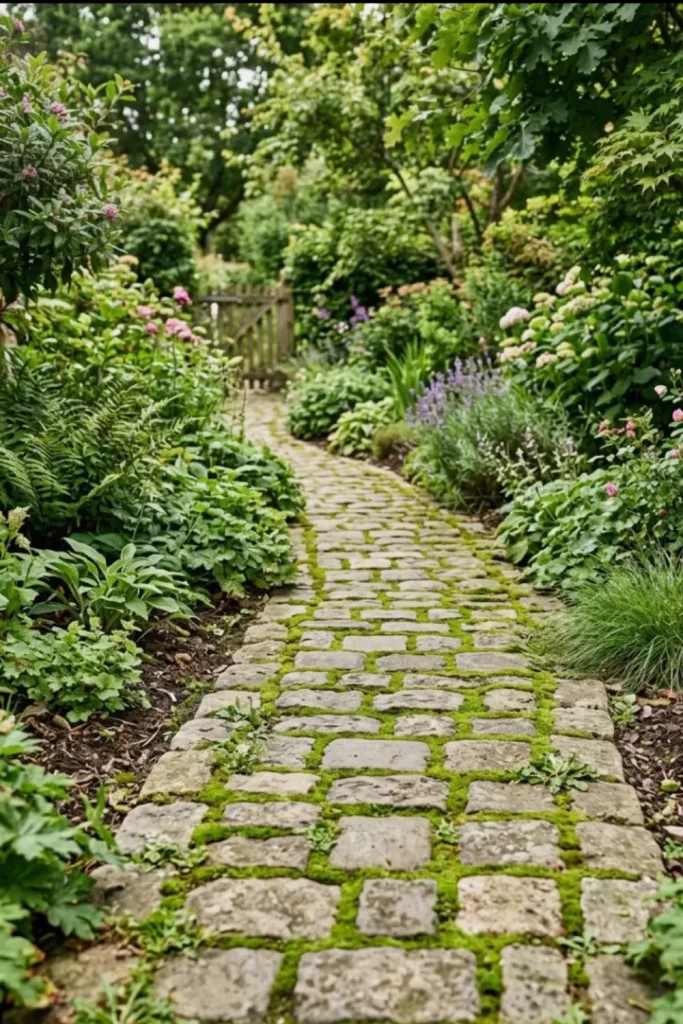
Cobblestone has that old-school charm without feeling too dressed up. When moss starts growing in the joints, the hard stone softens a bit and the whole path picks up a quiet, lived-in mood.
The texture is rough and full of character, and that uneven surface gives the garden a sense of history, like it’s been there for years.
This style fits best in spots where the path is more about atmosphere than movement, near a fountain, under a pergola, or alongside a dense flower bed.
Slate Tile Walkway With LED Path Lights
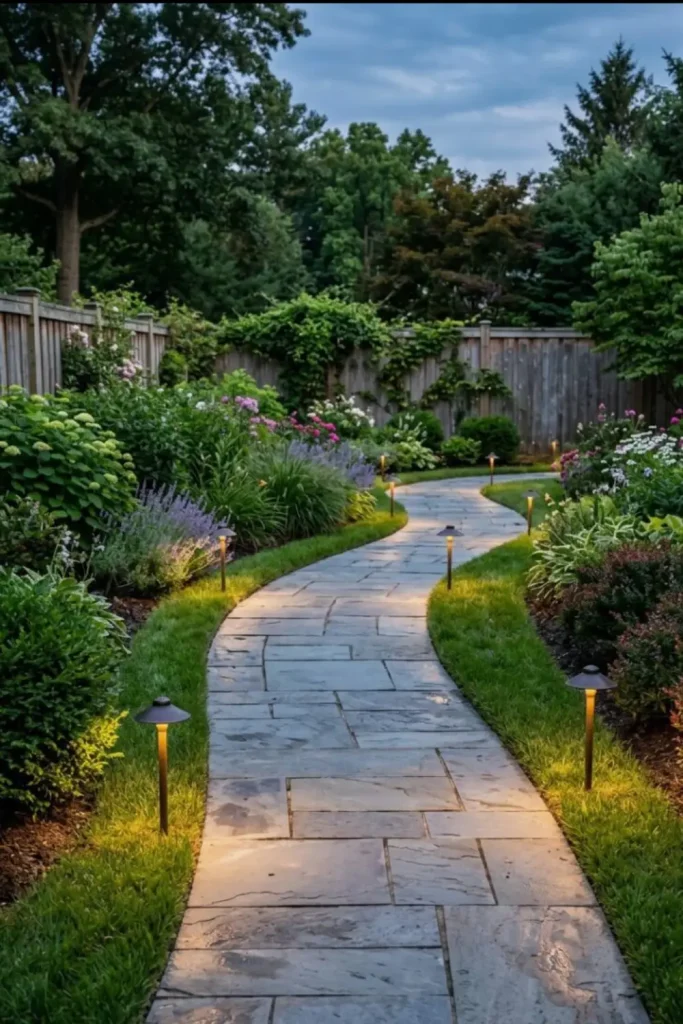
Walkways don’t have to disappear when the sun goes down. Slate tile brings in a deep, textured look, and low voltage LED path lights keep the route visible without turning the yard overly bright.
The lighting stays soft and grounded, just enough to guide the way and add a bit of calm to the space at night.
This kind of setup works well for evening gatherings, side paths, or garden walks that naturally get used after dark.
Round Concrete Steppers With White Clover
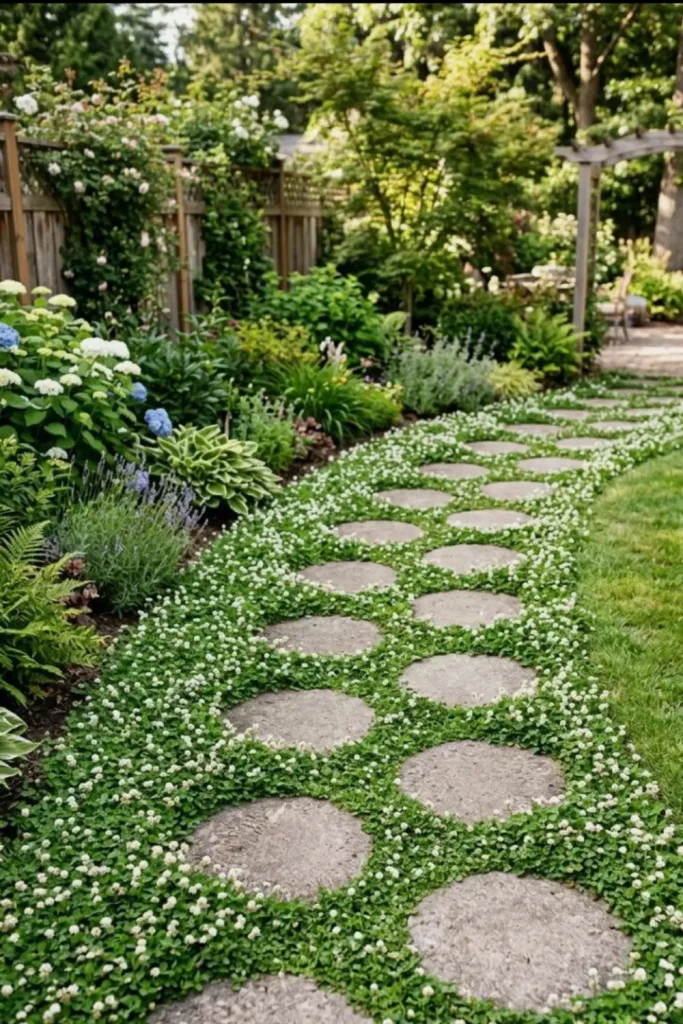
White clover has that easy, cheerful way of filling empty spaces. Pairing it with round concrete steppers keeps things simple, while the green spreads around them like a soft carpet.
Those round shapes break up straight lines and give the path a lighter, more playful feel. This setup fits well in relaxed gardens or family yards where the walkway doesn’t need to feel heavy or formal.
It also helps cut down mowing in those areas since the clover takes over most of the ground.
Straight Linear Porcelain Paver Walkway Idea
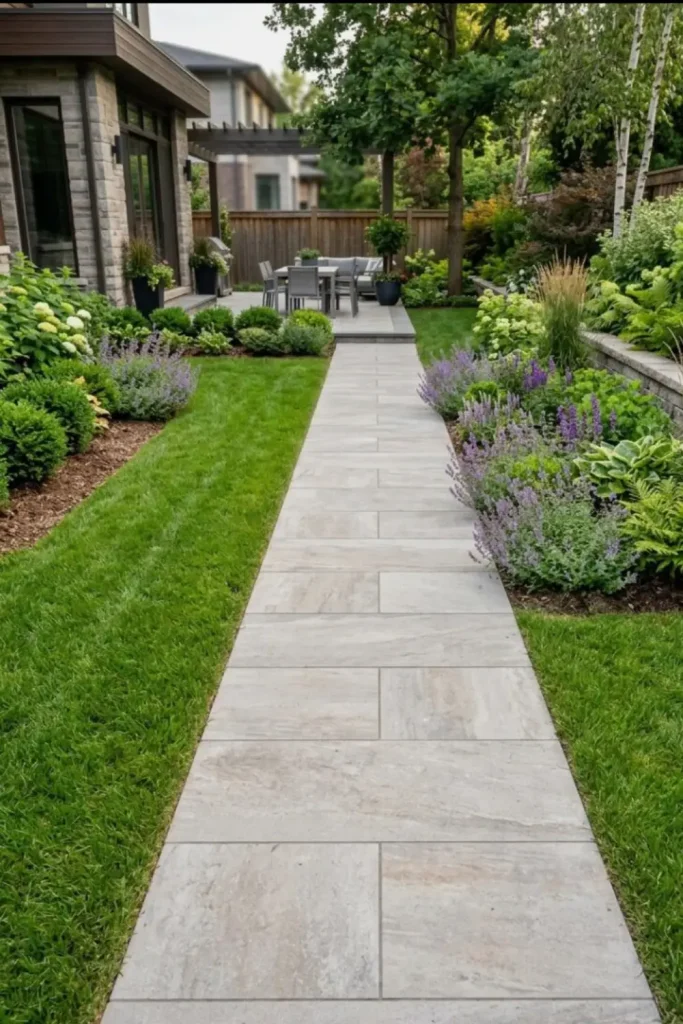
Porcelain pavers bring in a clean, structured look with a smooth surface that stays easy to manage and holds up well against stains.
Straight layouts keep the path feeling neat and intentional without adding too much visual noise.
This kind of walkway blends nicely with modern homes, poolside areas, or spots where the patio flows directly into the garden.
It also makes sense for spaces where low upkeep is a priority.
Wooden Path Using Cedar Deck
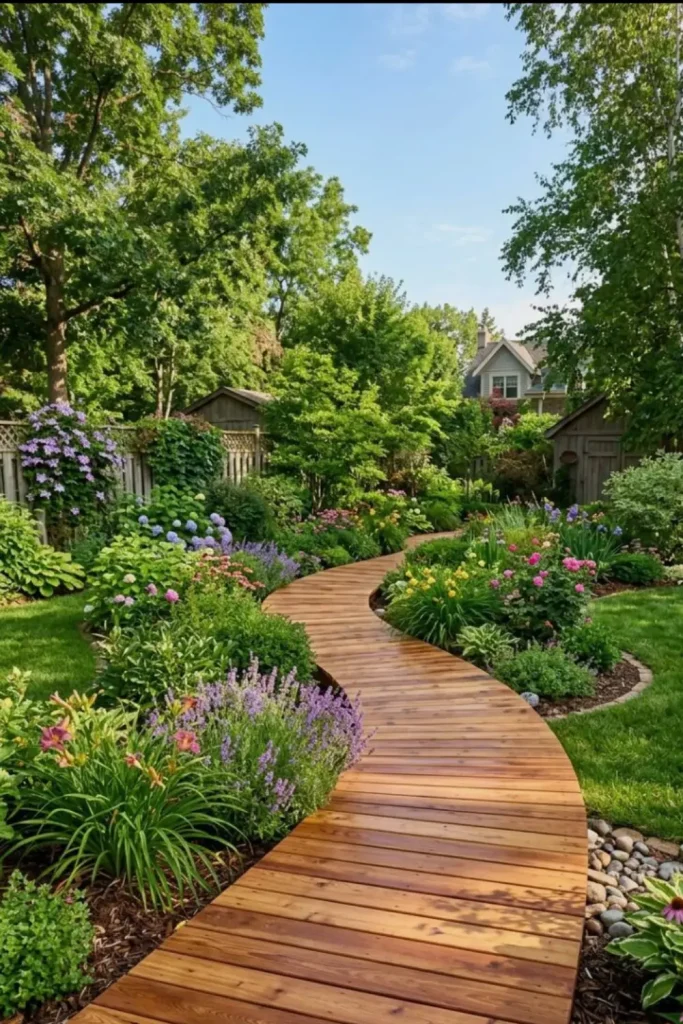
Cedar boards bring in that warm, easygoing feel right away. A simple boardwalk-style path can run through garden beds or stretch over damp spots, keeping things clean underfoot.
That natural wood tone has a richness to it, fitting into both rustic setups and more modern.
It’s a smart pick for uneven ground, areas near water, or anywhere the soil tends to stay soft. Just needs sealing now and then, plus a bit of upkeep to keep the wood from wearing down too fast.
Decomposed Granite Path with Steel Edging
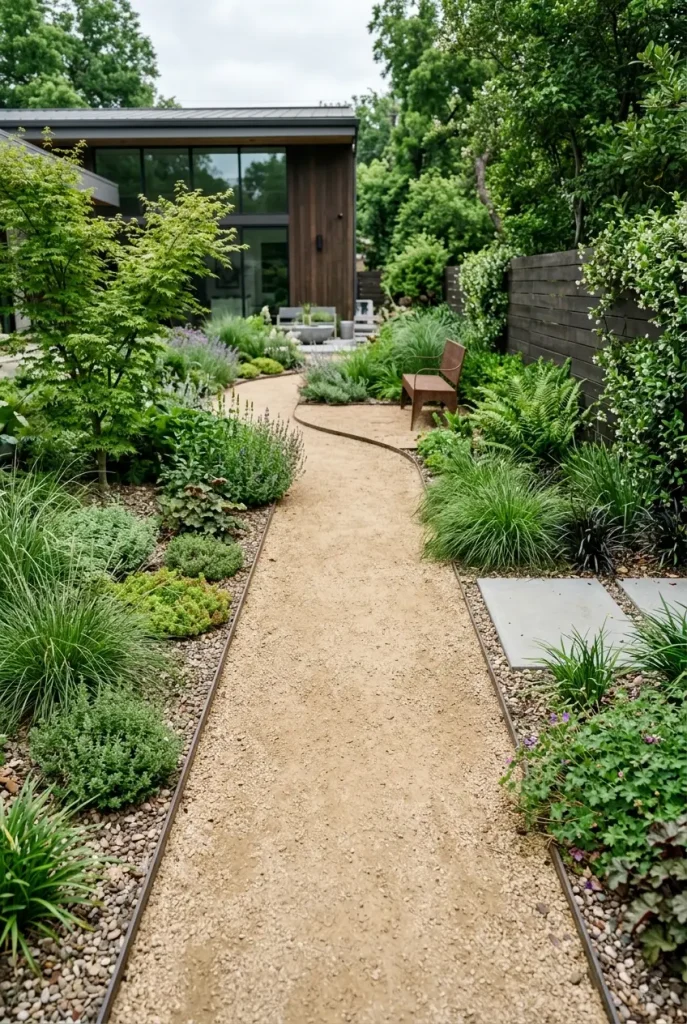
Decomposed granite brings in that soft, earthy surface that feels natural underfoot. When it’s packed down right, it holds its shape without looking too rigid.
Steel edging changes the whole outline, clean, sharp borders that stop the material from spilling into the grass. That contrast between loose texture and tight edges is what makes it feel intentional.
It works well for side yards, modern gardens, or simple walkways that need structure without going full concrete.
Over time, it settles a bit more, so occasional topping and light raking keeps it even.
River Rock Border Walkway
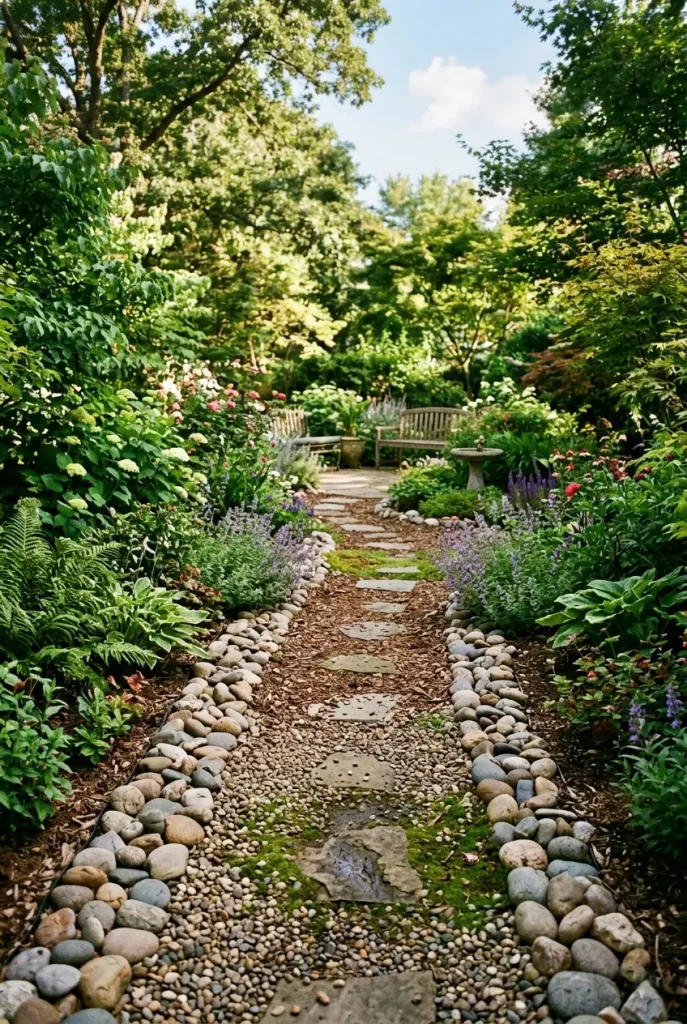
River rocks lining a simple walkway bring in that soft, natural flow. The stones have smooth shapes and mixed tones, so the edges don’t feel too rigid or forced.
A basic path in the middle, gravel, stepping stones, or even compact soil keeps things grounded, while the river rocks on the sides add shape and movement.
This setup works well near gardens, water features, or any space that leans more natural than structured.
It stays low effort, just a bit of occasional reshaping when stones shift out of place.
Paver Walkway with Grass Joints
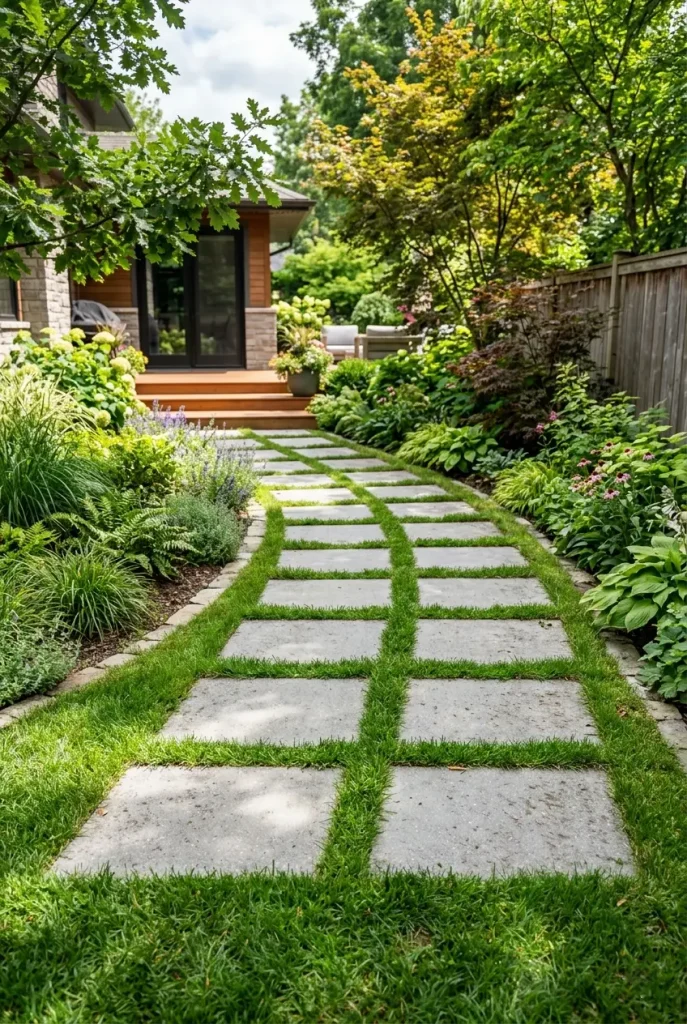
Pavers spaced with grass in between give that mix of structure and softness. The solid blocks keep the path clear, while the green strips break it up and keep it from feeling too rigid.
The grass growing between joints adds movement and life, especially when it shifts with the seasons. It’s a small detail, but it changes the whole mood of the walkway.
This setup works well for modern gardens that still want a bit of nature in the design, or backyards that sit between neat and relaxed styles.
Just a bit of trimming keeps the grass from taking over the edges.
Flagstone Walkway with Soft Sand Fill
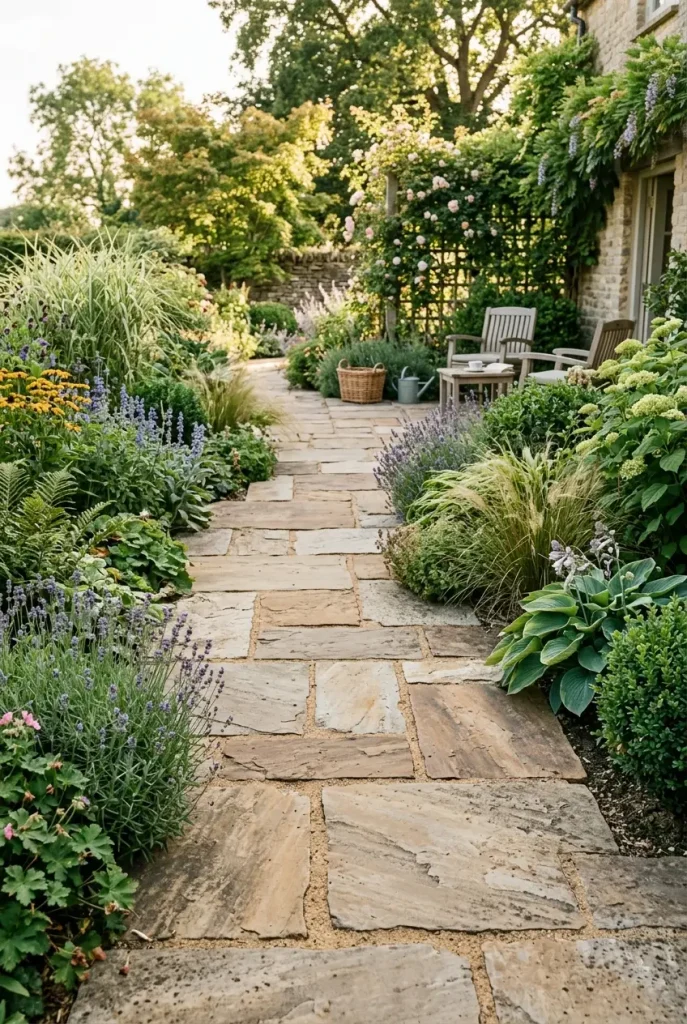
Flagstone laid in a loose pattern brings that natural, uneven charm that feels easy on the eyes. The gaps filled with sand keep everything stable while still letting the stones keep their irregular shape.
Each piece sits slightly different, so the path doesn’t feel repetitive. The surface feels grounded, but still relaxed and open.
This style fits well in cottage gardens, shaded backyards, or areas where a more natural flow makes sense.
Over time, a bit of sand may need topping up as it settles between the stones.
Wood and Stone Mixed Walkway
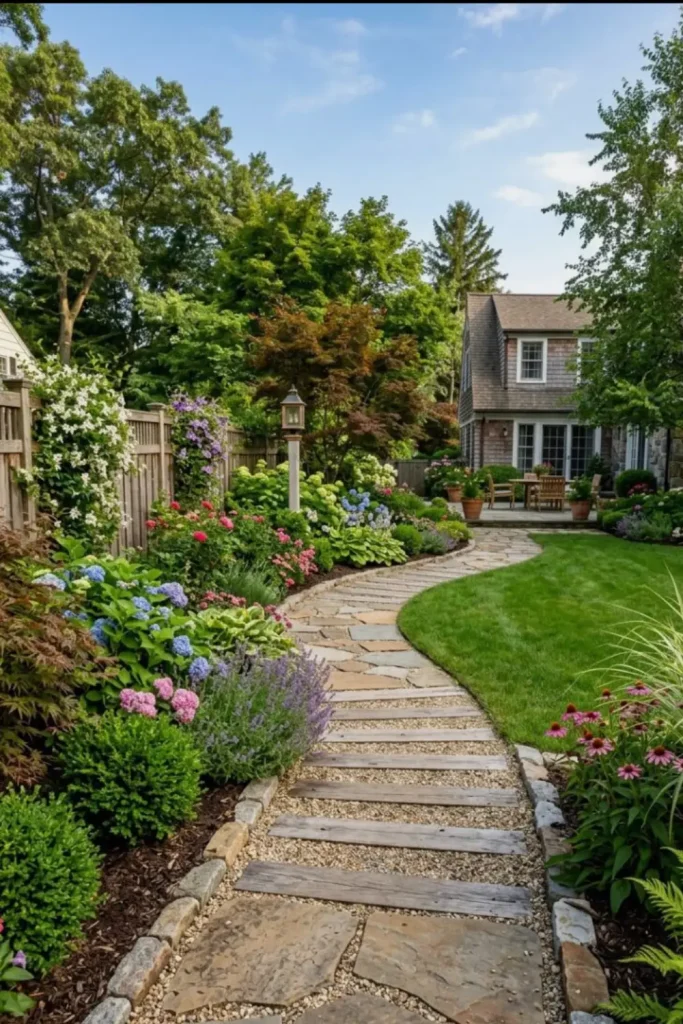
Wood and stone together give that balanced, earthy feel that sits right between soft and solid. The stone brings structure underfoot, while the wood adds warmth and breaks up the heaviness.
Pieces can be alternated in a loose pattern or placed in sections so the path doesn’t feel too repetitive. That mix keeps the walkway interesting without making it feel busy.
This style fits well in natural gardens, shaded yards, or spaces that connect a patio to a greener area.
It also ages in a nice way, wood softens over time, and stone stays steady, so both keep their own character.
I hoe you liked these 20 Backyard Walkway Ideas.