10 DIY Fencing To Keep Squirrels Out of Garden
Squirrels are clever, agile, and relentless. They can leap up to 10 feet horizontally, scale almost any vertical surface, and chew through surprisingly tough materials. Standard fencing rarely stops them without a few smart modifications. This guide walks you through 10 proven DIY fencing, from ultra-budget wire mesh solutions to clever rolling-bar deterrents. Each method is broken down step by step with the exact materials you need, an honest cost estimate, and a difficulty rating.
Whether you have a raised bed, an in-ground plot, or a container garden on a patio, there’s a solution here that fits your setup, skill level, and budget. The key principle: squirrels don’t just climb over, they dig under, squeeze through, and exploit every gap. A truly squirrel-proof fence addresses all three. Let’s build.
Hardware Cloth Cage Enclosure (The Gold Standard for Raised beds)
- Easy
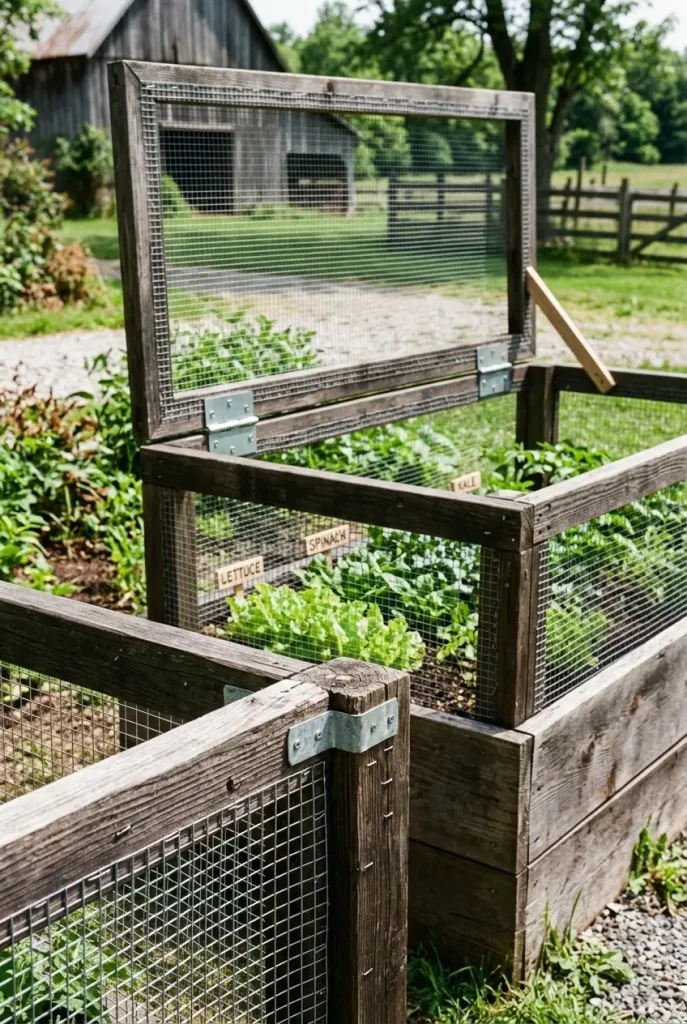
Build a rigid box frame from 2×2 lumber and wrap it entirely in ½-inch hardware cloth, top, sides, and a skirt along the bottom. The ½-inch mesh is too tight for squirrel paws or noses. Attach with staple gun and U-staples every 4 inches. Add a hinged lid panel for easy harvesting access. Bury the bottom skirt 2–3 inches underground to prevent digging entry. This method is the most thorough: it blocks climbing, jumping, and burrowing in one structure.
Materials:
- ½” hardware cloth roll
- 2×2 lumber
- U-staples
- Hinges ×2
- Staple gun
- Wire cutters
Estimated cost: $20–$50
Chicken Wire Perimeter Fence with overhang (Budget-friendly Garden Border)
- Easy
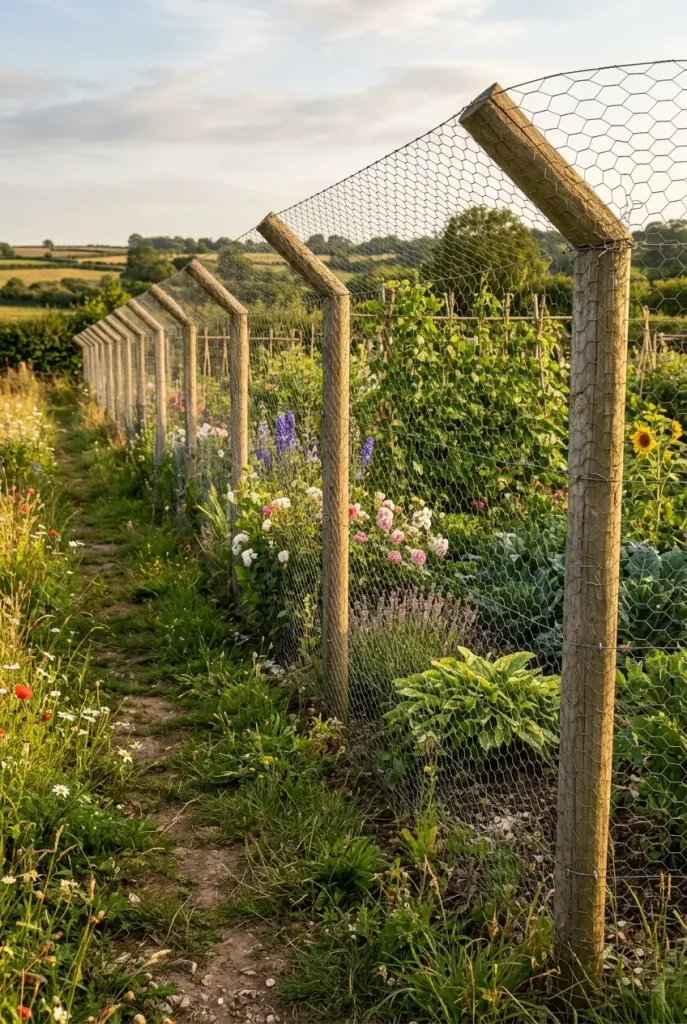
Run chicken wire around your garden perimeter attached to wooden or metal stakes. The key upgrade: bend the top 12 inches outward at a 45° angle to create an overhang lip. When a squirrel climbs up and reaches the outward-angling section, it can’t get past the overhang and falls back. Fence should be at least 30 inches tall total. Bury the bottom 4–6 inches in an L-shape underground to stop digging. Inexpensive and fast to install across large garden areas.
Materials:
- Chicken wire roll
- Wooden stakes
- Wire staples
- Zip ties
- Pliers
Estimated cost: $15–$35
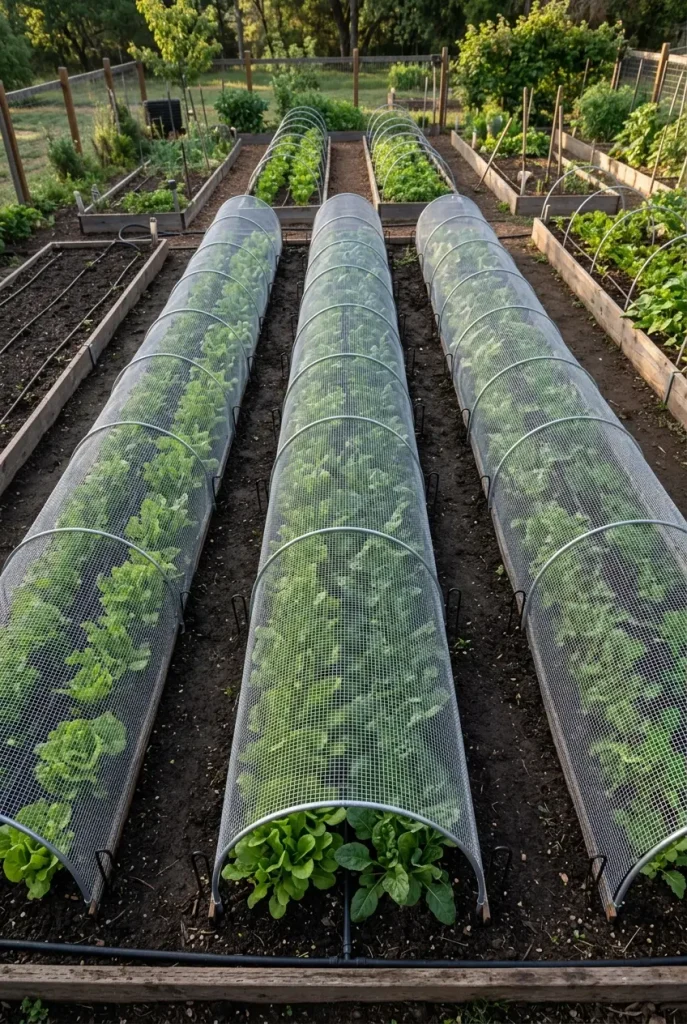
Cloche Tunnel Covers with Mesh ends (Row-by-row Protection)
- Easy
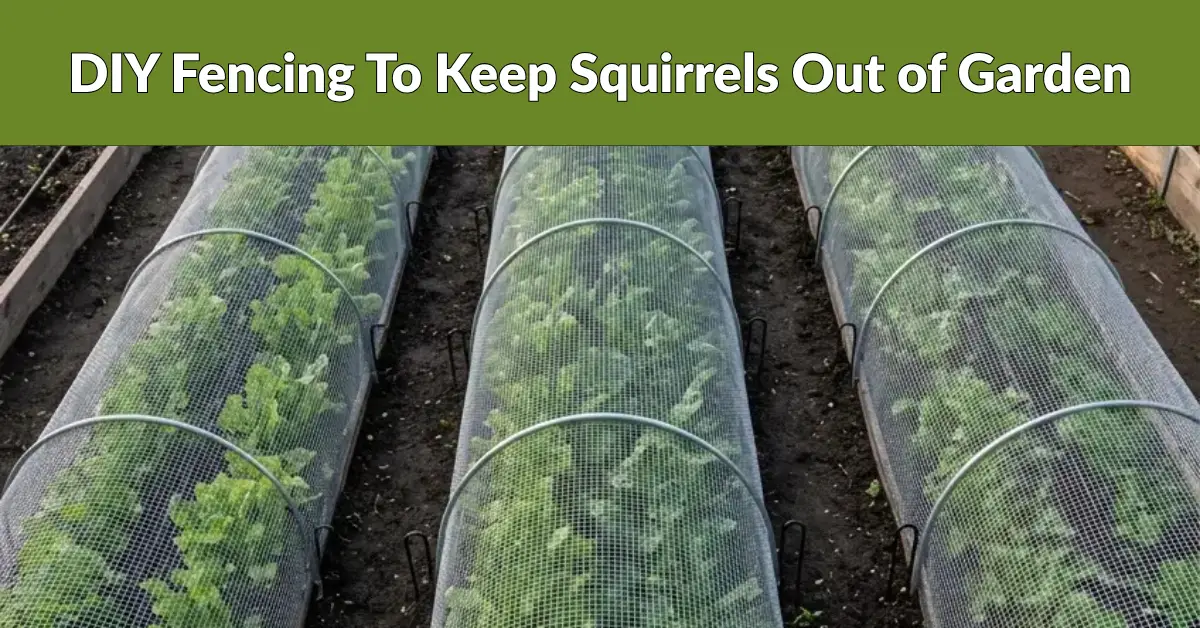
Bend lengths of heavy-gauge wire or rebar into hoops and push them into the soil over individual rows. Drape hardware cloth or fine bird netting over the hoops and secure the sides and ends with landscape pins or tent pegs. This creates a low tunnel that protects each planting row individually, great for strawberries, lettuces, and seedlings. Lift the cover end to harvest. Use hardware cloth rather than bird netting for full squirrel-proofing since their claws can push through loose netting.
Materials:
- Heavy wire / rebar
- Hardware cloth
- Landscape pins
- Wire cutters
- Zip ties
Estimated cost: $15–$40
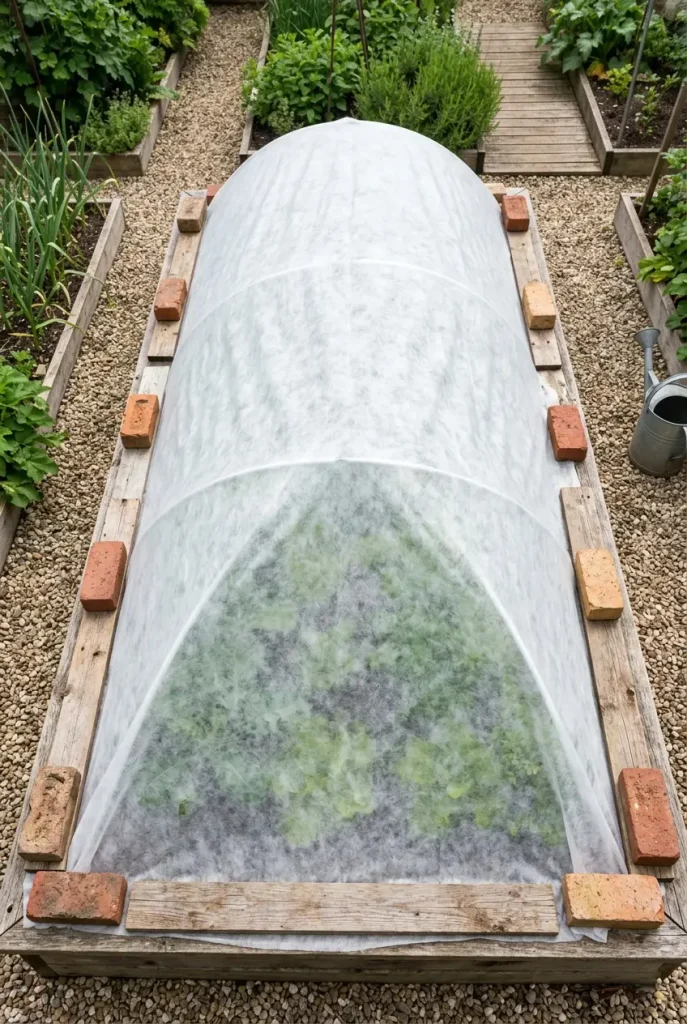
Floating row cover with weighted edges (Lightweight season-long cover)
- Easy
Lay lightweight spun polypropylene row cover fabric directly over plants and weigh down all edges with heavy boards, bricks, or sandbags. No frame is needed — the fabric sits on the plants directly. While primarily sold as a frost cover, dense versions (1.5 oz/sq yd) also act as an effective squirrel barrier. It lets in light, water, and air. Pin the edges every 12 inches so squirrels can’t push underneath. Best for low-growing crops and newly seeded beds where even mesh would be overkill.
Materials:
- 1.5oz row cover fabric
- Bricks or boards
- Landscape pins
- Scissors
Estimated cost: $8–$20
Wooden Frame Mesh Panels
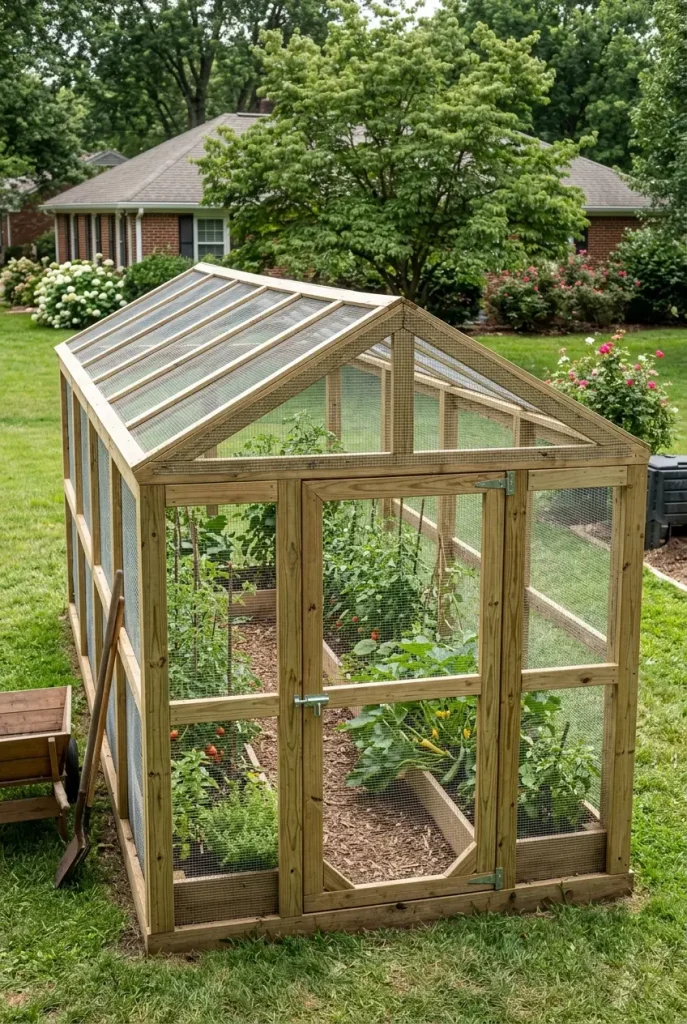
Build lightweight wooden frames and staple hardware cloth to each panel. Position the panels around the garden bed and connect them with hinges or brackets so they fold for storage. This creates a removable squirrel-resistant enclosure with a clean appearance.
Materials:
- 1×2 or 2×2 lumber
- Hardware cloth
- Wood screws
- Hinges
- Staple gun
Estimated cost: $35–$70
Skill level: Medium
Chicken Wire Cylinder Guards (Plant-by-Plant Protection)
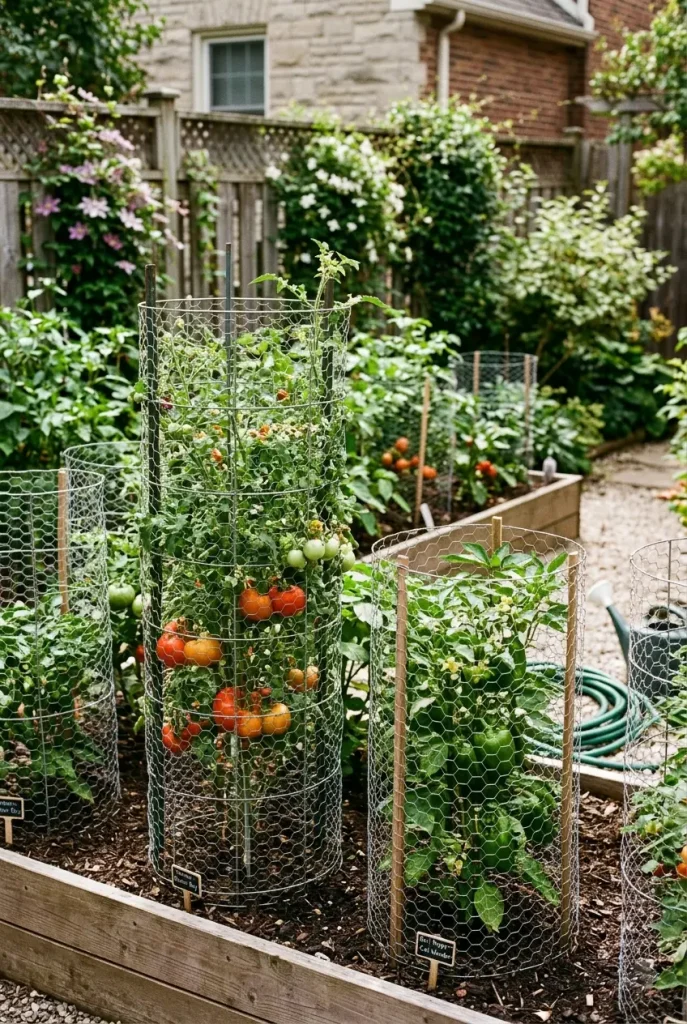
Cut chicken wire or hardware cloth into sections and form cylinders around vulnerable plants. Secure each cylinder with garden stakes. This method works especially well for tomatoes, peppers, sunflowers, and young fruit plants.
Materials:
- Chicken wire or hardware cloth
- Garden stakes
- Wire cutters
- Zip ties
Estimated cost: $10–$25
Skill level: Easy
Hinged Raised Bed Lid Fence
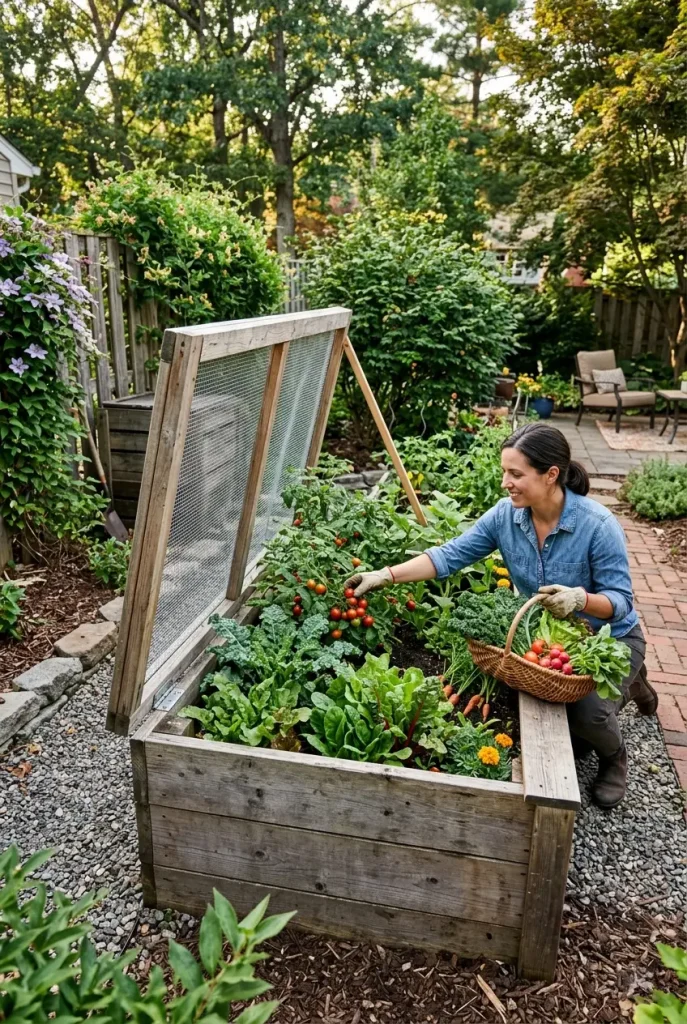
Build a wooden frame that fits over an entire raised bed and attach mesh across the top. Install hinges on one side so the lid opens for watering and harvesting. The design protects seedlings while keeping access convenient.
Materials:
- Wood boards
- Hardware cloth
- Hinges
- Screws
- Handle
Estimated cost: $30–$60
Skill level: Medium
Foldable A-Frame Mesh Cover
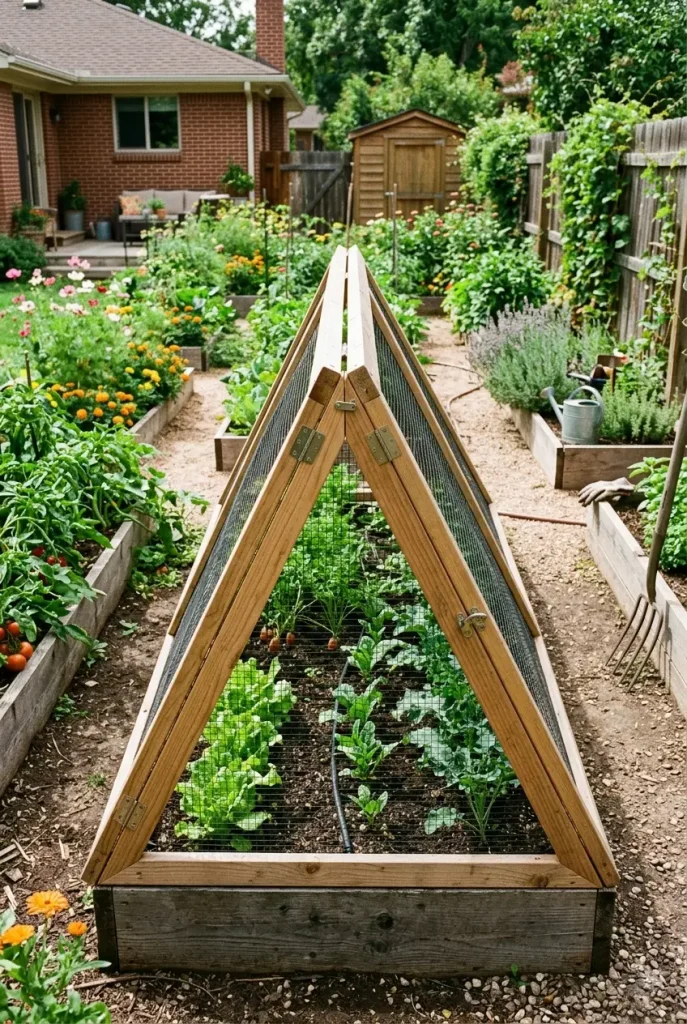
Build two mesh-covered panels joined at the top with hinges to create an A-frame shape over plants. The structure lifts off easily for harvesting and folds flat for storage.
Materials:
- Thin wood strips
- Hardware cloth
- Hinges
- Screws
Estimated cost: $20–$50
Skill level: Medium
Full Walk-In Garden Cage
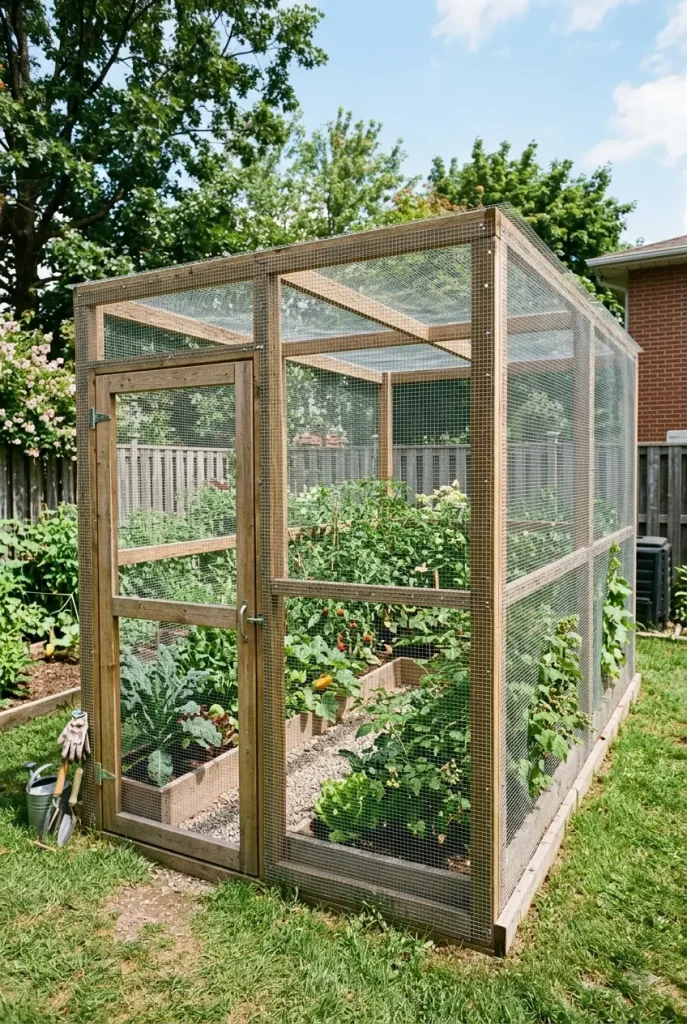
Build a larger walk-in structure using wooden posts or metal conduit with hardware cloth surrounding all sides and the roof. Add a simple door for access. This protects larger gardens and fruit-producing plants.
Materials:
- Wooden posts or conduit pipe
- Hardware cloth
- Hinges
- Door latch
- Screws
Estimated cost: $80–$200
Skill level: Advanced
Crisscross Wire Cube Covers (Stackable Garden Guards)
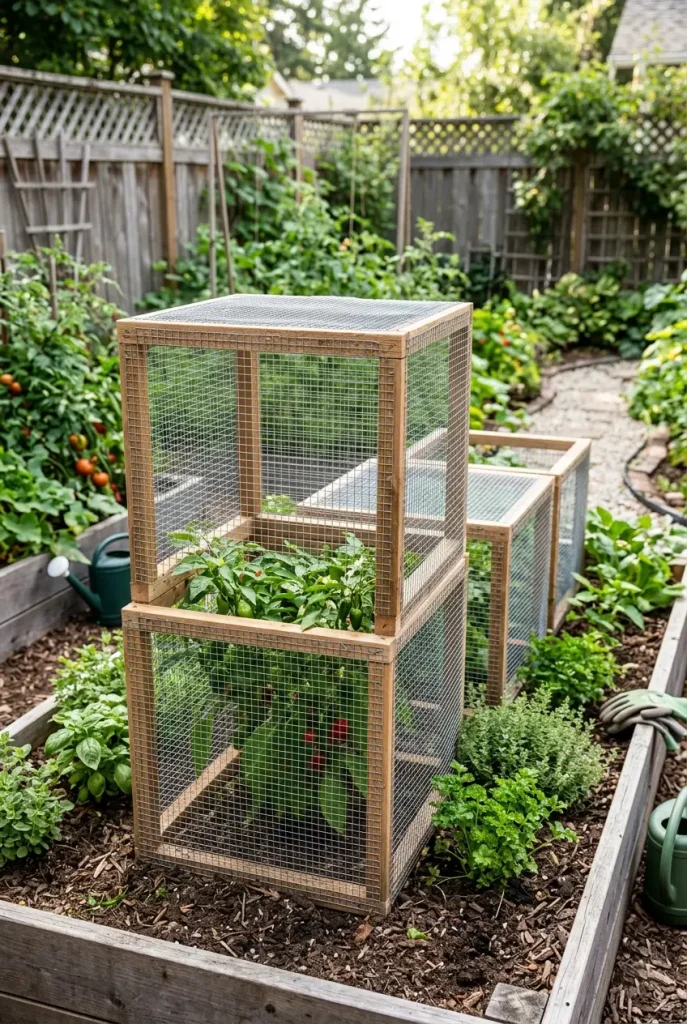
Create square cube frames using wooden strips or PVC pieces and cover all sides with hardware cloth. Place the cubes over vulnerable crops and stack them for taller plants as they grow. This method works especially well for peppers, lettuce, herbs, and small berry patches.
Materials:
- PVC pipe or wooden strips
- Hardware cloth
- Corner connectors or screws
- Zip ties
- Wire cutters
Estimated cost: $15–$40
Skill level: Easy