20 Cottage Garden Ideas For a Romantic Outdoor Space
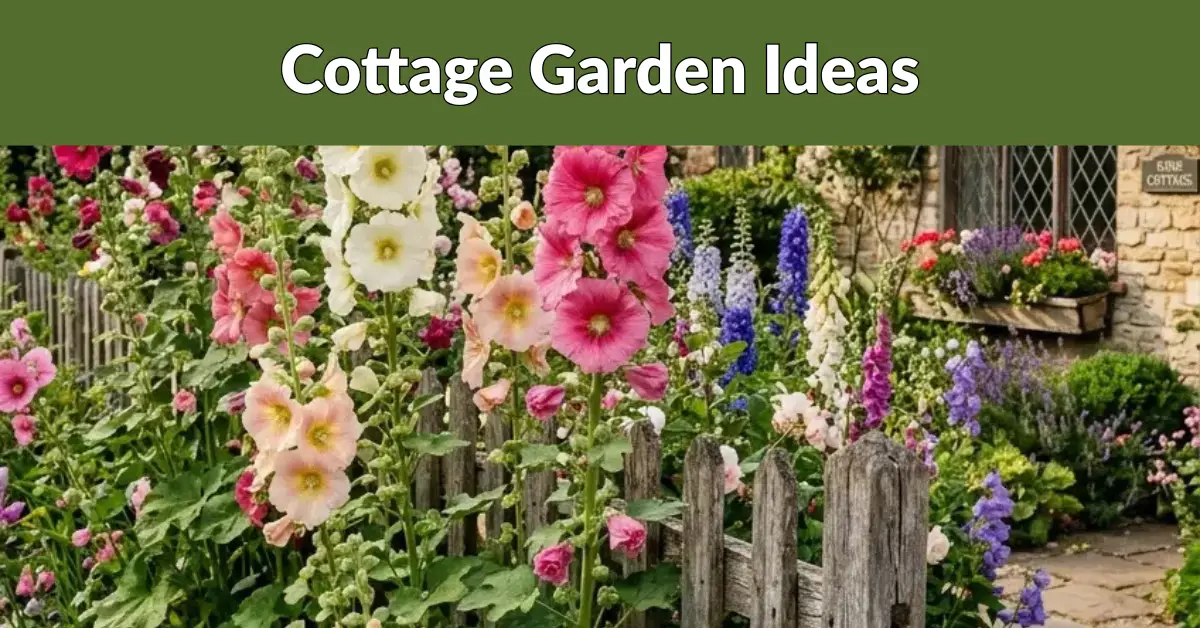
A cottage garden is a charming, informal style of gardening that originated in rural England. Unlike manicured lawns or formal garden designs, cottage gardens embrace a beautifully controlled chaos, overflowing with flowers, fragrance, and character. They feel lived-in, personal, and deeply romantic.
The look is defined by dense, relaxed planting where every inch is packed with something growing. Plants spill over pathways, self-seed freely, and mix together without strict rules. Flowers, herbs, vegetables, and shrubs all coexist side by side, and the layout avoids rigid symmetry. A rustic fence, stone path, or picket gate serves as the perfect backdrop.
Some of the most classic plants in a cottage garden include roses, lavender, foxgloves, hollyhocks, delphiniums, peonies, sweet peas, and poppies, interspersed with culinary herbs like thyme, rosemary, and chamomile.
Cottage gardens are wildlife-friendly and low-maintenance. Bees, butterflies, and birds thrive in the dense planting, and self-seeding plants let the garden renew itself season after season.
In this post, get ready to explore 20 amazing cottage garden ideas and a guide how to start a cottage garden
Seasonal Mixed Bloom Borders
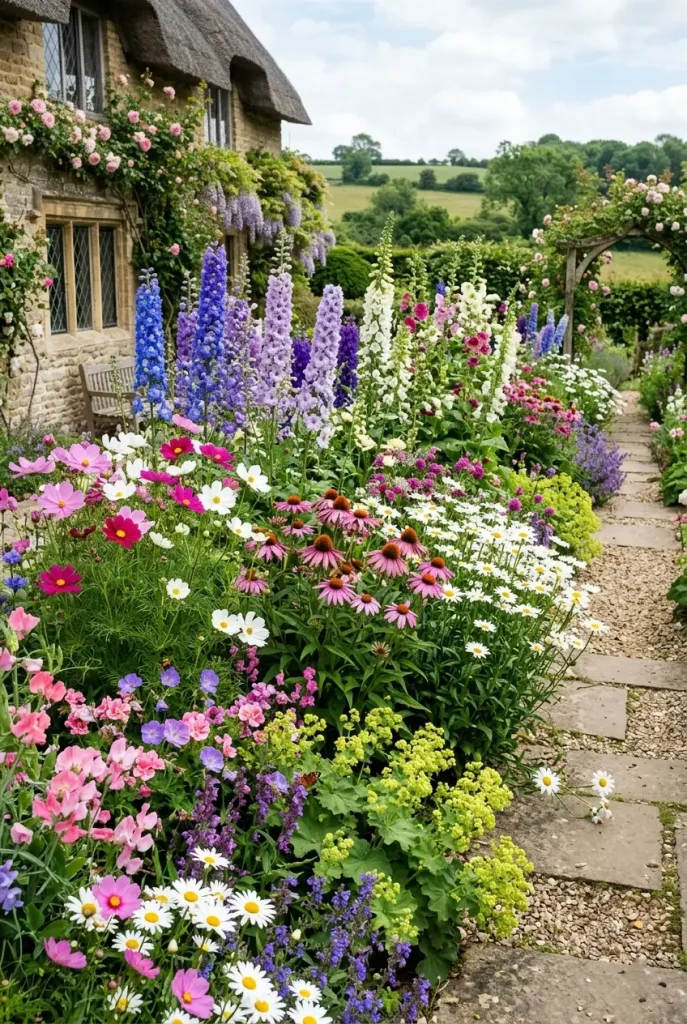
One of the defining characteristics of a cottage garden is its abundance of flowers throughout the growing season. Seasonal mixed bloom borders achieve this effect by combining annuals and perennials that flower at different times of the year. Early spring bulbs can transition into summer perennials, while late-season blooms keep the garden colorful well into autumn.
Mixed borders create visual depth and variety. Pairing flowers of different heights and bloom shapes results in a lush and layered appearance. Go with the combinations, daisies, coneflowers, delphiniums, cosmos, and salvias. As plants mature and intermingle, the border develops the relaxed, overflowing look that cottage gardens are known for.
Climbing Rose Archways
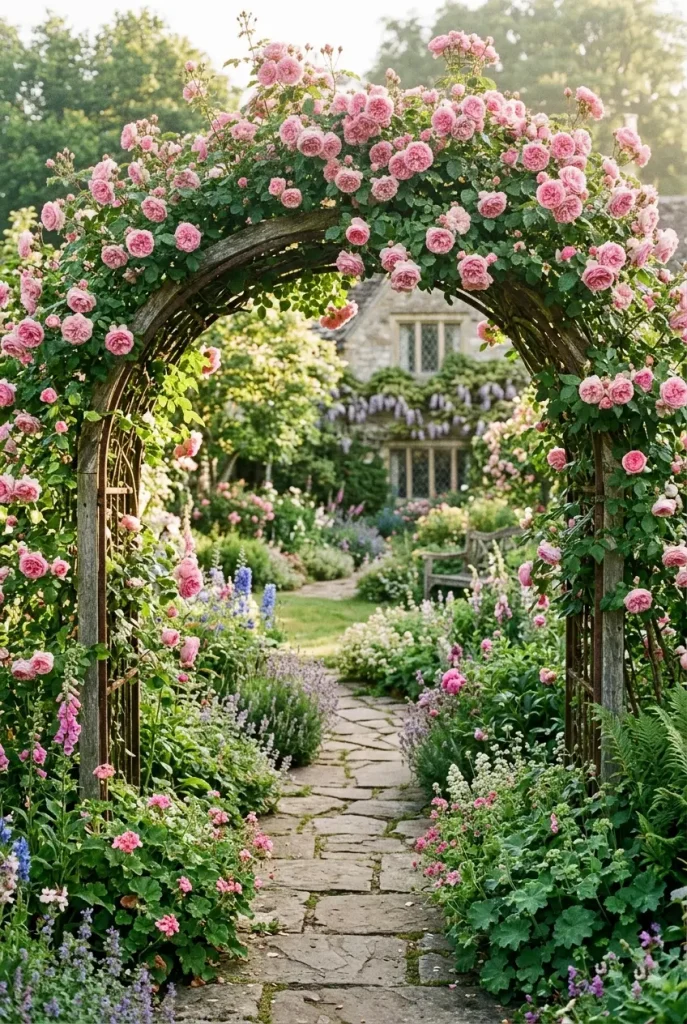
Climbing roses transform an ordinary entrance, pathway, or garden gate into a stunning focal point. As the plants mature, flowers create a canopy of color and fragrance that draws visitors through the garden.
An arch separates a seating area from flower beds or create a transition between garden rooms. Varieties in soft pink, white, peach, and cream tones complement the traditional cottage aesthetic particularly well. Combined with rustic wooden structures or wrought-iron frames, climbing roses create a romantic ambience and charm.
Fragrant Lavender Edging
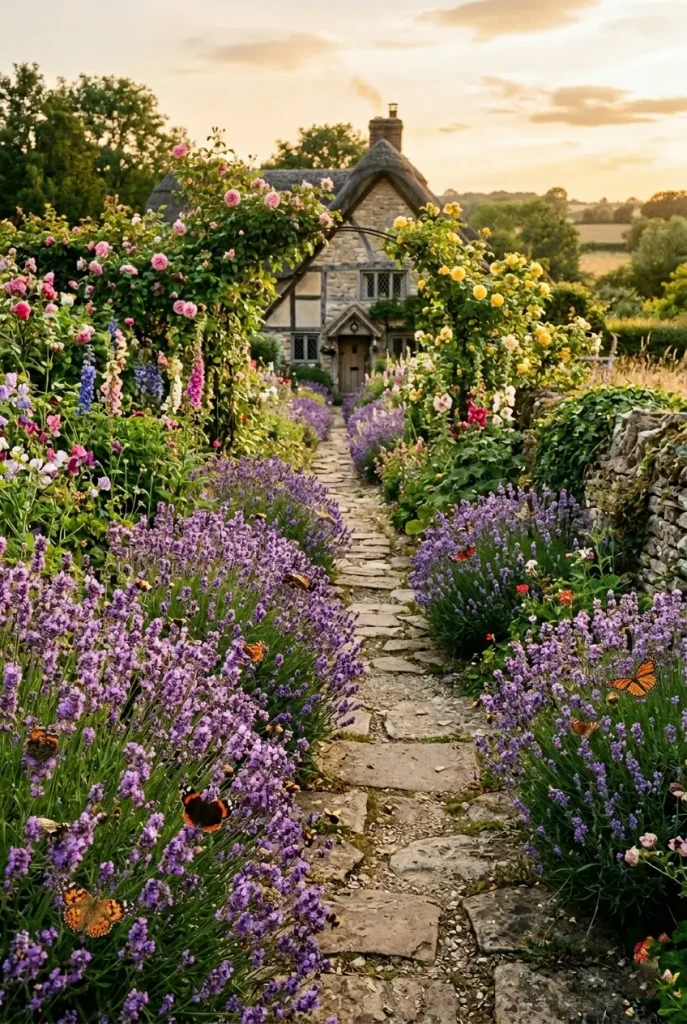
Lavender is one of the most versatile plants in a cottage garden. When planted along pathways, flower beds, or borders, it creates neat edging while maintaining the relaxed feel. Its silvery-green foliage and purple flower spikes provide contrast against brighter flowering plants.
The fragrant blooms attract bees and butterflies, making the garden more wildlife-friendly. Lavender is drought-tolerant, beauty with low maintenance. During summer, the scent released as people walk past creates a sensory experience that enhances the garden’s welcoming atmosphere.
Read: Lavender Growing Guide
Hollyhock Vertical Accents
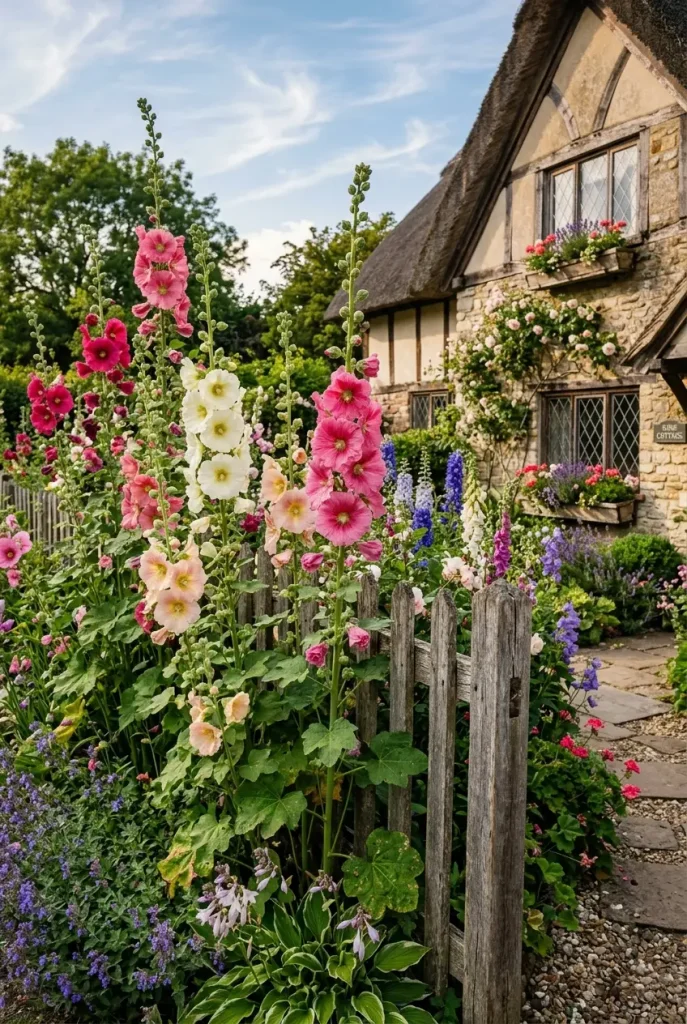
Hollyhocks are classic cottage garden plants prized for their towering flower spikes. Their height makes them ideal for planting along fences, walls, and the backs of flower beds where they can create a dramatic backdrop. Plants usually grow 3-6 feet tall, but some cultivars can reach 9 feet.
Available in shades of pink, red, yellow, white, and purple, hollyhocks add vibrant color while reinforcing the nostalgic character of a traditional cottage garden. They bloom on tall stems packed with flowers, they naturally draw the eye upward and make even small gardens feel more dynamic and layered. Their old-fashioned charm pairs beautifully with roses, foxgloves, and other cottage garden plants.
Foxglove Woodland Spires
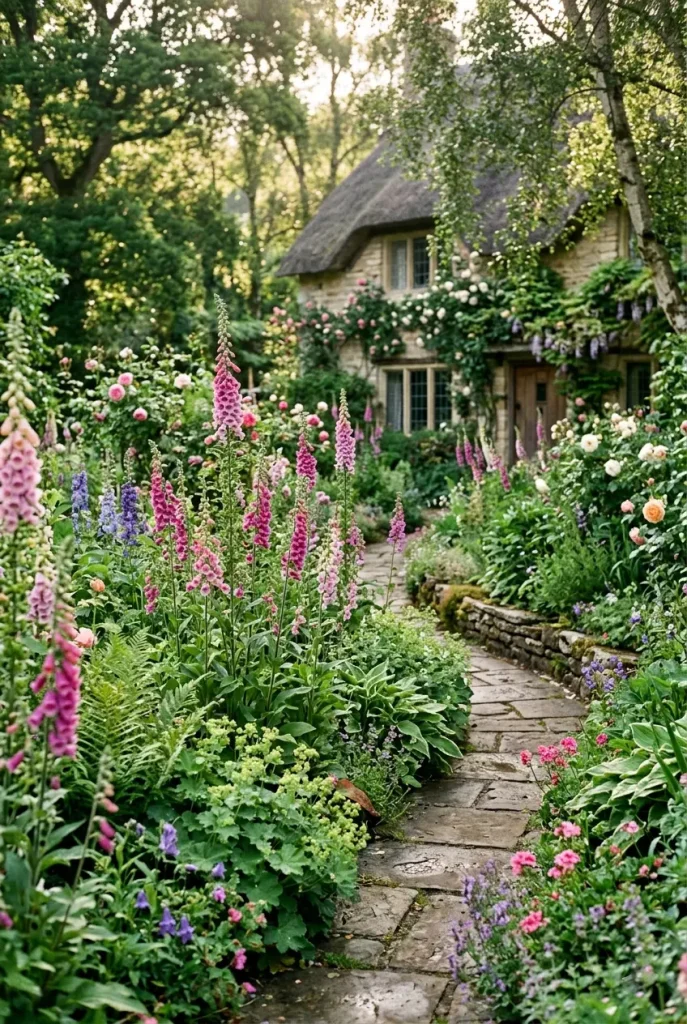
Foxgloves bring elegance to cottage gardens with their distinctive bell-shaped flowers arranged along tall stems. They thrive in partially shaded locations, making them an excellent choice for garden edges, woodland-inspired borders, and areas beneath trees.
Foxgloves create a naturalistic garden atmosphere. When planted in groups, they produce a soft, enchanting display that feels magical during the flowering season. Their pastel shades of pink, cream, purple, and white blend seamlessly with traditional cottage garden color palettes and create a layered and harmonious planting scheme.
Curved Cottage Garden Pathways
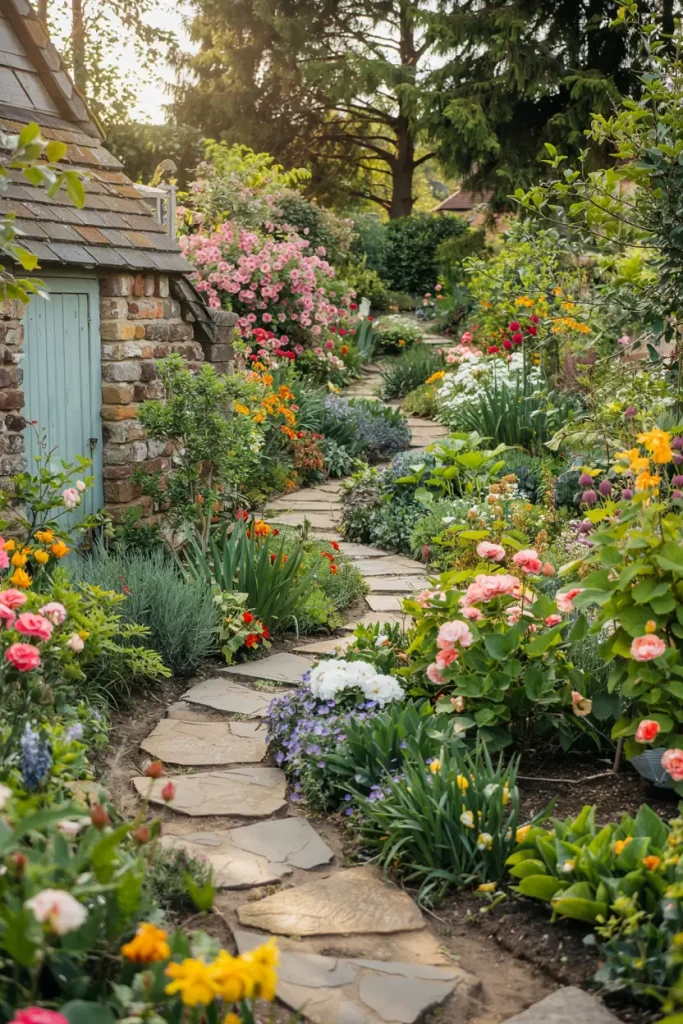
Straight paths feel formal, while curved pathways encourage exploration and create a sense of mystery. In a cottage garden, winding paths gently guide visitors through flower-filled borders, revealing new views and focal points around every bend. This simple design feature makes the garden feel larger and more inviting, even in limited spaces.
Curved pathways soften the landscape and complement the relaxed nature of cottage-style planting. Whether made from gravel, stepping stones, or natural stone slabs, these paths blend seamlessly into overflowing flower beds and lush greenery. The combination of winding routes and abundant planting creates a storybook atmosphere that encourages visitors to slow down and enjoy the surroundings.
Rustic Gravel and Brick Walkways
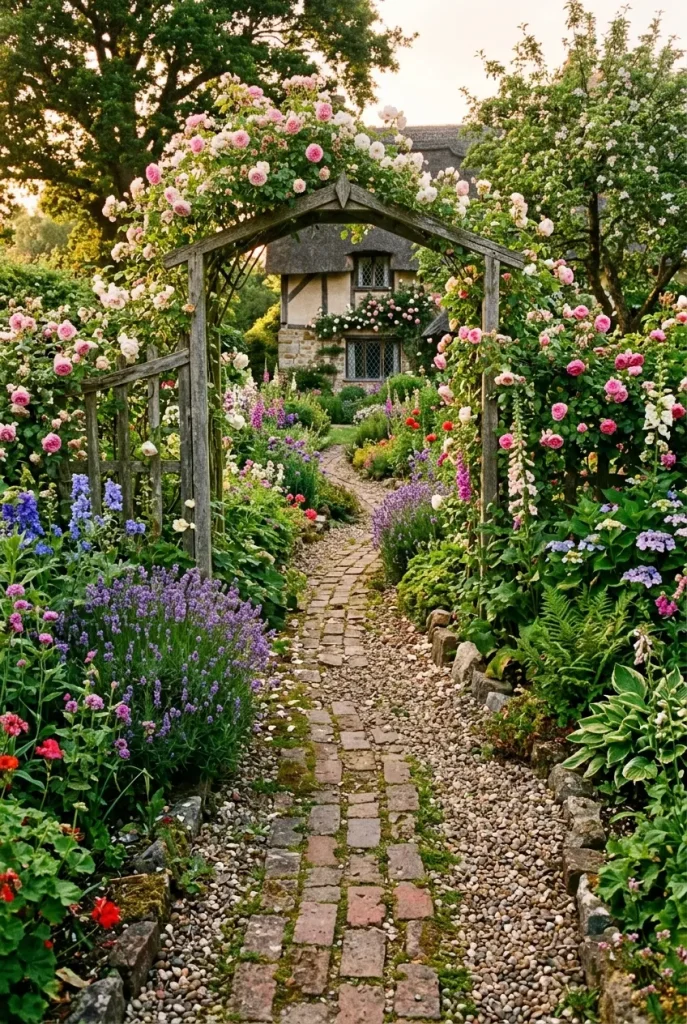
Natural materials play an important role in creating an authentic cottage garden aesthetic. Gravel and brick walkways offer timeless appeal while adding texture and character to the landscape. Their weathered appearance feels perfectly at home among flowering borders, climbing roses, and traditional garden structures.
Brick paths bring a sense of history and permanence, while gravel walkways create a more relaxed countryside feel. Both options are practical, durable, and easy to integrate into cottage-style designs. As plants spill over the edges and soften the boundaries, the pathways become an organic part of the garden. The result is a landscape that feels mature, welcoming, and rich in character.
Wildlife-Friendly Cottage Garden
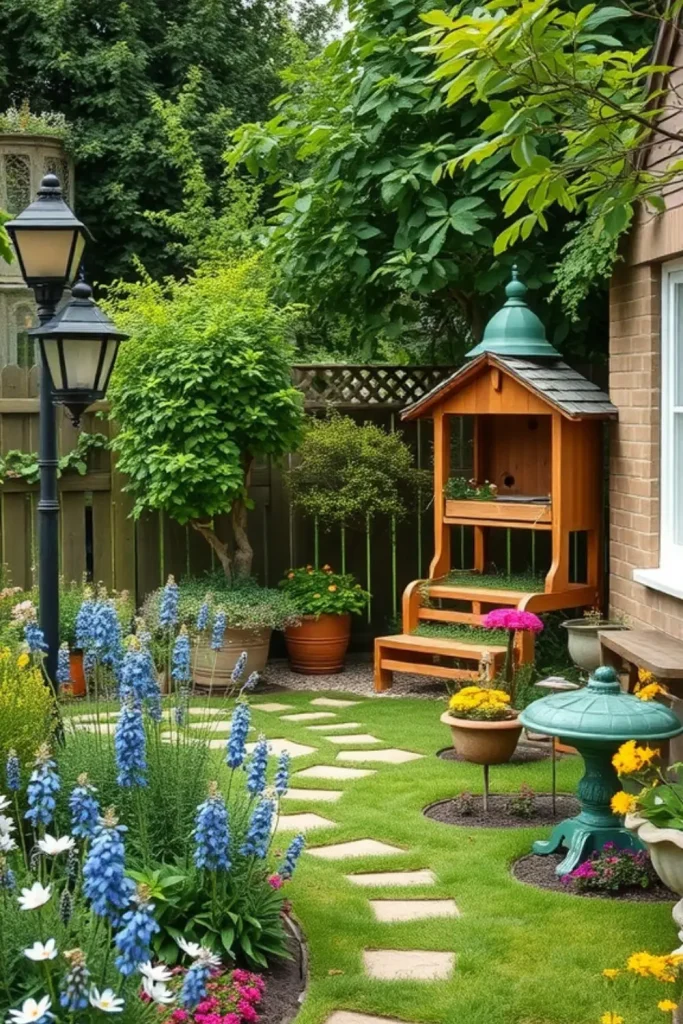
A cottage garden is not only beautiful but also a great place for wildlife. The bright blue flowers and green plants create a welcoming home for many creatures.
Planting flowers that attract bees and butterflies is an easy way to help nature and increase biodiversity in your garden.
Native plants are especially important because they provide food and shelter for local wildlife. This helps your garden become part of the natural ecosystem.
You can make your garden even more attractive to wildlife by adding features such as a birdhouse or a small water source.
The variety of flowers and plants along the path supports many species, keeping the garden lively and colorful throughout the year.
Container Gardening
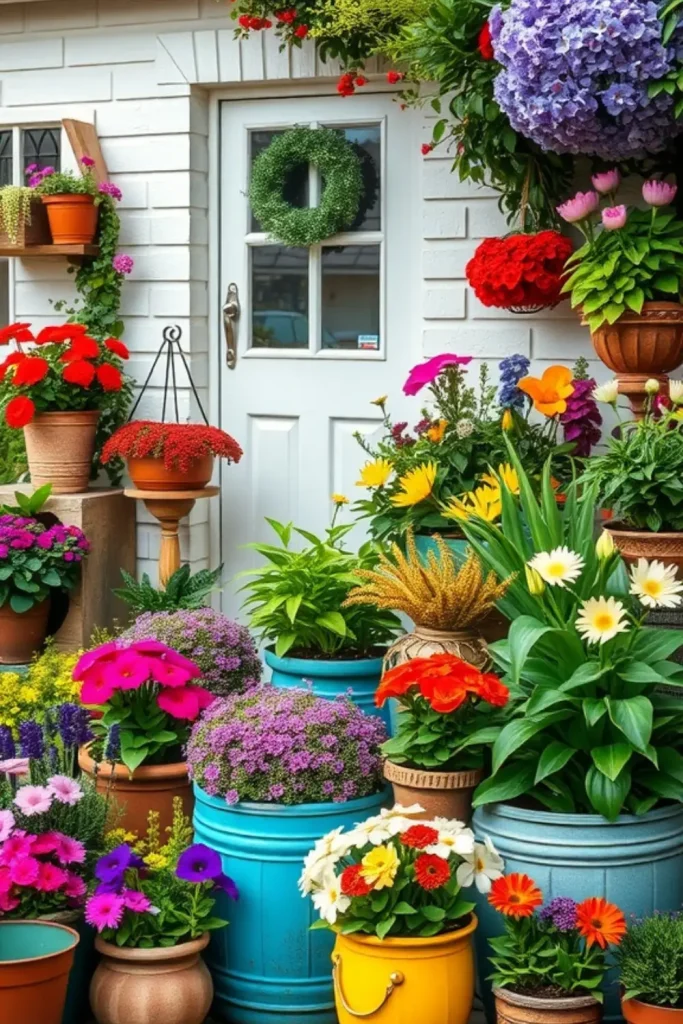
Container gardening is a wonderful way to add color and personality to a cottage garden.
This charming display of flower-filled pots creates a warm and inviting entrance. A mix of containers in different colors, shapes, and sizes adds character, while the colorful blooms and leafy plants bring life to the space.
One of the best things about container gardening is the flexibility it offers. You can arrange pots in groups, place them at different heights, and easily change the layout whenever you want a fresh look. This helps create depth and makes even a small area feel full and vibrant.
For a long-lasting display, combine annual flowers with perennials. Plants that trail over the edges of containers can soften hard lines and make the arrangement look more natural. Bright blooms paired with rich green foliage create the classic cottage garden style that feels cheerful and relaxed.
The simple white door in the background helps the flowers stand out, making the colors even more eye-catching. Choosing containers that either complement or contrast with your home’s exterior can further enhance the overall design.
Whether you have a large garden or a small porch, container gardening is an easy and creative way to bring cottage garden charm to any space.
Traditional Cottage Layouts
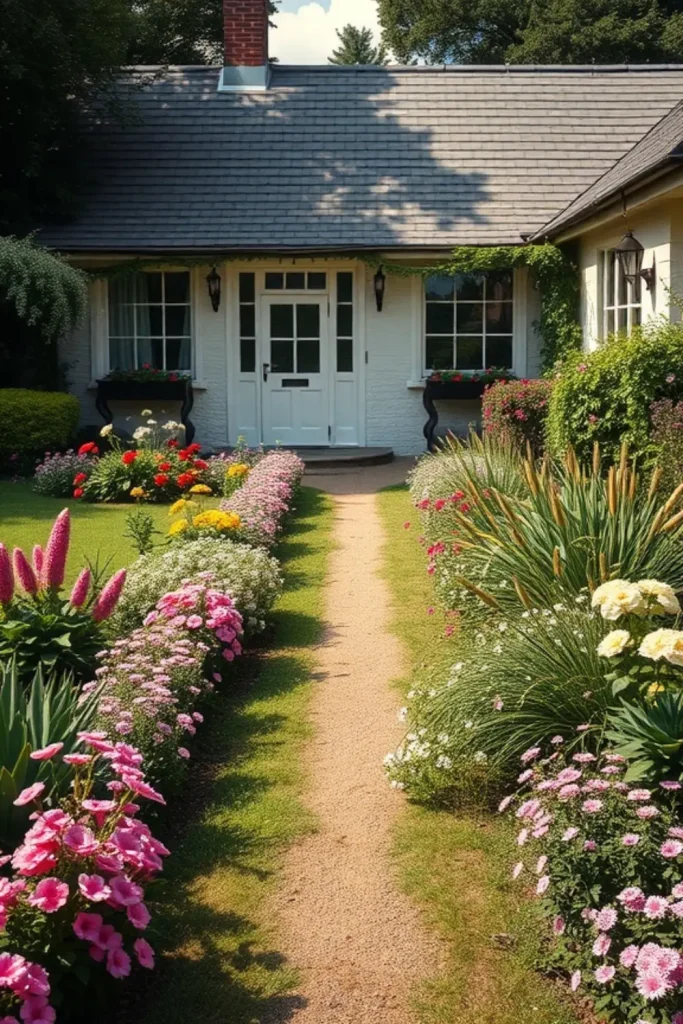
When you think of a classic cottage garden, this scene is a great example.
A welcoming path leads straight to the front door, with colorful flower beds on both sides. The matching layout creates a balanced and charming look that is common in traditional cottage gardens.
Bright flowers in shades of pink and white add warmth and beauty to the space. The plants are neatly arranged, making the garden feel organized while still keeping its natural, relaxed appeal.
The pathway encourages visitors to walk through and enjoy the garden. Lush greenery around the cottage adds to the cozy atmosphere, making it a perfect place to relax or spend time with family and friends. Features like the charming front door and flower-filled window boxes complete the timeless cottage garden style.
Shaded Cottage Garden with Cozy Seating
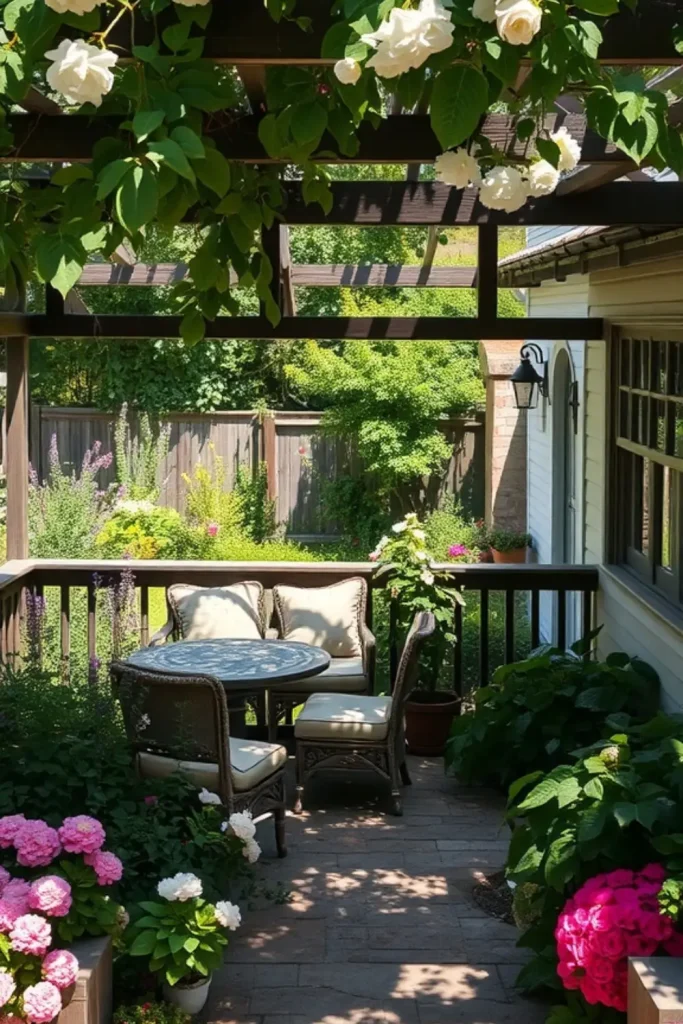
A shaded retreat can turn any garden into a welcoming escape.
A cozy seating area invites you to unwind. The comfortable chairs and table create a perfect spot for sipping coffee or enjoying a book reading.
The beauty of this space lies in its lush surroundings.
Colorful flowers frame the seating area, offering bursts of color that enhance the tranquility. The white blooms overhead add a soft touch, creating a serene atmosphere.
Being sheltered from direct sunlight makes this nook ideal for warm afternoons. Adding cushions can make it even more inviting.
Consider placing potted plants around the seating to further enrich the space.
Vintage Cottage Garden

This idea features a charming arrangement of wrought iron chairs with soft cushions and a round table, perfect for sipping a refreshing drink.
Surrounded by lush greenery, this space exudes warmth and tranquility. Potted plants add a pop of color and life, enhancing the overall charm of the area.
A subtle rug beneath the table ties the look together, creating a welcoming atmosphere.
This is not just a spot to sit; it’s a place to relax, read a book, or enjoy good company.
Vintage furniture pieces like these make your cottage garden feel inviting and nostalgic, encouraging you to spend more time outdoors. Whether it’s morning coffee or evening tea, this garden setup becomes a delightful retreat.
Seasonal Planting Cottage Garden
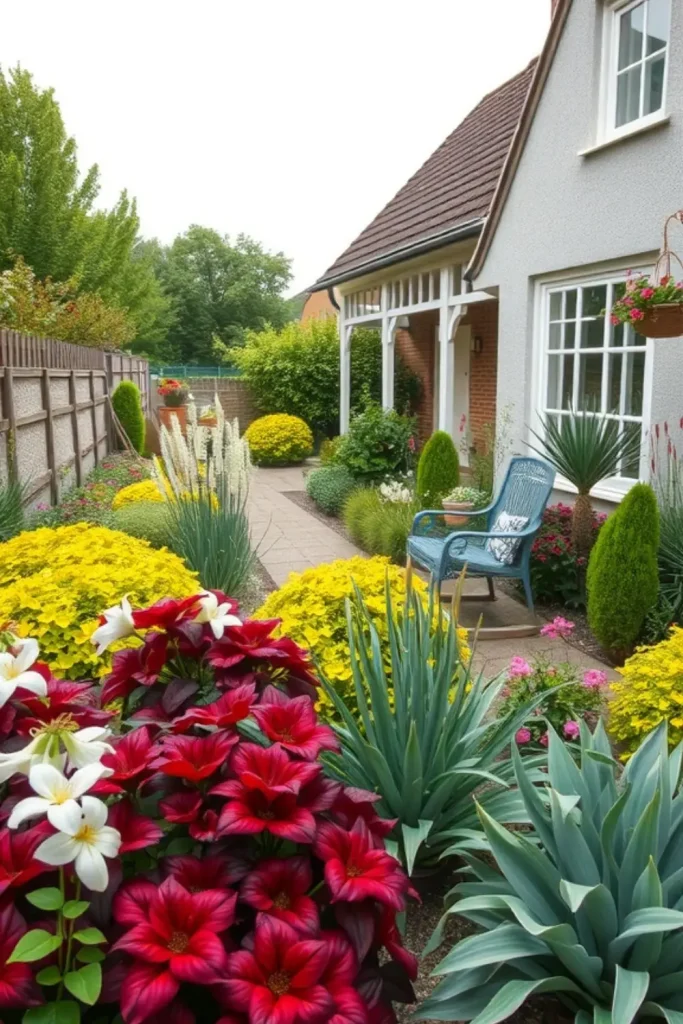
Cottage gardens are a lovely blend of colors and textures, especially when seasonal planting schemes are considered.
Vibrant reds and yellows burst forth from the flower beds, creating a cheerful scene. The mix of flowers and greenery captures attention and invites anyone to relax.
For spring, you can add tulips and daffodils for a pop of color. As summer rolls in, sunflowers and dahlias can bring even more life to the garden.
In autumn, consider chrysanthemums and ornamental grasses to carry the beauty through the season. This cycle of blooms helps maintain interest throughout the year.
Overflowing Border Planting Style
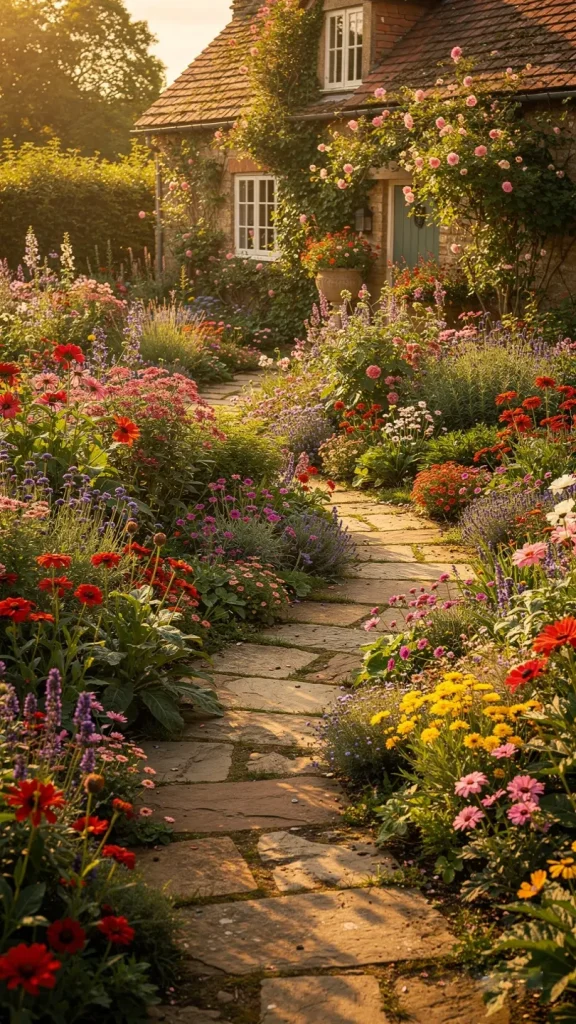
One of the most recognizable features of a cottage garden is the way plants seem to spill effortlessly beyond the boundaries of flower beds. Overflowing borders create a lush, abundant appearance by allowing flowers, herbs, and foliage plants to intermingle naturally. Instead of maintaining strict edges and perfectly defined planting zones, this style embraces a softer, more relaxed look that feels both welcoming and established.
The key to achieving overflowing borders is planting densely and combining species with different growth habits. Trailing flowers can cascade over pathways while taller plants rise behind them, creating multiple layers of interest. As the plants mature and fill available space, the garden develops a rich, tapestry-like effect that reflects the carefree beauty of traditional cottage landscapes. The result is a garden that feels vibrant, colorful, and alive with seasonal change.
Bird Bath and Feeder Sanctuary Corners
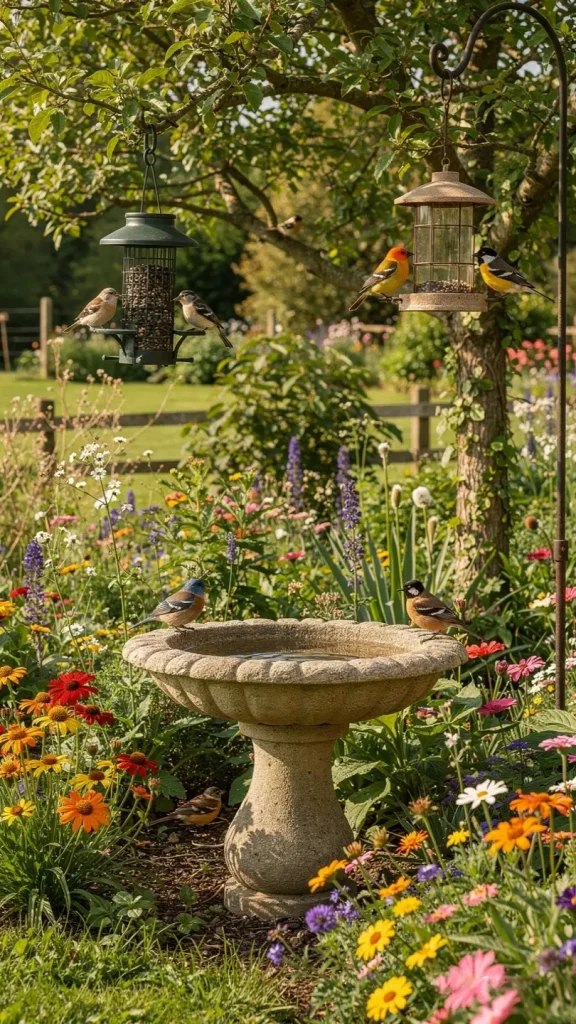
Birds bring life, movement, and natural music to a garden, making them valuable additions to any outdoor space. Creating a bird-friendly sanctuary with baths, birds feeders and shelter encourages a variety of species to visit throughout the year. These features turn the garden into a dynamic environment that changes with the seasons.
A shallow bird bath can serve as both a decorative focal point and a practical water source. Positioning feeders near shrubs or small trees provides birds with safe places to perch and seek cover. Combined with flowering plants and natural habitats, these elements transform an ordinary garden corner into a vibrant wildlife destination. Watching birds interact with the landscape adds another layer of enjoyment to the cottage garden experience.
Vintage Container Garden Displays
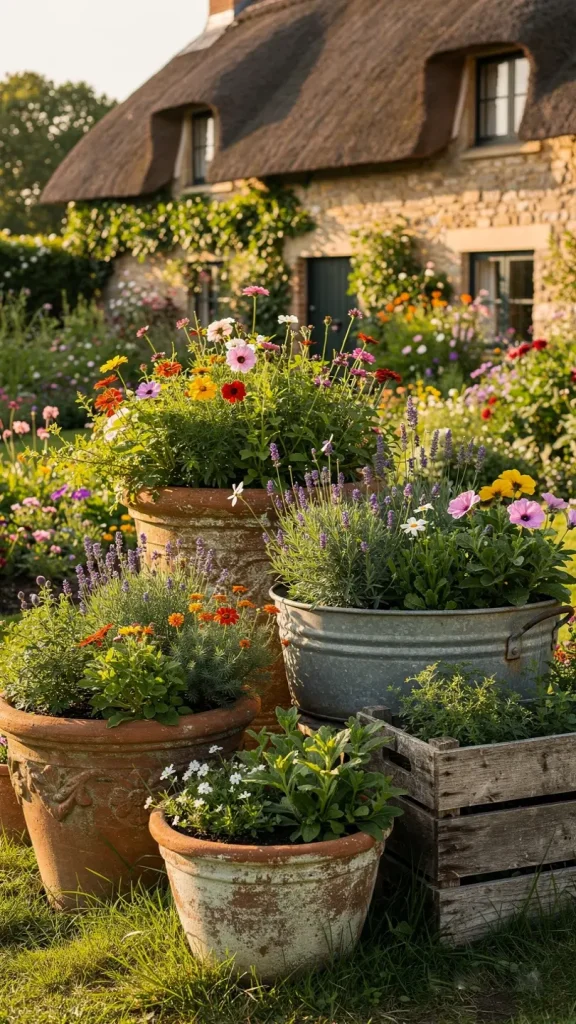
Cottage gardens are perfect places to showcase characterful containers. Vintage pots, galvanized tubs, old watering cans, wooden crates, and reclaimed ceramic planters add personality to the landscape. Instead of matching everything perfectly, mix different shapes, sizes, and materials for an eclectic, collected-over-time look.
Containers are also useful for highlighting focal points and filling small gaps in the garden. Plant them with trailing flowers, herbs, or seasonal annuals to create layered displays near garden entrances, patios, and pathways. As containers weather naturally, they contribute even more texture and authenticity to the overall design.
Whimsical Garden Ornaments and Accents
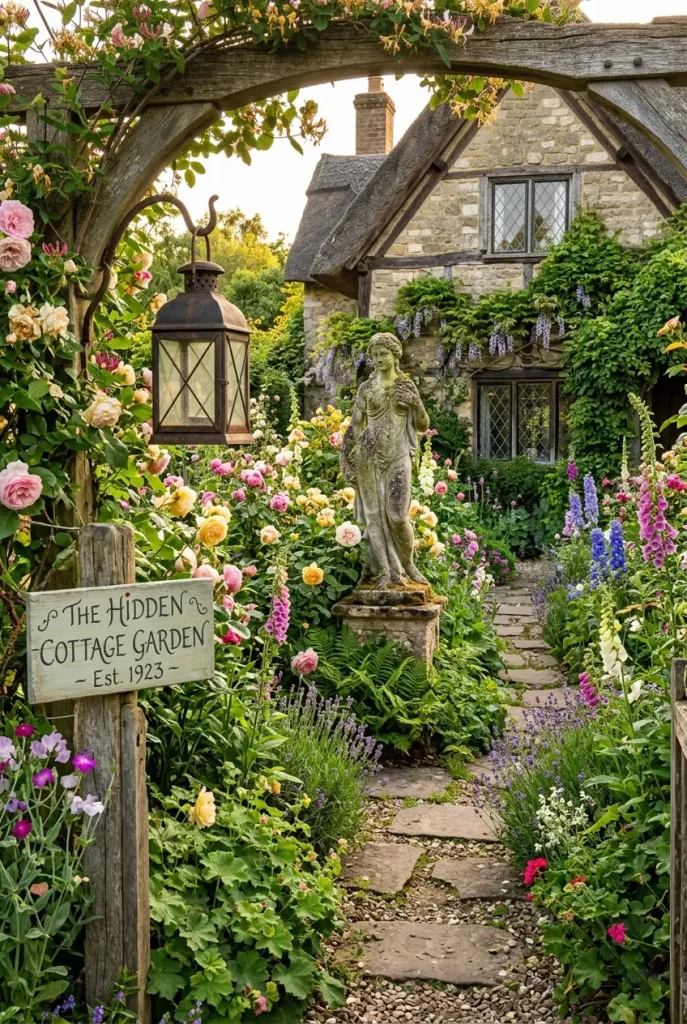
The finishing touches of a cottage garden often come from small decorative details. Whimsical ornaments such as garden statues, wrought-iron pieces, vintage signs, birdhouses, lanterns, and decorative planters add personality and create moments of surprise throughout the landscape. These accents feel charming and weathered rather than overly polished.
Use ornaments sparingly so they enhance the garden instead of competing with the plants. Tucking a small statue among flowers or placing a lantern beside a pathway can create a sense of discovery. The best cottage garden accents feel as though they have been part of the garden for years, contributing to its story and character.
Charming White Picket Fence Borders
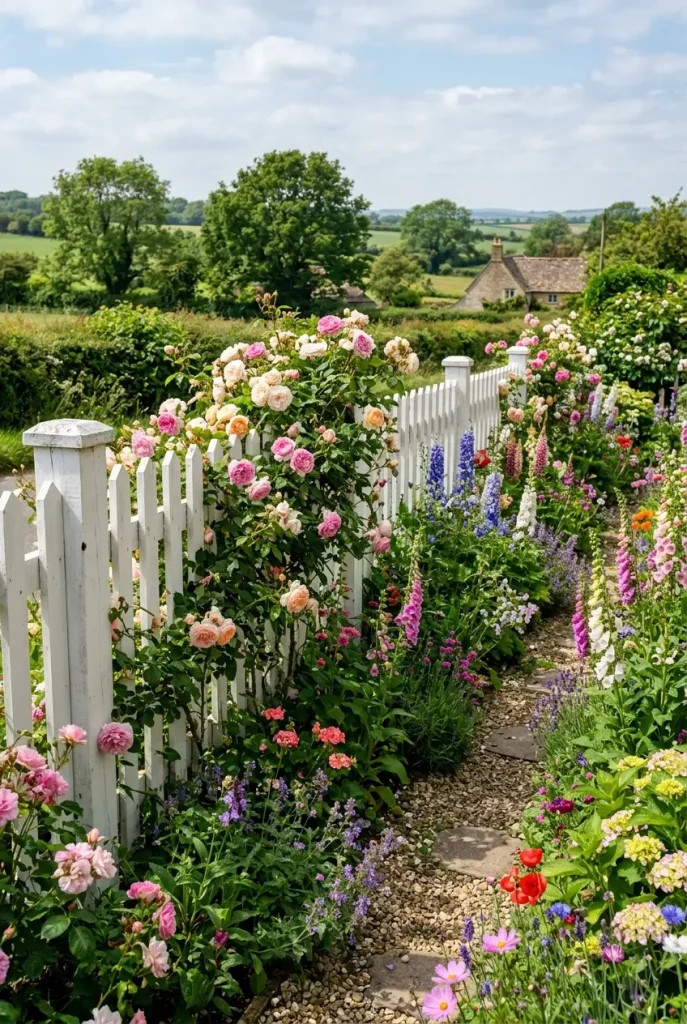
Few features are as closely associated with cottage gardens as a classic white picket fence. More than just a boundary marker, a picket fence provides a picturesque backdrop for flowers and helps frame the garden in a way that feels welcoming and timeless. When surrounded by colorful blooms, the crisp white finish creates beautiful contrast and highlights the natural beauty of the planting.
A picket fence also helps organize the garden without making it feel enclosed. Climbing roses, sweet peas, and clematis can weave through the fence, softening its appearance and blending it seamlessly into the landscape. Whether surrounding the entire garden or accenting a small section, this traditional feature instantly enhances cottage garden charm.
Cottage Garden Water Feature

Adding a small water feature introduces movement, sound, and tranquility to a cottage garden. Whether it’s a stone fountain, a bubbling urn, or a tiny pond surrounded by flowers, water creates a soothing focal point that encourages visitors to linger and enjoy the space. The gentle sound of flowing water can make even a modest garden feel more peaceful and secluded.
Water features also attract wildlife, including birds, butterflies, and beneficial insects. Positioning a fountain among flowering borders helps integrate it naturally into the landscape. As plants grow around the feature, it becomes part of the garden’s overall story, creating a sense of age and permanence that suits the cottage style perfectly.
Romantic Garden Arbor Retreat
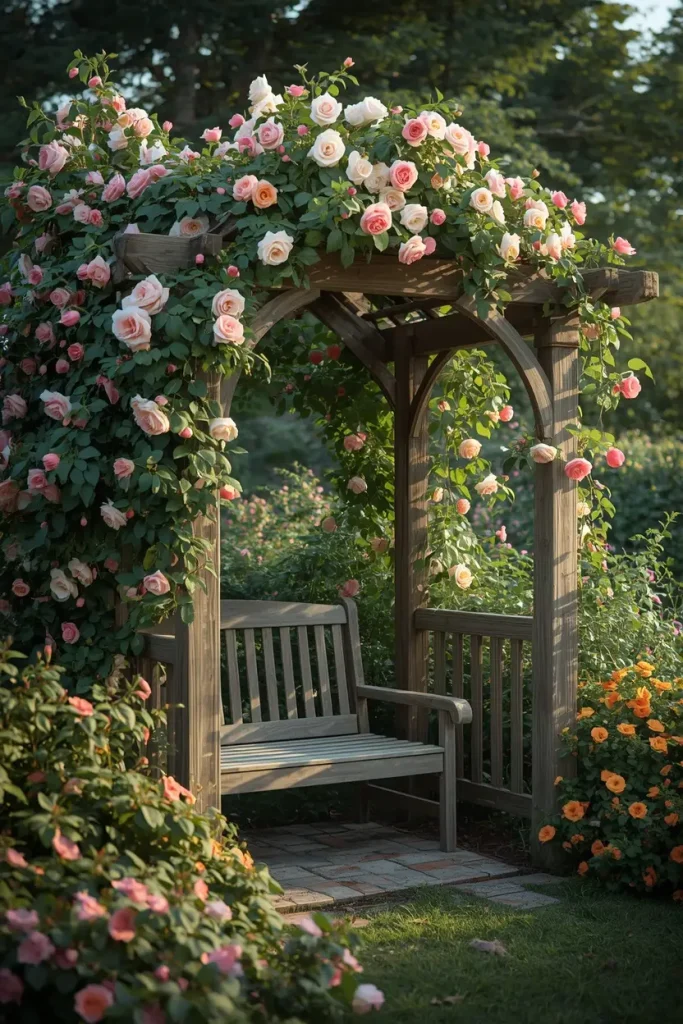
A garden arbor creates an inviting destination within the landscape and serves as a natural focal point. Covered in flowering vines such as climbing roses, wisteria, or clematis, an arbor provides height and architectural interest while maintaining the soft, romantic atmosphere of a cottage garden. It can mark an entrance, frame a pathway, or shelter a cozy seating area.
As the vines mature, the arbor becomes a living structure filled with color and fragrance. Adding a bench beneath it creates a peaceful retreat where visitors can relax and enjoy the garden from a different perspective. This combination of structure and planting embodies the essence of cottage garden design—beautiful, functional, and effortlessly charming.
I hope you liked these 20 cottage garden ideas.