15 Indoor Plants Safe For Dogs & What Plants To Avoid
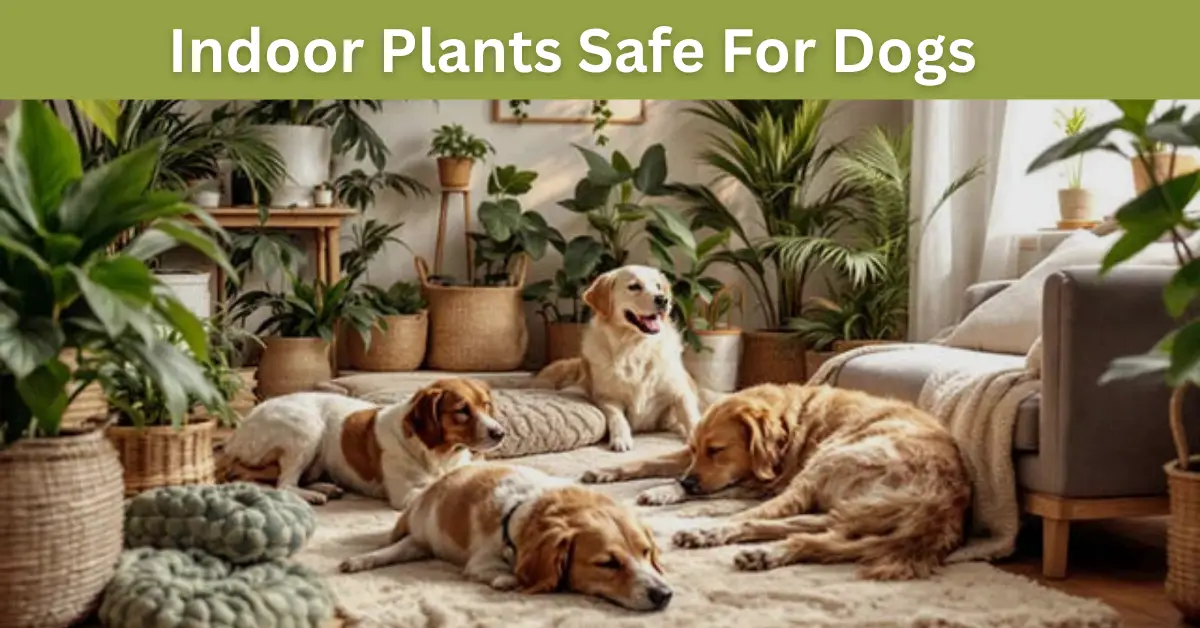
You found the perfect plant for that empty corner, brought it home and you noticed that your dog is sniffing it, batting at the leaves, or trying to take a bite. For dog owners, decorating with houseplants means factoring in one extra variable that most plant guides ignore: is this safe if my dog eats it?
It’s a fair question. Some of the most popular houseplants, including pothos, aloe vera and sago palm, are toxic to dogs and can cause illness from vomiting to more serious complications if chewed or swallowed. But going plant-free isn’t the answer either. There are dozens of beautiful, non-toxic houseplants that are completely safe for curious dogs and many of them are just as easy to grow as their toxic counterparts.
In this guide, you’ll find 15 indoor plants safe for dogs, covering large statement pieces, small space-savers, low-light varieties for dim rooms and low-maintenance options for beginners, plus a few that help purify your indoor air along the way.
Large Indoor Plants Safe For Dogs
Areca Palm
With its feathery, arching fronds, the areca palm (Dypsis lutescens) brings a resort-like feel to any room while staying completely non-toxic to dogs. It prefers bright, indirect light and consistently moist (but not waterlogged) soil, so check the top inch of soil regularly and water once it starts to dry out. Areca palms are also known for their air-purifying qualities, helping filter toxins like formaldehyde from indoor air. Given enough space and light, they can grow six feet or taller indoors, making them an excellent large floor plant for a bright living room or sunroom.
Boston Fern
The Boston fern (Nephrolepis exaltata) is a lush, feathery plant that adds instant texture to shelves, plant stands, or hanging baskets. It prefers bright, indirect light and consistently moist soil, since ferns are less tolerant of drying out completely than succulents or palms. Regular misting or a nearby humidifier helps recreate the humidity this plant naturally loves, especially in drier indoor air. Boston ferns are prized as one of the best pet-safe, air-purifying houseplants, and their trailing fronds make them a striking large plant for a hanging planter where curious paws can’t easily reach.
Parlor Palm
The parlor palm (Chamaedorea elegans) is a great pick if you want a tropical-looking plant without any worry about your dog. It grows well in low to bright indirect light, so you can place it in almost any room. Water it when the top inch of soil feels dry, and don’t let it sit in wet soil, or the roots may rot. Parlor palms usually stay under 4 to 6 feet tall indoors. This makes them easy to fit in a living room or office corner without taking up too much space.
Ponytail Palm
The ponytail palm (Beaucarnea recurvata) has a round trunk that stores water, with curly leaves growing out from the top. Even though it’s called a palm, it’s really a succulent. It can handle long gaps between waterings without any trouble. It likes bright light, either direct or indirect, and needs very little water. Let the soil dry out fully before you water it again, then water only a small amount. Ponytail palms grow slowly and can reach 6 to 8 feet tall over time. They’re a low-fuss large plant.
Small Indoor Plants Safe For Dogs
African Violet
African violets (Streptocarpus sect. Saintpaulia) have soft purple flowers that add color to a desk, shelf, or windowsill. They are non-toxic to dogs, so they’re a safe pick even if your dog sniffs or brushes against the leaves. They like bright, indirect light and soil that stays a little moist but drains well. Water from the bottom when you can, since wet leaves can lead to spots or rot. With the right light, African violets can bloom for months at a time, making them a nice small plant for pet owners who want color without much fuss.
Haworthia
Haworthia is a small succulent that looks a bit like a mini aloe plant, with thick, pointed leaves often lined with white bumps or stripes. Unlike aloe vera, which is toxic to dogs, haworthia is completely safe if your dog chews on a leaf. It grows well in bright, indirect light and does not need much water. Let the soil dry out completely between waterings, then give it a light soak. Because it stays small and grows slowly, haworthia is a good choice for a windowsill, desk, or any tight spot where a bigger plant won’t fit.
Baby Rubber Plant (Peperomia)
The baby rubber plant (Peperomia obtusifolia) has thick, round, glossy leaves that give it a simple, tidy look. Despite its name, it is not related to the toxic rubber tree (Ficus elastica) and is completely safe for dogs. It grows well in bright, indirect light and needs water only when the top inch or two of soil feels dry. Let the soil dry out a bit more between waterings in cooler months, since the plant grows slower then. This peperomia stays fairly small and compact and it works well on a side table, shelf, or small plant stand.
Friendship Plant
The friendship plant (Pilea involucrata) has small, deeply grooved leaves with a slight shine. It is non-toxic to dogs,. It gets its name from how easily it can be shared with friends, since new plants grow easily from cuttings. It likes bright, indirect light and soil that stays lightly moist but not soggy. Regular misting helps it stay healthy in dry indoor air. Its small size makes it a good fit for tabletops, shelves, or a spot near a bright window.
Low Light Indoor Plants Safe For Dogs
Calathea
Calathea is known for its patterned leaves, which show stripes, spots, or shades of green and purple. It is non-toxic to dogs. It grows well in low to medium indirect light. Keep the soil lightly moist and avoid letting it dry out completely, since calathea prefers steady moisture. Some types of calathea fold their leaves up at night and open them back up in the morning, adding a bit of movement to a shady spot.
Bird’s Nest Fern
The bird’s nest fern (Asplenium nidus) has wide, wavy leaves that grow out from a central point, giving it a fuller look than most ferns. It is safe for dogs, so you don’t need to worry if your dog gets close to the leaves. It grows well in low to medium indirect light and likes soil that stays lightly moist. Avoid direct sun, which can scorch the leaves, and mist it now and then to help it handle dry indoor air. Its low-light needs make it a solid choice for a bathroom, hallway, or any spot that doesn’t get much sun.
Prayer Plant
The prayer plant (Maranta leuconeura) gets its name from the way its leaves fold up at night, almost like hands in prayer. It is non-toxic to dogs, a safe plant to keep on a low shelf or table within reach. It does well in low to medium indirect light and needs soil that stays lightly moist but not wet. Bright, direct sun can fade or burn the leaves, so a shadier spot works best.
Low-maintenance Indoor Plants Safe For Dogs
Spider Plant
The spider plant (Chlorophytum comosum) has long, narrow leaves that arch out from the center with white or pale green stripes. It is non-toxic to dogs. It grows well in bright to medium indirect light and can handle a range of watering schedules. Spider plants also grow small baby plants on long stems, which you can snip off and grow into new plants. This makes them a good low-maintenance pick for beginners or anyone short on time.
Echeveria
Echeveria is a type of succulent with thick, fleshy leaves that grow in a rosette shape in shades of blue-green, pink, or purple. It is safe for dogs, so it works well even in homes with a curious pet. It needs bright light, ideally a few hours of direct sun and very little water. Let the soil dry out completely before watering again, then soak it well. It needs little care and is a good fit for busy plant owners.
Air Plant
Air plants (Tillandsia) don’t need soil, so you can display them in glass containers, on shelves, or tucked into decorative holders. They are non-toxic to dogs. Instead of watering the soil, mist them a few times a week or soak them in water for a few hours every week or two, then let them dry fully before putting them back in place. Their small size and lack of soil mean less mess.
Pet-Safe Air-Purifying Indoor Plant
Bamboo Palm
The bamboo palm (Chamaedorea seifrizii) has thin, cane-like stems and full, feathery fronds that give it a soft, tropical look. It is non-toxic to dogs, a safe pick for homes with pets. It grows well in low to bright indirect light. Water when the top inch of soil feels dry, and keep the soil moist but not soggy. Bamboo palm is known as one of the best air-purifying houseplants, helping remove toxins like formaldehyde and benzene from indoor air. Its full, bushy shape also makes it a nice way to fill an empty corner.
Houseplants to Avoid If You Have a Dog
Not every popular houseplant is safe to keep around dogs. Some common ones can cause illness from mild stomach upset to more serious health problems if chewed or eaten. Here are a few to watch out for:
- Pothos – Can cause mouth irritation, drooling, and vomiting if chewed.
- Sago Palm – Highly toxic to dogs, even in small amounts, and can cause liver failure.
- Peace Lily – Causes mouth irritation, drooling, and trouble swallowing if chewed.
- Aloe Vera – Can cause vomiting, diarrhea, and lethargy if eaten.
- Philodendron – Can irritate the mouth and throat and cause vomiting.
- Rubber Tree (Ficus elastica) – Can cause mouth irritation and stomach upset.
If you already have any of these plants, you don’t have to get rid of them right away. Just keep them well out of reach, such as on a high shelf or in a hanging planter, and watch your dog closely around them.