10 Best Easy To Grow Lilies Types for Home Gardens
Lilies are perennial flowering plants that belong to the Liliaceae family. They are known for their large, eye-catching blooms and in many varieties, a noticeable fragrance. Lily flowers appear in a wide range of colors, shapes and sizes, which is why they are popular in both home gardens and floral arrangements. These plants are native to parts of Asia, Europe, and North America and they adapt well to different climates and growing conditions.
All true lilies belong to the genus Lilium. Because the word “lily” appears in the common names of many unrelated plants, it is important not to confuse them with true lilies. Only plants in the Lilium genus are considered true lilies, a diverse group that includes nearly 100 species, each offer different colors, flower forms, sizes and blooming periods.
Some types release a strong scent, while some are scent-free. The flowers grow on firm, upright stems, and the leaves are long, narrow, and green. Lilies grow easily from healthy bulbs planted in autumn or spring. They are hardy perennials, returning year after year with minimal effort. They perform well in garden borders, raised beds and large containers, making them suitable for many garden styles.
This guide explains the popular & easiest lilies types to grow in home gardens. You will learn about lilies growing (indoors & outdoors), USDA Hardiness zones, blooms, fragrance and care needs.
Lily Characteristics
| Characteristic | Details |
|---|---|
| Scientific Name | Lilium |
| Family | Liliaceae |
| Genus | Lilium |
| Common Colors | White, yellow, orange, pink, red, purple, bi-color |
| Plant Height | 30 cm to 180 cm (1 to 6 feet), depending on type |
| USDA Hardiness Zones | Zones 3–9 (varies by species and hybrid) |
| Growing Best | Outdoors (garden beds, borders, containers); limited indoor growing |
| Soil Type | Well-drained, loose, fertile soil |
| Soil pH | Slightly acidic to neutral (pH 5.5–7.0) |
| Maintenance Level | Low to moderate |
| Time to Maturity | 2–3 months after sprouting |
| Main Uses | Garden borders, containers, cut flowers, landscaping, bouquets |
Lilies Types
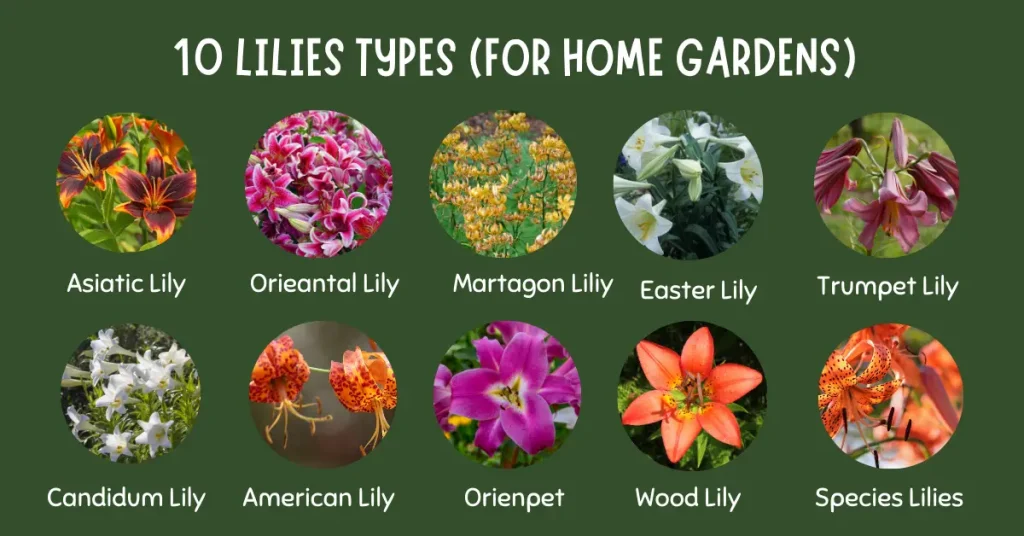
- Asiatic Lilies
- Oriental Lilies
- Martagon Lilies
- Easter Lily
- Trumpet Lily
- Candidum Lily
- American Lily
- Oerienpet
- Wood Lily
- Species Lilies
Asiatic Lilies

Botanical Name: Lilium Asiatic hybrids
Bloom Time: Early to mid-summer (mostly June to July).
Hardiness Zones: 3 to 9.
Colors: Bright shades of red, orange, yellow, pink, white, lavender, and bicolors. Many have dark spots or freckles.
Flower Shape: Upward-facing or outward-facing. Cup-shaped or flat star-like. Usually no strong fragrance.
Height: 1 to 5 feet tall. Dwarf types stay under 2 feet. Taller ones reach 4-5 feet.
Asiatic lilies are the easiest lilies to grow. They are the first to bloom each summer. Each stem holds 8 to 20+ flowers. The colors are bold and cheerful. They work well in pots, borders, or cutting gardens. Plant them in full sun.
They like well-drained soil. These lilies multiply quickly and form nice clumps over time. They are very cold-hardy and reliable. Deer sometimes eat them, so protect young plants.
Oriental Lilies

Botanical Name: Lilium Oriental hybrids
Bloom Time: Mid to late summer (mostly July to August, sometimes into early fall).
Hardiness Zones: 4 to 9.
Colors: Mostly white, soft pink, deep pink, red, and yellow. Many have gold bands, raspberry edges, or dark spots.
Flower Shape: Large, open bowl-shaped or slightly recurved petals. Very strong, sweet fragrance.
Height: 2 to 6 feet tall. Taller varieties often need staking.
Oriental lilies are the most dramatic and fragrant of all lilies. They bloom later in the season. Each stem can carry 6 to 15 huge flowers. The perfume is powerful and fills the garden on warm evenings.
They look stunning in beds or as cut flowers. Plant them in full sun or very light shade. They prefer rich, moist but well-drained soil. Mulch helps in hot or cold areas. These lilies are a favorite for bouquets and late-summer color. Deer may nibble young shoots, so protect them early. Once established, they return reliably for many years.
Martagon Lilies

Botanical Name: Lilium martagon
Bloom Time: Late spring to early summer (mostly June and July).
Hardiness Zones: 3 to 8 .
Colors: Shades of pink, purple, white, yellow, orange, gold, red, and deep maroon. Many have spots or markings.
Flower Shape: Downward-facing. Petals curl back strongly. They look like little turbans.
Height: 3 to 6 feet tall. Stems are slender.
Martagon lilies are also called Turk’s cap lilies. Their petals curl back like a fancy turban. The flowers nod downward. These lilies are among the earliest to bloom in the Asiatic group. They come from Europe and Asia.
Each tall stem can hold dozens of blossoms. Plants form big clumps over time and live for many years. They do not like hot, humid weather or wet soil. Plant them in part shade for best results.
Some popular varieties:
- Golden Morning (or similar like Sunny Morning): Starts blooming in late May. Grows 3 to 4 feet tall. Flowers are bright yellow-orange with markings.
- Arabian Knight: Has deep red or russet petals with golden centers and mahogany spots. Very showy and fragrant.
- White Henryi: An old favorite. Blooms for about 4 weeks later in summer. Grows 4 to 5 feet tall. Good resistance to disease.
Many other colors exist too. You can find pink, lavender, orange, deep red, and more. They often have spots, stripes, or tips in contrasting colors.
Martagon lilies are tough and beautiful. Once established, they reward you with lots of blooms every year.
Easter Lily

Botanical Name: Lilium longiflorum
Bloom Time: Mid-summer outdoors (mostly July to August). Often forced to bloom in spring for Easter pots.
Hardiness Zones: 5 to 9 (protect in zone 4-5 with mulch).
Colors: Pure white. Some rare pink cultivars exist.
Flower Shape: Long, elegant trumpet shape. Strongly fragrant with a sweet, classic lily scent.
Height: 2 to 3 feet tall outdoors. Potted plants are usually shorter.
Easter lilies are the classic pure white trumpets seen at Easter. They symbolize purity and new beginnings. Most people know them as holiday potted plants. Outdoors, they are reliable perennials in mild climates. Plant bulbs in full sun with well-drained soil.
They prefer slightly acidic to neutral soil. The fragrance is wonderful in the garden or as cut flowers. After blooming, let the foliage die back naturally. Cut stems once yellowed. They can naturalize in the right spot and return for years. Protect from deer and rabbits when young.
Trumpet Lily

Botanical Name: Lilium Trumpet hybrids (Aurelian group)
Bloom Time: Mid-summer (mostly June to July).
Hardiness Zones: 4 to 9.
Colors: White, creamy yellow, gold, soft pink, apricot, orange. Often with green throats or purple-bronze reverses.
Flower Shape: Large, deep trumpet shape. Flowers face outward or slightly downward. Very strong, sweet fragrance.
Height: 4 to 8 feet tall (some reach 10 feet in ideal conditions). Tall stems often need staking.
Trumpet lilies are tall and impressive. They produce 10 to 20+ huge blooms on each stem. The fragrance is rich and fills the air from a distance. These lilies bring a dramatic, elegant look to the back of borders. Plant them in full sun with rich, well-drained soil.
They tolerate heat better than some other types. Good for cutting—stems last long in vases. Mulch to keep roots cool. Once established, they form large clumps and return reliably for many years. Protect young shoots from deer.
Check: Lilies Tattoos Ideas
Candidum Lily

Botanical Name: Lilium candidum
Bloom Time: Late spring to early summer (mostly May to June).
Hardiness Zones: 6 to 9 (some varieties survive in zone 5 with protection).
Colors: Pure bright white petals with golden-yellow pollen inside.
Flower Shape: Outward-facing trumpets. Wide open and slightly recurved at the tips. Sweet honey-like fragrance.
Height: 3 to 6 feet tall. Slender, upright stems.
Madonna lilies are one of the oldest cultivated lilies. They have been grown for centuries in gardens. The pure white flowers are symbols of purity. Each stem carries 5 to 20 blooms. They bloom earlier than most other lilies.
Plant the bulbs very shallow (only 1-2 inches deep). They need full sun and well-drained, slightly alkaline soil. Good air circulation helps prevent disease. These lilies form a rosette of leaves in fall and overwinter that way.
They are perfect for white-themed gardens or moon gardens. Once happy in a spot, they live for decades. They do not like hot, humid summers or soggy roots. Protect from deer and slugs when young.
American Lily

Botanical Name: Lilium (North American species hybrids, such as L. superbum, L. pardalinum, L. michauxii)
Bloom Time: Late spring to mid-summer (mostly June to July).
Hardiness Zones: 3 to 8 (some species hardy to zone 9, others only to zone 4).
Colors: Warm shades of orange, red, yellow, and sometimes pinkish tones. Almost always heavily spotted or freckled.
Flower Shape: Nodding or Turk’s cap style with strongly recurved petals. Flowers hang downward. Usually no strong fragrance.
Height: 3 to 8 feet tall. Stems are sturdy but can lean in shade.
American lilies are true natives of North America. They grow wild in moist meadows, woodlands, and along streams. Each tall stem produces 10 to 40+ pendant flowers. The recurved petals give a graceful, wild look.
They attract butterflies and hummingbirds. Plant them in part shade to full sun with consistently moist, rich soil. They do not like dry conditions or poor drainage. These lilies are slower to establish than hybrids. Once settled, they form large, long-lived colonies.
Ideal for naturalized gardens, woodland edges, or rain gardens. Protect from deer—they love the buds and leaves.
Orienpet

Botanical Name: Lilium Orienpet hybrids (Oriental × Trumpet cross)
Bloom Time: Mid to late summer (mostly July to August, sometimes into early September).
Hardiness Zones: 4 to 9.
Colors: Rich shades of pink, white, creamy yellow, gold, red, and soft apricot. Many have contrasting bands, speckles, or raspberry edges.
Flower Shape: Very large, waxy petals that are slightly recurved or open wide. Strong, sweet to fruity fragrance.
Height: 3 to 8 feet tall. Sturdy stems usually stand well without staking.
Orienpet lilies combine the best of Oriental and Trumpet lilies. They have enormous, impressive blooms with excellent substance. Each stem produces 8 to 20+ flowers. The fragrance is wonderful but not as overpowering as pure Orientals.
They are more heat-tolerant and vigorous than many other types. Plant them in full sun with well-drained, rich soil. Mulch to keep roots cool in summer. These lilies are fantastic for cutting—blooms last a long time in vases.
They make a bold statement in the middle or back of borders. Once established, they form substantial clumps and return reliably year after year. Protect young growth from deer and slugs.
Wood lily

Botanical Name: Lilium philadelphicum
Bloom Time: Early to mid-summer (mostly June to July).
Hardiness Zones: 3 to 8.
Colors: Bright orange-red (the most common shade). Sometimes clear yellow forms appear. Dark spots or freckles near the center.
Flower Shape: Upward-facing cups or shallow bowls. Petals open wide and flat. No strong fragrance.
Height: 1 to 3 feet tall. Usually stays compact and low-growing.
Wood lilies are charming native wildflowers of North America. They grow naturally in open woodlands, prairies, and along roadsides. Each slender stem holds 1 to 7 upward-facing blooms. The bright color stands out beautifully against green foliage.
They attract butterflies and other pollinators. Plant them in full sun to light shade with average to moist, well-drained soil. They prefer slightly acidic conditions. These lilies are slower to establish than hybrids. Once happy, they form small colonies and return reliably for years. They make excellent additions to wildflower meadows or naturalistic gardens.
Protect from deer—they find the buds very tasty. Avoid disturbing the bulbs once planted.
Species Lily

Botanical Name: Lilium (true wild species, not hybrids)
Bloom Time: Varies widely — early spring through fall (most bloom mid-summer, June to August).
Hardiness Zones: 3 to 9 (depends heavily on the specific species).
Colors: Very diverse — pure white, golden yellow, orange, red, pink, lavender, even greenish tones. Many feature bold spots, stripes, or contrasting throats.
Flower Shape: Highly variable — nodding Turk’s cap (recurved petals), outward-facing trumpets, upward cups, or pendant bells. Fragrance ranges from none to sweetly scented or spicy.
Height: 1 to 10 feet tall (ranges from low woodland types to towering meadow species).
Species lilies are the original wild lilies from which all hybrids were bred. They include famous ones like Lilium regale (tall white trumpet), Lilium martagon (downward recurved pink/purple), Lilium pardalinum (spotted orange leopard lily), and Lilium superbum (tall Turk’s cap). Each species has its own personality and needs. Some love moist shade, others dry sunny slopes.
They often have fewer but more graceful flowers per stem than hybrids. Plant them in spots that match their natural habitat for success. They grow more slowly and are less forgiving than modern hybrids. Once established, many live for decades and naturalize beautifully.
Perfect for wild gardens, rock gardens, or collector displays. Protect from deer and rodents—they are favorite snacks.
Growing Tips for Lilies
Where to Plant: Lilies need at least 6 hours of sun each day. Morning sun with afternoon shade works best. Avoid wet spots—lilies hate soggy roots. Use well-drained soil or a raised bed. Choose neutral to slightly acidic soil rich in organic matter (humus). Keep nitrogen low to avoid weak stems.
When to Plant: Plant bulbs in spring or fall. Lilies have no protective papery skin like tulips or daffodils. Plant them right away. If you must wait, keep bulbs moist in peat moss or sawdust. Do not let them dry out—they shrivel fast.
How to Plant: Space bulbs 12 inches apart. This helps prevent disease and gives room to grow. Plant in groups for the best show. Mix early, mid, and late-blooming types for flowers all summer.
Dig holes 6–8 inches deep (deeper for taller lilies). Place bulb pointy end up. Cover with soil and water well. After planting, mulch lightly to keep soil cool and moist. Leave foliage on plants after bloom. Let leaves turn yellow and dry naturally. They feed the bulb for next year.
Cutting and Harvesting: Lilies are excellent cut flowers. They last a long time in vases. Cut stems when the first bud opens. Other buds will open indoors. One stem with many flowers can last 7–10 days or more. Remove pollen stamens to avoid stains and extend vase life. Change vase water every few days.
Pests and Problems: Voles love lily bulbs. They dig and eat them underground. Use raised beds with hardware cloth on the bottom to keep voles out. Some gardeners plant bulbs closer (6 inches apart) in protected beds to fill space.
The biggest above-ground pest is the lily leaf beetle (the “red terror”). It is bright red, oval, no spots—like a spotless ladybug—with black legs and head. Larvae are orange-red slugs that cover themselves in their own poop. Handpick beetles and larvae early in spring. Drop them in soapy water.
Check plants often—beetles damage leaves and buds fast. No perfect control yet, but hand removal works well. Researchers test parasitic wasps as future help. Other issues: aphids, botrytis (gray mold) in wet weather, or deer eating tops. Good air flow, proper spacing and clean tools reduce most problems.
Follow these tips and your lilies will thrive for many years. They reward you with beautiful blooms season after season. Happy gardening!