10 Best Plants For Mental Health
Mental health is the foundation of a fulfilling and functional life, influencing how we think, feel, act and connect with others. It determines our ability to handle stress, make decisions, build relationships and bounce back from adversity. When mental health is neglected, even physical health deteriorates—increased risk of heart disease, weakened immune function and chronic pain are all linked to prolonged anxiety, depression, or trauma.
Good mental well-being enhances productivity, creativity and empathy, creating a positive ripple effect in families, workplaces and communities. Prioritizing mental health is not a luxury or a sign of weakness; it is essential self-care that allows people to show up fully for themselves and the people who depend on them.
One of the easiest and most natural ways to improve your mood, reduce daily stress and create a calming environment is by surrounding yourself with plants. Whether you live in a small apartment, have a sunny balcony, a dedicated garden space, or even a busy office desk, the right plant can add peace, clarity and a sense of relaxation to your day. Plants don’t just make your space beautiful, they can purify the air, release soothing fragrances, improve sleep quality and even help reduce feelings of anxiety and depression.
What makes this guide different is that it doesn’t limit mental health plants to indoor settings only. Some plants thrive better outdoors, where they spread their fragrance more strongly. Some perform perfectly in a balcony where there’s airflow and natural light. And others are ideal for bedrooms, offices, or living rooms where you need calm and positive energy. You’ll clearly understand which plant belongs where and why it benefits your mental health in that particular space.
Whether you’re looking for calming plants for the bedroom, plants for anxiety and depression in your living room, or stress-relief greenery for your workspace, this guide covers everything. From hardy plants that even beginners can handle to fragrant herbs traditionally used for emotional healing, these are the best choices to uplift your mood and environment.
Let’s explore the 10 best plants for mental health, how each one helps emotionally, where they grow best, and simple care tips—even if you’ve never kept a plant before.
List of the 10 Best Plants for Mental Health
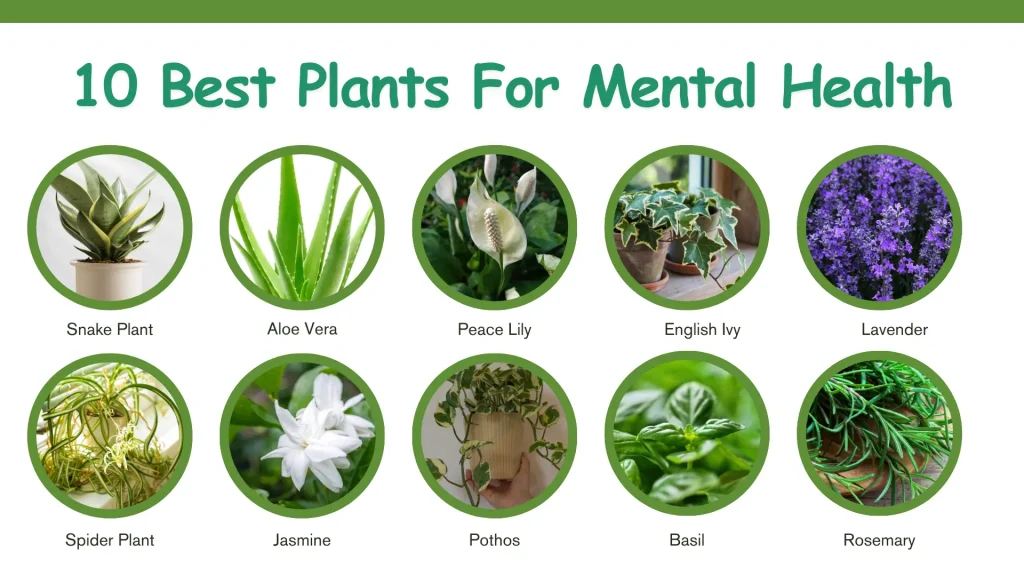
- Snake Plant
- Aloe Vera
- Peace Lily
- English Ivy
- Lavender
- Spider Plant
- Jasmine
- Pothos (Devil’s Ivy)
- Basil
- Rosemary
Snake Plant (Mother-in-Law’s Tongue)

Snake plants are low-maintenance, air-purifying plants that can remove toxins, boost mental health and absorb negative energy. They are extremely versatile. Snake plants grow well indoors—living rooms, offices, bedrooms and can also be placed on a shaded balcony. Outdoor placement works if the climate stays warm and temperatures don’t drop too low.
Care Tips: Water lightly every 2–3 weeks. Avoid overwatering.
Maintenance Level: Very low (perfect for beginners).
Best Placement: Bedroom, office, living room, shaded balcony.
Aloe Vera
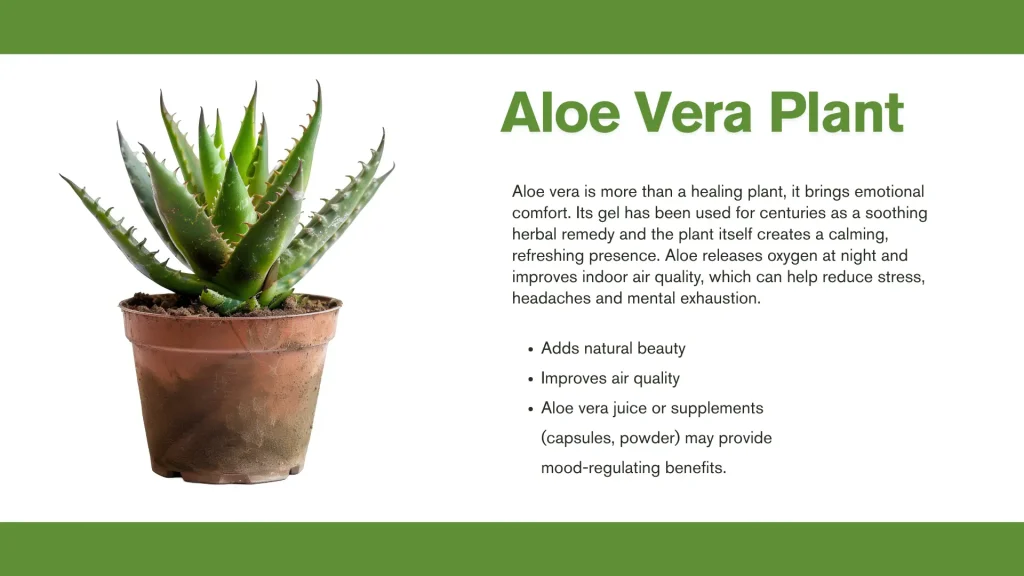
Aloe vera is more than a healing plant, it brings emotional comfort. Its gel has been used for centuries as a soothing herbal remedy and the plant itself creates a calming, refreshing presence. Aloe releases oxygen at night and improves indoor air quality, which can help reduce stress, headaches and mental exhaustion.
Aloe vera thrives in bright spots, making it ideal for balconies, windowsills and outdoor patios. Indoors, it performs best in living rooms or kitchens with good sunlight.
Care Tips: Let soil dry completely before watering. Loves sunlight.
Maintenance Level: Low.
Best Placement: Sunny balcony, kitchen window, outdoor patio, bright living room.
Peace Lily
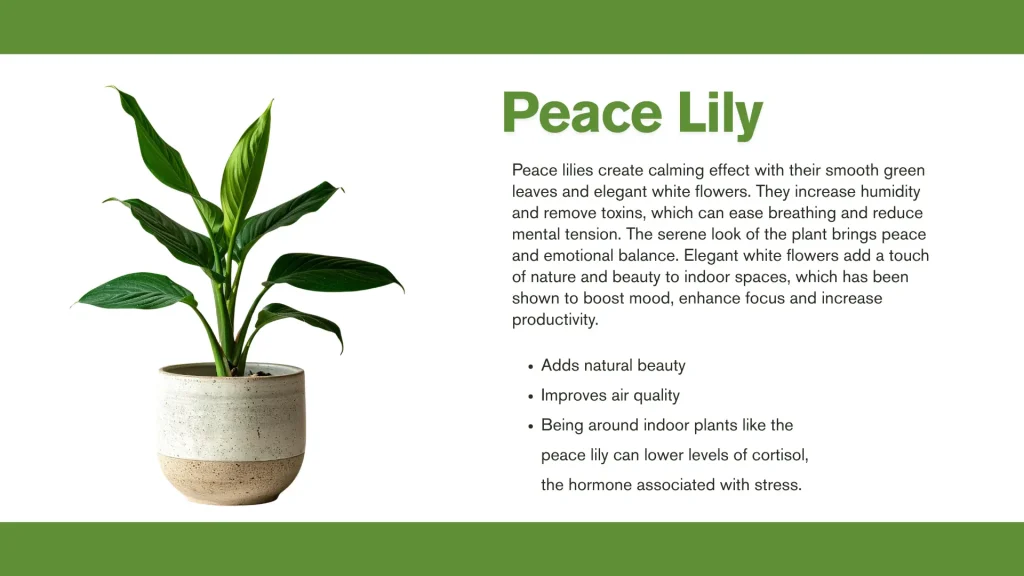
The plant’s name and white blooms make it a strong symbol of peace, purity and healing. Peace lilies create calming effect with their smooth green leaves and elegant white flowers.
They increase humidity and remove toxins, which can ease breathing and reduce mental tension. The serene look of the plant brings peace and emotional balance. Elegant white flowers add a touch of nature and beauty to indoor spaces, which has been shown to boost mood, enhance focus and increase productivity.
This plant is mainly an indoor plant. It thrives in living rooms, bedrooms, and offices where indirect light keeps it healthy. While it can be kept on a shaded balcony, it is not a full outdoor plant—it prefers stable indoor conditions.
Care Tips: Keep soil slightly moist. Avoid direct sunlight.
Maintenance Level: Medium (needs regular watering).
Best Placement: Living room, bedroom, office, shaded balcony.
English Ivy
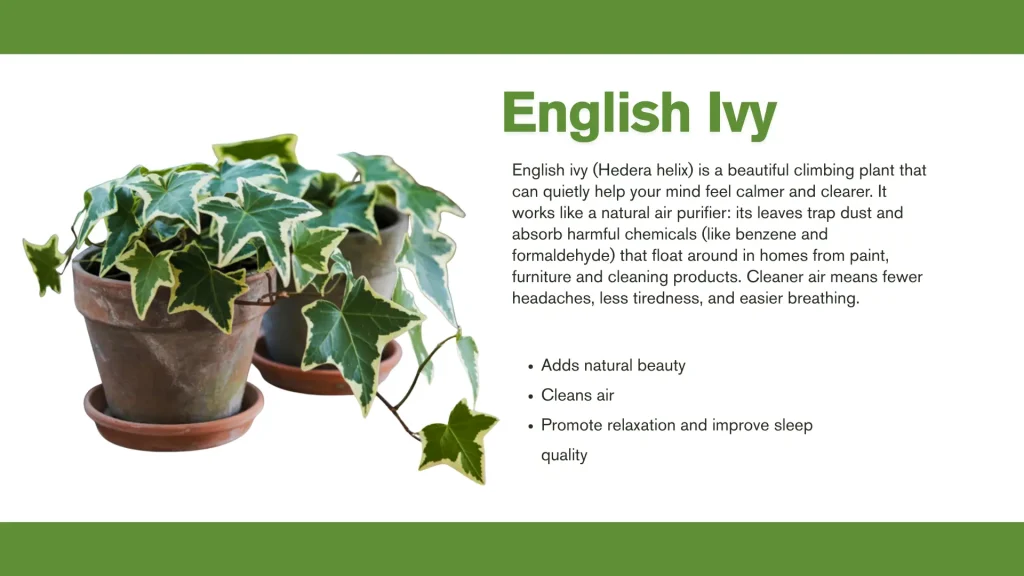
English ivy (Hedera helix) is a beautiful climbing plant that can quietly help your mind feel calmer and clearer. It works like a natural air purifier: its leaves trap dust and absorb harmful chemicals (like benzene and formaldehyde) that float around in homes from paint, furniture and cleaning products. Cleaner air means fewer headaches, less tiredness and easier breathing.
It grows beautifully on balconies, outdoor walls, or railings but can also be kept indoors in hanging baskets. Outdoors is better for vigorous growth, while indoors is better for clean air and controlled shape.
Care Tips: Keep soil lightly moist; provide moderate light.
Maintenance Level: Medium.
Best Placement: Outdoor balcony, patio, indoor hanging basket, near windows.
Lavender
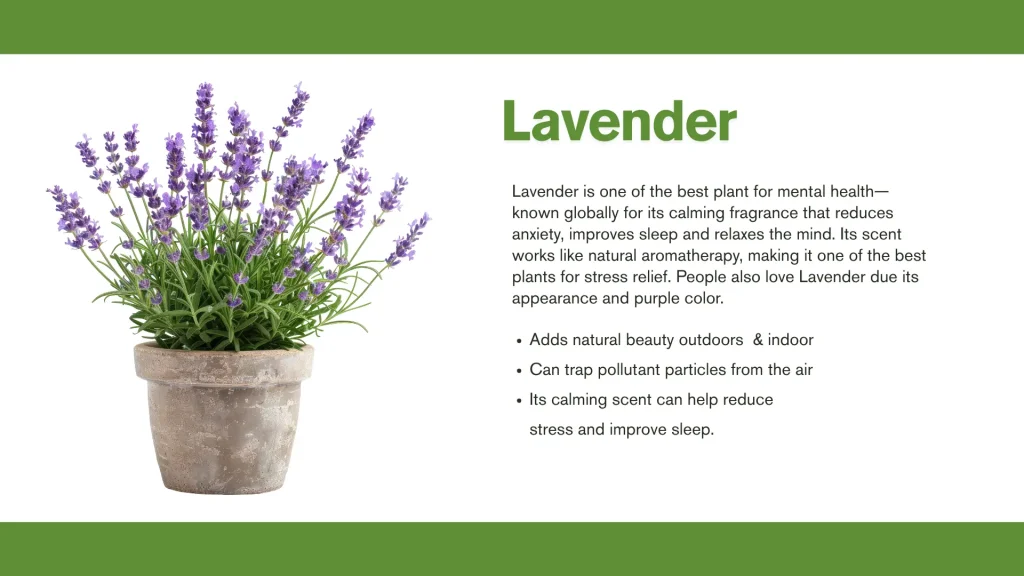
Lavender is one of the best plant for mental health—known globally for its calming fragrance that reduces anxiety, improves sleep and relaxes the mind. Its scent works like natural aromatherapy, making it one of the best plants for stress relief.
Lavender prefers outdoor spaces—balconies, terraces and gardens. Indoors, it can survive near bright windows, but outdoor placement gives the strongest mental-health benefits due to stronger scent production.
Care Tips: Needs full sun, water only when soil is dry.
Maintenance Level: Medium (sunlight required).
Best Placement: Balcony, terrace, garden corner, sunny window.
Read: Which One Best Among French Lavender and English Lavender
Spider Plant

Spider plants are cheerful and vibrant with a potential to uplift a dull or stressful room. They suck up toxins like formaldehyde, carbon monoxide and even cigarette smoke faster than many other plants. Their trailing leaves create movement, which has a soothing, natural rhythm. Just having their soft, bouncy leaves around makes a space feel gentler and safer – many people say their anxiety quiets down when they sit near spider plants.
Spider plants thrive indoors—offices, living rooms, children’s rooms and can also be placed on semi-shaded balconies. They are incredibly forgiving, which makes them perfect for beginners or busy people.
Care Tips: Water once a week; indirect light is ideal.
Maintenance Level: Very low.
Best Placement: Office desk, living room shelf, bedroom, semi-shaded balcony.
Jasmine
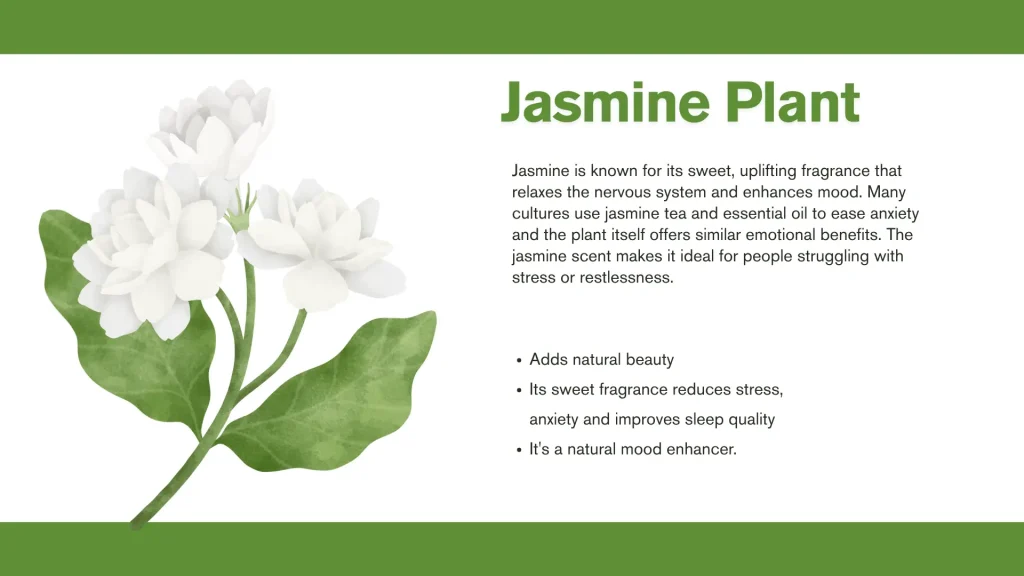
Jasmine is known for its sweet, uplifting fragrance that relaxes the nervous system and enhances mood. Many cultures use jasmine tea and essential oil to ease anxiety and the plant itself offers similar emotional benefits. The jasmine scent makes it ideal for people struggling with stress or restlessness.
Jasmine grows better outdoors or on balconies where it gets sunlight and airflow. Indoors, it can stay near bright windows but may produce less fragrance. For maximum mental-health benefits, balcony placement is best.
Care Tips: Water regularly; provide bright light and support for climbing.
Maintenance Level: Medium.
Best Placement: Balcony, outdoor wall, sunny window.
Pothos
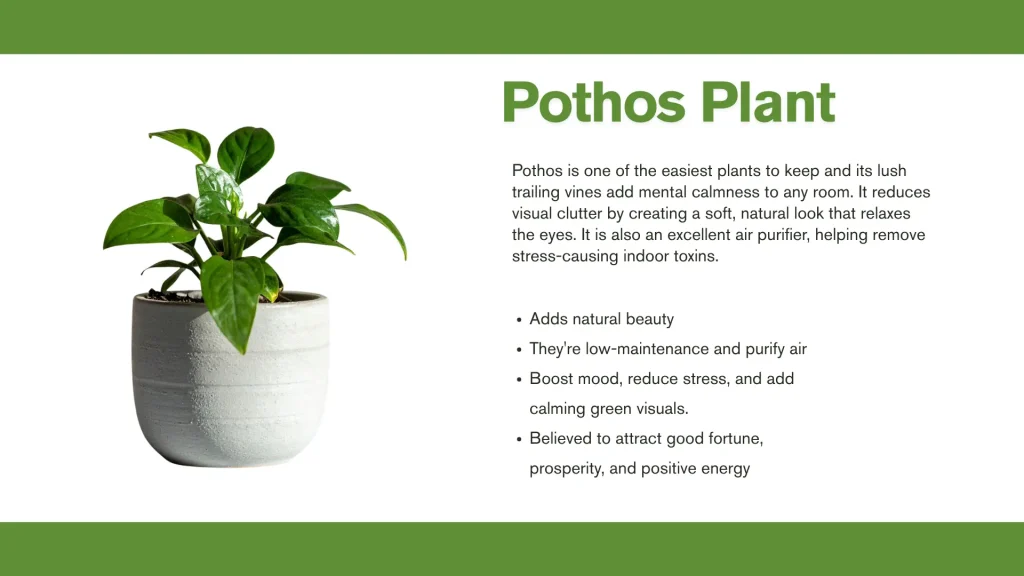
Pothos is one of the easiest plants to keep and its lush trailing vines add mental calmness to any room. It reduces visual clutter by creating a soft, natural look that relaxes the eyes. It is also an excellent air purifier, helping remove stress-causing indoor toxins.
This plant is strictly indoor or shaded-balcony friendly. It does not like harsh sunlight, so homes, offices, and bathrooms are ideal. It grows quickly even with minimal care, making it perfect for beginners.
Care Tips: Water when soil dries; low to medium light.
Maintenance Level: Very low.
Best Placement: Living room, office, bathroom, shaded balcony.
Basil

Basil is a popular herbal plant traditionally used for emotional balance, digestion and boosting mood. Its fresh scent is energizing and uplifting—great for people who feel mentally tired or stressed. Basil is also symbolic of positivity and protection in many cultures.
Basil grows best outdoors—balconies, terraces, and sunny patios—because it loves warmth and airflow. Indoors, it can grow on a sunny kitchen windowsill. If you enjoy natural herbal fragrances, basil is one of the best plants for mental health.
Care Tips: Needs strong sunlight; water regularly.
Maintenance Level: Medium.
Best Placement: Balcony, outdoor planter, kitchen window.
Rosemary

Rosemary has a refreshing scent that boosts mental clarity, improves memory, and reduces mental fog. It is widely used in aromatherapy for focus and cognitive support. Keeping rosemary nearby can help with productivity and fatigue.
Rosemary prefers outdoor conditions—balconies, gardens, terraces—but can also grow indoors near a bright window. It thrives in dry soil and sunny positions, making it easy to maintain for busy people.
Care Tips: Needs sunlight; allow soil to dry between watering.
Maintenance Level: Low.
Best Placement: Balcony, terrace, outdoor pot, sunny indoor window.
Tips for Choosing Indoor Plants for Stress Relief
Choosing the right indoor plants for stress relief starts with understanding your lifestyle, space and daily routine. Not every calming plant fits every home. The first thing to consider is light availability. Plants like snake plant, pothos and spider plant are excellent if your room gets low or indirect light. On the other hand, herbs like basil or fragrant plants like lavender need stronger light to stay healthy and aromatic.
Another factor is maintenance level. If you’re a beginner or have a busy routine, choose easy-going plants such as pothos, aloe vera, or snake plant. These plants forgive occasional neglect, grow well in most conditions, and still offer excellent stress-relief benefits. For people who enjoy a bit of plant care as a therapeutic activity, medium-maintenance plants like jasmine, rosemary, or peace lily are great options—they give emotional satisfaction as you nurture them.
For bedrooms, choose calming plants like lavender, snake plant, or jasmine—to promote deep rest and emotional peace. For workspaces, go for plants that improve focus and air quality, like spider plant, rosemary, or pothos. Living rooms benefit from larger, lush plants that create a soothing environment, while kitchens are perfect for herbs that bring fragrance and freshness.
Lastly, always consider air quality. All the above plants purify air but among them some do more. Plants such as peace lily, English ivy and spider plant—create a more cleaner, healthier environment, which reduces mental fatigue and stress. When the air feels lighter, your mind feels lighter too.
That’s the End! Happy Gardening.