How To Hand Pollinate Cucumbers Successfully
What if, your cucumber vine is climbing beautifully across a trellis, producing large green leaves and bright yellow flowers everywhere, but there comes one problem: no cucumbers. It can feel confusing because the plant looks healthy and full of blooms, yet nothing seems to be happening.
Pollination is the missing step. Cucumber plants can produce plenty of flowers, but flowers alone do not guarantee fruit. If pollinators are not moving pollen where it needs to go, those flowers may bloom and fade without producing cucumbers.
The solution for this problem is hand pollination. You do not need special tools or gardening experience. With a few minutes of effort, you can help your plants produce healthy fruit and improve your harvest.
This is going to be an easy guide on how to hand pollinate cucumbers.
How Pollination Works in Cucumber Plants
Many gardeners hear that all cucumbers are “self-pollinating” and assume the plant takes care of everything on its own. This can be misleading. Cucumbers produce both male and female flowers on the same plant, which means you do not necessarily need a second plant nearby for fruit production.
Read: Self Pollinating Varieties
However, pollen still has to move from the male flower to the female flower. Normally, bees and other pollinators handle this job. As they visit flowers searching for nectar, pollen sticks to their bodies and gets transferred from one flower to another.
Sometimes this natural process does not happen well enough. Pollinator activity may be low, weather conditions may interfere, or nearby flowers may attract bees away from your cucumber plants. When pollen is not transferred, the female flower cannot develop into a cucumber.
That is where hand pollination becomes useful.
Why You May Need to Hand Pollinate Cucumbers
Hand pollination becomes especially important when cucumbers are grown in pots indoors or inside greenhouses. In these environments, plants often have little or no access to bees. Even if the vines look healthy and continue flowering, the pollen may never reach the female flowers.
Outdoor gardens can also experience pollination problems. Heavy rain can reduce pollinator activity. Strong winds may limit insect movement. Very high temperatures and excessive humidity can also affect pollen quality.
Some gardeners have fewer pollinating insects in their area. This is common in urban spaces, balconies, enclosed gardens, and places with limited flowering plants nearby.
When natural pollination is disturbed, hand pollination gives you control over the process.
Read: How To Attract Bees to Pollinate Cucumbers
How to Identify Male and Female Cucumber Flowers
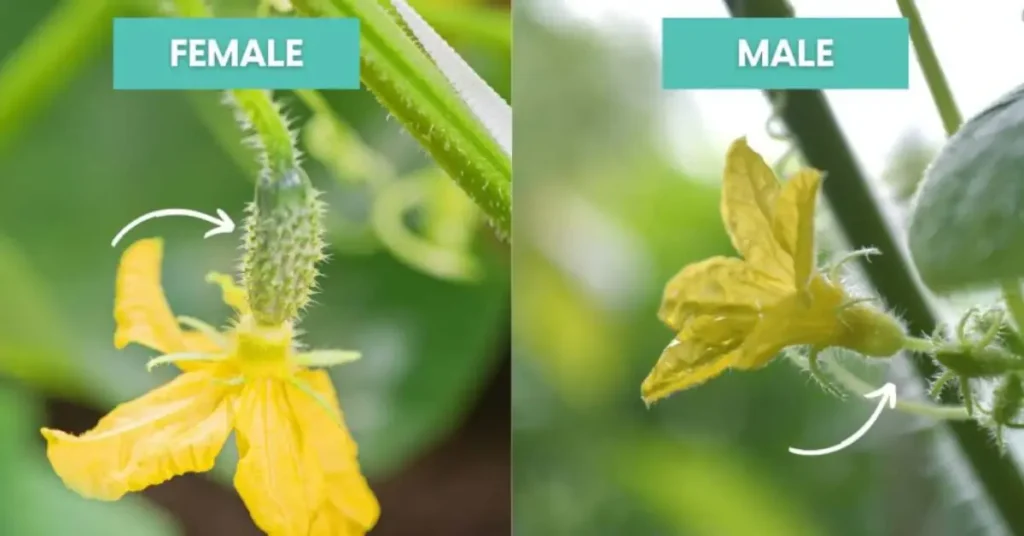
Before hand pollinating, you need to identify the different flower types on the vine. The flowers look similar at first glance because both are bright yellow, but there are differences.
Male flowers usually appear first on the plant. They often grow in clusters and sit on thin stems. Their main purpose is to produce pollen.
Female flowers are usually spaced farther apart. The easiest way to identify them is to look directly behind the flower. You will notice a small swollen area that looks like a tiny cucumber. This small structure is the future fruit.
Sometimes gardeners become concerned when they only see male flowers early in the season. This is normal. Male flowers appear first, and female flowers usually begin developing after the plant matures further.
Best Time to Hand Pollinate Cucumbers
Timing matters when hand pollinating cucumbers. Morning is usually the best time to do it.
Freshly opened flowers are more receptive during the early part of the day, and pollen is generally at its most viable stage. As temperatures increase later in the afternoon, flowers can begin losing freshness and pollen quality can decline.
Weather also affects pollination success. Mild temperatures are usually ideal. Extremely hot conditions may reduce pollen viability, while excessive moisture or humidity can make pollen clump together and become less effective.
How To Hand Pollinate Cucumbers
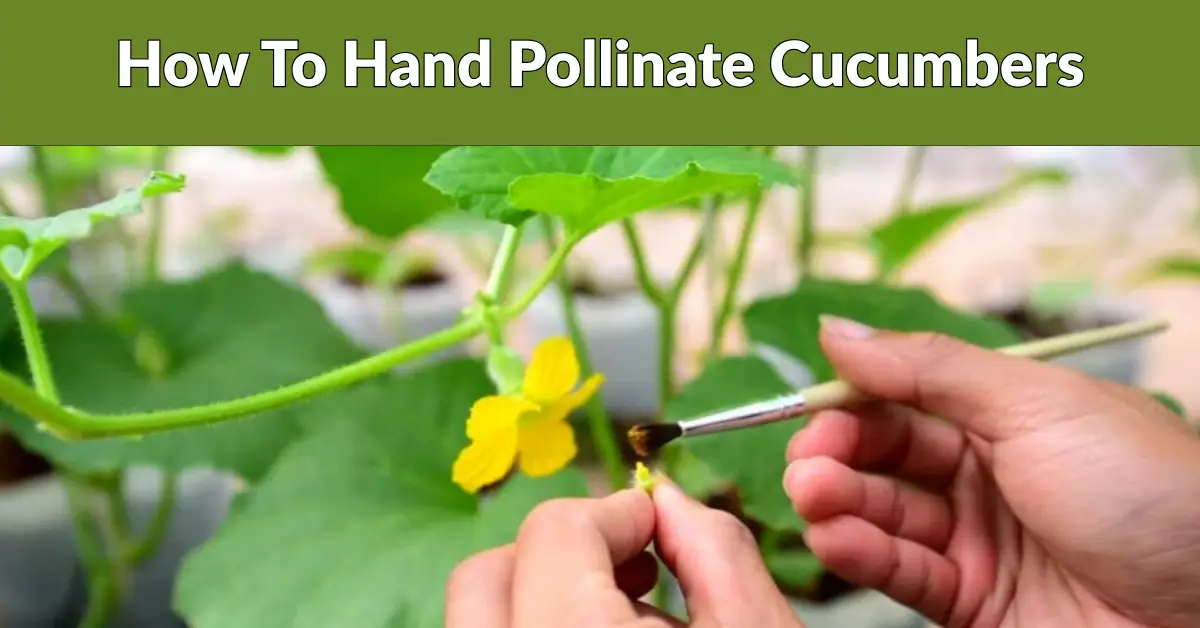
Start by getting a small clean paintbrush or cotton swab. Some gardeners also use the male flower itself by removing its petals and exposing the pollen-producing center.
Look for a fresh male flower that has recently opened. Gently place your brush inside the flower and twist slightly so the bristles collect pollen. You will see fine yellow pollen sticking to the tip.
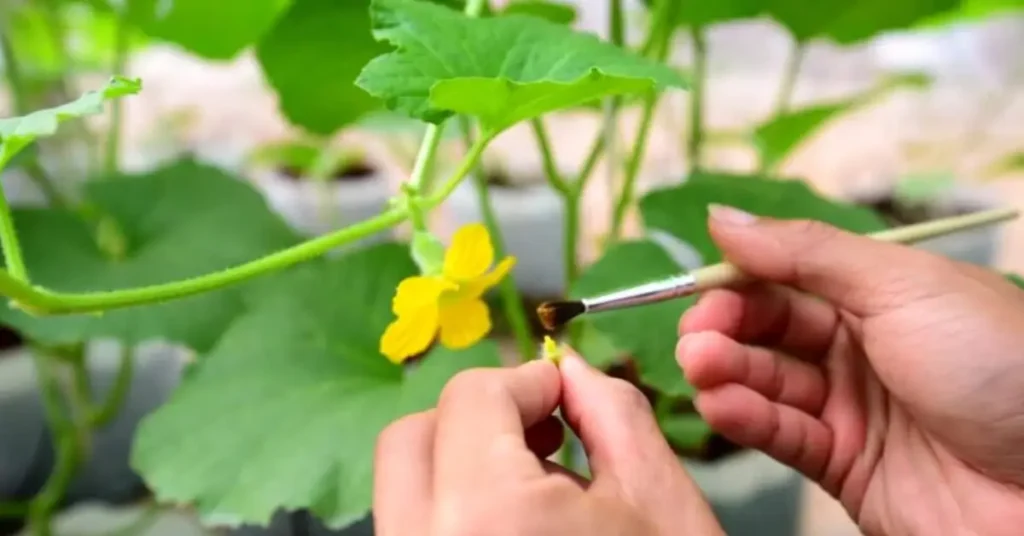
Next, find a female flower and gently brush the pollen onto the center of the flower. Rotate the brush carefully to make sure the pollen comes into contact with the flower’s reproductive structures.
Repeat this process with additional female flowers on the plant. You can also collect pollen from multiple male flowers to improve coverage.
The process is gentle, there is no need to press hard or force the brush into the flower.
How Often Should You Hand Pollinate?
Hand pollination is not a one-time task.
Cucumber plants continue producing new flowers throughout the growing season. Fresh blooms can appear daily, especially during active growth periods. Because flowers open continuously, checking your plants each morning can help maintain steady fruit production. Even spending a few minutes transferring pollen can make a noticeable difference.
If your plants are flowering heavily, daily pollination during peak bloom periods may produce the best results.
How Long Do Cucumber Flowers Stay Open?
Cucumber flowers do not remain open for very long.
In most cases, male and female flowers stay fully open for only one day. Once that window passes, the flowers begin fading and become less useful for pollination.
Because of this short lifespan, timing becomes important. Missing the flower’s most active period can reduce your chances of successful fruit development.
When Not to Hand Pollinate
Avoid flowers that already look wilted, dry, or partially closed. Older flowers may no longer be receptive, and the pollen may not remain viable.
Flowers that are beginning to shrivel or lose color are often already past their most productive stage.
Instead of spending time on aging flowers, focus on blooms that opened recently and still appear bright and healthy.
How to Tell if Pollination Worked
The small cucumber behind the female flower usually starts enlarging over several days. Instead of staying tiny, it gradually becomes longer and thicker.
You may also notice changes in the flower itself. The petals often begin fading and drying out while the developing fruit remains green and firm.
Healthy young cucumbers usually keep a smooth texture and continue growing steadily. If growth continues over the next several days, pollination was likely successful.
Why Baby Cucumbers Turn Yellow and Fall Off
Sometimes a tiny cucumber begins forming, turns yellow, and eventually drops from the vine. This usually signals a pollination problem.
Incomplete pollination often causes the plant to stop supporting the developing fruit. If enough pollen does not reach the female flower, the plant recognizes that the fruit cannot continue developing.
Environmental stress can also contribute to the problem. High temperatures, inconsistent watering, and poor growing conditions can affect fruit development.
Nutrient issues may play a role as well. Plants need balanced nutrition and consistent care to support healthy growth. If yellowing and fruit drop happen often, improve watering habits, maintain plant health, and continue pollinating regularly.
Can You Store Cucumber Pollen?
Pollen can sometimes be stored for short periods if kept cool and dry. A small sealed container placed in the refrigerator may help preserve it briefly.
However, fresh pollen generally produces the most reliable results. Cucumber flowers open regularly during the growing season, using newly collected pollen is usually the better approach.
Final Thoughts
Hand pollinating cucumbers is a simple technique. It requires very little time, no special equipment, and only a basic understanding of how cucumber flowers work.
Once you recognize the difference between male and female flowers and learn the right timing, the process becomes easy. A few minutes of attention each day can help transform vines full of flowers into vines full of cucumbers.