25 Gardening Tips For Tomatoes
Growing tomatoes at home is a fulfilling experience. Whether you’re a beginner or an experienced gardener, cultivating tomatoes offers not only a bounty of delicious fruit but also the satisfaction of nurturing plants from seed to harvest. Tomatoes are relatively easy to grow and with the right knowledge, gardeners can avoid mistakes and achieve a healthy, abundant harvest.
Tomatoes are a versatile plant, with hundreds of varieties available. From small cherry tomatoes to large beefsteaks, each variety has unique characteristics.
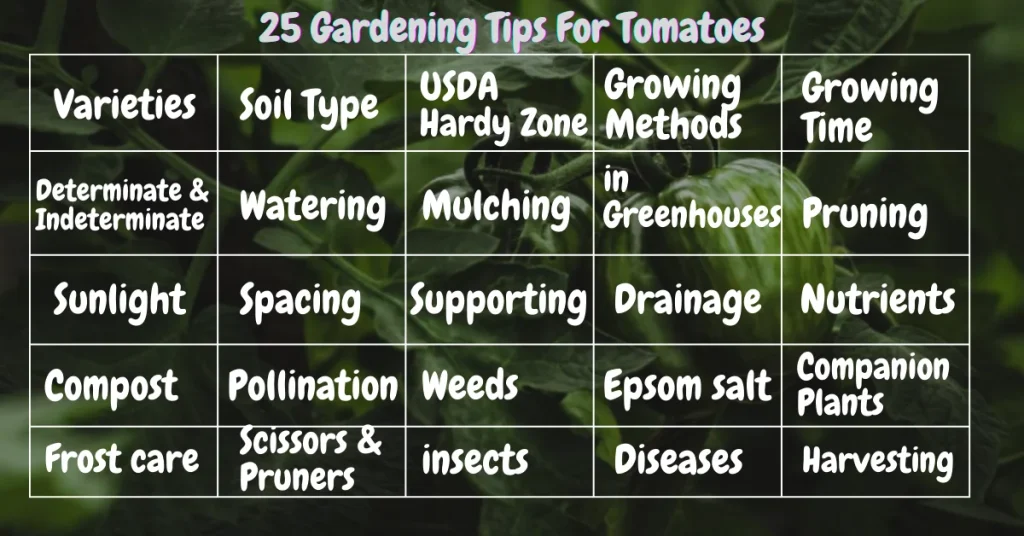
In this guide, I’ll share 25 Gardening tips for tomatoes that I’ve learned over the years, from choosing the best tomato variety for your garden to keeping your plants disease-free and productive. These tips are simple and effective to help you become an expert tomato gardener.
Vegetable Gardening Tips For Tomatoes
Tomatoes Varieties
Tomatoes come in different tastes, sizes, and colors worldwide. Surprisingly, there are more than ten thousand (10,000) varieties of tomatoes available. Best variety for your garden depends on your space, climate, and uses.
Here’s a table with various tomato varieties that includes their common and scientific names, color, taste, suitable USDA hardiness zones, sowing time, and ideal uses:
| Tomato Variety | Plant Height (Ft) | Color | Taste | USDA Hardiness Zones | Sowing Time | Best For |
|---|---|---|---|---|---|---|
| Roma | 3.3 | Red | Sweet, tangy, rich | 3-11 | February to early April | Sauces, pastes, canning |
| Beefsteak | 6 | Red,Orange, Pink, Yellow | Meaty Juicy, mild, slightly tangy | 3-9 | 6-8 weeks before last frost | Fresh slices, sandwiches, salads |
| Cherry | 4-6 | Red, Yellow, Purple | Sweet, juicy, small-sized | 2-11 | 3 months before the hot temperatures | Snacking, salads, garnish |
| Early Girl | 9 | Bright Red | Sweet, meaty tomatoes | 3-11 | early spring | Sauces, salads, fresh use,canning |
| Heirloom | 3-10 | Red, Yellow, Purple, Green | sweet to tart, juicy | 3-11 | 6-8 weeks before last frost | Fresh eating, sauces |
| San Marzano | 5-8 | Bright Red | Sweet, less acidic | 5-10 | March to April | Sauces, canning, cooking |
| Green Zebra | 4-6 | Green with yellow stripes | Tangy, sharp, mild sweetness | 3-11 | early spring, late spring, or early summer | Salsas, salads, garnishes |
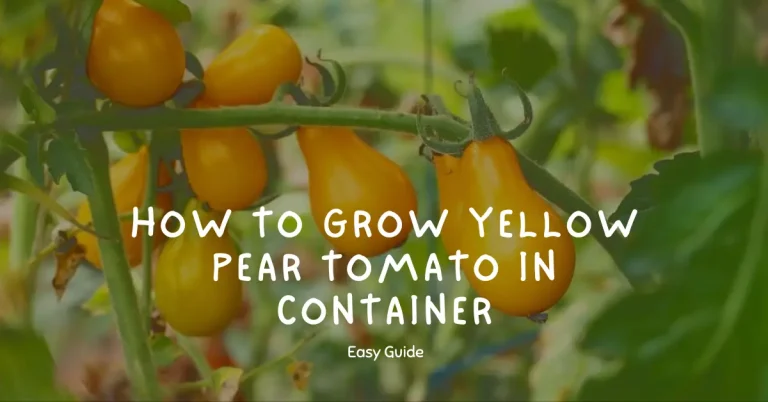
| Yellow Pear | 6-8 | Bright Yellow | Tangy, citrus falvor | 4-11 | 6-8 weeks before last frost | Snacking, salads, fresh use |
| Black Krim | 4-6 | dark maroon, deep purple or almost black | Tangy, Rich, sweet | 2-11 | early spring, late spring, or early summer | Fresh use, cooking, roasted |
| Cherokee Purple | 4-6 | deep, dusky-rose color | Sweet, smoky flavor | 3-9 | 5-6 weeks before last frost | Slicing, fresh use, pizza, burgers |
| Grape Tomato | 8-9 | Red, Yellow, or Purple, black | Sweet, slightly tangy | 3-9 | late February to mid-March | Snacking, salads, fresh use |
| Brandywine | 8-10 | Pink or Red, yellow | Fruity, sweet, spicy | 3a to 11b | late February to April | Slicing, sandwiches, salads |
| Celebrity | 3-4 | Bright Red | Meaty | 3-10 | 6-8 weeks before last frost | Slicing, salads, sauces |
Soil For Tomatoes
The best soil for tomatoes is loamy soil, well drained and rich in organic matter. The soil’s pH should be slightly acidic, between 6.0 and 6.8. I have met with most of cases that my soil is clayey, can i grow grow tomatoes? Yes, always my answer. I advise three things.
- Clay soils retain water, become compact and lead to root rot. I advise to amend the soil.
- I advise to add compost, organic matter and some quantity of sand (not too much).
- I advise for raised beds (mix with soil, compost and sand).
Check: Raised Bed Gardening Books
Climate For Tomatoes (USDA Hardiness Zones)
Where do tomatoes grow best?
Tomatoes can grow in a variety of USDA hardiness zones. See the above table for each variety, USDA hardy zones mentioned. Tomatoes are warm-season plants that grow best in temperatures between 70-82°F (21-27°C) during the day and 62-64°F (16-18°C) at night. Highly sensitive to frost, the best planting time is only after the last frost date in spring when temperatures consistently stay above 50°F (10°C) at night. They require at least 6-8 hours of direct sunlight daily to produce strong, healthy plants and abundant fruit. If they don’t receive minimum 6 hours light, they remain green or result in weak fruits.
Tomatoes Growing
I always have fun and love in growing tomatoes with my family. Its rewarding at the end when enjoying ripened tomatoes in fresh salads and cooking. As a gardener, I advise four methods.
Growing Tomatoes From Seeds
Its a beginner friendly method but it takes time and careful handling required. Simply, plant tomato seeds indoors about 6-8 weeks before the last frost date. Place two or three seeds into in each pot. Use small pots with good soil and keep them in sunlight (sunny spot in your garden or on your balcony). Tomato seeds typically germinate in 5 to 10 days. After germination when plants grown with few leaves and the weather warms up, transplant them outdoors.
Growing Tomatoes From Seedlings
This a quicker and easy way of growing tomatoes in garden. Buy young tomato plants from a nursery or garden center. Transplant them directly into your garden or containers. Place in sunny spot (at least 6-8 hours of direct sunlight each day).
If you bought seedlings from nursery or grown yourself in pots, when seedlings are 3 inches in size, choose a container or pot with 4 inches wide and move seedlings.
Growing Tomatoes in Containers
Limited ground space? No worries, containers are perfect for small spaces, such as balconies, patios, or urban environments. You can grow tomatoes in containers or in grow bags for the several reasons.
- Containers allow you to move the plants around to follow the sun or protect them from harsh weather (wind, rain, frost).
- Containers often have drainage holes, which help prevent waterlogging.
- Growing tomatoes in containers can minimize issues with soil-dwelling pests (like rootworms or slugs) that typically affect ground-planted tomatoes.
- Weeds are less likely to compete with your tomato plants for nutrients.
- Growing tomatoes in containers or grow bags add attractive look and enhance the overall appearance of garden or patio.
Both containers and grow bags are popular choices.
Comparison: Containers vs. Grow Bags for Tomatoes
| Factor | Containers | Grow Bags |
|---|---|---|
| Weight | Heavier, harder to move once filled | Lightweight and easy to move |
| Durability | Long-lasting, especially plastic and ceramic | can last for multiple growing seasons. |
| Drainage | Good drainage if there are holes | Excellent drainage due to fabric design |
| Root Health | Roots can become root-bound in smaller containers | Air-pruning promotes healthy roots and avoids root-bound problems |
| Cost | Generally expensive | Typically more affordable |
| Space Efficiency | Can take up more space (large ones) | Flexible and space-saving |
| Aesthetic | more decorative | Simple and utilitarian, less aesthetic appeal |
| Watering Needs | Needs regular watering | Dries out faster, requires more frequent watering |
Choose a container that is at least 12–18 inches in diameter and 12–18 inches deep for optimal root growth. Larger containers (5–10 gallons) are better for bigger tomato varieties.
Indeterminate varieties go tall and need more space, if space is limited than its better to choose the dwarf varieties like Rosella Purple, Grape tomatoes and snakebite dwarf tomato.
Plant your tomato seedlings or young plants after the last frost and when the weather is consistently warm (at least 60°F/15°C during the day). In a a large 5-gallon pot, space them at least 12–18 inches apart. For watering, let the top inch of soil dry out before watering again.
Growing Tomatoes in Raised Beds
Tomatoes can be grown in raised beds with a few tips:
To grow and spread of tomatoes roots, make sure to choose 18–24 inches deep raised beds. Fill raised beds with loamy, well-draining soil enriched with compost. Plant your tomato seedlings and Space your tomato seedlings about 18-24 inches apart (for indeterminate varieties) and 12-18 inches apart (for determinate varieties). If planting multiple rows, position them north-south for even sunlight exposure.
Apply a 2–3 inch layer of mulch (organic mulch) around your tomato seedlings to retain moisture, weeds suppression. To prevent the plants from sprawling on the ground and keep them upright., Use tomato cages, stakes, or trellises.
Planting herbs like basil, oregano, or marigolds around your tomatoes help deter pests and improve plant health.
Tomatoes Growing Time
Here’s a general timeline for tomato growth:
| Stage | Time Duration | Details |
|---|---|---|
| Seed Starting (Indoors) | 6-8 weeks before last frost | Start seeds indoors before the last expected frost date. |
| Transplanting Outdoors | 2-4 weeks after last frost | Move seedlings outdoors once the risk of frost is gone and soil warms up to 60°F (15°C). |
| Vegetative Growth | 4-6 weeks | Tomatoes grow stems and leaves after transplanting. |
| Flowering | 50-60 days after transplant | Plants begin to produce flowers. |
| Fruit Development | 50-85 days after flowering | Time from flowering to mature fruit depends on the variety. |
| Harvesting | 60-85 days after transplant | Time for tomatoes to ripen and be ready for harvest. |
| Total Time (Seed to Harvest) | 80-120 days | Full growth cycle, depending on variety. |
Determinate and Indeterminate Tomatoes
Determinate and indeterminate are terms used to describe the growth habits of tomato plants.
Determinate Tomatoes (Bush Type)
Determinate tomatoes grow to a set height (usually compact) and then stop growing. They have a bush-like shape. They produce all their fruit at once, typically over a 1-2 week period. They are good for canning or making sauces, as you can harvest a large quantity of fruit at one time. They need minimal pruning.
- Examples: Roma, Patio Princess, Bush Early Girl.
Indeterminate Tomatoes (Vining Type)
Indeterminate tomatoes continue to grow taller throughout the growing season, produce new stems, leaves, and fruit as long as given the best supports and conditions. They produce fruit continuously during growing season. Frequent pruning is necessary to manage their growth and get more fruit production.
- Examples: Beefsteak, Cherokee Purple, Big Boy.
Why Determinate Tomatoes are Better?
I like determinate tomatoes because they are deal for smaller spaces like containers, patios, or small gardens. Determinates require less pruning and maintenance. They grow to a set height, you won’t need to spend much time managing their growth. They get mature quicker than indeterminate types, indeed a better choice in regions with a short growing season or where frost arrives early.
Watering For Tomatoes
Garden tomatoes require 1-2 inches of water a week. Wilted or drooping leaves and stems are often the first signs that your tomato plants are thirsty. When the plants need water, their leaves may curl inward, though this can also happen during very hot weather.
If the top 2 to 3 inches of soil becomes dry or cracked, it’s a clear indication that the plants need watering. If the plant’s growth seems to slow down or stop, it might also signs that tomatoes are not getting enough water. Avoid overwatering, overwatering encourages fungal growth.
Mulching Tomatoes
Mulching is an effective gardening technique for tomatoes that offer many benefits, such as moisture retention, temperature regulation, and weed suppression.
When to Mulch Tomatoes
Apply mulch 2–3 weeks after transplanting seedlings or when the plants have grown to about 6–8 inches tall. Ensure the ground is warm and plants are actively growing before applying mulch.
How to Mulch Tomatoes
- Prepare the Soil
- Water the soil thoroughly before mulching.
- Remove any weeds or grass around the base of your tomato plants before applying the mulch.
- Choose the Right Mulch
- Organic Mulches: These include options like straw, grass clippings, shredded leaves, wood chips, or compost. Organic mulches break down over time and enrich the soil.
- Plastic Mulch: Black plastic mulch is often used in commercial tomato growing to warm the soil faster and reduce weed growth. It doesn’t decompose.
- Apply the Mulch
- Spread a 2–4 inch layer of mulch evenly around your tomato plants. Keep the mulch a few inches away from the stems to avoid rot.
- While applying organic mulch, make sure straw or hay free from weed seeds.
Greenhouse Tomatoes
Greenhouse tomatoes are tomatoes grown in controlled, indoor environments known as greenhouses. These environments allow for precise control over factors such as temperature, humidity, light, and water, and ideal conditions for tomato plants to thrive throughout the year. Here, indeterminate varieties perform well on on a trellis system. Tomatoes like Brandywine, Rosella and Beefsteak are the good choices for greenhouses.
Growing tomatoes in a greenhouse is quite similar to growing them outdoors, with the main difference being a longer growing season and typically higher yields.
Pruning Tomatoes
Its important to have the right information about when to prune tomatoes and how to prune tomatoes for better plants growth and higher yields.
When to Prune Tomatoes
Pruning is necessary to reduce the extra foliage. Indeterminate varieties go taller whether grown in large containers and greenhouses. Removing suckers and yellowed leaves helps promote larger fruit, improves airflow, reduces the risk of diseases, and, for container-grown tomatoes, allows the plant to stay a better size. Regardless of any variety sown, when flowers start to open, its the time of pruning tomatoes, usually in late June or early July. Continue pruning (every two weeks) until harvest time arrives.
How to Prune Tomatoes
Necessary Tools
Pruning Shears or Scissors: A sharp pair of gardening shears or scissors is essential for clean cuts.
Gloves (optional): While not strictly necessary, gloves can protect your hands from thorns, sap, and dirt.
Garden Twine or Stakes (optional): These help support the plant as you prune, especially if you decide to train your tomatoes on stakes or cages.
Remove suckers first. Suckers are small shoots that grow in the joint between the main stem and a branch. if left unpruned, they eventually grow in big size and add more foliage. Remove suckers when they are small 2-3 inches. Simply, pinch them off with your fingers or use pruning shears.
After removing suckers, remove any yellowing, wilting, or diseased leaves. Cut the diseased or dead branches at the base where they meet the main stem or a healthy branch. Dispose of the pruned material far from the garden.
Sunlight For Tomatoes
More sunlight, better photosynthesis, better plant growth. 6-8 hours direct sunlight is necessary for tomatoes growth and fruiting. If you’re growing tomatoes indoors or in containers, make sure to place them near a south-facing window or use grow lights.
Not enough light can cause:
- weak vines.
- lead to more pests.
- lower fruit production.
- poor quality fruit.
Spacing For Tomatoes
The ideal spacing for tomato plants is between 24 and 36 inches. Proper spacing allows air to flow freely between plants, reduce humidity around the leaves and prevent the growth of fungal diseases, such as blight. Tomatoes are sun lovers. When plants are spaced correctly, each one can receive adequate sunlight.
crowded plants create a favorable environment for pests and diseases. By spacing plants appropriately, it’s easier to manage these issues.
Tomatoes grown in pots? Space them at least 12 inches apart.
Supporting Tomatoes
Supporting tomatoes makes the plants easier to manage, when pruning or inspecting for pests and diseases and harvesting. Good airflow reduces the likelihood of fungal diseases like blight and mildew. Staking or trellising helps keep the plant upright and more spaced out.
Here’s a table summarizing the types of tomato supports, their advantages, and disadvantages:
| Support Type | Description | Best For | Advantages | Disadvantages |
|---|---|---|---|---|
| Stakes | Vertical poles placed next to tomato plants. Plants are tied to the stake as they grow. | Determinate varieties (bushy tomatoes) | Simple, inexpensive, effective for small spaces, easy to install. | Requires frequent tying, less effective for indeterminate varieties. |
| Cages | Wire or metal frames placed around plants to provide 360-degree support. | Both determinate and indeterminate | 360-degree support, low maintenance, prevents plant contact with soil. | Takes up space, can deform with larger plants, may be unstable in wind. |
| Trellises | Vertical or horizontal support structures (netting, wire) that plants grow along. | Indeterminate varieties (vining tomatoes) | Supports upward growth, great for air circulation, space-saving for rows. | Requires setup time and space, may not be ideal for determinate varieties. |
| Sprawl Systems | Horizontal supports like ropes or wires allowing plants to spread out. | Large gardens, greenhouses | Simple and inexpensive, flexible for large spaces. | Less organized, harder to maintain and harvest, can become messy. |
| Florida Weave | String is woven between plants and tied to stakes in rows for support. | Indeterminate varieties (rows of tomatoes) | Highly effective for rows, promotes airflow, allows for easy access. | Requires multiple stakes and regular tying, less effective for determinate. |
| Arches/A-Frames | Arched or framed structures that support the plant’s vertical growth. | Large or tall indeterminate plants | Aesthetic, saves space, good for heavier plants, supports vertical growth. | Requires installation, more complex, may not be flexible for all varieties. |
Drainage in Tomatoes
Soil that retains the water is not good for tomatoes. It will eventually lead to fungal diseases. Make sure soil is loamy or sand loamy for tomatoes. For containers growing, choose the containers that have holes at the bottom. Raised beds improve drainage, especially in areas with heavy or poorly-draining soil.
Nutrients
Like all other vegetables, nutrients for tomatoes are essential for plants growth, roots development and juicy fruiting. Blind application of fertilizers is not a wise decision. I always advise for the soil analysis first to know what nutrients are deficient in soil. You can go with nearby extension services or commercial services for soil analysis.
Essential Nutrients for Tomatoes
Macronutrients
- Nitrogen (N): Encourages healthy leaf and stem growth.
- Phosphorus (P): Promotes root development, flower formation, and fruiting.
- Potassium (K): Essential for fruit development, disease resistance, and overall plant health.
- Calcium (Ca): Vital for cell wall development, preventing blossom end rot.
- Magnesium (Mg): Important for photosynthesis and chlorophyll production.
- Sulfur (S): Helps with protein synthesis and enzyme function.
Micro Nutrients
- Iron (Fe): Important for chlorophyll production and photosynthesis.
- Manganese (Mn): Involved in photosynthesis and enzyme systems.
- Boron (B): Helps with pollination and fruit set.
- Copper (Cu): Needed for enzyme functions.
- Zinc (Zn): Important for growth regulation and protein synthesis.
- Molybdenum (Mo): Essential for nitrogen metabolism
Nutrient Deficiencies in Tomatoes presented in a table below:
| Nutrient | Deficiency Symptoms |
|---|---|
| Nitrogen (N) | Yellowing of older leaves (lower leaves), stunted growth, pale foliage. |
| Phosphorus (P) | Dark green leaves with purplish tints on older leaves, stunted growth, delayed flowering and fruiting. |
| Potassium (K) | Yellowing and browning at leaf edges (marginal chlorosis), weak stems, poor fruit quality, small fruits. |
| Calcium (Ca) | Blossom end rot (black or darkened spots on the bottom of the fruit), curled leaves, stunted growth. |
| Magnesium (Mg) | Interveinal chlorosis (yellowing between veins) of older leaves, progressing to necrosis. |
| Sulfur (S) | Yellowing of young leaves, stunted growth, pale foliage. |
| Iron (Fe) | Yellowing of younger leaves (interveinal chlorosis), veins remain green. |
| Boron (B) | Blossom drop, malformed fruits, poor fruit set. |
| Manganese (Mn) | Interveinal chlorosis of younger leaves, brown spots may appear on older leaves. |
| Zinc (Zn) | Dwarfism, stunted growth, yellowing between leaf veins, distorted leaves. |
Application of Fertilizers
Its up to you, you can use liquid, dry, or compost fertilizers. People often ask, what is the best fertilizer for tomatoes? Its fairly depends the nutrients already available in your soil. If your soil lacks nitrogen, use a more balanced fertilizer, such as a 10-10-10 NPK ratio.
See Options Here: 10-10-10 NPK
When growing tomatoes in a pot, the soil has limited space for the plant to get nutrients. About six (6) weeks after planting, switch to a water-soluble fertilizer and apply it according to the instructions on the package. A fertilizer with a nutrient ratio of 5-10-5 give good results for tomatoes.
Compost For Tomatoes
Composting is creating a rich, organic environment that supports healthy growth and maximizes fruit production. The best compost for tomatoes is a well-aged, nutrient-rich compost that provides good drainage.
To add compost, spread a 2-inch layer over your garden in the spring before planting. Lightly mix it into the top 6 inches of soil. If your soil has a lot of clay (which drains slowly) or sand (which drains quickly), add compost again in the fall. You can also use compost as mulch around tomato plants during the growing season.
Pollination Tomato Plants
Tomatoes are self-pollinating, meaning they have both male and female parts in the same flower. Insects and wind can still help with pollination. For example, bees buzzing around the flowers can help shake the pollen into the flower.
Even with perfect pollination, tomatoes sometimes don’t set fruit, and one common reason for this is high temperatures. When the temperature goes above 85-90°F during the day and 75°F at night, the pollen can become useless. Humidity also plays a role. In very humid areas, pollen can become sticky and not fall where it’s needed. In dry areas, pollen can become too dry to stick.
Heirloom tomatoes are more sensitive to temperature than hybrid varieties and might take longer to set fruit.
There are also heat-tolerant tomato varieties, like Heatmaster and Solar Fire, which handle warm temperatures better. But extreme heat can still affect most tomato plants.
Tomato Weeds
Weeds reduce tomato yields by competing for water, nutrients, light, and space. Some weeds can also increase pest problems by serving as hosts for insects, diseases, or nematodes. Some common weeds that can affect tomato plants are:
Crabgrass (Digitaria spp.): Fast-growing weed that can quickly take over garden spaces, crowding out tomato plants and other crops.
Pigweed (Amaranthus spp.): A troublesome weed, grows quickly and produce a lot of seeds.
Common Lambsquarters (Chenopodium album): It can overshadow tomato plants and reduce yields.
Chickweed (Stellaria media): Chickweed can spread rapidly, covering the soil around tomato plants.
Dandelion (Taraxacum officinale): Their deep taproots can steal moisture and nutrients from tomato plants, and their seeds are easily dispersed by the wind.
Morning Glory (Ipomoea spp.): This weed spreads quickly and competes for resources.
Bindweed (Convolvulus spp.): A deep-rooted perennial that can be difficult to control.
Nutsedge (Cyperus spp.): With grass-like appearance, nutsedge can quickly invade garden beds and is difficult to control because of its persistent underground tubers.
Yellow Dock (Rumex crispus): This weed has deep taproots and can take up a lot of space in the garden.
Creeping Jenny (Lysimachia nummularia): This creeping weed can smother the soil around tomatoes, prevent proper airflow and water drainage.
Epsom Salt for Tomatoes
Epsom salt, which is made up of magnesium sulfate, is a natural and popular supplement for growing plants. Magnesium is an essential nutrient for plants because it is a key component of chlorophyll. Without enough magnesium, tomatoes can struggle to produce chlorophyll properly, leading to poor growth and yellowing leaves.
When tomato plants are deficient in magnesium, they may show signs like yellowing between the veins of the leaves, a condition called interveinal chlorosis. This occurs because the plant can’t produce enough chlorophyll to carry out photosynthesis. By adding Epsom salt to the soil, you provide a boost of magnesium, help the plant restore its chlorophyll production.
Epsom salt also contains sulfur, which is another important element for plants. Sulfur helps with the production of certain amino acids and enzymes that are essential for plant growth. So, when you use Epsom salt for tomatoes, you’re not only improving magnesium levels but also boosting the overall health and growth of your plants.
Applying Epsom salt to your tomato plants can be done in a few different ways. One method is to mix it directly into the soil before planting. Another way is to dissolve a small amount of Epsom salt in water (1 tablespoon of Epsom salts with one gallon of water) and use it as a foliar spray.
Use it in moderation.
Companion Plants for Tomatoes
A frequently asked question, what is the best companion plant for tomato? My vote is always for basil. Basil is the best companion plant for tomato. Companion plants are plants that are grown together because they provide benefits to each other, help each other grow better or ward off pests and diseases.
Here are companion plants for tomatoes, along with the benefits they provide:
| Companion Plant | Benefit to Tomatoes |
|---|---|
| Basil | Repels pests like mosquitoes, flies, and aphids; enhances flavor of tomatoes. |
| Marigolds | Repels nematodes and other pests; attracts beneficial insects. |
| Garlic | Repels aphids, spider mites, and whiteflies. |
| Onions | Help repel pests like aphids and beetles; improve tomato growth. |
| Carrots | Have deep roots that help loosen soil, improving root growth of tomatoes. |
| Nasturtiums | Acts as a trap crop for aphids and other pests; attracts beneficial insects. |
| Borage | Attracts pollinators like bees; helps improve tomato growth and flavor. |
| Parsley | Attracts beneficial insects like predatory beetles that prey on pests. |
| Chives | Repels aphids and other insect pests; improves tomato flavor. |
| Spinach | Provides ground cover to help retain moisture and suppress weeds. |
Protect Tomatoes from Frost
Tomatoes are sensitive to cold temperatures and frost can severely damage or kill them. Tomato plants exposed to frost experience stunted growth, poor flowering and fruit set. Tomatoes generally stop growing well below 50°F (10°C) and are significantly harmed by frost, which occurs at freezing temperatures (32°F/0°C).
Prevention is better than cure. I do advise short duration varieties in areas where early frost occurs. Plant tomatoes right after the last frost date in your area to avoid early frost.
Keep an eye on weather forecast, before frost prediction, bring containers grown tomatoes inside a protected area. For short statured varieties, use inverted buckets or boxes. Mulching around the plants is also a good option. It insulated plants. Use a lightweight fabric like an old sheet, row cover, or even a blanket to drape over the plants.
Pruning Shears
Look for pruners with sharp blades and ergonomic handles to make pruning your tomato plants easier and effective. Bypass Pruning Shears are the best for pruning Tomatoes.
Tomato Plants Insects
Below are some common insects that affect tomato plants:
Aphids
- Description: Small, soft-bodied insects that can be green, black, or yellow.
- Damage: They suck sap from the plants, cause yellowing and curling of leaves. They also excrete a sticky substance known as honeydew, which attract ants and cause mold growth.
- Control: Use insecticidal soap or introduce natural predators like ladybugs.
Tomato Hornworm (Five-Spotted Hawkmoth Caterpillar)
- Description: Large, green caterpillars with white markings and a horn on their tail.
- Damage: These caterpillars eat large amounts of tomato leaves and can quickly defoliate plants.
- Control: Hand-pick them off the plants or use Bacillus thuringiensis (Bt), an organic pesticide.
Whiteflies
- Description: Small, white, flying insects that congregate on the underside of leaves.
- Damage: They feed on plant sap, causing yellowing of the leaves and stunted growth. Like aphids, they can also spread diseases.
- Control: Use yellow sticky traps or insecticidal soap to control them.
Spider Mites
- Description: Tiny, spider-like pests that are hard to see with the naked eye.
- Damage: They cause stippling (tiny white spots) on leaves, which can lead to leaf drop. They thrive in hot, dry conditions.
- Control: Increase humidity around the plants, spray with miticides, or use a strong water spray to dislodge them.
Flea Beetles
- Description: Small, black or metallic beetles that jump when disturbed.
- Damage: They chew small holes in leaves, which can stunt plant growth and make plants more susceptible to disease.
- Control: Use floating row covers to protect plants, or apply insecticidal soap.
Leafminers
- Description: Small larvae that burrow through tomato leaves, creating visible trails.
- Damage: The mining of leaves reduces the plant’s ability to photosynthesize, weakening the plant.
- Control: Remove affected leaves, and use insecticidal soap or neem oil for prevention.
Stink Bugs
- Description: Brown or green bugs that have a shield-like shape.
- Damage: Stink bugs suck juices from the tomato fruits, causing them to become discolored and deformed.
- Control: Hand-pick them off or use insecticidal soap or neem oil.
Cutworms
- Description: Caterpillars that are usually found in the soil.
- Damage: They chew through the stems of young tomato plants, causing them to collapse.
- Control: Use collars around the stems of young plants or apply diatomaceous earth around the base of the plant.
Tobacco Hornworm
- Description: Similar to the tomato hornworm but larger and often has a red horn.
- Damage: They eat leaves and sometimes even the fruit of tomato plants.
- Control: Remove them by hand or use natural predators like parasitic wasps.
Tomato Psyllid
- Description: Small, jumping insects that look similar to aphids.
- Damage: They can cause leaf curling and a condition called “psyllid yellows” that stunts growth.
- Control: Remove affected leaves and use insecticidal soap.
Prevention and General Tips
- Regular Inspection: Check your tomato plants frequently for signs of pests.
- Healthy Soil: Maintain healthy and well-draining soil.
- Beneficial Insects: Encourage natural predators like ladybugs, lacewings, and parasitic wasps.
- Neem Oil: This organic pesticide is effective against a variety of insect pests.
- Companion Planting: Consider planting basil or marigolds near tomatoes to repel certain pests.
Diseases
Common diseases in tomato plants are:
Fungal Diseases
Early Blight (Alternaria solani): This disease causes dark, concentric spots on older leaves, often surrounded by yellow halos. It can lead to defoliation, reducing plant vigor.
Late Blight (Phytophthora infestans): A devastating disease that leads to large, water-soaked lesions on leaves and fruit. It thrives in cool, wet conditions and can spread rapidly, causing significant crop loss.
Fusarium Wilt (Fusarium oxysporum): A soil-borne fungus that infects the vascular system of the plant, causing yellowing and wilting, starting from the lower leaves and progressing upwards.
Powdery Mildew (Leveillula taurica): White, powdery fungal growth on leaves, stems, and fruit. It weakens plants and reduces yields.
Bacterial Diseases
Bacterial Spot (Xanthomonas campestris): It causes water-soaked lesions with a yellow halo on leaves, stems, and fruit. Infected leaves can become necrotic.
Bacterial Canker (Clavibacter michiganensis): It causes wilting, yellowing of leaves, and cankers on stems. This disease can also affect the fruit, causing them to develop sunken, necrotic spots.
Viral Diseases
Tomato Mosaic Virus (ToMV): A virus that causes mottled, yellowing leaves and stunted growth. It spreads rapidly and can reduce yields dramatically.
Tomato Yellow Leaf Curl Virus (TYLCV): Transmitted by whiteflies, this virus causes severe yellowing and curling of the leaves, stunting, and reduced fruit size.
Tobacco Mosaic Virus (TMV): Causes mottling of leaves, leaf curling, and stunting. It is transmitted mechanically and can survive on equipment and surfaces.
Nematode Diseases
Root-Knot Nematode (Meloidogyne spp.): These microscopic worms damage the root system, cause knots or galls to form on the roots.
Other Diseases
- Anthracnose (Colletotrichum spp.): Fungal infection leading to dark, sunken lesions on fruit, often with concentric rings. It spreads quickly under humid conditions.
- Gray Mold (Botrytis cinerea): A fungus that causes fuzzy, gray mold on fruit and flowers, particularly in humid, wet conditions.
Prevention and Management
Avoid planting tomatoes or related plants (like peppers and eggplants) in the same soil for some years. Fungicides, bactericides, and nematicides can be used to control the diseases in tomatoes.
Harvesting Tomatoes
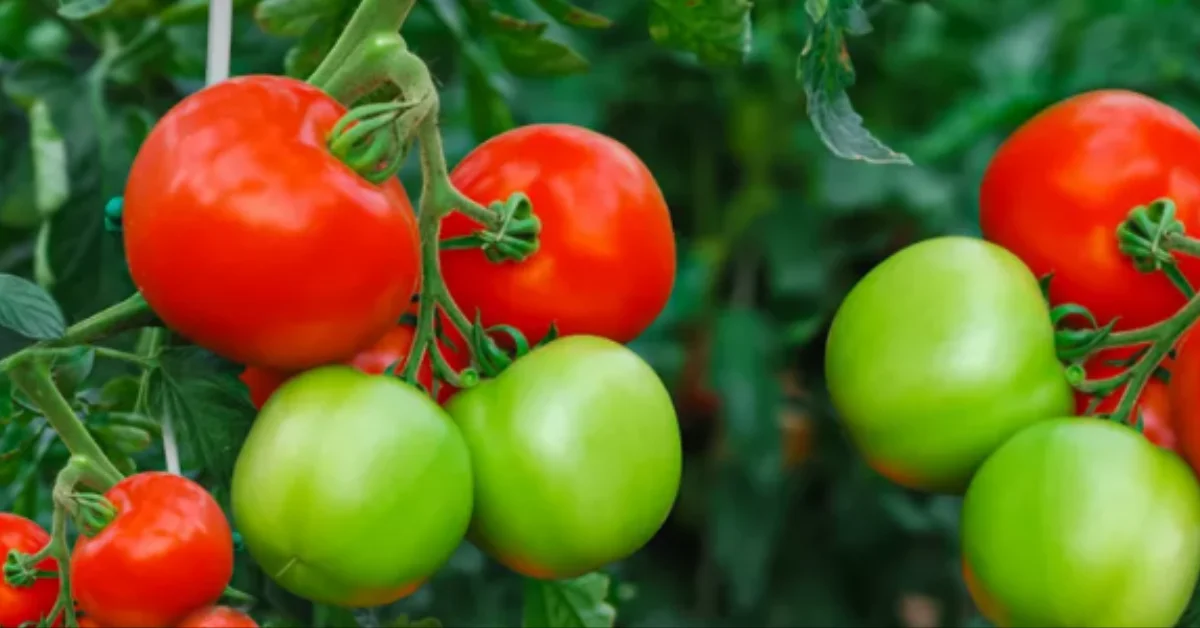
Harvest timing can vary depending on the variety of tomato and growing conditions. Ripe tomatoes are shiny, glossy, supple, slightly soft and attain full color (red, pink, yellow, etc). The ripened color may vary due to varietal characteristic.
Use your garden shears to snip the tomatoes from the plant. Ripe tomatoes often come off the vine easily with a slight twist or tug. If the tomato resists being pulled, it’s probably not quite ready.
After picking, store tomatoes. If your tomatoes are very ripe, you can store them in the fridge to make them last longer. Just let them come up to room temperature before eating.
By following these 25 expert tips, you’ll be well on your way to growing a bountiful harvest of healthy, flavorful tomatoes. Happy gardening!