20 Small Front Lawn Landscaping Ideas That Are Wow
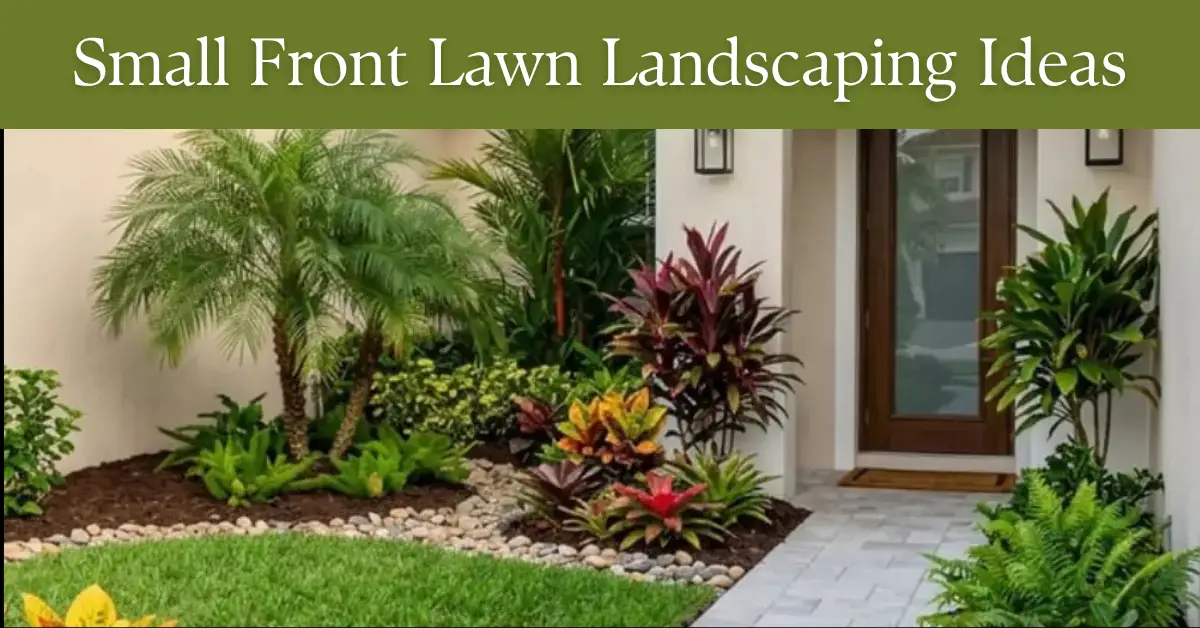
Your front lawn is the first thing people see when they pull up to your home. And when it’s small, every inch counts.
A small front yard is actually easier to work with than a large one. You don’t need a big budget or a professional landscaper. You just need a clear plan, the right plants, and a few smart ideas to pull it all together.
Most small front lawns struggle for one simple reason, too much going on with no clear focus. Random plants, patchy grass, and no defined edges make even a decent yard look messy. The fix is simpler than you think.
Pick one focal point. Keep your edges clean. Stick to a simple color palette. Do those three things and your yard will look polished and intentional no matter how small it is.
We’ve put together 20 of the best small front lawn landscaping ideas, a mix of classic approaches, modern and fresh ideas you won’t find everywhere else. Whether you rent or own, have sun or shade, or want low-maintenance or full seasonal color, there’s something here for every yard.
Let’s get into it.
Line Your Walkway With Dwarf Boxwood and Dark Mulch
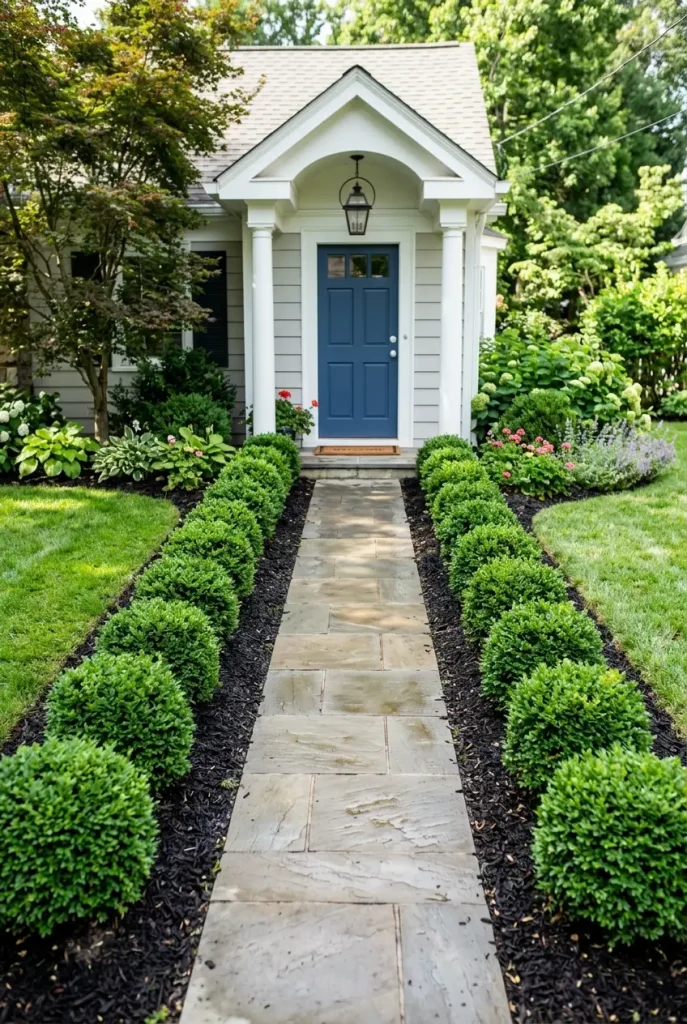
A clean row of dwarf boxwood on both sides of your front path does a lot of work. It adds structure, frames the entrance, and the dark mulch makes the green color stand out.
Keep the shrubs evenly spaced and trimmed low so they guide the eye toward the door instead of blocking it. In a small yard, this kind of defined edge makes everything look more intentional.
Pro Tip: Keep the line straight and the spacing even. The cleaner the border, the more put-together the whole yard looks.
Replace Patchy Grass With Creeping Thyme and Flagstone
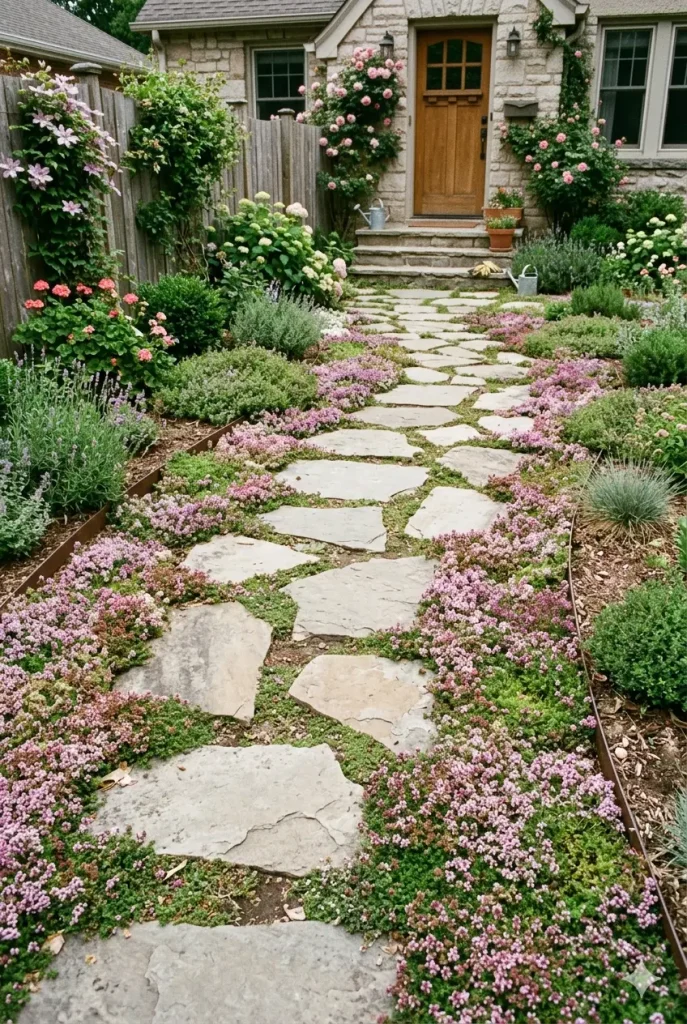
If your grass has thin or bare spots, stop fighting it. Lay down flagstone pavers and let creeping thyme fill the gaps between them.
It’s low-maintenance, smells great, and looks far better than a struggling lawn. This works well as a side path or as a full front yard replacement in tight spaces.
Pro Tip: Leave room between the stones for the thyme to spread on its own. Water it well in the first few weeks and it will settle in.
Use Two Matching Planters to Frame Your Front Door
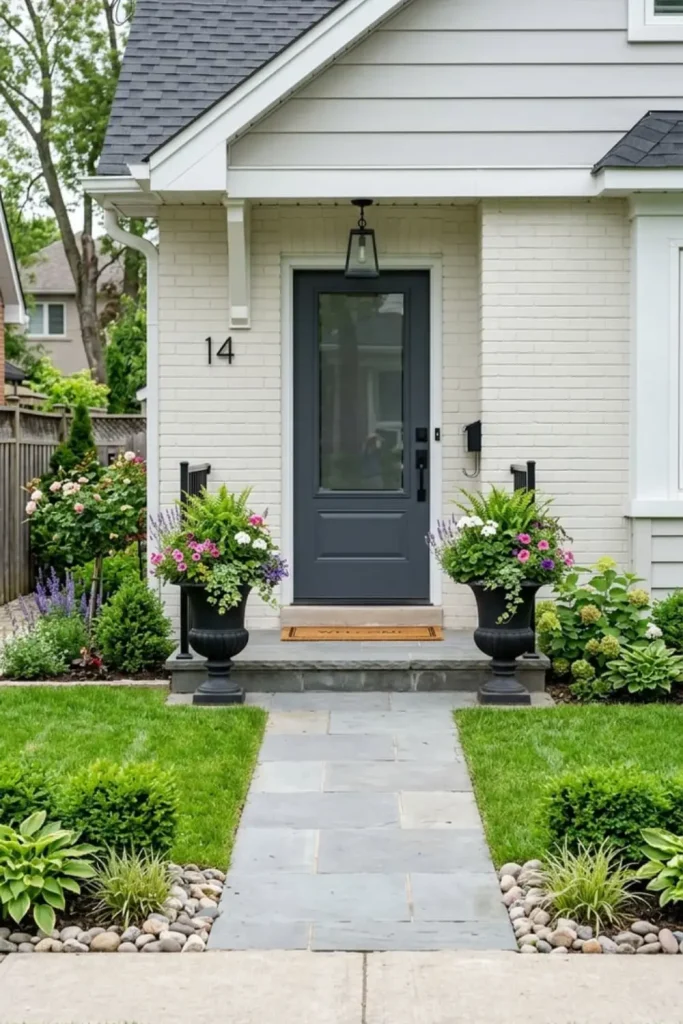
Two identical planters placed on either side of your front door create instant symmetry. It’s one of the fastest ways to improve curb appeal without digging a single bed.
Use something full and structured inside them, boxwood balls, ferns, or a simple seasonal flower. Keep both planters the same so the entry feels calm and balanced.
Pro Tip: Same plant in both pots, same size containers. Matching wins every time over mixing.
Plant One Japanese Maple as Your Focal Point
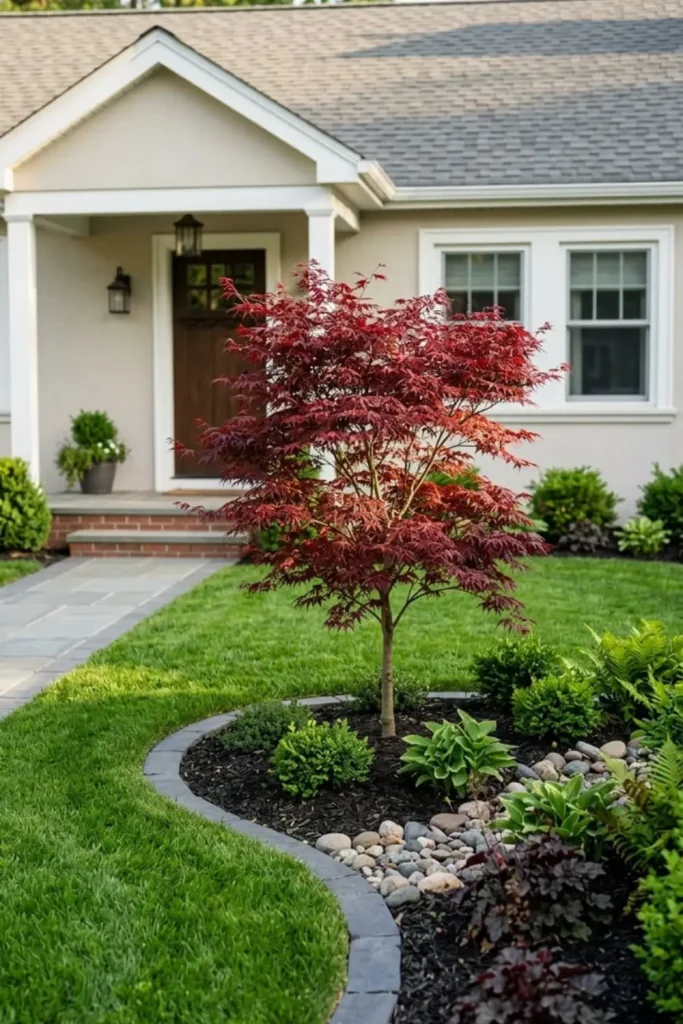
One well-placed Japanese maple does more for a small yard than a dozen random plants. Its shape is interesting, its leaf color is striking, and it gives the yard a clear center.
Place it where it’s visible from the street and keep the area around it simple. A focal point only works when you give it space to breathe.
Pro Tip: Don’t crowd it. Open space around the tree makes it look like a design decision, not an afterthought.
Add Solar Path Lights Along the Walkway
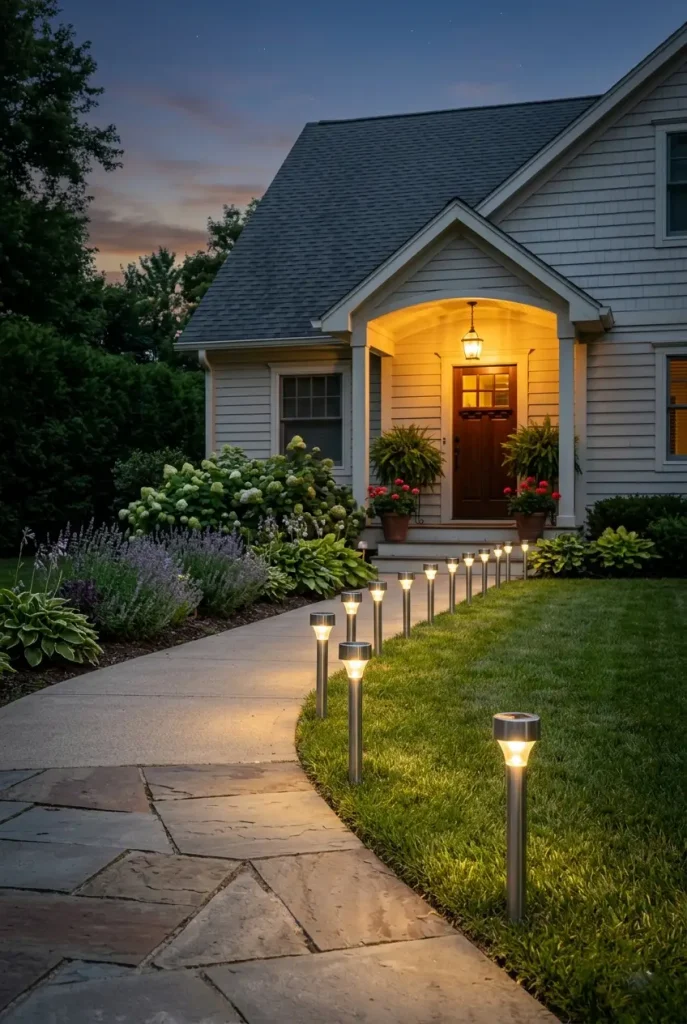
This is one of the easiest upgrades most people skip. Solar path lights along your front walkway add warmth, improve safety, and make your yard look finished even after dark.
Stick to a single style of light and space them evenly. Mixing styles or uneven spacing makes the path look cluttered.
Pro Tip: Choose warm white lights over cool white. They look more welcoming in the evening and work with almost any plant palette.
Install Window Box Planters Under Your Front Windows
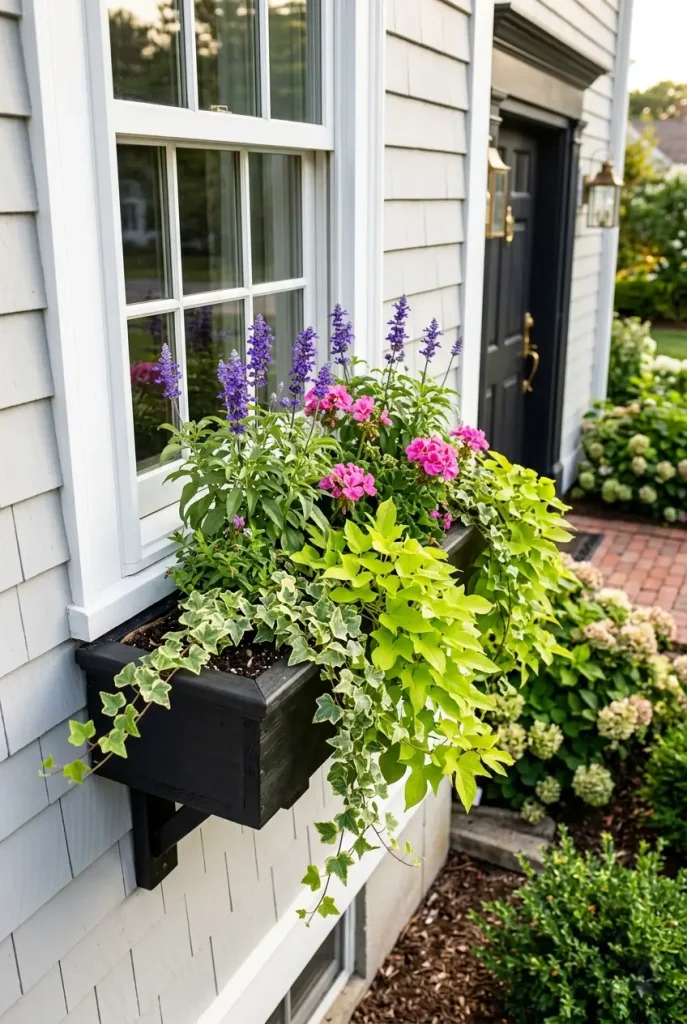
Window boxes add color and character without taking up any ground space. They work especially well on small front yards where bed space is limited.
Fill them with trailing plants like ivy or sweet potato vine mixed with a few upright flowers. The combination creates depth and moves nicely in the breeze.
Pro Tip: Match the window box color to your shutters or front door trim for a cohesive look.
Edge the Lawn With Granite Setts for a Clean Border
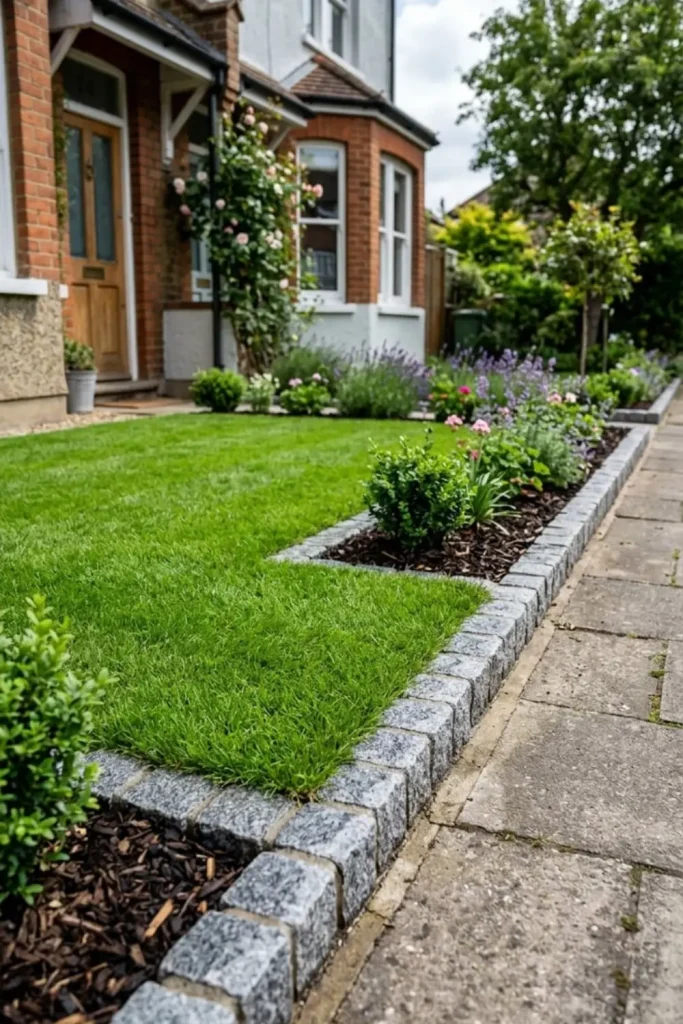
Nothing sharpens up a small front lawn faster than a proper edge. Granite setts create a strong, tidy border that keeps grass in place and gives your yard a finished look.
In a small space, a defined edge makes the lawn feel larger because the boundaries are crisp and clear.
Pro Tip: Set the stones level and keep the line consistent. Clean edging makes everything else look better, even if you haven’t changed a single plant.
Use a Low Evergreen Hedge Along the Driveway
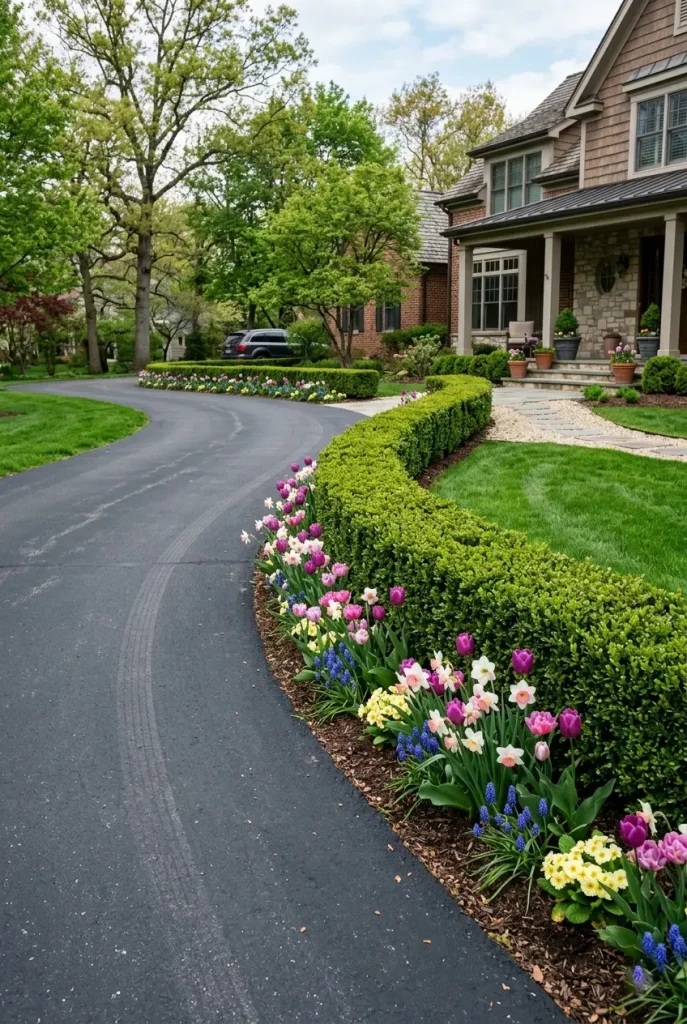
A low evergreen hedge along the driveway gives your yard a clean boundary year-round. It frames the space without blocking the view and keeps everything looking tidy even in winter.
Add seasonal color in front of it with bulbs or annuals. The hedge stays constant while the flowers change with the season.
Pro Tip: Keep the hedge low enough to frame the driveway, not hide it. It should guide the eye, not create a wall.
Layer Your Foundation Bed With Three Heights
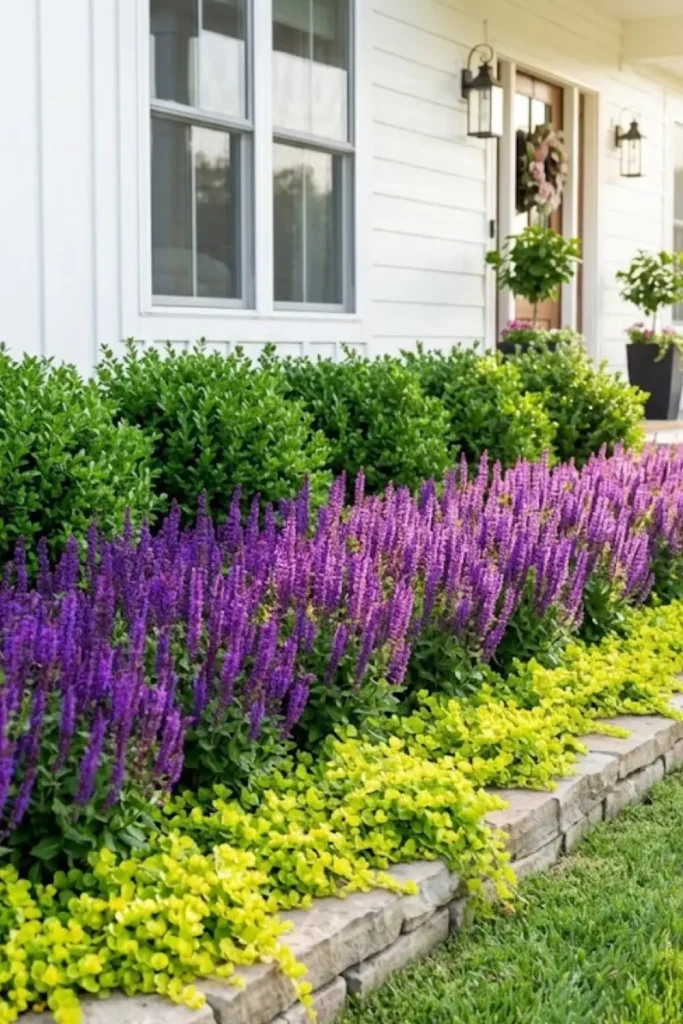
Most foundation beds look flat because everything is planted at the same height. Fix that by using three layers, tall shrubs against the house, medium plants in the middle, and low ground cover at the edge.
Inkberry holly, salvia, and creeping jenny work well together for this. Tall gives structure, medium adds color, and low softens the front edge.
Pro Tip: Keep the tallest plants close to the wall and the shortest at the front. This simple trick makes the bed look full without overcrowding.
Place Terra-Cotta Pots of Rosemary Along the Porch
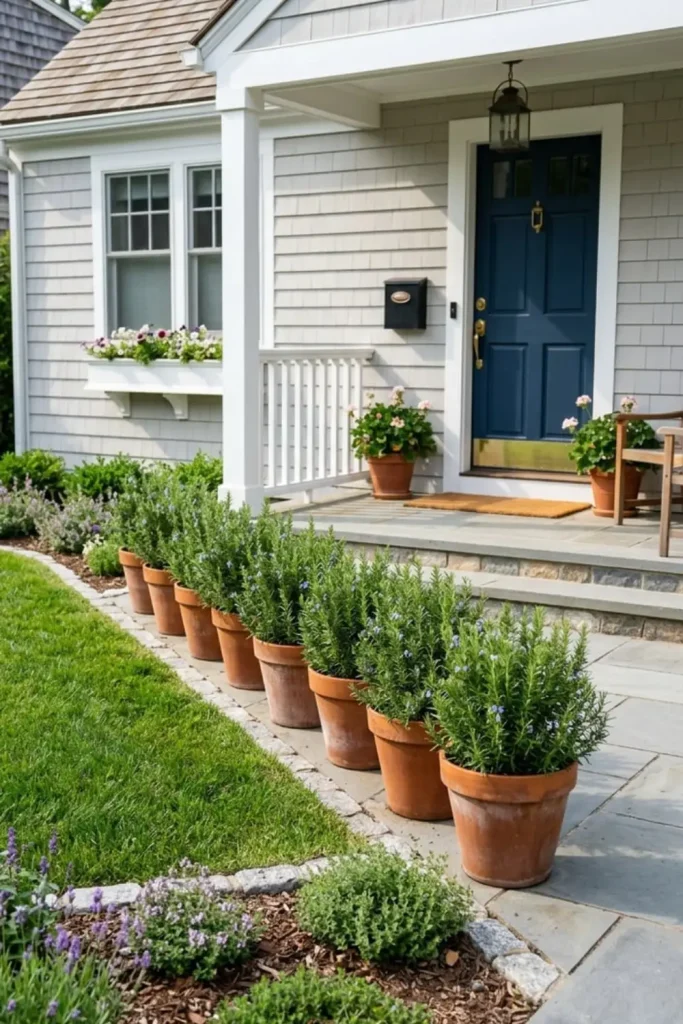
A row of matching terra-cotta pots filled with rosemary gives your porch a warm, organized look. The repetition makes even a small entry feel well-designed.
Rosemary stays neat, smells good, and you can actually use it in cooking. It’s both decorative and practical.
Pro Tip: Use the same pot size all the way across. Repeating the same shape and plant is what makes this look intentional.
Add a Curved Flower Bed
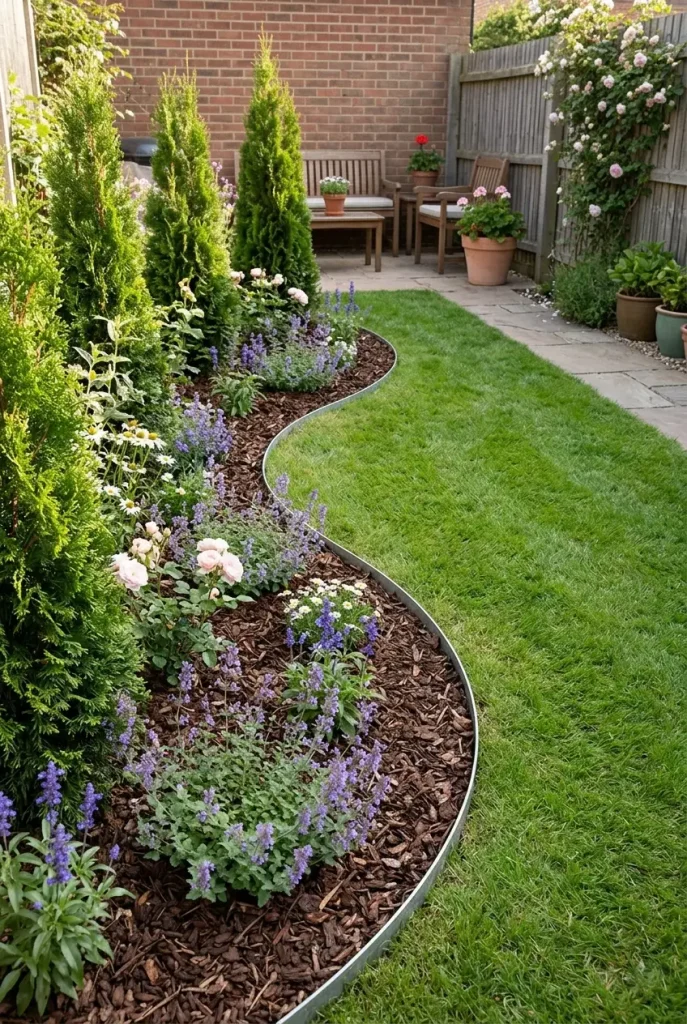
A straight lawn with hard lines can feel rigid in a small yard. A curved bed along one edge softens the whole look and makes the space feel more natural.
Plant it with a mix of arborvitae for height, catmint for color, and shredded bark to keep weeds down and the finish tidy.
Pro Tip: Make the curve smooth and easy to read from the street. A clean arc always looks more deliberate than sharp angles.
Anchor the Yard With a Decorative Obelisk and Climbing Clematis
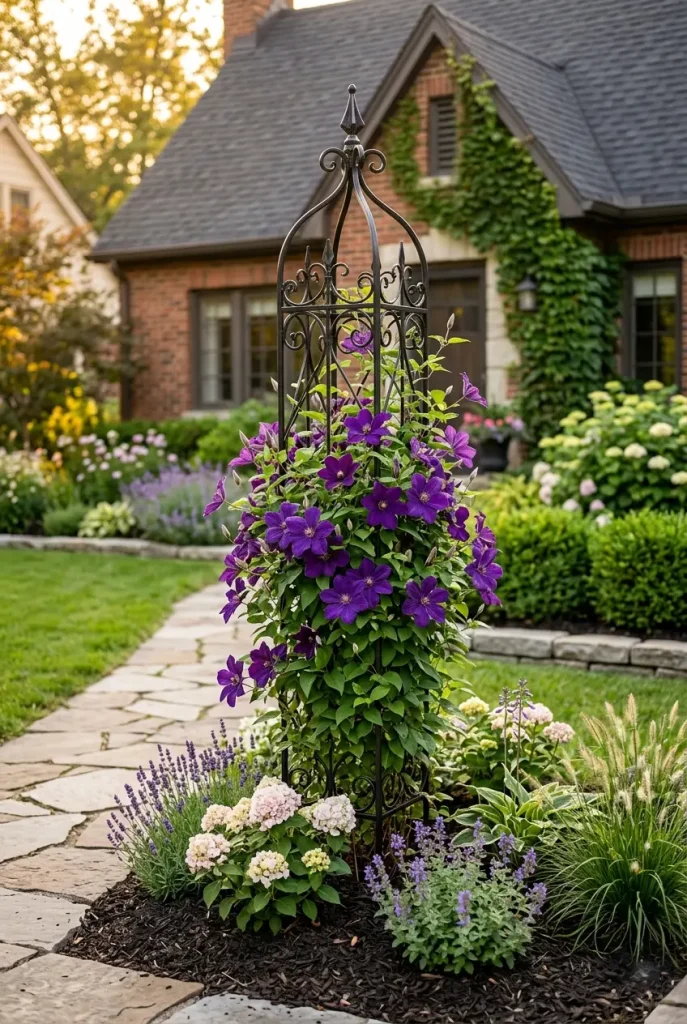
If your small lawn feels flat, an obelisk with clematis growing up it adds instant vertical interest. The structure draws the eye upward and makes the yard feel taller and more dynamic.
Keep the base planting simple so the obelisk stays the focal point. Purple clematis against a dark metal obelisk is a classic combination that works in almost any front yard.
Pro Tip: Place it where people can see it from both the street and the porch for maximum impact.
Moss Lawn as a No-Mow Grass Alternative
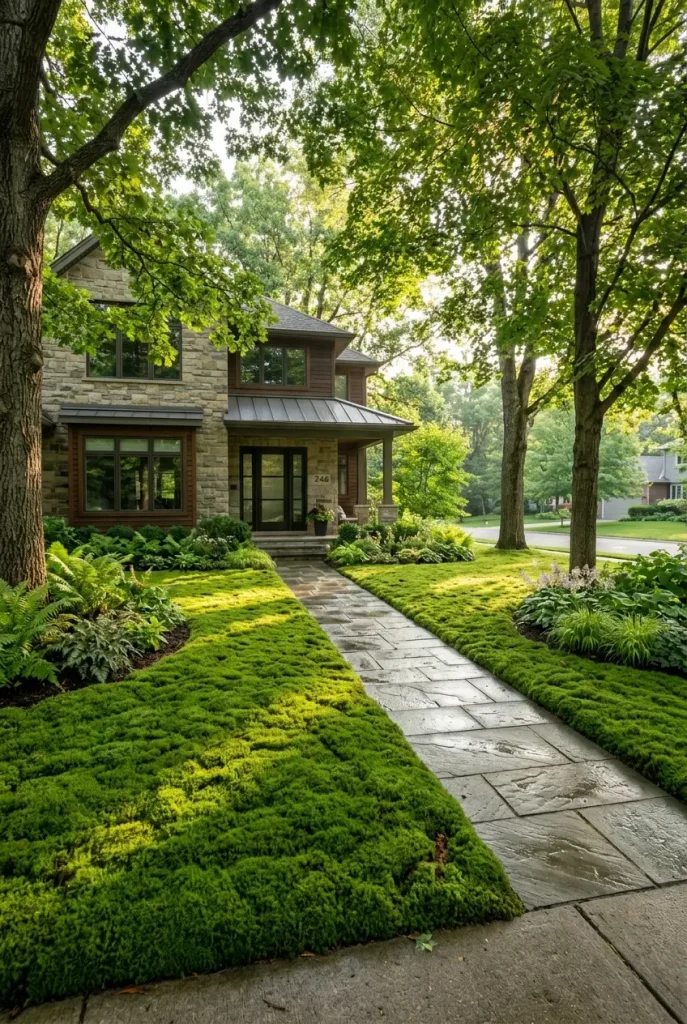
Moss lawns are having a moment and they stay low, stay green, need no mowing, and thrive in shady spots where grass gives up.
If your front yard gets limited sun, moss is one of the best alternatives. It creates a soft, lush carpet that looks peaceful and well-kept.
Pro Tip: Moss works best in consistently moist, shaded areas. It won’t do well in hot, dry, or sunny spots.
Use Stepping Stones Through Dwarf Mondo Grass

A plain strip of ground between the driveway and the door is easy to overlook but it’s also easy to improve. Lay stepping stones through a bed of dwarf mondo grass to add texture and a simple path.
The stones break up the green and the grass softens the edges. It looks thoughtful without requiring a big project.
Pro Tip: Space the stones like natural walking steps. When the rhythm feels comfortable, the path looks better.
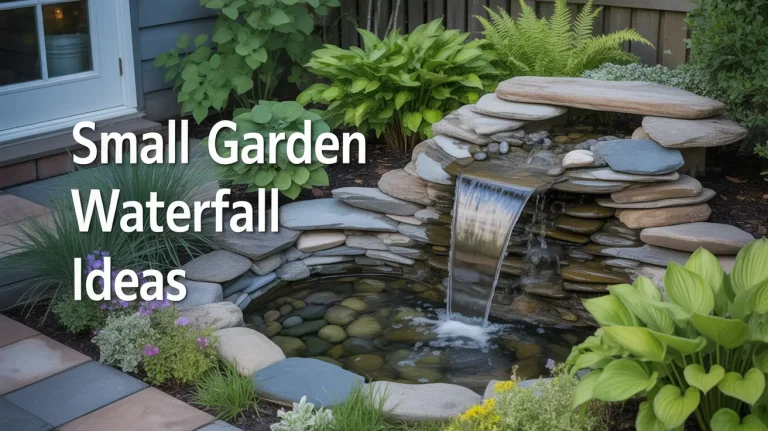
Add a Small Water Feature as a Yard Centerpiece
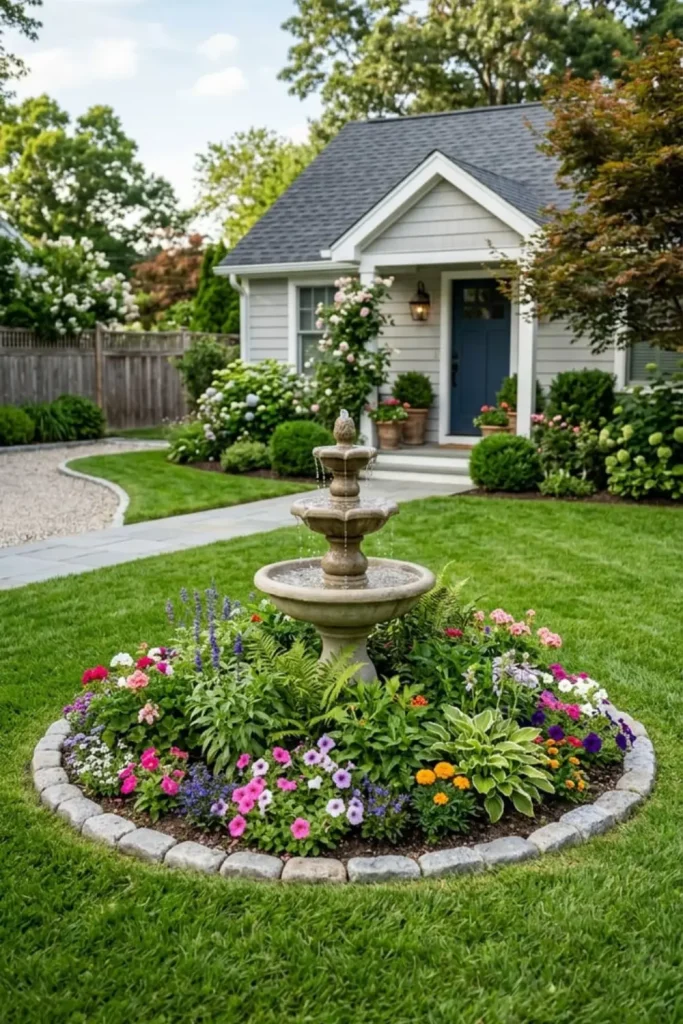
A compact tiered fountain or bubbling birdbath gives your front yard movement and sound. It creates a natural focal point and makes the entry feel welcoming in a way that plants alone can’t.
Surround it with a simple circular bed of low plants so the feature stays visible. Keep the planting ring tidy and the water clean.
Pro Tip: Choose a fountain size that fits the scale of your yard. In a small space, a compact feature almost always looks better than an oversized one.
Use Bromeliads and Crotons for a Tropical Florida-Style Entry
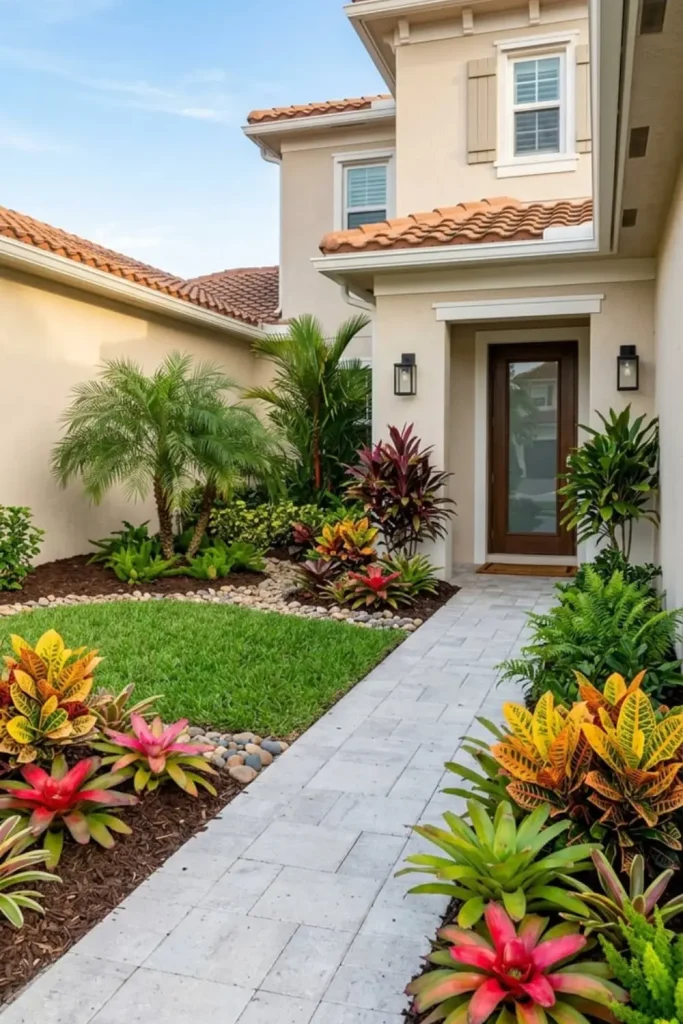
If you live in a warm climate, bromeliads and crotons are two of the best plants you can put in your front yard. The colors are bold — deep reds, bright oranges, yellows, and greens — and they hold that color all year without much effort.
Place crotons as your mid-height backdrop and tuck bromeliads in front for bursts of color at ground level. The combination looks lush and full even in a small bed.
Pro Tip: This works best in USDA zones 9–11. If you’re in a cooler climate, use them in pots and bring them in during winter.
Tuck In a Window-View Flower Bed With Coneflower and Nepeta
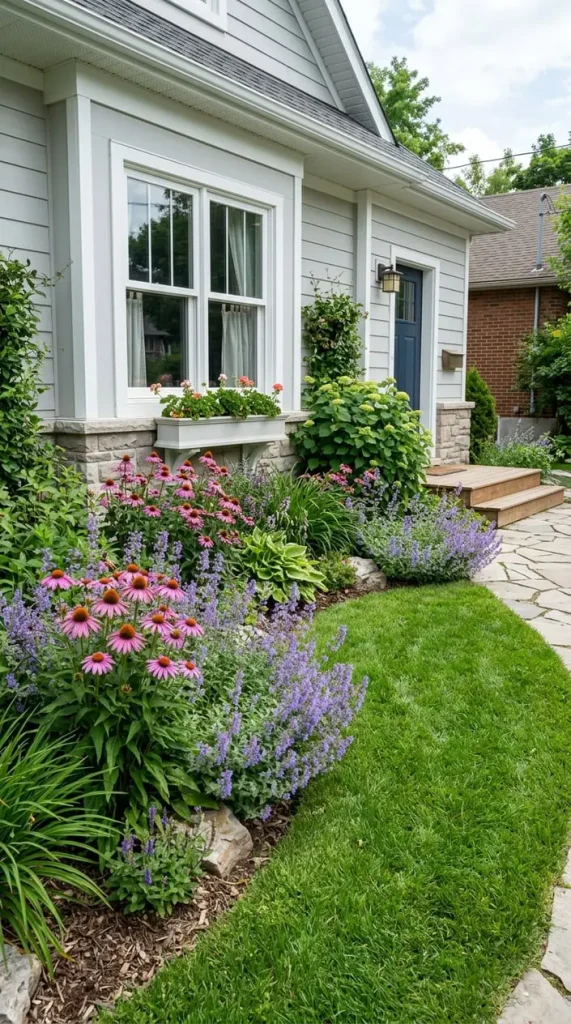
This idea is about what you see from inside the house, not just from the street. A small bed planted with coneflower and nepeta right outside your front window gives you a view of color and movement every time you look out.
Coneflower stands tall with pink or purple blooms. Nepeta spills softly at the edges with lavender-blue flowers. Together they look natural and relaxed without needing much maintenance.
Pro Tip: Plant where you actually look from inside. A bed that frames your favorite window adds daily enjoyment, not just curb appeal.
Line the Front Fence With Ornamental Grasses for Easy Privacy
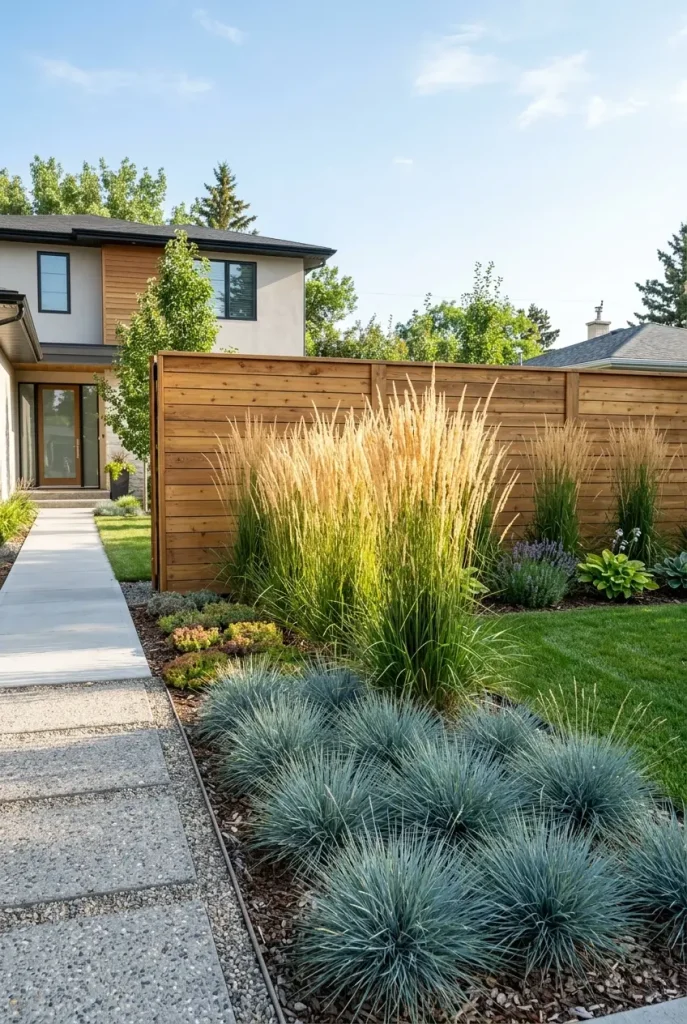
Ornamental grasses grow fast, need minimal care, and add movement to a flat front yard. Planted along a fence line, they soften hard edges and create a natural screen without looking heavy or formal.
Karl Foerster grass and blue oat grass are both good choices for small spaces. They stay upright, don’t spread aggressively, and look great from spring through winter.
Pro Tip: Plant in odd numbers — three or five in a row looks more natural than two or four.
Create a Renter-Friendly Entry With Large Potted Plants
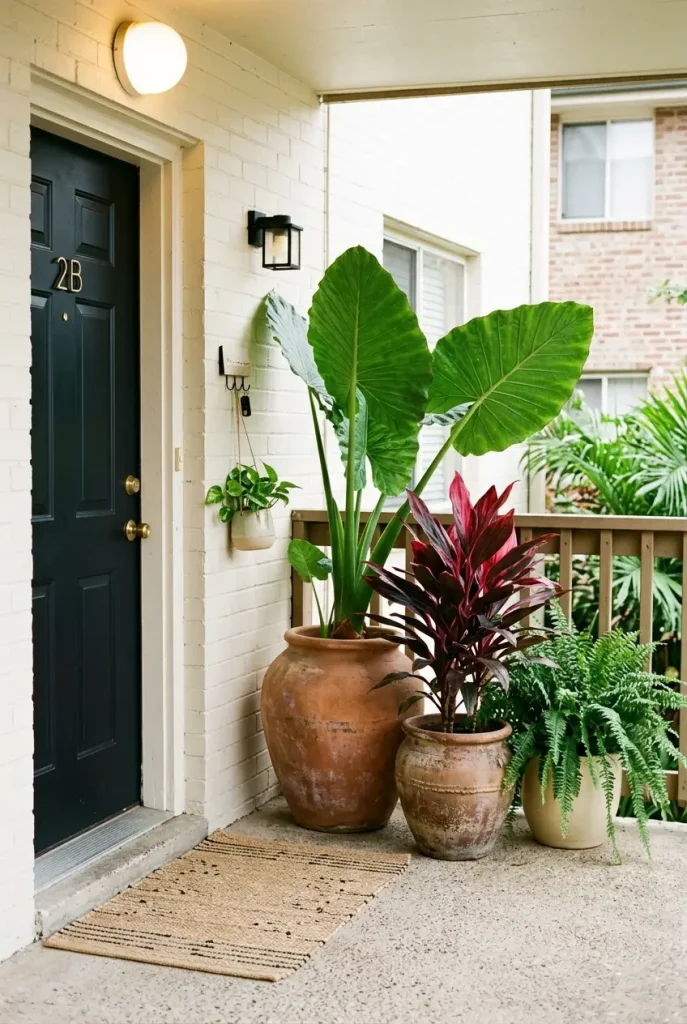
If you rent and can’t dig beds or make permanent changes, large pots are your best option. A few oversized containers with tall plants like cordyline, elephant ears, or bamboo can completely transform a bare entry without touching the ground.
Arrange them in different heights so the grouping has structure. You can take everything with you when you move.
Pro Tip: Group pots in threes with varying heights. One tall, one medium, one low — that combination always looks intentional.
Add a Vertical Wall Planter to a Bare Fence or Porch Wall
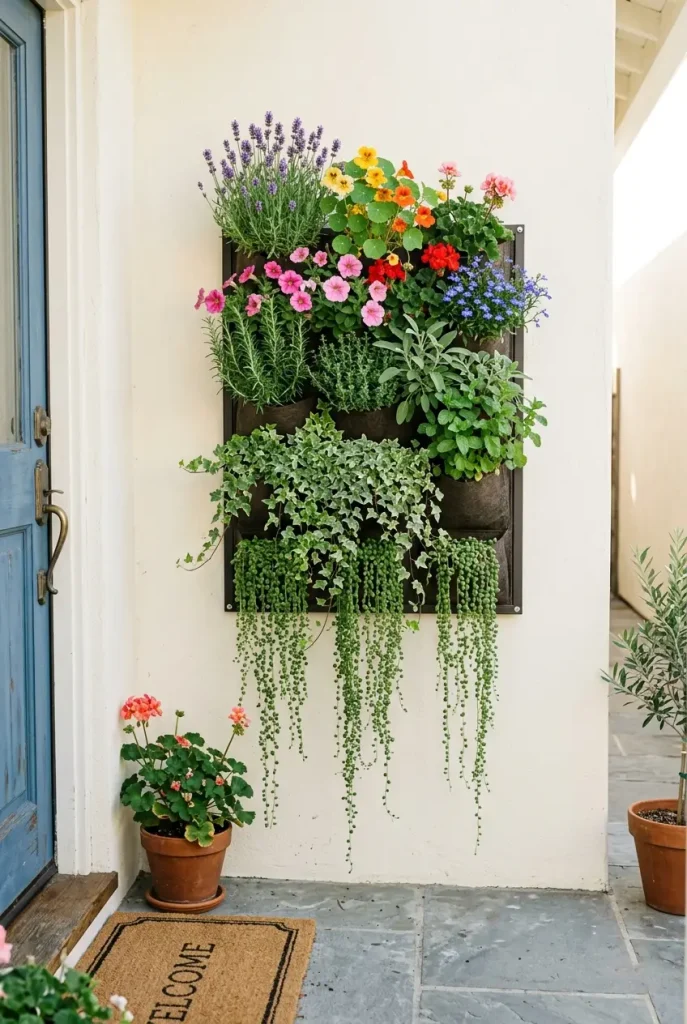
A blank fence or porch wall is free real estate in a small front yard. A vertical wall planter fills that space with greenery without using any ground space at all.
Use trailing plants like ivy or string of pearls for the lower pockets and upright herbs or small flowers at the top. It adds life to an otherwise forgettable surface and works especially well in narrow entries.
Pro Tip: Choose a planter with a built-in water reservoir if possible. Vertical planters dry out faster than ground beds, especially in full sun.