Yarrow Companion Plants: Vegetables, Flowers & Herbs
Honestly, companion planting is something people don’t take seriously for the first couple of years of gardening. They just plant things wherever there find space. But once you start pairing plants the right way, matching their sun, water, and soil needs, and using them to actually benefit each other, you notice a real difference. Fewer pest problems, healthier soil, and honestly a garden that just feels more balanced overall.
Yarrow is one of those plants that once you grow it, you realize it’s doing way more than just looking pretty. Ladybugs, lacewings, parasitic wasps, they’re all drawn to it, and these are the good bugs that quietly take care of your pest problems for you. Plus it’s tough, barely needs watering and helps improve the soil over time. It’s the low-maintenance friend in the garden who still shows up for everyone else.
So naturally, the question becomes: who actually pairs best with yarrow? Below, I’ve put together a list of vegetables, herbs and flowers that genuinely grow well alongside yarrow, based on matching growing conditions and real mutual benefit.
Continue reading the best Yarrow Companion Plants.
Yarrow Companion Vegetables
If you’re growing vegetables, yarrow can be one of the most useful border plants you add to the bed. It doesn’t compete for nutrients the way a lot of vegetables do with each other, and the pest control benefit makes it worth the space.
Tomatoes
Tomatoes are prone to aphids and hornworms and yarrow’s ability to draw in ladybugs and parasitic wasps helps keep those populations in check naturally. I’ve planted yarrow along the edge of tomato beds before, and it noticeably cuts down on the aphid clusters you’d otherwise find on new growth. It also doesn’t compete for water in a way that stresses tomato roots, yarrow is happy with much less moisture.
Peppers
Peppers deal with similar pests as tomatoes, aphids and mites in particular, and benefit from the same predatory insect boost yarrow provides. Since peppers also prefer well-draining soil and don’t need constant watering, they share fairly compatible growing conditions with yarrow. Just make sure yarrow isn’t planted close enough to shade out young pepper plants as it bushes out.
Cucumbers
Cucumbers rely on pollinators to produce a good yield, and yarrow’s long bloom season helps keep bees and other pollinators active in the area throughout the growing season. It also helps manage cucumber beetles and aphids indirectly through the predatory insects it attracts. Just give cucumbers their own trellis space since yarrow’s spread can compete for room if planted too close.
Squash and Zucchini
Squash and zucchini are heavy pollinator-dependent crops too, and having yarrow nearby helps keep pollinator activity steady, especially useful if your squash blossoms aren’t setting fruit well on their own. The pest control benefit also helps with squash bugs and aphids, common headaches for anyone growing squash. Just be mindful of space, since both plants can sprawl if left unchecked.
Corn
Planting yarrow along the border of a corn patch is a good way to invite in beneficial insects that help control corn earworms and aphids. Corn doesn’t compete much with yarrow for nutrients since they have different root depths, corn rooting shallower and yarrow going deeper. It’s a low-maintenance pairing that works well if you’re growing corn in rows with open border space.
Cabbage and Other Brassicas
Yarrow attracts many beneficial insects, including ladybugs, lacewings, hoverflies, and parasitic wasps. These insects feed on common brassica pests such as aphids, cabbage worms, and cabbage loopers. Having yarrow nearby can naturally reduce pest problems without relying on chemical sprays.
Its clusters of tiny flowers also attract pollinators. While brassicas grown for leaves do not need pollination, flowering brassicas grown for seed benefit from increased pollinator activity.
Yarrow’s deep roots help improve soil structure by bringing nutrients closer to the surface. As its leaves decompose, they add organic matter to the soil, which benefits nearby vegetables.
Brassicas That Grow Well Near Yarrow
Yarrow pairs well with many members of the brassica family, including:
- Cabbage
- Broccoli
- Cauliflower
- Kale
- Brussels sprouts
- Kohlrabi
- Bok choy
- Collard greens
- Mustard greens
- Turnips (grown for greens or roots)
Planting Tips
- Plant yarrow around the edges of brassica beds instead of between every plant.
- Leave about 18–24 inches (45–60 cm) between yarrow and brassicas to ensure good airflow.
- Remove spent flowers if you want to prevent self-seeding.
- Keep yarrow in a sunny location, as it performs best in full sun.
Things to Keep in Mind
Yarrow is a vigorous perennial and can spread by rhizomes and self-seeding. In small vegetable gardens, trim it regularly or grow it in a designated border to keep it from overtaking your brassicas.
Overall, cabbage and other brassicas are among the best companion plants for yarrow because yarrow attracts beneficial insects, helps suppress pest populations, improves biodiversity, and supports a healthier vegetable garden.
Yarrow Companion Herbs
Yarrow grows well alongside many culinary and ornamental herbs. Most herbs enjoy the same growing conditions as yarrow, including full sun and well-drained soil. In return, yarrow attracts beneficial insects that help control pests and improve the overall health of your herb garden.
Oregano
Oregano and yarrow make an excellent pair because both thrive in dry, sunny locations. Yarrow attracts hoverflies and ladybugs that feed on aphids, while oregano’s fragrant foliage can help confuse some insect pests. Both plants require little water once established, making them ideal for low-maintenance herb gardens.
Sage
Sage grows well with yarrow because they share similar soil and watering needs. Yarrow attracts pollinators and beneficial insects that can help protect sage from aphids and other soft-bodied pests. Together, they create a drought-tolerant planting that looks attractive throughout the growing season.
Rosemary
Rosemary is another Mediterranean herb that pairs naturally with yarrow. Both plants prefer full sun and well-drained soil and dislike overly wet conditions. Yarrow’s flowers attract beneficial insects, while rosemary’s aromatic leaves help deter some garden pests. This combination works well in herb borders and rock gardens.
Dill
Dill is one of the best companion herbs for yarrow. Both plants produce nectar-rich flowers that attract lacewings, parasitic wasps, hoverflies, and other beneficial insects. These insects help control aphids, caterpillars, and other common garden pests. Planting dill and yarrow together creates a valuable habitat for natural pest predators.
Catmint
Catmint grows happily alongside yarrow in sunny gardens. Both plants are drought tolerant once established and bloom over a long period. Their flowers attract bees, butterflies, and other pollinators, increasing biodiversity in the garden. Catmint also forms an attractive ground cover around taller yarrow plants.
Chives
Chives are a useful companion for yarrow because their onion-like scent helps deter pests such as aphids and Japanese beetles. Meanwhile, yarrow attracts beneficial insects that prey on harmful garden pests. Since chives stay compact, they fit easily around yarrow without competing for space.
Yarrow Companion Flowers
Yarrow is easy to mix with many flowering perennials because it blooms for a long time, attracts pollinators, and thrives in full sun with well-drained soil. Its flat flower clusters also create a nice contrast with plants that have tall flower spikes or large daisy-like blooms. Choosing flowers with similar growing needs makes the garden easier to maintain while creating a colorful display from late spring through fall.
Coneflower (Echinacea)
Coneflower is one of the best companions for yarrow. Both plants are native prairie perennials that tolerate heat, drought, and poor soil once established. Their long blooming season attracts bees, butterflies, and other pollinators throughout summer. The upright flowers of coneflowers also add height and texture beside yarrow’s flat flower heads.
Black-Eyed Susan
Black-eyed Susans bring bright golden blooms that pair beautifully with yarrow’s yellow, white, pink, or red flowers. Since both plants bloom during summer and enjoy full sun, they create a cheerful, low-maintenance flower bed. Together, they attract beneficial insects and provide food for pollinators over many weeks.
Salvia
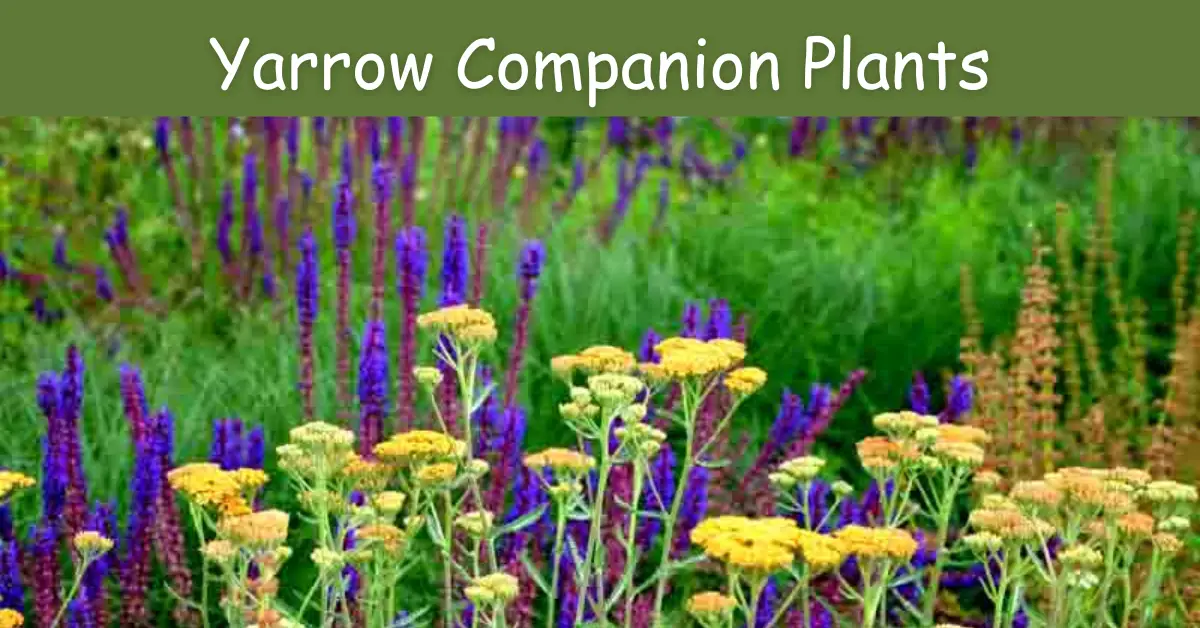
Salvia adds vertical spikes of blue, purple, pink, or red flowers that complement yarrow’s spreading flower clusters. This combination creates an eye-catching contrast in both color and shape. Both plants are drought tolerant and thrive in sunny borders, making them a popular choice for cottage and pollinator gardens.
Russian Sage
Russian sage and yarrow make an excellent pairing for hot, dry landscapes. The airy stems and lavender-blue flowers of Russian sage soften the bold appearance of yarrow while extending seasonal interest. Both plants require very little water after establishment, they work especially well in xeriscapes and water-wise gardens.
Shasta Daisy
Shasta daisies combine beautifully with yarrow to create a classic summer garden. Their large white blooms stand out against yarrow’s finely textured foliage and colorful flower clusters. Both plants bloom over a similar period and attract bees and butterflies, making them a great choice for pollinator-friendly borders.
Sedum (Stonecrop)
Sedum is an ideal companion for yarrow because both plants store energy well during dry periods and need minimal care. The fleshy foliage of stonecrop provides a different texture, while its late-season flowers keep the garden colorful after yarrow begins to fade. Together, they provide continuous interest from summer into fall.
Yarrow Companion Fruit Trees and Shrubs
Yarrow is a valuable companion for many fruit trees and berry-producing shrubs. Its nectar-rich flowers attract bees for pollination and beneficial insects that feed on aphids, mites, scale insects, and other common fruit garden pests. Because yarrow has deep roots and tolerates dry conditions, it can grow around established trees and shrubs without demanding much care.
Plant yarrow around the drip line of fruit trees or along the edges of berry patches rather than directly against the trunk. This gives every plant enough room to grow while creating a healthy habitat for pollinators and natural pest predators.
Apple Trees
Apple trees deal with their fair share of aphids and codling moths, and a ring of yarrow planted around the base helps draw in the predatory insects that keep those pest populations down. It also doesn’t compete with the tree’s root system in any meaningful way, since yarrow stays fairly shallow-rooted in comparison. Plus, it fills in ground space that would otherwise just be bare mulch.
Berry Bushes (Blueberries, Raspberries, etc.)
Berry bushes benefit heavily from steady pollinator activity, and yarrow’s long bloom season helps keep bees visiting the area consistently through the fruiting period. The pest control angle helps too, since aphids and other common berry pests get kept in check by the same beneficial insects yarrow attracts. Just give berry bushes their own root space if they’re shallow-rooted, so there’s no unnecessary competition underground.
Tips for Planting Yarrow With Companions
A few things I’ve learned from actually growing yarrow alongside other plants:
- Give it room to spread. Yarrow’s rhizomes will expand over time, so plant companions far enough apart that nobody gets crowded out after a season or two.
- Skip the rich, fertilized soil. If your companion plants need heavy feeding, keep yarrow at the border instead of directly interplanted, so you’re not compromising on soil prep for either one.
- Prioritize full sun placement. Yarrow won’t bloom well in shade, so build the bed around its sun needs first, then fit companions around that.
- Don’t overwater for yarrow’s sake. Pick companions that can handle drier conditions, or keep yarrow separate from anything that needs frequent watering.
Wrapping Up
Yarrow is one of those plants that makes your whole garden work a little smarter, not harder. Pair it with the right vegetables, herbs, and flowers, and you get natural pest control, better pollination, and a genuinely low-maintenance bed that takes care of itself. If you haven’t already, it’s worth checking out our guide on what NOT to plant with yarrow too, so you know both sides before you start planning your layout.