Mexican Honeysuckle: A Complete Guide to Growing and Caring
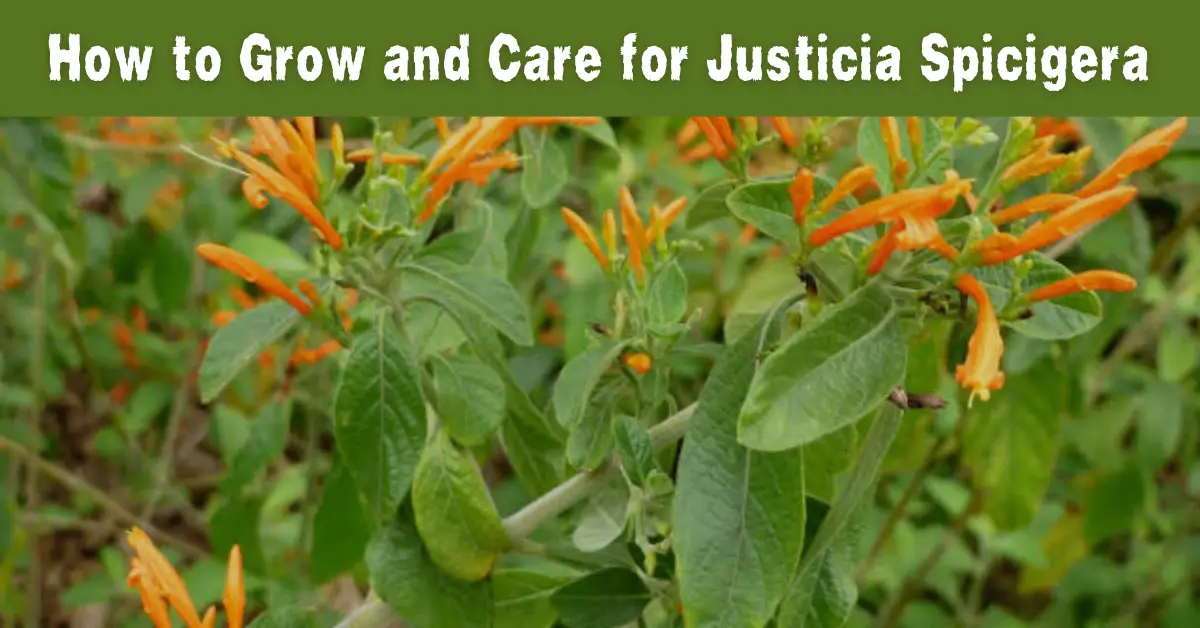
Mexican honeysuckle is a colorful flowering plant that can bring a warm, tropical look to a garden. Its a non fragrant but a good choice for flower beds, borders, and pollinator gardens. The flowers also attract hummingbirds and butterflies.
Despite its common name, Mexican honeysuckle is not a true honeysuckle. It belongs to the Justicia genus and is known botanically as Justicia spicigera. It grows as a small shrub in warm climates and can produce flowers for a long season when it gets the right care.
It is easy to grow and does not need much care. You can plant it in full sun or light shade, and it can handle poor soil too. Many gardeners like it because it adds color to the yard for a long time and brings in helpful pollinators.
Justicia spicigera thrives in warm to hot weather, preferring a general range of 68°F to 100°F (20°C to 38°C). It handles intense heat well, but suffers cold damage if temperatures drop below 25°F (-4°C). In colder areas, gardeners need to grow it in a container or protect it during winter.
With the right location, watering, pruning, and winter care, Mexican honeysuckle can become a useful and attractive part of the landscape. In this guide, you will learn how to plant, grow, prune, propagate, and care for Mexican honeysuckle, along with common problems that can affect the plant.
What Is Mexican Honeysuckle?
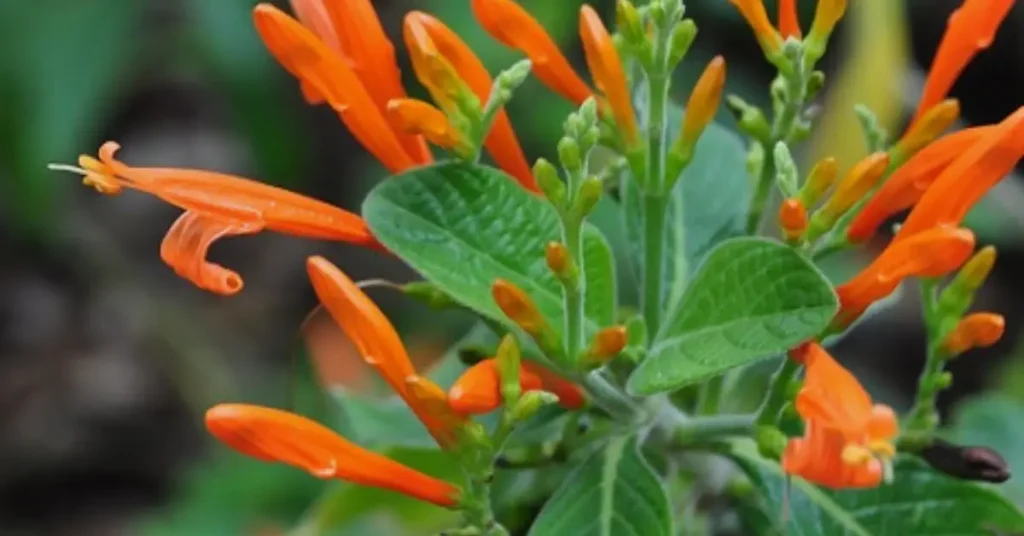
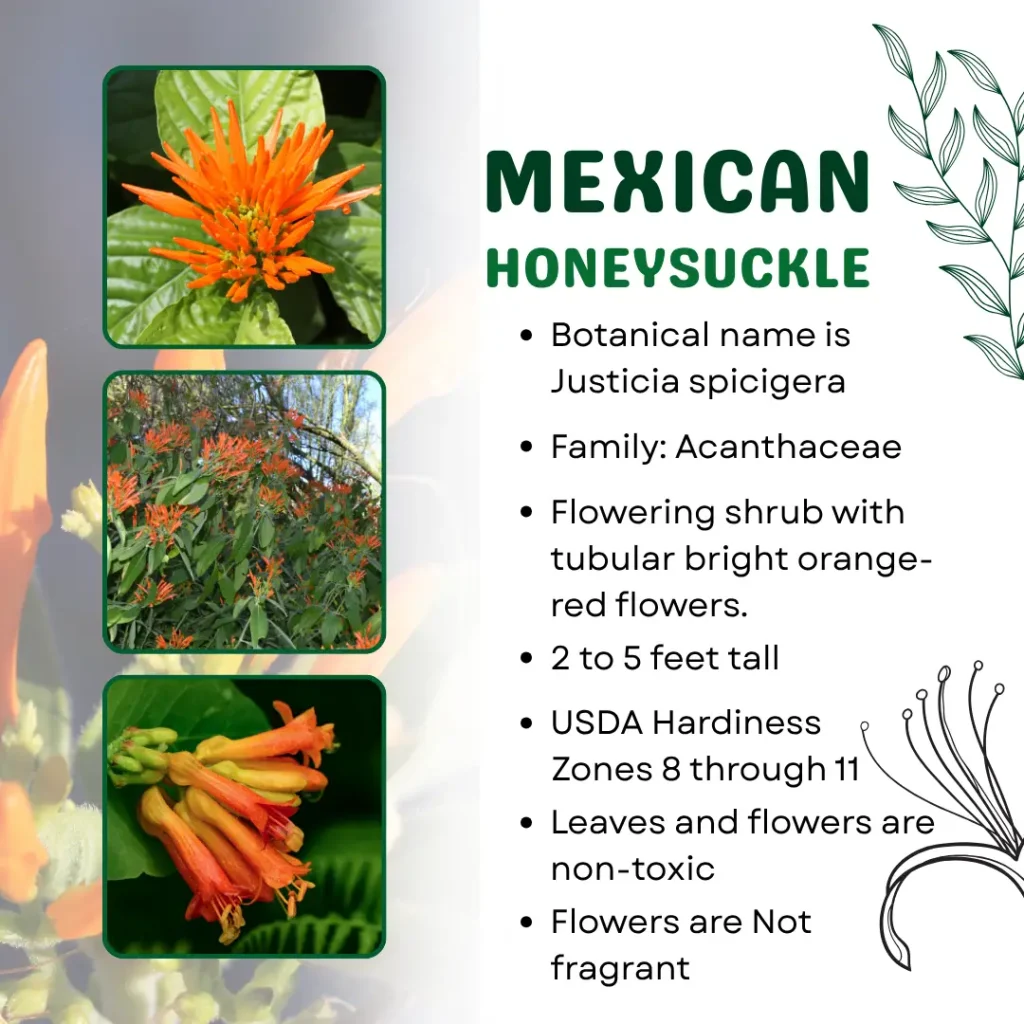
Mexican honeysuckle is a flowering shrub known for its bright orange-red flowers and soft green leaves. Its botanical name is Justicia spicigera. It belongs to the Acanthaceae family, which includes many warm-climate flowering plants.
The plant is native to parts of Mexico and Central America. It naturally grows in warm areas where there is plenty of sunlight and mild winters. It grows best in warm climates.
Mexican honeysuckle grows as a small, bushy shrub. It grows between 2 to 5 feet tall (0.6 to 1.5 meters), though it can reach up to 6 feet under ideal conditions. Regular pruning can help keep it shorter and more compact, especially when it is planted near walkways, patios, or other garden plants.
The leaves are green, oval-shaped, and fairly soft. They provide a nice background for the bright flowers. The flowers are usually orange, orange-red, or reddish-orange. They grow in clusters and have a narrow, tube-like shape. This flower shape is especially useful for hummingbirds, which can reach the nectar with their long bills.
Mexican honeysuckle can bloom for a long period (from late spring through fall) when it receives enough warmth and sunlight. Flowering slow down during cold weather or when the plant is under stress. In warm climates, it can continue producing flowers for much of the growing season.
Is Mexican Honeysuckle a True Honeysuckle?
No. Mexican honeysuckle is not a member of the true honeysuckle family.
True honeysuckles belong to the Lonicera genus. Mexican honeysuckle belongs to the Justicia genus. The common name comes mainly from its tubular flowers and its use as a flowering garden plant.
Care instructions for true honeysuckle should not be used for Mexican honeysuckle.
What Makes Mexican Honeysuckle Special?
The flowers are one of its main attractions. Their bright color add a strong splash of color to a garden, especially when planted with green foliage plants.
The flowers are also valuable in wildlife-friendly gardens. Hummingbirds are especially attracted to the tubular blooms, while butterflies and other insects may also visit the plant.
Another useful feature is its ability to grow as a shrub or be maintained as a smaller landscape plant.
How to Grow Mexican Honeysuckle
Mexican honeysuckle (Justicia spicigera) grows best in USDA Hardiness Zones 8 through 11. It is easy to grow when it is planted in the right place. The most important things are good sunlight, well-drained soil, enough water and protection from severe cold.
Choose the Right Location
Start by choosing a spot that gets plenty of sunlight. Mexican honeysuckle grows well in full sun to partial shade. Most varieties grow and bloom best with at least six hours of sun, but they tolerate partial shade quite well. In hot southern climates, light afternoon shade actually protects the plant from heat stress.
Choose a location with enough space for the plant to spread. Avoid planting it too close to walls, paths, or other shrubs. Good air movement around the plant is necessary.
Prepare the Soil
Mexican honeysuckle prefers loose soil that drains well with a neutral to alkaline pH (6.6 to 8.5). Water should be able to move through the soil instead of sitting around the roots for a long time.
Poor drainage can cause root problems. If the garden soil is heavy clay, mix in organic matter such as compost before planting. This can improve the soil structure and help roots grow more easily.
The soil does not need to be extremely rich. A healthy soil with some organic matter is enough for good growth. Avoid adding large amounts of fertilizer to the planting hole, as too much fertilizer can damage young roots.
If the soil is very sandy, adding compost can help it hold some moisture.
Planting Mexican Honeysuckle
The best time to plant Mexican honeysuckle is during a warm part of the growing season. Avoid planting just before a period of frost or freezing temperatures.
Before planting, water the plant well if the soil in its container is dry. Dig a hole that is about as deep as the root ball and wider than the container.
Gently remove the plant from its pot. If the roots are tightly packed around the outside of the root ball, loosen a few of them carefully with your fingers.
Place the plant in the hole so the top of the root ball is level with the surrounding soil. Do not bury the stem deeper than it was in the container.
Fill the hole with the original soil and press it gently around the roots. Then water slowly and deeply. This helps remove large air pockets around the root ball and gives the roots good contact with the soil.
Regular Watering
Newly planted Mexican honeysuckle needs more attention than an established plant. Water it regularly during the first few weeks, especially when the weather is hot and dry.
Keep the soil slightly moist while the roots become established. Do not keep the soil constantly wet.
After the plant develops a stronger root system, reduce watering. Established plants are more tolerant of short dry periods, but they still need water during long periods of heat or drought.
A layer of organic mulch around the plant also help slow moisture loss. Keep the mulch a few inches away from the main stem to prevent the stem from staying wet.
Give the Plant Enough Space
If you are planting several Mexican honeysuckle plants, leave enough space between them for mature growth. Crowding plants together can reduce air circulation and make maintenance harder.
Spacing also gives each plant enough access to sunlight. Once the plant is established, regular pruning is done to control its size and encourage a fuller appearance.
Mulching
Mulch can be useful around Mexican honeysuckle, especially during hot weather. Organic mulch such as shredded leaves, bark, or compost help the soil hold moisture for longer.
Mulch also helps reduce weed growth and keeps soil temperatures more stable.
Spread a thin to moderate layer around the root area. Do not pile mulch directly against the stems. Leaving a small gap around the base helps keep the stem dry and reduces the chance of rot.
Caring for Mexican Honeysuckle in Hot Weather
Mexican honeysuckle likes warm conditions, but extreme heat combined with dry soil can still stress the plant.
During very hot weather, check the soil regularly. Water when the plant needs it rather than following a fixed schedule.
A mulch layer can help reduce water loss. If the plant is growing in a container, move it to a spot with some protection from intense afternoon heat if the leaves are repeatedly wilting.
Avoid heavy pruning during periods of extreme heat. Give the plant enough water and allow it to recover before making major cuts.
Caring for Mexican Honeysuckle in Winter
Mexican honeysuckle (Justicia spicigera) stays evergreen and blooms with bright orange tubular flowers through mild winters, but drops its leaves and dies back to the ground if temperatures plunge below 25°F (-4°C).
Winter is a resting time for your Mexican honeysuckle. Growth slows down in the cold months, you don’t need to water as often, cutting back to once every week or two is enough to keep the roots happy without overdoing it. This is also a good time to stop fertilizing completely.
Don’t do punning until the last frost danger has passed.
How to Prune Mexican Honeysuckle
Mexican honeysuckle can get leggy and woody over time if you never trim it. A little pruning keeps it bushy, tidy, and full of blooms instead of tall and bare at the bottom.
When to Prune
The best time is late winter or early spring, after the last frost has passed. Pruning too early can expose fresh growth to cold damage, so it’s worth the wait.
Steps to Prune
- Gather your tools: Use clean, sharp pruning shears so you get neat cuts that heal fast.
- Remove damaged stems: Look for any parts that turned brown, black, or mushy from frost, and cut them off first.
- Cut back woody growth: Trim thick, old, woody stems down by about one-third to one-half. This encourages fresh, green growth.
- Shape the plant: Trim uneven or overly long branches so the plant keeps a nice, rounded shape.
- Clear the base: Remove any dead leaves or debris sitting around the bottom of the plant so air can flow freely.
A Quick Tip
Don’t be afraid to prune a bit hard. Mexican honeysuckle is a fast grower plant and will bounce back quickly once warm weather returns.
How to Propagate Mexican Honeysuckle
Mexican honeysuckle can be propagated from stem cuttings and seeds, but stem cuttings are usually the easier option for home gardeners. Cuttings can produce new plants that are very similar to the parent plant.
Propagation is best done when the plant is actively growing and the weather is warm.
Propagation From Stem Cuttings
Choose a healthy stem from a mature Mexican honeysuckle plant. Avoid stems that have flowers, pests, or signs of disease.
Take a 4-inch softwood stem cutting. Make the cut just below a leaf node because this area can produce new roots.
Remove the lower leaves from the cutting, leaving a few leaves near the top. If the remaining leaves are large, they can be cut in half to reduce moisture loss.
Place the cutting into a small container filled with a light, well-draining rooting medium. A mixture designed for rooting cuttings works well.
Keep the medium slightly moist but not soaked. Place the container somewhere warm with bright, indirect light. Avoid strong direct afternoon sun while the cutting is developing roots.
Over time, roots begin to form. You can gently check for resistance by giving the cutting a very light pull. Do not pull hard because new roots are delicate.
Once the cutting has developed a good root system and begins producing fresh growth, it should moved into a larger pot or planted in the garden.
Can You Use Rooting Hormone?
Rooting hormone can be used to encourage faster or more reliable root development, but it is not always necessary.
If you use it, dip the lower end of the cutting lightly into the rooting powder or gel according to the product instructions. Avoid using more than recommended.
Good moisture, warmth, and a suitable rooting medium are as important as rooting hormone.
Propagation From Seeds
Mexican honeysuckle can also be grown from seed, although this method takes longer than using cuttings.
Seeds should be planted in a clean, well-draining growing medium. Keep them warm and provide enough moisture for germination.
Young seedlings need bright light and careful watering. Do not allow the growing medium to remain waterlogged because small seedlings can be easily damaged by excess moisture.
Seed-grown plants may not always have exactly the same characteristics as the parent plant. This is one reason gardeners often prefer cuttings when they want to reproduce a particular plant.
When to Transplant Young Plants
Do not rush young plants into the garden. Give them time to develop a healthy root system and several strong new shoots.
Before planting outdoors, gradually expose them to outdoor conditions if they were started indoors. Start with a sheltered location and increase their exposure over several days.
Choose a warm period for transplanting and water the young plant well after planting. Keep the soil lightly moist while it becomes established.
With good care, a healthy cutting can develop into a strong Mexican honeysuckle shrub and eventually provide its own cuttings for future plants.
Mexican Honeysuckle in Containers
Mexican honeysuckle can grow well in containers, especially in areas where winters are too cold for it to stay outdoors. Growing it in a pot also makes it easier to control the plant’s size and move it to a protected place when frost is expected.
Choose the Right Container
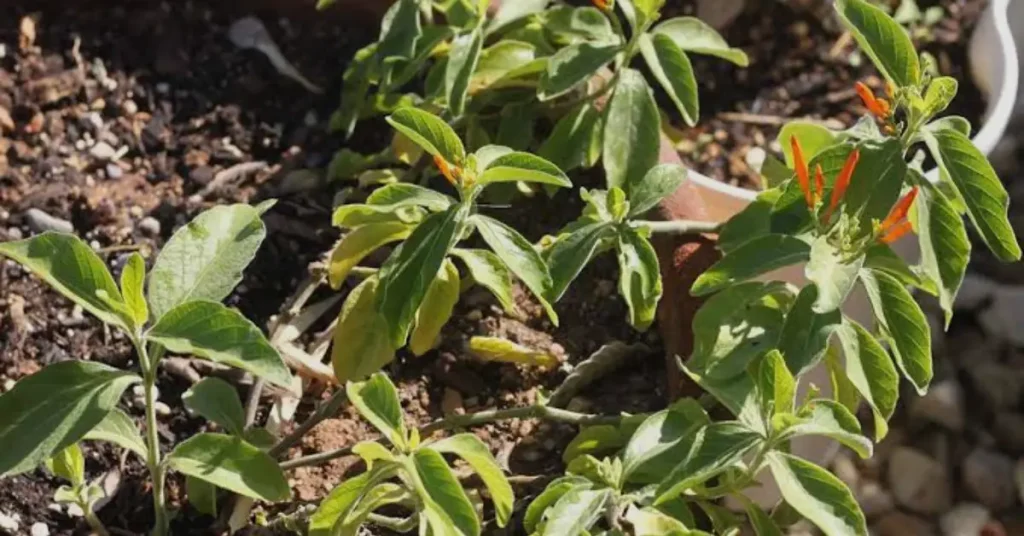
Start with a pot that has several drainage holes at the bottom. Good drainage is important because Mexican honeysuckle does not like to sit in waterlogged soil.
Choose a container (at least 12 to 14 inches wide and deep) that is large enough for the plant’s current root system. A pot that is slightly larger than the root ball is better than using a very large pot from the start.
If roots are coming out of the drainage holes or the soil dries out very quickly, it may be time to repot.
Use a Well-Draining Potting Mix
Use a good-quality potting mix that drains easily. Avoid using heavy garden soil by itself in a container because it can become compacted and hold too much water.
A potting mix with organic matter provide nutrients while still allowing air and water to reach the roots.
Make sure excess water can drain freely from the bottom of the container after every watering.
Watering Potted Mexican Honeysuckle
Container plants usually need more frequent watering than plants growing in the ground. The soil in a pot can dry out quickly, especially during hot weather.
Check the soil with your finger before watering. If the upper layer feels dry, water thoroughly until some water comes out of the drainage holes.
Do not leave the container sitting in a tray filled with water. Empty excess water after watering so the roots are not kept in soggy conditions.
During cool weather, reduce watering because the soil dries more slowly.
Fertilizing Container Plants
Nutrients in a container become depleted over time, so potted Mexican honeysuckle benefit from occasional feeding during active growth.
Use a balanced fertilizer. Avoid high-nitrogenous fertilizers that cause excess leaf growth and reduce orange blooms.
Where to Place the Container
Place the pot somewhere that receives plenty of sunlight (at least 6 hours of direct sun). Morning sun with some afternoon shade can be useful in very hot climates.
Keep the plant away from areas where strong winds can repeatedly dry out the leaves and soil.
If the plant is near a wall or patio, make sure it still has enough space for its branches to grow without being crowded.
Winter Care for Potted Plants
One of the biggest advantages of container growing is that you can move Mexican honeysuckle when freezing weather is approaching.
If frost or freezing temperatures are expected, move the pot to a sheltered location.
Before bringing the plant indoors, check the leaves and stems for insects. Place it near a bright window where it can receive enough light.
Avoid placing the plant directly next to a heater or other strong heat source. Indoor air can be dry, and sudden changes in temperature can stress the plant.
When to Repot Mexican Honeysuckle
Mexican honeysuckle does not need to be repotted every year. Repot when the roots have filled most of the container or when the plant’s growth has slowed because the roots have become crowded.
Move it into a pot only one size larger. A container that is much larger than the root system can hold excess moisture and increase the risk of root problems.
After repotting, water the plant well and keep it in a sheltered location while it adjusts to the new container.
Common Mexican Honeysuckle Problems
Mexican honeysuckle is generally an easy plant to care for, but there come some problems. Most issues are linked to watering, poor drainage, lack of sunlight, pests, or cold weather.
Yellow Leaves
Yellow leaves can have several causes. One common reason is too much water, especially when the soil does not drain well.
If the soil stays wet for long periods, the roots do not get enough oxygen. Over time, this leads to weak growth and yellowing leaves.
Check the soil before watering. If it feels wet, allow it to dry before adding more water.
Yellow leaves can also appear when the plant is under stress from extreme heat, drought, or fertilizer deficiency.
Wilting
Wilting means the plant is losing water faster than it can replace it. This happens during hot, dry weather or when a container dries out quickly.
Check the soil. If the soil is dry, give it a deep watering.
If the soil is already wet but the plant continues to wilt, the problem may be related to damaged roots or poor drainage. Adding more water in this situation can make the problem worse.
Few or No Flowers
A Mexican honeysuckle that grows well but produces very few flowers may not be getting enough sunlight. Too much shade can lead to lots of green growth but fewer blooms. Move a container plant to a brighter location.
Overfertilizing, especially with a high-nitrogen fertilizer, can also encourage leaves instead of flowers.
Pruning at the wrong time also reduce flowering as well. Avoid removing large amounts of healthy growth just before the plant’s main flowering period.
Leaf Drop
Some leaf loss can happen when the plant is stressed. Drought, extreme heat, sudden temperature changes and cold weather can all cause leaves to fall.
Frost can be especially damaging. Leaves may turn dark, brown, or black before dropping.
If the stems remain alive, the plant may recover when warm weather returns. Give it suitable care and wait for new growth before making heavy cuts.
Pests
Mexican honeysuckle can occasionally attract common garden pests. Aphids, whiteflies, spider mites, and other small insects may feed on the leaves or new growth.
Check the underside of leaves and the tips of young shoots regularly. Look for insects, sticky residue, distorted leaves, or fine webbing.
For a small infestation, washing the plant with a strong but gentle stream of water help remove some pests. Heavily affected parts can also be trimmed away.
If a pesticide is needed, choose a product suitable for the pest. Avoid spraying flowers when bees, butterflies and other pollinators are actively visiting.
Root Problems
Root problems appear when the plant is grown in poorly drained soil or watered too often.
Signs include yellow leaves, slow growth, wilting even when the soil is wet, and a general decline in plant health.
Good drainage is the best prevention. In containers, always use a pot with drainage holes and a suitable potting mix.
Frost and Cold Damage
Cold weather is one of the biggest problems for Mexican honeysuckle.
Frost can damage leaves and young stems. Severe freezes may cause the upper part of the plant to die back.
If this happens, wait until the cold weather has passed before pruning heavily. Once new growth begins, remove sections that are clearly dead.
In areas with regular freezing temperatures, growing Mexican honeysuckle in a container can make winter protection easier.
Mexican Honeysuckle vs. Cape Honeysuckle
Mexican honeysuckle and Cape honeysuckle are sometimes confused because both have colorful, tubular flowers and are popular in warm-climate gardens. However, they are different plants with different growth habits and sizes.
Mexican honeysuckle is Justicia spicigera, while Cape honeysuckle is Tecoma capensis.
| Feature | Mexican Honeysuckle | Cape Honeysuckle |
|---|---|---|
| Botanical name | Justicia spicigera | Tecoma capensis |
| Plant type | Shrub | Shrub or climbing plant |
| Flowers | Orange to orange-red | Orange to red-orange |
| Flower shape | Tubular | Tubular |
| Growth habit | Bushy and upright | Larger, spreading, and vine-like |
| Typical use | Borders, beds, containers, pollinator gardens | Screens, hedges, fences, walls |
| Size | Usually smaller | Can become much larger |
| Cold tolerance | Sensitive to frost | Also sensitive to severe cold |
| Pruning | Used to control shape and size | Often needed to control spreading growth |
Which One To Grow?
Choose Mexican honeysuckle if you want a smaller flowering shrub for a border, container, patio, or pollinator garden.
Choose Cape honeysuckle if you have more space and want a larger plant for screening, hedges, or covering a fence or wall.
Both can produce attractive warm-colored flowers, but their different growth habits make them better suited to different garden spaces.
When should Mexican honeysuckle be pruned?
Major pruning is usually best done during warm weather after the main flowering period. Dead or damaged growth should be removed. Avoid heavy pruning just before frost or freezing weather.
Final Thoughts
Mexican honeysuckle is a good choice if you want a flowering shrub with bright orange blooms and a long growing season. Its flowers bring hummingbirds, butterflies, and other visitors to the garden.
The plant is easy to care for when it gets the conditions it needs. Give it plenty of sunlight, well-drained soil, and regular water. Once mature, it can handle short periods of dry weather.
Pruning keeps the shrub neat and encourage fresh growth. If you live in a colder area, protect the plant from frost.