Schefflera Plant Care: Indoor and Outdoor Guide
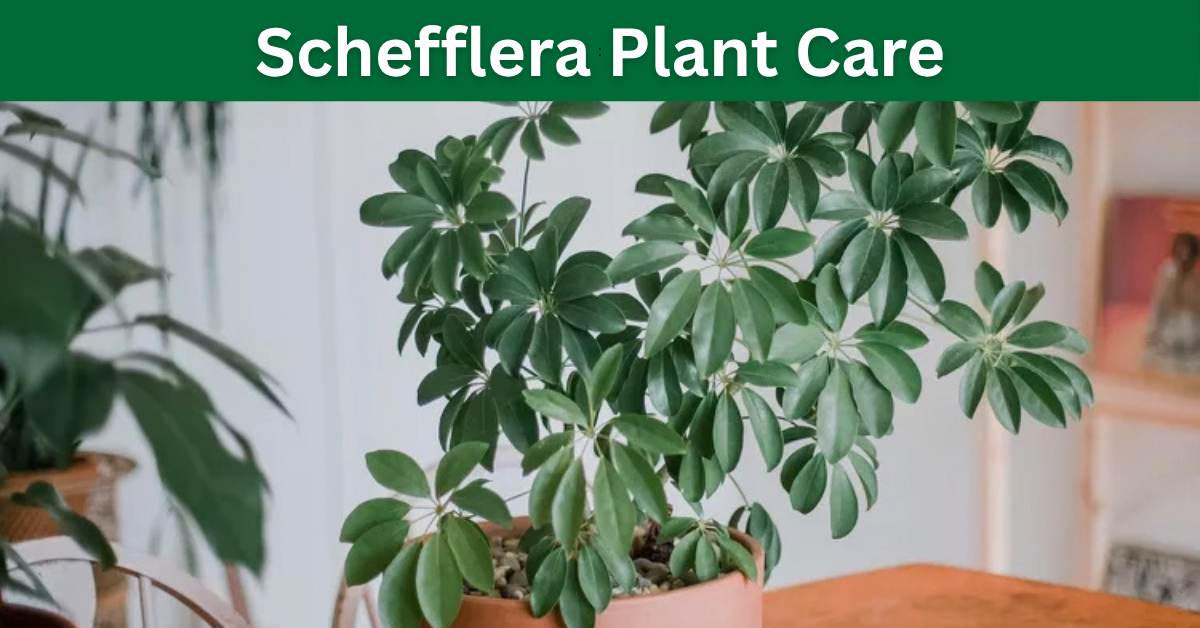
The schefflera plant, also called the umbrella plant, is a perennial. It lives for many years and does not die after one season, unlike an annual. It is also an evergreen plant and it keeps its shiny green leaves all year. Outdoors, it grows well in USDA zones 10 to 12, where winters stay warm. In colder zones, people grow it in a pot indoors, because it cannot handle frost. A schefflera grows from a few feet tall indoors to much taller outside.
The schefflera needs about 4 to 6 hours of bright, indirect light each day. Outdoors, it does best in partial shade. It likes the soil to dry on top, so it needs water about once every one to two weeks, depending on the season. The plant is happiest when the temperature stays between 60°F and 85°F. Keep it away from cats and dogs, because the leaves can make them sick.
If you have schefflera plant, continue reading schefflera plant care.
What Is Schefflera?
Schefflera is a group of tropical plants that are loved for their glossy, umbrella-shaped leaves. They are popular houseplants and they grow well in warm gardens.
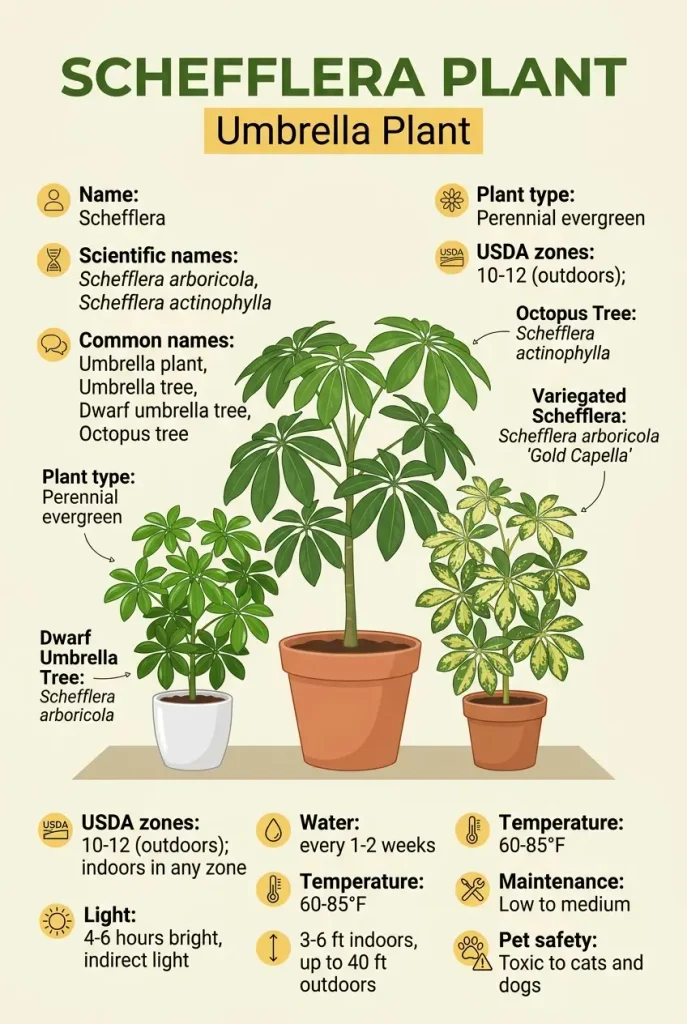
- Name: Schefflera
- Scientific name: Schefflera arboricola and Schefflera actinophylla
- Plant family: Araliaceae
- Common names: Umbrella plant, umbrella tree, dwarf umbrella tree, octopus tree
- Plant type: Perennial evergreen. It lives for many years and keeps its leaves all year. It is not an annual.
- Native to: Taiwan and southern China (arboricola), and Australia and New Guinea (actinophylla)
- Maintenance level: Low to medium
- Growth rate: Medium
- Height indoors: About 3 to 6 feet
- Height outdoors: About 8 to 40 feet, depending on the type
- USDA zones (outdoors): Zones 10 to 12
- Indoors: Grows in any zone, in a pot
- Light: 4 to 6 hours of bright, indirect light
- Water: About once every 1 to 2 weeks, when the top soil is dry
- Best temperature: 60°F to 85°F
- Pet safety: Not safe for cats and dogs
Types of Schefflera
Dwarf Umbrella Tree (Schefflera arboricola)
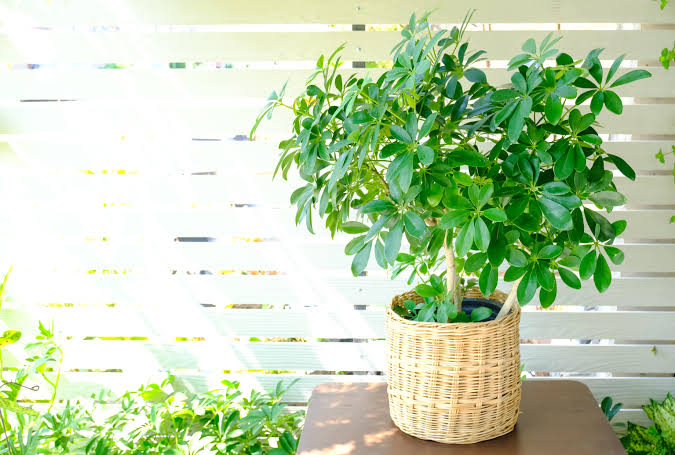
This is the most common type for homes. It has small, glossy leaves and stays smaller, so it fits well in pots and indoor spaces. It is also easy to prune.
Octopus Tree (Schefflera actinophylla)
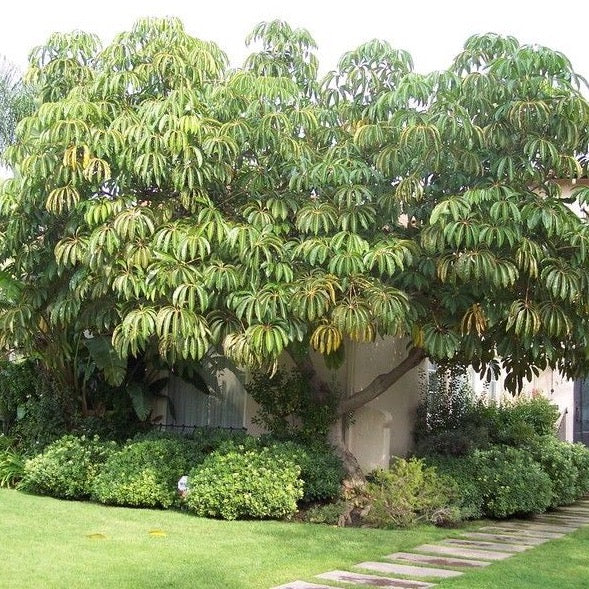
This type has big leaves that look like the arms of an octopus. It grows very tall (40 to 50 feet), that’s why, it is a better choice for outdoor gardens in warm places.
Variegated Schefflera
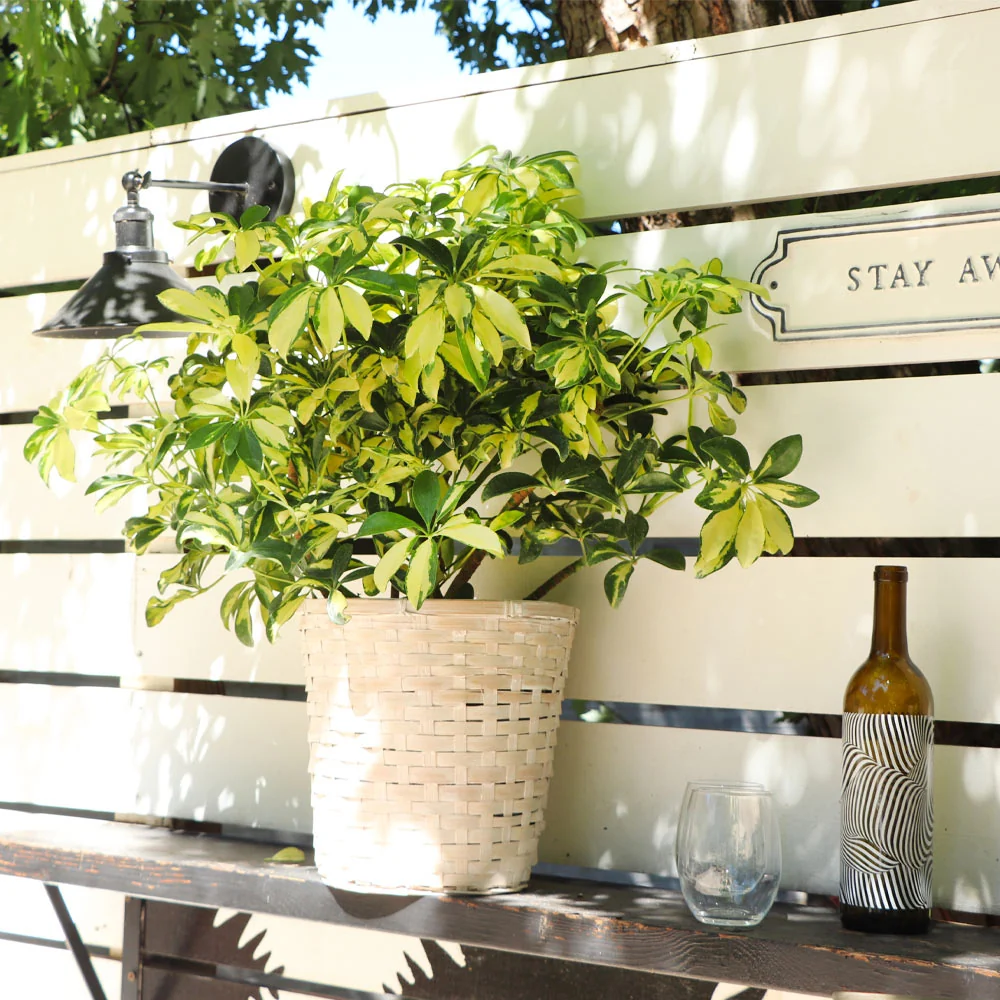
These are types of dwarf umbrella tree that have cream or yellow spots on the leaves, like ‘Gold Capella’ and ‘Trinette’. They look bright and bold, but they need a little more light to keep their color.
Schefflera Plant Care Indoors
Light
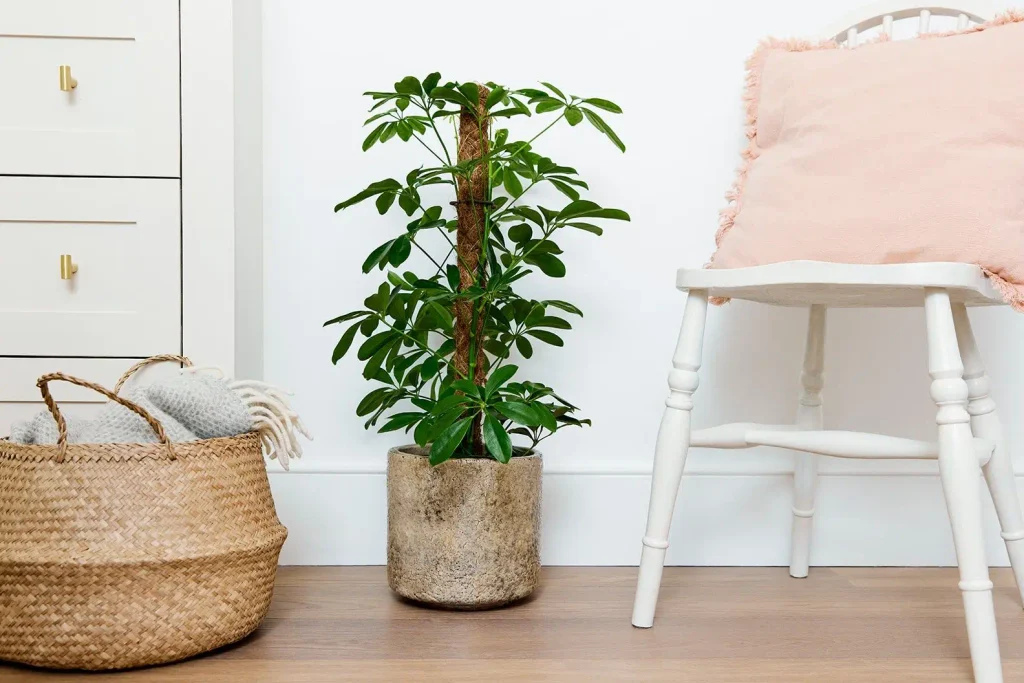
A schefflera likes bright, indirect light. Give it about 4 to 6 hours of this light each day. A spot near an east-facing or north-facing window is a great choice. Gentle morning sun for 2 to 3 hours is also fine. Strong afternoon sun can burn the leaves, so keep the plant a few feet away from a hot, sunny window.
If the plant gets too little light, it grows tall and thin, with big gaps between the leaves. If it gets too much sun, the leaves get brown, dry spots.
Water
Water your schefflera about once every 1 to 2 weeks. The best way to know is to touch the soil. If the top 1 to 2 inches feel dry, it is time to water. Pour water slowly until it comes out of the drainage holes. Then empty the saucer, so the roots do not sit in water.
In spring and summer, the plant drinks more. In fall and winter, it drinks less, so water about once every 2 to 3 weeks. Too much water is the most common mistake. I always advise that It is always safer to water a little less than a little more.
Soil and Pot
Use a light, well-draining potting mix. A mix for houseplants works well. Add a handful of perlite to help the water drain faster. Always choose a pot with drainage holes, because soggy soil can rot the roots.
Repot your schefflera every 2 to 3 years, or when you see roots coming out of the bottom of the pot. Choose a new pot that is only 1 to 2 inches wider. Spring is the best time to repot.
Temperature and Humidity
A schefflera is happiest between 60°F and 85°F. Keep it away from cold drafts, air conditioners, and heaters. Cold air makes the leaves drop. It does not like temperatures below 50°F.
It enjoys medium humidity. If your home is very dry, mist the leaves once in a while, or place the pot on a tray of pebbles with a little water. Do not let the pot sit in the water.
Feeding
Feed your schefflera once a month in spring and summer. Use a balanced liquid houseplant fertilizer, and mix it at half strength. Do not feed it in fall and winter, because the plant grows slowly and rests in the cold months.
Pruning
Pruning keeps your plant bushy and the right size. In spring, cut back any long, thin stems just above a leaf. New branches will grow from that spot. You can also remove dead or yellow leaves at any time. Wipe the leaves with a soft, damp cloth every few weeks to remove dust, so the plant can take in more light.
Common Indoor Problems
- Yellow leaves: This usually means too much water. Let the soil dry out more between waterings.
- Dropping leaves: This happens due to low light, cold drafts, or a sudden move. Find a steady, bright spot and leave the plant there.
- Brown, crispy leaf edges: The air is too dry, or the plant is not getting enough water. Check the soil and add humidity.
- Sticky leaves or tiny webs: These are signs of pests, like spider mites, mealybugs, or scale. Wipe the leaves with soapy water or use neem oil.
- Soft, dark stems and a bad smell: This is root rot. Take the plant out, cut off the mushy roots, and repot it in fresh, dry soil.
Schefflera Plant Care Outdoor
Best Zones
A schefflera grows best outdoors in USDA zones 10 to 12. These zones have warm winters, so the plant can stay outside all year. In zone 9, it can grow outside with extra care, but a hard frost can damage the leaves. In zone 8 and below, it is better to grow your schefflera in a pot. Keep it outside in warm weather, and bring it indoors before the cold comes.
Light
Outdoors, a schefflera does best in partial shade. Give it about 3 to 5 hours of gentle morning sun. Then give it shade in the afternoon, because the strong afternoon sun can burn the leaves. A spot under a tall tree or next to a wall that blocks the afternoon sun is a good choice.
If the leaves get pale, brown, or dry patches, the plant is getting too much sun. If it grows thin and leggy, it needs a little more light.
Planting
The best time to plant is in spring, after the last frost. Pick a spot with good drainage. Dig a hole about twice as wide as the root ball, but only as deep as the root ball. Place the plant in the hole, fill it with soil, and press down gently. Water it well right after planting.
Schefflera likes rich, loose soil with well-draining potting mix that stays slightly acidic to neutral (pH 6.0–7.0). If your soil is heavy clay, mix in compost or sand to help the water flow. Leave about 3 to 6 feet of space between plants, because they grow wide. If you plant an octopus tree, give it even more room, because it grows very tall.
Water
In the first year, water your schefflera about 2 times a week. Push your finger into the soil. If the top 2 inches are dry, it is time to water.
After the first year, the plant needs less water. Water it once a week, or when the soil is dry. In very hot weather, you may need to water more often. In the rainy season, you can water less. Like indoor plants, outdoor schefflera does not like soggy soil, so make sure the water can drain away.
Frost and Cold Protection
A schefflera does not like frost. It can handle temperatures down to about 40°F. Below that, the leaves turn black and fall off. If a cold night is coming, cover the plant with a frost cloth or an old sheet. Take the cover off in the morning, when it warms up.
If your plant is in a pot, move it to a sheltered spot, like a porch or garage, or bring it inside before the first frost.
Feeding and Mulching
Feed your schefflera every 4 to 6 weeks in spring and summer. Use a balanced fertilizer, and follow the amounts on the package. Stop feeding in fall and winter.
Spread 2 to 3 inches of mulch around the plant, like bark or leaves. Mulch keeps the soil moist, stops weeds, and protects the roots from heat and cold. Keep the mulch a few inches away from the stem, so the stem does not rot.
Pruning
Prune your schefflera in spring, when new growth starts. Cut back long or messy branches just above a leaf. This helps the plant grow fuller and keeps it the size you want. Remove any dead, yellow, or damaged leaves at any time. Outdoor schefflera can grow very big, so regular pruning is a good habit.
Common Outdoor Problems
- Sunburned leaves: Brown or pale patches on the leaves mean too much sun. Move the plant to a shadier spot, or give it afternoon shade.
- Yellow leaves: The soil may be too wet. Check the drainage and water less.
- Leaf drop after cold weather: This is from frost or cold wind. Protect the plant on cold nights, and wait for new leaves in spring.
- Pests: Spider mites, scale, and mealybugs can attack the plant. Spray the leaves with water, or use soapy water or neem oil.
- Root rot: Heavy, wet soil can rot the roots. Plant in well-draining soil, and do not water too often.
Is Schefflera Toxic to Pets?
Yes, schefflera is toxic to cats and dogs. All parts of the plant are harmful, including the leaves, stems, and sap. The plant has tiny, sharp crystals called calcium oxalate. When a pet bites or chews the plant, these crystals poke the mouth and throat. This causes pain and burning right away. Most cases are mild to moderate, but your pet can feel very sick, so take it seriously.
Signs Your Pet Ate Schefflera
- Drooling a lot
- Pawing or rubbing at the mouth
- Swollen lips, tongue, or mouth
- Trouble swallowing
- Vomiting
- Not wanting to eat
What to Do If Your Pet Eats Schefflera Plant
- Take the plant away from your pet and gently wipe out any leaf pieces from the mouth.
- Give your pet a little fresh water to drink.
- Call your vet right away.
- You can also call the ASPCA Animal Poison Control Center or the Pet Poison Helpline.
- If your pet has trouble breathing or a very swollen mouth, go to an emergency vet right away.
Safety Tips for Indoor Spaces
- Place your schefflera on a high shelf or plant stand where pets cannot reach it.
- Keep it in a room your pets cannot enter, like a home office with the door closed.
- Pick up fallen leaves because pets may chew them.
- Use a hanging planter for extra safety.
- If your pet loves to chew plants, think about choosing a pet-safe plant instead.
Safety Tips for Outdoor Spaces
- Plant your schefflera in a spot that your pets cannot reach, like behind a fence or in a fenced-off garden bed.
- Use a raised bed or a large pot on a stand, so pets cannot get to the leaves.
- Rake up fallen leaves and trimmed branches after pruning.
- Watch your pets when they play near the plant, especially puppies and kittens.
- Check your yard often for new leaves or broken stems on the ground.
Good to know: The plant can also upset a person’s mouth or skin a little. Wear gloves when you prune it and wash your hands after.