Monstera Pruning Mistakes: 25 Mistakes Gardeners Make
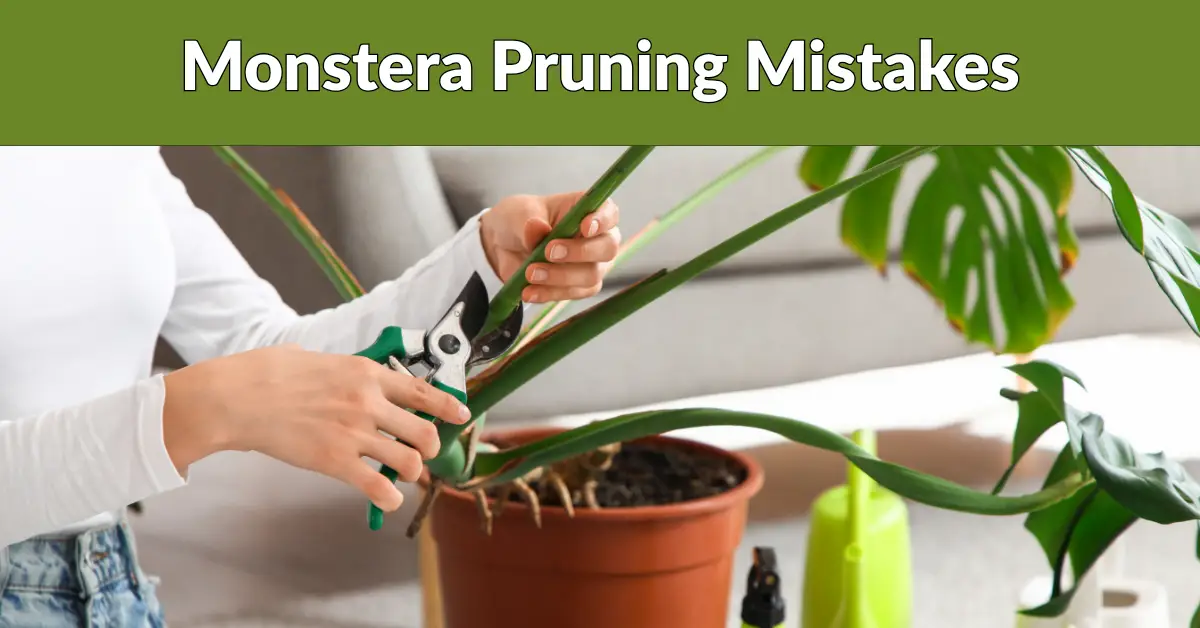
Monstera is one of the most popular houseplants in the world. With its large, glossy leaves and distinctive natural splits called fenestrations, it brings a bold tropical look to any indoor space. Native to the rainforests of Central and South America, Monstera is a naturally vigorous climber that can grow quite large even indoors.
Pruning is the practice of selectively removing parts of a plant to manage its size, improve its shape, remove dead or damaged growth, and encourage healthy new development. For most plants, regular pruning is not optional, it is a necessary part of maintenance that keeps the plant looking good and growing well.
The importance of pruning goes beyond aesthetics. Cutting away dead, damaged, or overcrowded growth reduces disease pressure, improves air circulation around leaves, and directs the plant’s energy toward healthy stems and new leaves. Without pruning, plants can become overgrown, unbalanced, and more susceptible to pests and rot.
For Monstera, pruning controls the plant’s size, which can become an issue indoors as Monstera can grow several feet wide and tall. It helps manage the long, sprawling vines that develop as the plant matures. It also gives you the opportunity to propagate new plants from healthy cuttings.
Despite how straightforward pruning sounds, it is easy to make mistakes that slow growth, stress the plant, or cause lasting damage. Below are 25 monstera pruning mistakes that gardeners commonly make and what to do instead.
Over-pruning Healthy Leaves
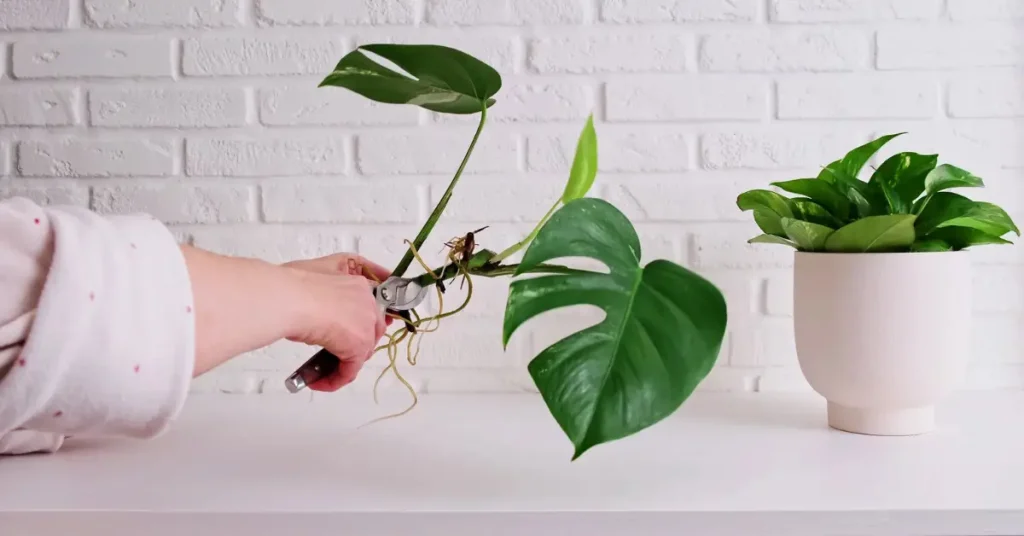
Many gardeners go too far and remove healthy, green leaves thinking it will help the plant look tidier. In reality, leaves are how Monstera makes energy. Cutting off too many at once starves the plant and slows growth significantly. A good rule of thumb is to never remove more than 25% of the plant at one time.
Cutting too close to the Main Stem
When you cut a leaf or stem too close to the main trunk, you risk damaging the core structure of the plant. This kind of wound is slow to heal and can become an entry point for rot or disease. Always leave a small stub of at least half an inch from the main stem when making cuts.
Using Dirty or Dull Pruning Shears
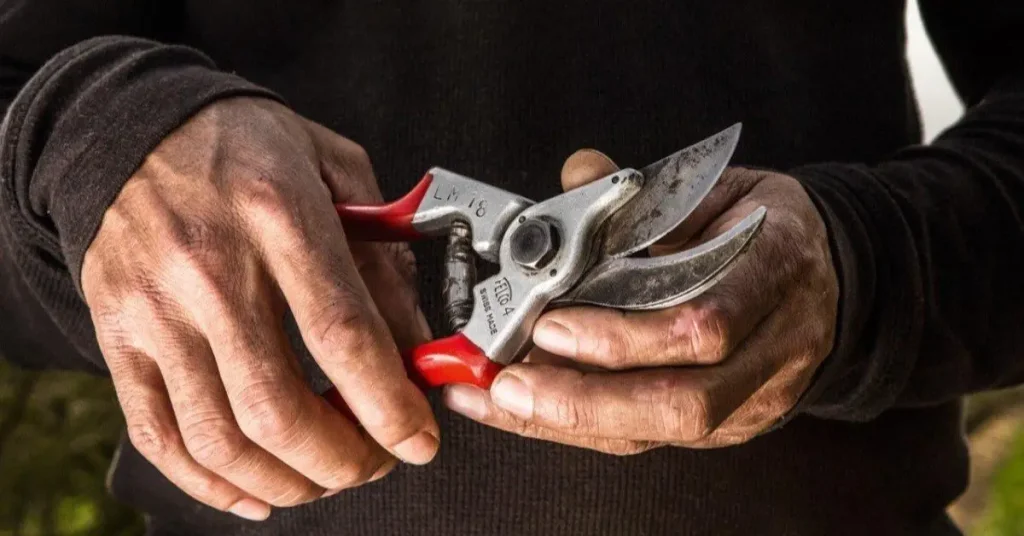
Dirty tools carry bacteria and fungi from one plant to another. Dull blades crush the stem instead of making a clean cut, which takes longer to heal and increases infection risk. Always clean your pruning shears with rubbing alcohol before use and sharpen them regularly.
Pruning during Stress or Disease
If your Monstera is already dealing with root rot, overwatering, pests, or poor lighting, pruning on top of that adds more stress. The plant is already using all its energy to survive. Wait until it has stabilized and shows signs of recovery before you start cutting.
Removing Aerial Roots Unnecessarily
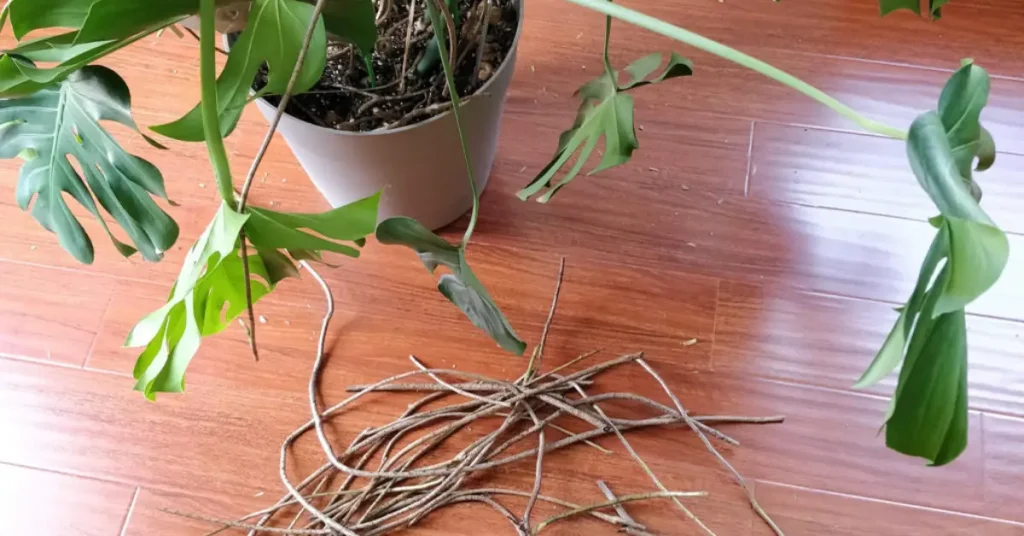
Aerial roots might look messy, but they serve a real purpose. They help the plant absorb moisture and nutrients from the air and anchor it to surfaces as it climbs. Removing all of them weakens the plant’s ability to support itself and can slow its overall growth.
Cutting New Growth too early
New growth on a Monstera starts as a tightly rolled leaf that slowly unfurls. Cutting this growth before it fully opens removes is the big mistake you do. New leaves represent the future of the plant’s canopy. Give them time to develop fully before deciding whether to prune.
Ignoring Damaged or Yellowing leaves
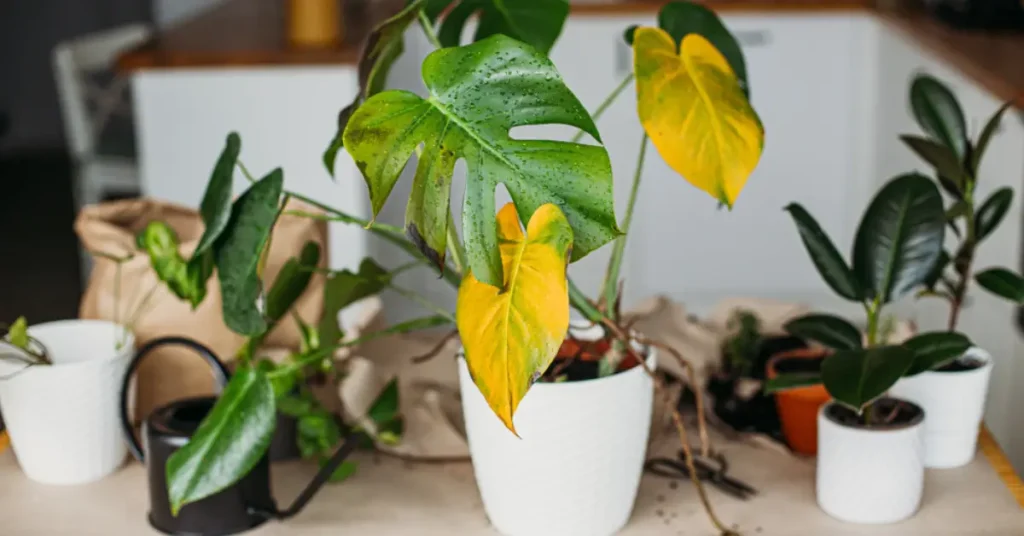
If a leaf has turned yellow, brown, or looks damaged, it is not doing anything useful for the plant anymore. Keeping it on does not help, it actually pulls energy away from the healthy leaves. Cut it off as soon as you notice it.
Pruning without identifying Growth Nodes
A node is the small bump or joint on the stem where new leaves and roots grow. If you cut a stem without a node, that cutting will never root or produce new growth. It is simply dead material. Always identify the nodes before making any cuts, especially if you plan to propagate.
Removing too many leaves at once
Taking off a large number of leaves in a single pruning session is a shock to the plant. Monstera needs its leaves to photosynthesize and fuel recovery. Sudden loss of too much foliage can cause the plant to go into shock and stop growing for weeks.
Not wearing gloves around sap-sensitive skin
Monstera sap contains calcium oxalate crystals, which cause irritation, itching, and redness on skin. For people with sensitive skin, the reaction can be more severe. Always wear gloves when pruning and avoid touching your face during the process.
Read: Monstera Plant Care
Pruning during low-light winter periods
In winter, Monstera naturally slows down its growth because of lower light levels. Pruning during this time removes foliage the plant needs to capture what little light is available. The plant also recovers much more slowly in winter. Spring or early summer is the ideal time to prune.
Leaving long stem stubs after cuts
When you cut a leaf stem and leave a long stub behind, that stub will slowly die and rot back toward the main plant. This rotting material can become a breeding ground for fungal infections. Always cut cleanly just above the node to minimize the amount of dead tissue left behind.
Overwatering immediately after pruning
Fresh cuts on a Monstera need time to callus and seal. If you soak the soil right after pruning, excess moisture can enter the open wound and trigger rot. Wait a few days after pruning before returning to your regular watering schedule.
Propagating node-less cuttings
A cutting without a node cannot grow roots or produce new leaves. It will simply sit in water or soil and slowly decay. Before taking cuttings for propagation, always confirm that each piece includes at least one visible node. A leaf alone is not enough for successful propagation.
Forgetting to disinfect tools between plants
Even if your Monstera looks healthy, your pruning tools can carry invisible pathogens from other plants in your collection. Wiping blades with rubbing alcohol between each plant takes only a few seconds and can prevent infections from spreading through your entire garden.
Cutting random sections for shape only
Pruning just to make the plant look a certain shape without understanding how Monstera grows can remove productive stems. Monstera grows from specific points and does not always recover symmetrically. Make intentional cuts based on where growth nodes are located, not just on how the plant looks from the outside.
Keeping crowded stems instead of thinning strategically
When multiple stems grow close together, they compete for light and airflow. Poor airflow around dense foliage increases the risk of fungal issues. Thinning out crowded stems encourages better air circulation, lets light reach inner leaves, and gives the plant a healthier overall structure.
Pruning a weak or recently repotted Monstera
Repotting already puts stress on a Monstera as its roots adjust to new soil. Pruning on top of that doubles the recovery burden. Similarly, a plant that looks weak, droopy, or pale needs time to stabilize first. Only prune when the plant is actively growing and appears healthy.
Exposing fresh cuts to direct harsh sunlight
After pruning, the exposed tissue at a cut site is vulnerable. Direct harsh sunlight can dry it out too quickly or scorch the tender area, slowing the healing process. After pruning, move your Monstera to a spot with bright indirect light and let the wounds seal naturally.
Neglecting support poles after pruning
Pruning changes the weight distribution of the plant. A Monstera that was previously balanced may lean or fall after heavy pruning. If your plant uses a moss pole or support stake, check that the remaining stems are properly tied and supported so the plant grows upright and does not damage its own stems.
Tossing healthy cuttings instead of propagating them
A healthy cutting from a Monstera with at least one node is a new plant waiting to grow. Many gardeners trim their plants and throw away perfectly viable cuttings. Place them in water or moist perlite, and within a few weeks, roots will develop. It is an easy way to expand your collection or share with others.
Pruning all aerial roots for a cleaner look
Some gardeners cut off all aerial roots because they look untidy. But aerial roots help the plant absorb humidity, anchor to support structures, and in some cases take in extra nutrients. Removing all of them weakens the plant’s natural ability to grow and climb the way it is designed to.
Removing fenestrated mature leaves first
Fenestrated leaves are the large, split leaves that Monstera is known for. These mature leaves are the most efficient photosynthesizers the plant has. Removing them first during pruning sacrifices the plant’s most productive foliage. Always remove old, damaged, or yellowing leaves before touching healthy mature fenestrated ones.
Not checking for pests before pruning
Pruning a plant that has a hidden pest infestation spreads the problem. Spider mites, mealybugs, and thrips can travel on your tools or hands to other plants. Before you begin pruning, inspect the undersides of leaves and along the stems carefully. Treat any pest issues first, then prune once the plant is clean.
Making uneven cuts that damage stems
A jagged or torn cut takes far longer to heal than a clean, smooth one. Uneven cuts leave more exposed tissue, which increases the chance of infection and moisture loss. Always use sharp shears and cut in one clean motion at a slight angle to prevent water from pooling on the wound.