20 Trees With White Flowers To Grow in Your Yard
Everyone talks about adding a “pop of color” to the garden, but sometimes what a space really needs is something calm. Not every yard needs to compete for attention with bright pinks and purples. Sometimes the better move is a tree that just looks settled, something that fits in no matter what season it is or what else is blooming around it. White flowering trees do exactly that.
White pairs with green lawns, gray siding, brick, dark mulch. It is an easy color to live with long-term and it tends to look just as good ten years from now as it does the day you plant it.
We put together a list of twenty trees with white flowers. Some are familiar picks you have probably seen a hundred times, like dogwood or crabapple. For each one, we are covering the basics, soil, sun, size, bloom time, plus what actually makes it worth growing. If you have been going back and forth on what to plant, this will help you land on the right one.
List of Trees With White Flowers
- Flowering Dogwood (Cornus florida)
- Yoshino Cherry (Prunus × yedoensis)
- Southern Magnolia (Magnolia grandiflora)
- Bradford Pear (Pyrus calleryana ‘Bradford’)
- Crabapple (Malus spp.)
- Fringe Tree (Chionanthus virginicus)
- Serviceberry (Amelanchier canadensis)
- Hawthorn (Crataegus spp.)
- Japanese Snowbell (Styrax japonicus)
- Sweetbay Magnolia (Magnolia virginiana)
- Seven-Sons Tree (Heptacodium miconioides)
- White Mazzard Cherry (Prunus avium)
- Japanese Tree Lilac (Syringa reticulata)
- Northern Catalpa (Catalpa speciosa)
- California Buckeye (Aesculus californica)
- Horse Chestnut (Aesculus hippocastanum)
- Japanese Crepe Myrtle (Lagerstroemia indica)
- Natchez Crape Myrtle (Lagerstroemia indica ‘Natchez’)
- Orange Jasmine (Murraya paniculata)
- Pee Gee Hydrangea (Hydrangea paniculata ‘Grandiflora’)
Flowering Dogwood (Cornus Florida)
- Native to: Eastern United States and northern Mexico
- USDA Zones: 5 to 9
- Soil: Well-drained loamy soil, rich in organic matter; pH 5.5 to 6.5
- Sunlight: Partial shade to full sun; 4 to 6 hours daily
- Height: 15 to 25 feet tall, 20 to 25 feet wide
- Blooms: Nursery-bought trees flower within 2 to 3 years; blooms in early to mid spring, March to April, before leaves fully emerge
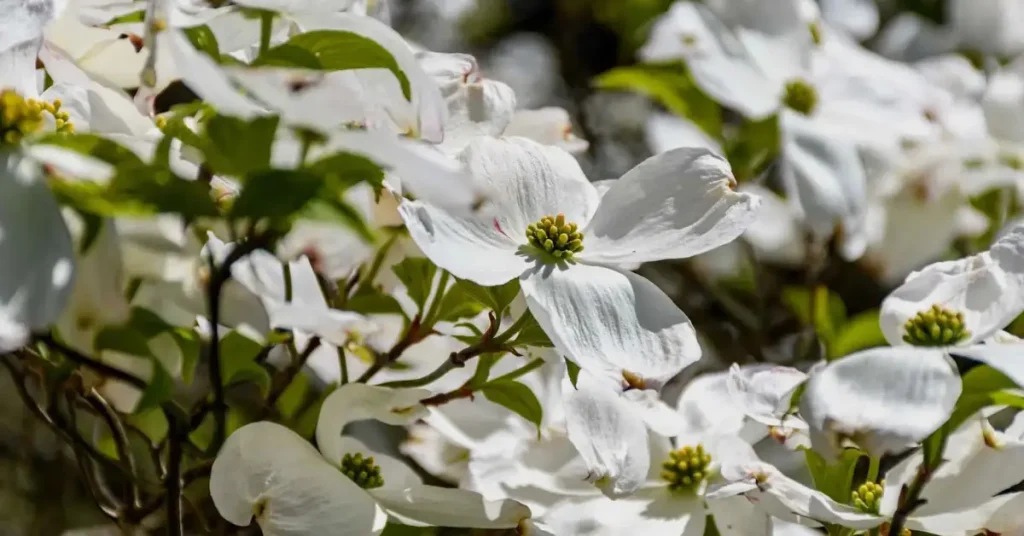
This is one of the most recognized native flowering trees in North America, growing as an understory tree along the edges of woodlands. Large white petals are bracts surrounding a small central cluster of true flowers. The bracts are broad, notched at the tip, and arranged in fours around the flower cluster, giving the bloom its classic cross-like shape.
The tree carries a layered, horizontal branching habit that is attractive even without flowers. Leaves are oval and turn a deep red to scarlet in autumn. Bright red berries follow the blooms and are an important food source for birds through fall and winter.
Anthracnose and dogwood borer can be issues, particularly in trees under stress, so siting in a spot with good air circulation and avoiding deep shade helps keep it healthier long term.
Yoshino Cherry (Prunus × Yedoensis)
- Native to: Hybrid origin, associated with Japan
- USDA Zones: 5 to 8
- Soil: Well-drained loamy soil; pH 6.0 to 6.5
- Sunlight: Full sun; minimum 6 hours daily
- Height: 20 to 30 feet tall, 20 to 25 feet wide
- Blooms: Nursery-bought trees flower within 1 to 2 years; blooms in early spring, March to April
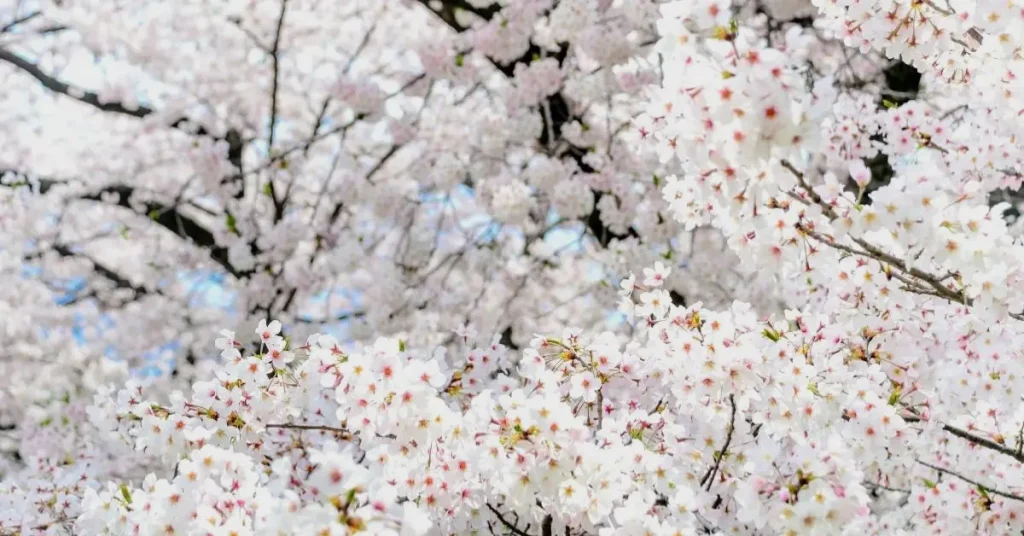
Yoshino Cherry is the variety most associated with Washington D.C.’s Cherry Blossom Festival, having been gifted from Japan in the early 1900s and planted around the Tidal Basin. The flowers are single to semi-double, opening pale pink in bud and fading to nearly white as they mature, with a light almond-like fragrance.
Bloom timing is just one to two weeks and the display is dense enough that the branches can appear almost entirely white when viewed from a distance. The canopy is broad and rounded, casting decent shade once mature. Bark has a smooth, glossy, reddish-brown quality with visible horizontal lenticels.
Like most ornamental cherries, this one is fairly short-lived compared to other shade trees, typically living 15 to 25 years. Fall color is a modest yellow to bronze, and the tree produces small, mostly inedible fruit that draws birds.
Southern Magnolia (Magnolia Grandiflora)
- Native to: Southeastern United States
- USDA Zones: 6 to 10
- Soil: Well-drained, moist loamy soil; pH 5.0 to 6.5
- Sunlight: Full sun to partial shade; 4 to 6 hours daily
- Height: 60 to 80 feet tall, 30 to 50 feet wide
- Blooms: Nursery-bought trees flower within 5 to 10 years; blooms in late spring through summer, May to July, with sporadic rebloom into autumn
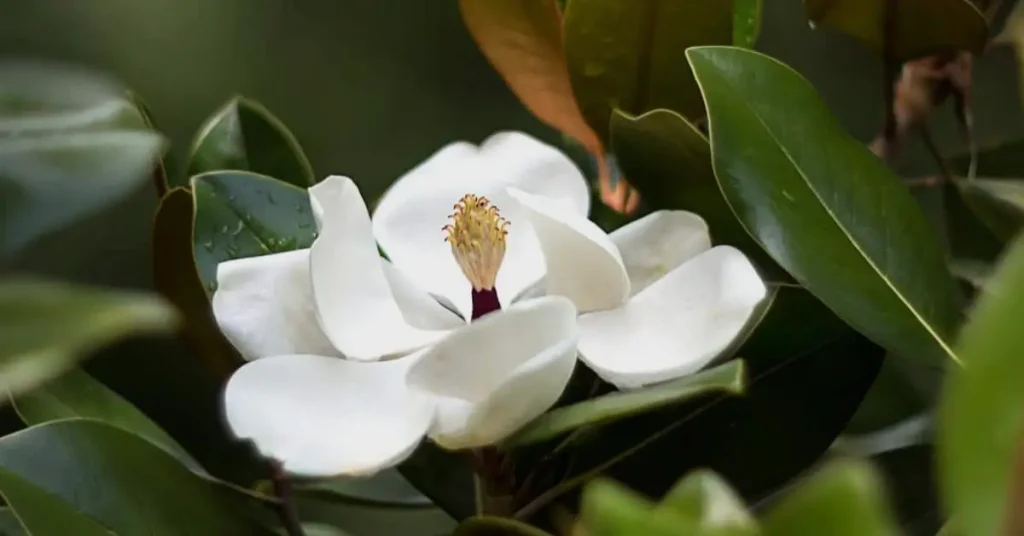
This is a large, evergreen tree that holds its glossy, dark green leaves year-round, with a rusty-brown underside that catches the wind and adds texture to the canopy. The flowers are enormous 8 to 12 inches across, creamy white, cup-shaped and carry a strong lemon like fragrance that fill an entire yard during peak bloom.
Unlike many flowering trees that bloom in one short burst, Southern Magnolia flowers over an extended period through summer, with individual blooms opening in succession rather than all at once. After flowering, cone-like seed pods develop and split open to reveal bright red seeds, which birds favor.
Size and surface roots are worth planning around. This tree gets large and drops a steady amount of leaf litter year-round since it does not lose all its leaves at once. It needs room to mature and is better tree for larger properties than small urban lots.
Bradford Pear (Pyrus calleryana ‘Bradford’)
- Native to: China; cultivar developed in the United States
- USDA Zones: 5 to 8
- Soil: Adaptable to most well-drained soils; pH 5.5 to 7.5
- Sunlight: Full sun; minimum 6 hours daily
- Height: 30 to 40 feet tall, 20 to 30 feet wide
- Blooms: Nursery-bought trees flower within 2 to 3 years; blooms in early spring, March to April, before leaves emerge
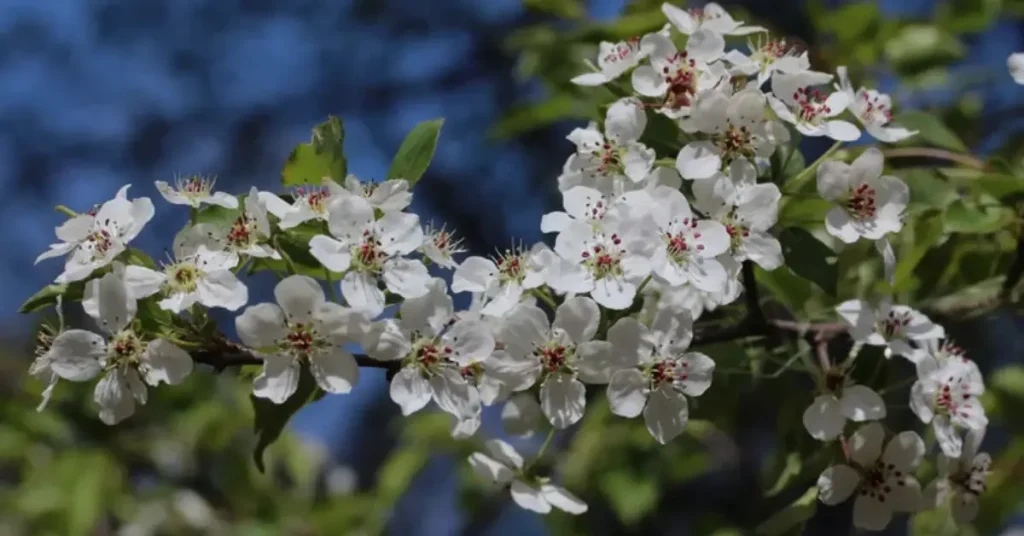
Bradford Pear became one of the most widely planted street trees in the U.S. through the late twentieth century, well known for its fast growth, tidy pyramidal shape and heavy spring bloom. The flowers are small, five-petaled and white, covering the tree in dense clusters before any leaves appear. The display is striking but brief and many people find the scent unpleasant rather than fragrant.
Fall color is a strong point, leaves turn shades of red, orange and purple late in the season, holding longer than most trees. The branching structure, however, is a known weak point. Branches grow at narrow angles and are prone to splitting in wind or ice storms, especially as the tree matures.
This tree is now banned or restricted for sale in several U.S. states due to its tendency to escape cultivation and outcompete native plants. It crosses readily with other Callery Pear cultivars, producing thorny, fast-spreading seedlings in wild areas.
Crabapple (Malus spp.)
- Native to: Varies by species; many native to North America, Europe, and Asia
- USDA Zones: 4 to 8 (varies by species and cultivar)
- Soil: Well-drained loamy soil; pH 6.0 to 7.0
- Sunlight: Full sun; minimum 6 hours daily
- Height: 15 to 25 feet tall, 15 to 20 feet wide (varies by cultivar)
- Blooms: Nursery-bought trees flower within 2 to 3 years; blooms in mid to late spring, April to May
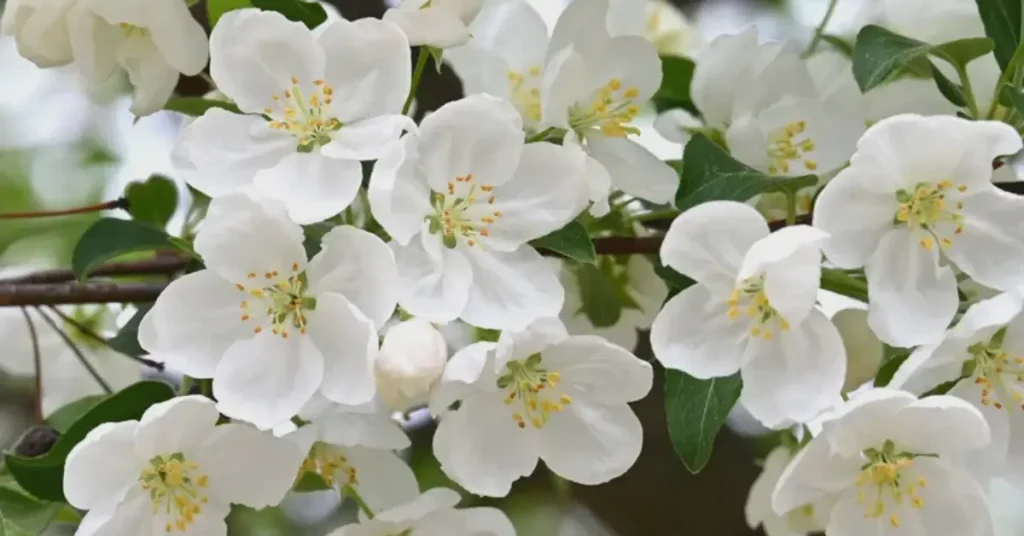
Crabapple covers a wide range of species and cultivars, many selected specifically for white flowers, disease resistance, and small ornamental fruit. The blooms are five-petaled, opening from pink or red buds before fading to white, and cover the canopy densely enough to obscure the branches during peak bloom. Fragrance varies by cultivar, ranging from faint to noticeably sweet.
After flowering, small fruit develops usually under 2 inches across in shades of red, orange, or yellow depending on the variety. Many cultivars hold their fruit well into winter, providing color in the landscape after leaves drop and serving as a food source for birds.
Disease resistance varies between cultivars, with older varieties prone to issues like apple scab and fire blight. Choosing a disease-resistant cultivar matters more with crabapple than with most trees on this list, so it is worth checking the specific variety before buying rather than assuming all crabapples perform the same.
Fringe Tree (Chionanthus Virginicus)
- Native to: Eastern and southeastern United States
- USDA Zones: 3 to 9
- Soil: Well-drained, moist loamy soil; pH 5.0 to 6.5
- Sunlight: Full sun to partial shade; 4 to 6 hours daily
- Height: 12 to 20 feet tall, 12 to 20 feet wide
- Blooms: Nursery-bought trees flower within 2 to 4 years; blooms in mid to late spring, April to May
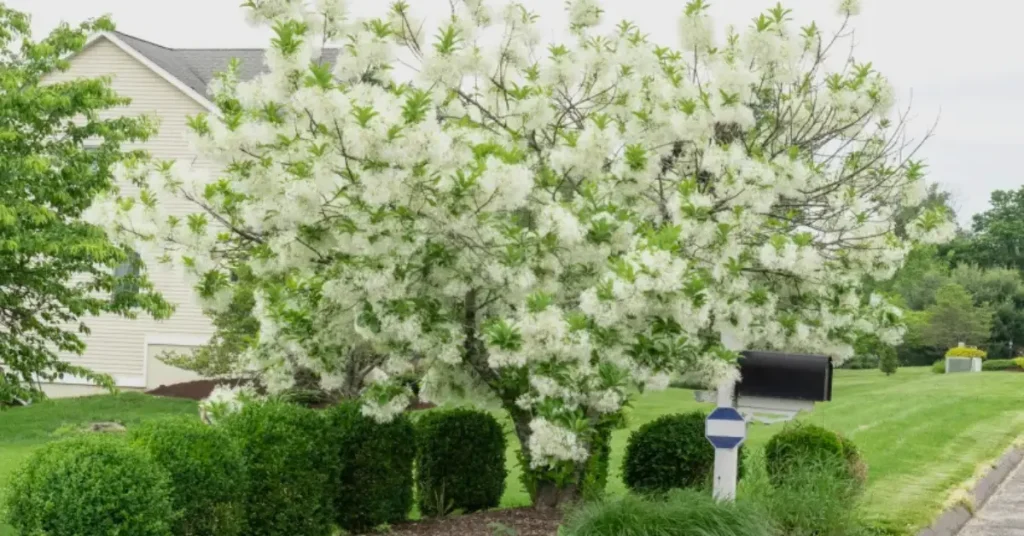
Also called Old Man’s Beard, this small native tree produces airy, drooping clusters of narrow, strap-like petals that give the canopy a soft, fringed appearance. The flowers are slightly fragrant and appear after the leaves have emerged, unlike many spring-blooming trees that flower first.
This species is dioecious, meaning individual trees are either male or female. Male trees tend to produce showier, denser flower clusters, while female trees produce smaller flowers followed by dark blue, olive-like fruit in late summer that birds favor. If fruit production matters, both a male and female tree are needed nearby for pollination.
Growth is slow and the tree takes a multi-stemmed, irregular shape unless trained early. It tolerates some shade better than many flowering trees on this list, making it a reasonable choice for a partially shaded understory spot. Fall color is a modest yellow.
Serviceberry (Amelanchier Canadensis)
- Native to: Eastern North America
- USDA Zones: 4 to 8
- Soil: Well-drained, moist loamy soil; pH 6.0 to 7.0
- Sunlight: Full sun to partial shade; 4 to 6 hours daily
- Height: 15 to 25 feet tall, 10 to 15 feet wide
- Blooms: Nursery-bought trees flower within 1 to 2 years; blooms in early spring, March to April, often among the first native trees to flower
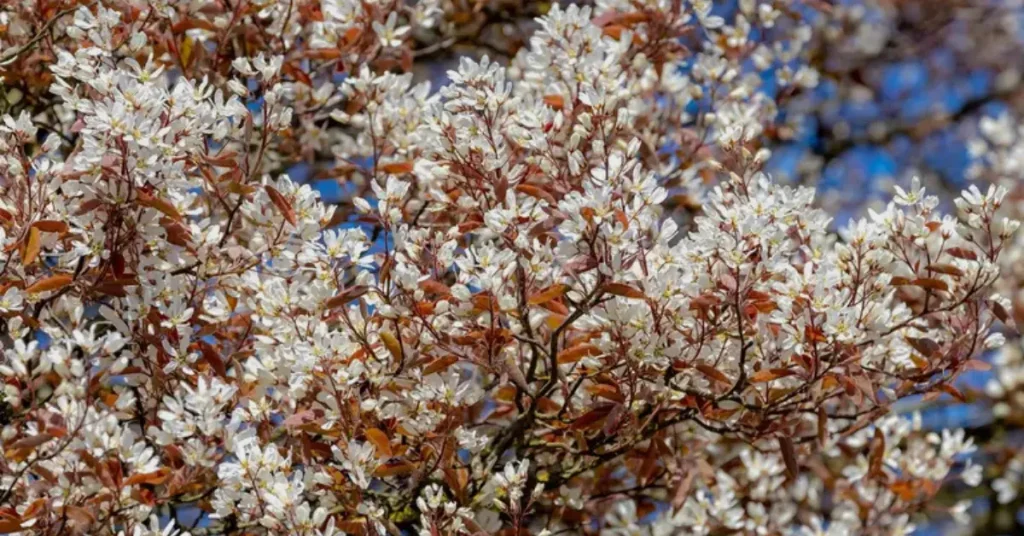
Serviceberry is known for being one of the earliest native trees to bloom, flowering before forsythia and many spring bulbs have finished. The flowers are small, white, star-shaped, and appear in loose drooping clusters just as the leaves begin to unfurl, giving the canopy a delicate, slightly see-through quality during bloom.
Small reddish-purple berries follow in early summer, resembling blueberries in size and taste and are a favorite of birds. Fall color is one of this tree’s strongest features, turning shades of orange, red, and yellow that rival dogwood.
It tends to grow as a multi-stemmed small tree or large shrub unless pruned to a single trunk. It handles wetter soils better than most trees on this list and works well near ponds or low-lying areas of the yard.
Hawthorn (Crataegus spp.)
- Native to: Varies by species; many native to North America and Europe
- USDA Zones: 4 to 8 (varies by species)
- Soil: Adaptable to most well-drained soils; pH 6.0 to 7.5
- Sunlight: Full sun; minimum 6 hours daily
- Height: 15 to 30 feet tall, 15 to 25 feet wide (varies by species)
- Blooms: Nursery-bought trees flower within 2 to 4 years; blooms in mid to late spring, April to May
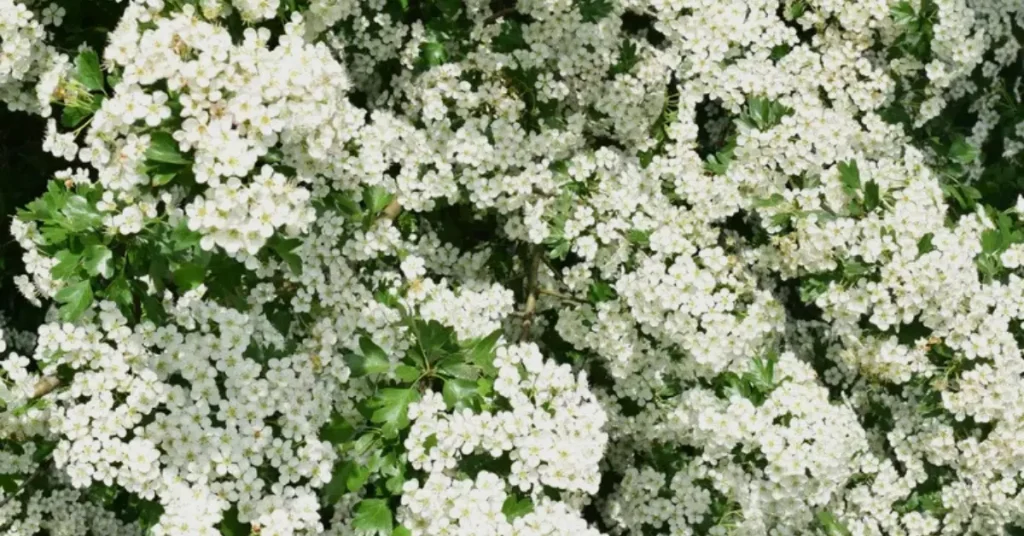
Hawthorn covers a large genus of small to medium trees, most carrying clusters of small white flowers with a scent some find pleasant and others find off-putting, depending on the species. The flowers are followed by small red or orange fruit, called haws, that persist into winter and serve as an important late-season food source for birds.
Many hawthorn species carry sharp thorns along the branches, a trait that made them popular as hedging and barrier plants. The branching is dense and twiggy, giving the canopy a tight, layered look that holds up well through winter even without leaves.
Japanese Snowbell (Styrax Japonicus)
- Native to: Japan, China, Korea
- USDA Zones: 5 to 8
- Soil: Well-drained, moist loamy soil; pH 5.5 to 6.5
- Sunlight: Full sun to partial shade; 4 to 6 hours daily
- Height: 20 to 30 feet tall, 20 to 25 feet wide
- Blooms: Nursery-bought trees flower within 2 to 3 years; blooms in late spring to early summer, May to June
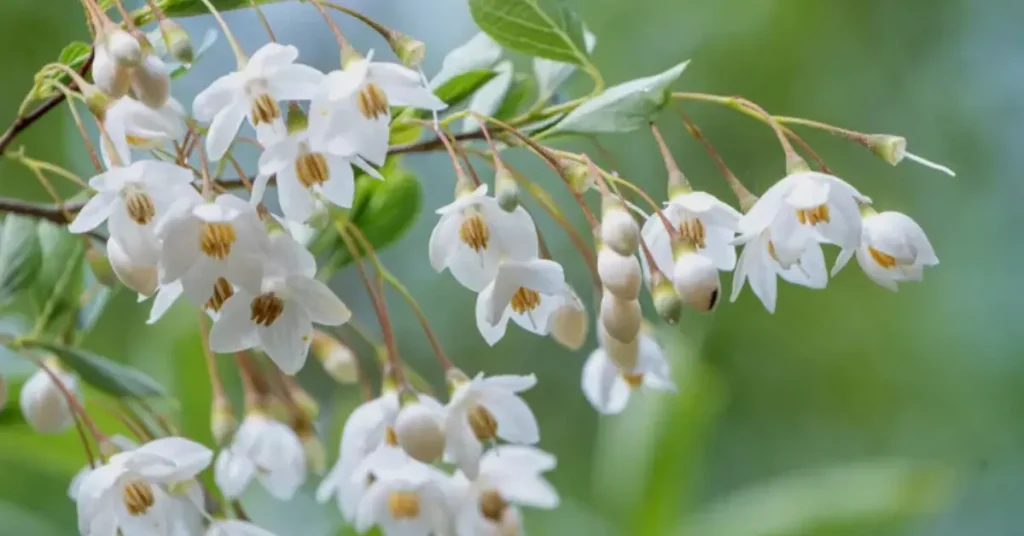
This tree produces small, bell-shaped white flowers that hang beneath the branches on slender stalks, facing downward so they are best appreciated from below — sitting on a bench underneath the canopy during bloom is the way to see it properly. The flowers are mildly fragrant and appear after the leaves have fully developed, set against a backdrop of fresh green foliage.
The branching habit is horizontal and slightly layered, similar in structure to a dogwood, and the bark develops an attractive scaly texture with age. Small, gray, egg-shaped fruit follows the blooms in late summer, though it is not a major ornamental feature.
Fall color is typically a muted yellow. This tree does best with some afternoon shade in hotter climates and benefits from consistent moisture, particularly in its first few years while establishing.
Sweetbay Magnolia (Magnolia Virginiana)
- Native to: Eastern and southeastern United States
- USDA Zones: 5 to 9
- Soil: Moist to wet loamy or sandy soil; pH 5.0 to 6.5
- Sunlight: Full sun to partial shade; 4 to 6 hours daily
- Height: 10 to 35 feet tall, 10 to 20 feet wide, depending on region and form
- Blooms: Nursery-bought trees flower within 2 to 4 years; blooms in late spring through summer, May to July, often with sporadic rebloom
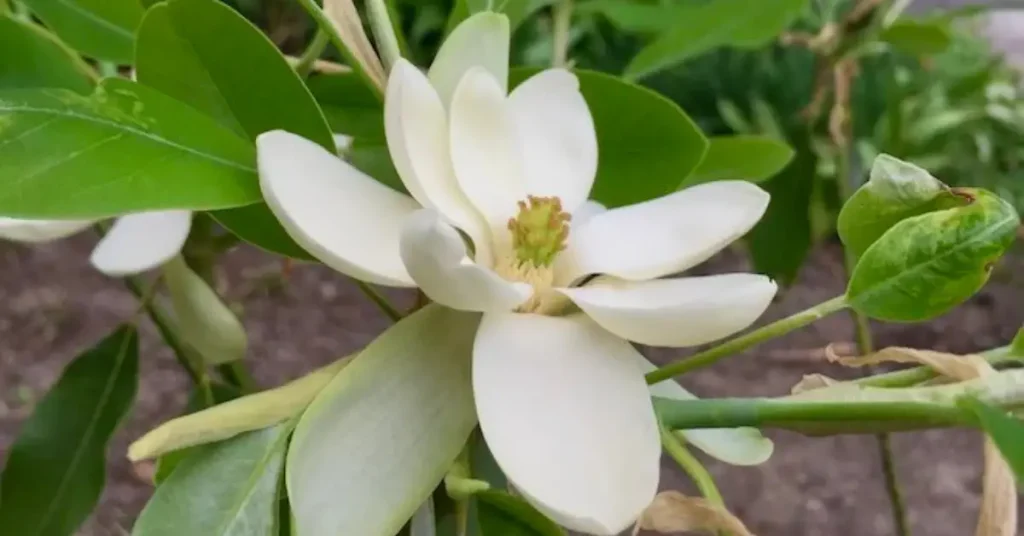
Sweetbay Magnolia is naturally found in wetlands and along stream banks, making it one of the more moisture-tolerant trees on this list. The flowers are creamy white, cup-shaped, and smaller than Southern Magnolia blooms, with a sweet, slightly citrusy fragrance that tends to be more noticeable in the evening.
Leaves are glossy dark green on top with a silvery underside that flashes in the wind, a feature that makes the tree easy to identify even without flowers. In northern parts of its range it behaves as semi-evergreen to deciduous, while in warmer southern zones it holds more of its leaves through winter.
It tolerates wet, poorly drained soils better than many trees, making it a strong option for low spots in the yard or areas near water that other ornamental trees would struggle in.
Seven-Sons Tree (Heptacodium Miconioides)
- Native to: China
- USDA Zones: 5 to 9
- Soil: Well-drained loamy soil; pH 6.0 to 7.5
- Sunlight: Full sun to partial shade; 4 to 6 hours daily
- Height: 15 to 20 feet tall, 8 to 12 feet wide
- Blooms: Nursery-bought trees flower within 2 to 3 years; blooms in late summer to early autumn, August to September
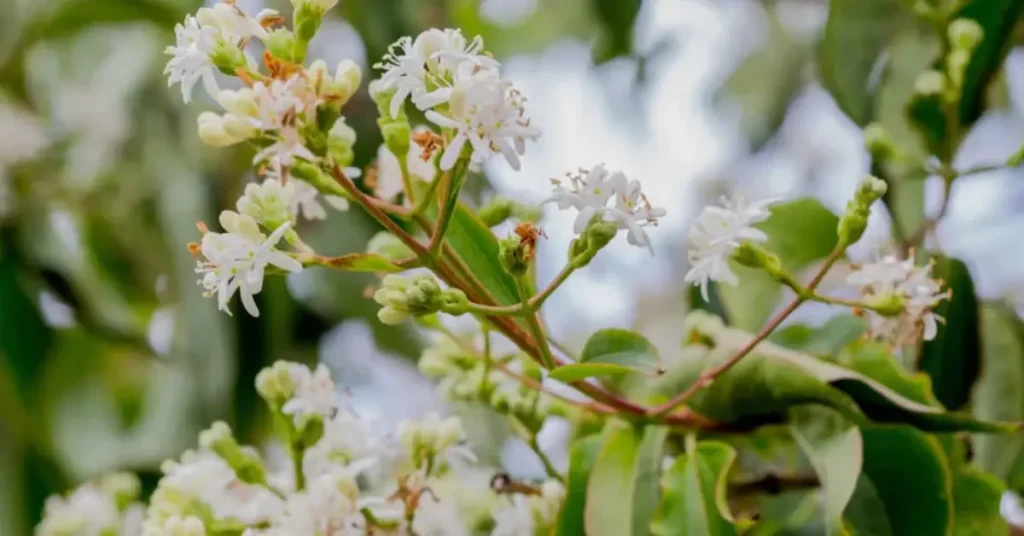
This tree gets its common name from the flower clusters, which form in groups of six surrounding a seventh terminal bud, seven points per cluster. The flowers themselves are small, white and fragrant, opening late in the season when most other flowering trees have already finished, making it a useful addition for extending bloom interest into autumn.
After the white flowers fade, the calyces beneath them turn a deep rosy-red and persist for several weeks, creating a second, longer-lasting display that some people find more striking than the flowers themselves. The bark is another standout feature, peeling in thin strips to reveal a tan to light brown layer underneath, giving the trunk visual interest through winter.
Growth is fast for a small ornamental tree and it typically develops a multi-stemmed, vase-shaped form. It is a relatively recent introduction to Western gardens and has not been widely planted.
White Mazzard Cherry (Prunus Avium)
- Native to: Europe and western Asia
- USDA Zones: 4 to 8
- Soil: Well-drained loamy soil; pH 6.0 to 7.0
- Sunlight: Full sun; minimum 6 hours daily
- Height: 30 to 50 feet tall, 25 to 35 feet wide
- Blooms: Nursery-bought trees flower within 3 to 5 years; blooms in mid spring, April to May
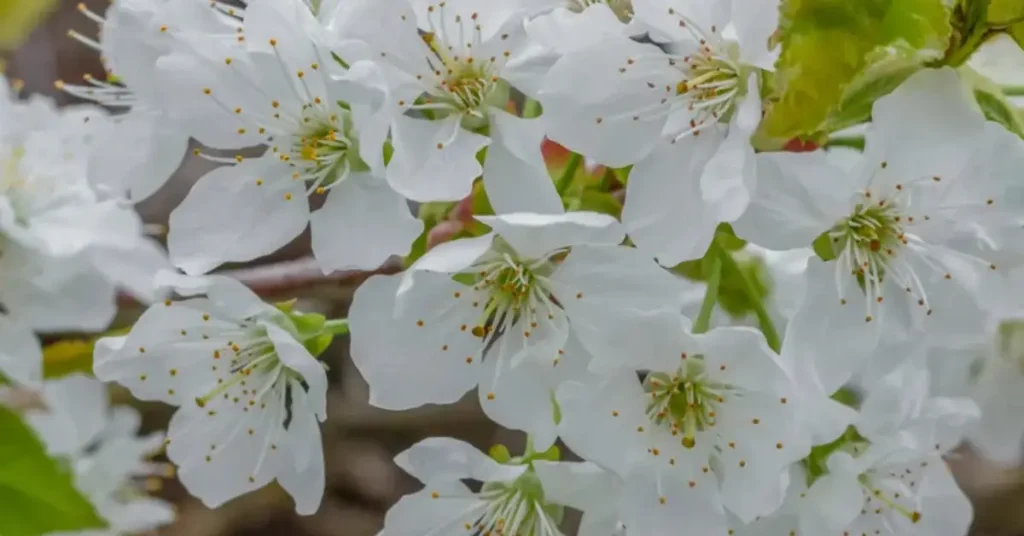
Also known as Wild Cherry or Sweet Cherry, this is a larger, faster-growing species than most ornamental cherries on this list, often used as rootstock for cultivated cherry varieties. The flowers are white, five-petaled, and appear in small clusters just before or alongside the emerging leaves, giving the tree a cleaner, less dense bloom display than double-flowered ornamental cultivars.
Small dark red to black fruit follows in summer, edible but typically bitter compared to cultivated sweet cherries, and heavily favored by birds. Bark is smooth and reddish-brown when young, developing a rougher, more textured surface with age, and it peels in horizontal bands.
Fall color tends toward yellow to orange. Because of its larger eventual size, this tree suits open lawns or naturalized areas better than tight urban lots, and it is sometimes planted for timber as well as ornamental value.
Japanese Tree Lilac (Syringa Reticulata)
- Native to: Japan, Korea, northern China
- USDA Zones: 3 to 7
- Soil: Well-drained loamy soil; pH 6.0 to 7.5
- Sunlight: Full sun; minimum 6 hours daily
- Height: 20 to 30 feet tall, 15 to 25 feet wide
- Blooms: Nursery-bought trees flower within 2 to 4 years; blooms in early summer, June, later than most other lilacs
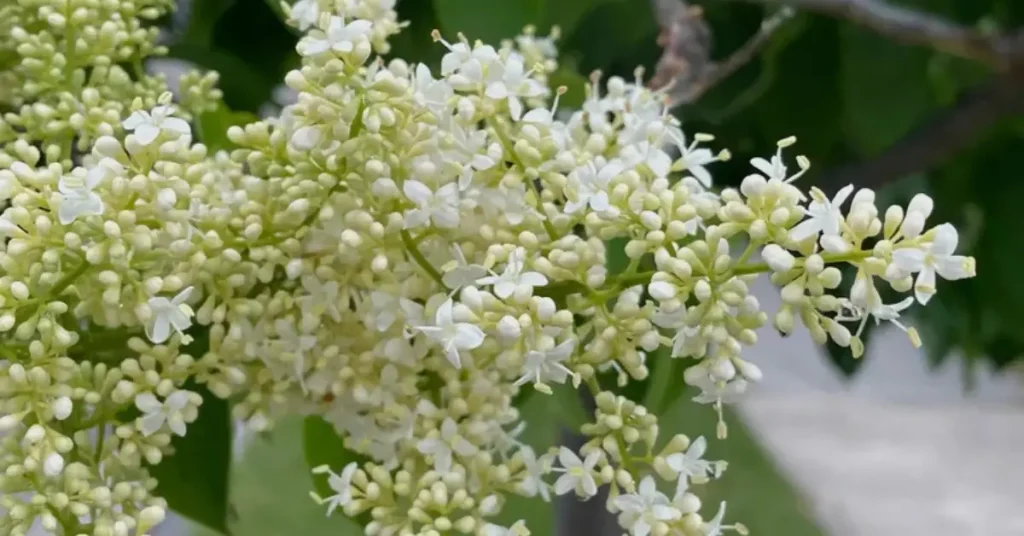
This is the largest member of the lilac family grown as a true tree rather than a shrub, and it flowers later than common lilac. The flowers are creamy white, held in large upright clusters up to 12 inches long, with a fragrance that is noticeably different from common lilac — sometimes described as more privet-like than sweet.
Bark is a strong on this tree, cherry-like and reddish-brown with horizontal lenticels, giving it winter interest after the leaves drop. It tolerates urban conditions, including pollution and road salt, better than common lilac, which has made it a popular choice as a street tree in colder climates.
Unlike common lilac, this species is less prone to powdery mildew and It is more cold-hardy tree that perform well into USDA zone 3.
Northern Catalpa (Catalpa Speciosa)
- Native to: Central United States
- USDA Zones: 4 to 8
- Soil: Adaptable to most well-drained soils; pH 6.0 to 8.0
- Sunlight: Full sun; minimum 6 hours daily
- Height: 40 to 60 feet tall, 20 to 40 feet wide
- Blooms: Nursery-bought trees flower within 3 to 5 years; blooms in late spring to early summer, May to June
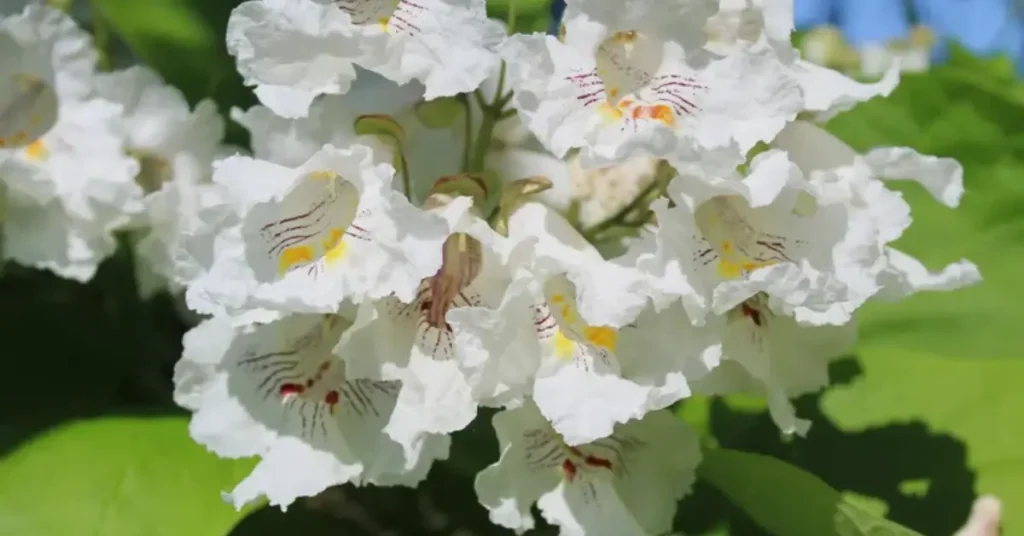
Northern Catalpa is a large shade tree known for its showy flower clusters and oversized heart-shaped leaves that can reach 12 inches across. The flowers are white with purple and yellow throat markings, trumpet-shaped, and held in upright clusters that can be 8 inches or more in length.
After flowering, long, slender seed pods develop, sometimes reaching 12 to 20 inches, and persist on the tree through much of winter, giving it the nickname Cigar Tree. The pods eventually split to release flat, winged seeds.
This tree grows quickly when young and become quite large with age, so it needs room to mature. It is tolerant of poor soils and urban conditions, but the large leaves and long seed pods create a fair amount of cleanup through fall and winter, which is worth factoring in for smaller properties.
California Buckeye (Aesculus Californica)
- Native to: California
- USDA Zones: 7 to 9
- Soil: Well-drained rocky or loamy soil; pH 6.0 to 7.5
- Sunlight: Full sun to partial shade; 4 to 6 hours daily
- Height: 15 to 30 feet tall, 15 to 30 feet wide
- Blooms: Nursery-bought trees flower within 3 to 5 years; blooms in late spring to early summer, May to June
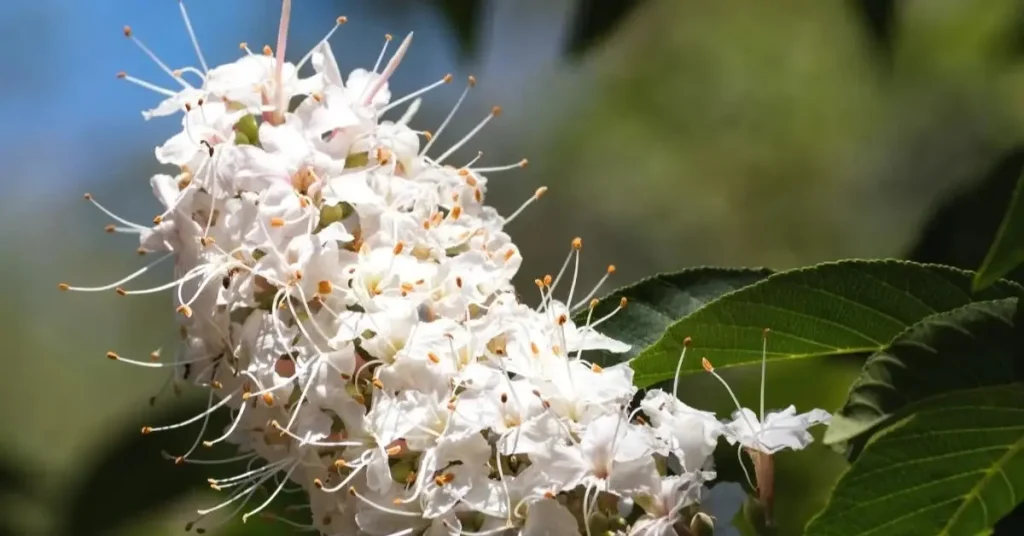
This is a drought-adapted native tree from California’s foothills and canyons, known for an unusual survival trait. It drops its leaves in summer as a response to drought stress, well before autumn, then leafs out again the following spring. The flowers are white to pale pink, held in dense upright spikes called panicles that can reach 4 to 8 inches long, and carry a strong fragrance that some find appealing and others find overwhelming up close.
After flowering, smooth, pear-shaped seed pods develop, each containing one or two large, shiny brown seeds. All parts of the tree, including the seeds, nectar, and pollen, are toxic to humans and many animals, including honeybees, which is worth knowing if bees are a concern in the area.
It tolerates dry, rocky soils and minimal supplemental water once established, reflecting its native habitat in California’s dry interior hills. The early leaf drop can look like a sign of dieback to people unfamiliar with the species, but it is a normal part of its growth cycle.
Horse Chestnut (Aesculus Hippocastanum)
- Native to: Balkan Peninsula in southeastern Europe
- USDA Zones: 3 to 8
- Soil: Well-drained loamy soil; pH 6.0 to 7.5
- Sunlight: Full sun; minimum 6 hours daily
- Height: 50 to 75 feet tall, 40 to 70 feet wide
- Blooms: Nursery-bought trees flower within 4 to 7 years; blooms in mid to late spring, April to May
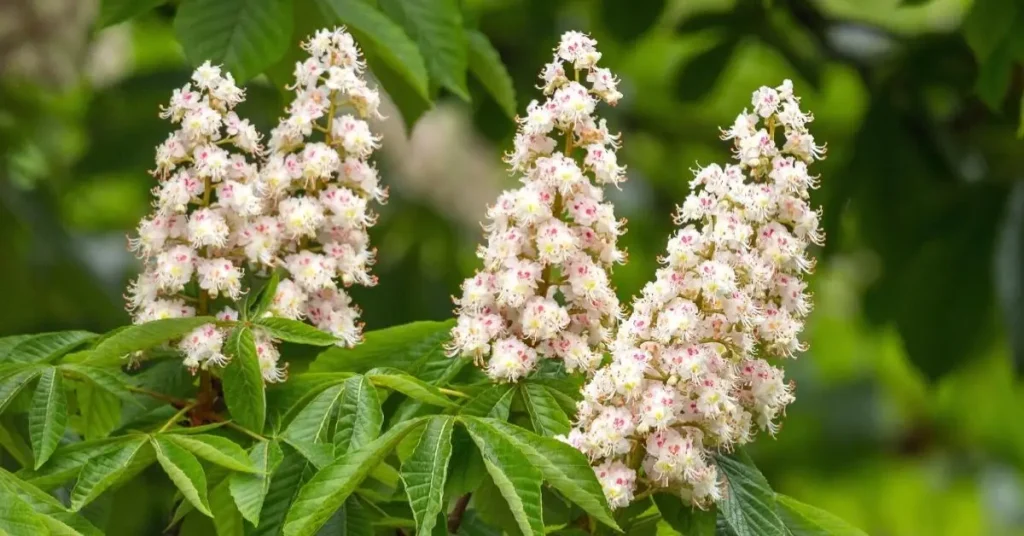
This is a large shade tree known for upright flower clusters, called panicles, that stand out above the foliage like candles across the canopy. The flowers are white with a yellow to pink throat marking that fades as the bloom matures, and each panicle can reach 8 to 12 inches tall, made up of dozens of individual small flowers.
Leaves are large, palmately compound with five to seven leaflets, giving the canopy a dense, full appearance through summer. After flowering, spiny green seed capsules develop, splitting open in autumn to reveal glossy brown seeds known as conkers, historically used in a popular children’s game in parts of Europe. The seeds are toxic if ingested.
This tree gets large and needs large space to mature. It is better suited to parks, estates, and larger properties than small residential lots. It is prone to leaf blotch and leaf miner in some regions.
Japanese Crepe Myrtle (Lagerstroemia Indica)
- Native to: China, Japan, Korea
- USDA Zones: 6 to 9
- Soil: Well-drained loamy or sandy soil; pH 5.0 to 6.5
- Sunlight: Full sun; minimum 6 hours daily
- Height: 15 to 25 feet tall, 10 to 15 feet wide
- Blooms: Nursery-bought trees flower within 1 to 2 years; blooms in mid summer through early autumn, June to September
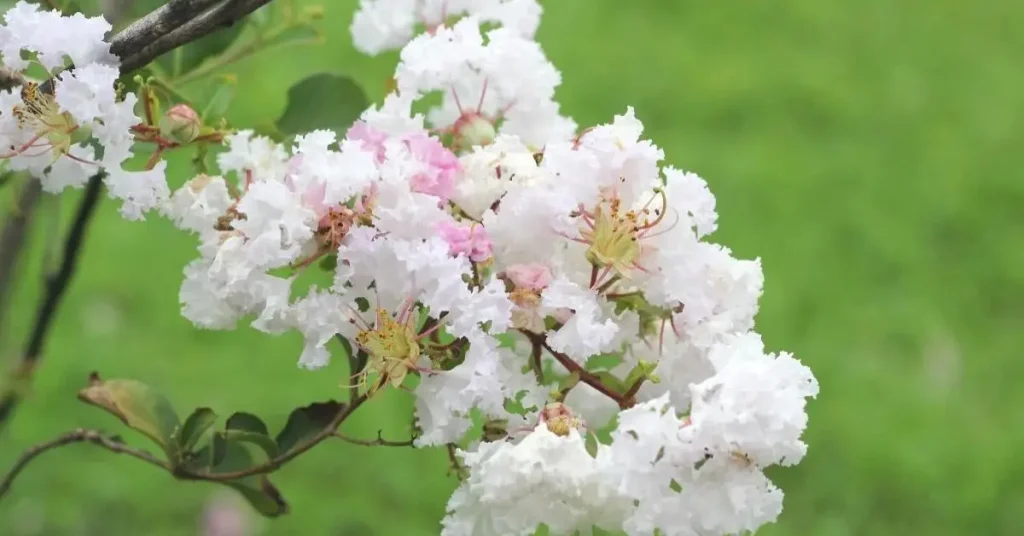
Crepe Myrtle is known for an unusually long bloom period that stretches across much of summer, well past the time most flowering trees have finished. The flowers are ruffled and papery in texture, giving them their common name, and white-flowered cultivars produce dense clusters along the tips of new growth that continue forming as the season progresses.
Bark is strong, smooth and mottled in shades of gray, tan, and cinnamon-brown, peeling in thin curls that expose lighter wood underneath — giving the trunk visual interest through winter once leaves have dropped. Fall color ranges from orange to red to purple depending on the cultivar and growing conditions.
This tree tolerates heat and humidity better than most trees on this list, performing especially well across the southern United States. It benefits from full sun for the heaviest bloom and can struggle with powdery mildew in shadier or more humid spots without good air circulation.
Natchez Crape Myrtle (Lagerstroemia Indica ‘Natchez’)
- Native to: Cultivar developed in the United States; parent species from China, Japan, Korea
- USDA Zones: 6 to 9
- Soil: Well-drained loamy or sandy soil; pH 5.0 to 6.5
- Sunlight: Full sun; minimum 6 hours daily
- Height: 20 to 30 feet tall, 15 to 20 feet wide
- Blooms: Nursery-bought trees flower within 1 to 2 years; blooms in mid summer through early autumn, June to September
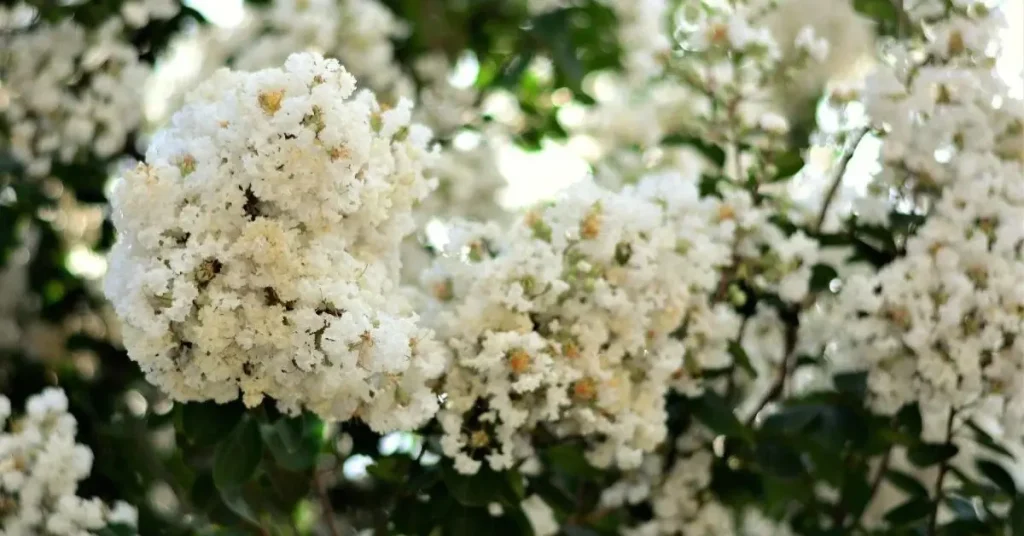
‘Natchez’ is one of the most widely planted crape myrtle cultivars, developed for mildew resistance and a larger, more tree-like form than many other varieties. The flowers are pure white, ruffled, and held in large conical clusters that can reach 12 inches or more, covering the canopy heavily during peak bloom.
The bark is a particular highlight on this cultivar, cinnamon-brown, smooth, and exfoliating in thin curls to reveal lighter wood beneath, considered one of the more attractive barks among ornamental trees. Fall foliage color shifts to orange and red before dropping.
This cultivar was specifically bred for resistance to powdery mildew, a common problem in older crape myrtle varieties. It grows larger than many crape myrtles, so it suits use as a small shade tree rather than just a flowering shrub-like specimen.
Orange Jasmine (Murraya Paniculata)
- Native to: Southeast Asia, southern China, northern Australia
- USDA Zones: 9 to 11
- Soil: Well-drained loamy or sandy soil; pH 5.5 to 6.5
- Sunlight: Full sun to partial shade; 4 to 6 hours daily
- Height: 10 to 25 feet tall, 8 to 15 feet wide
- Blooms: Nursery-bought trees flower within 1 to 2 years; blooms intermittently through the year, heaviest after rain or warm humid periods
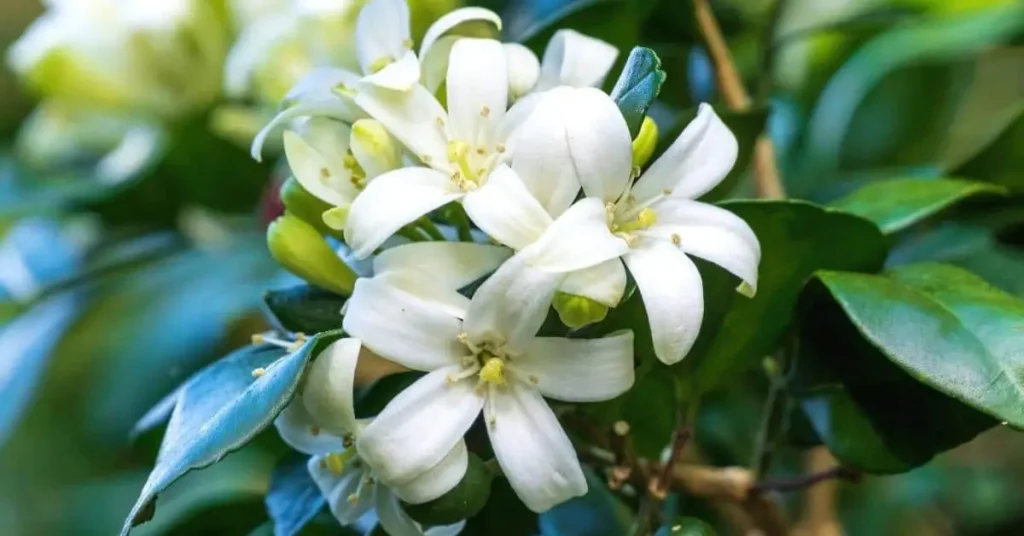
Despite the common name, this plant is not a true jasmine, though the small white flowers carry a similarly strong, sweet fragrance that has made it a popular choice near patios and entryways. Flowering is not tied to a single season, it blooms in flushes after rainfall or warm humid weather, which means bloom timing can be somewhat unpredictable depending on local conditions.
Leaves are glossy, dark green, and finely divided, giving the foliage a soft, refined texture even when the plant is not in bloom. Small red to orange berries follow the flowers, adding a secondary point of color, though they are not typically eaten by people.
It is usually grown as a large shrub or small multi-stemmed tree and is commonly used for hedging or screening in warm climates due to its dense, naturally tidy growth habit. In zones below 9 it can be grown in containers and brought indoors over winter.
Pee Gee Hydrangea (Hydrangea Paniculata ‘Grandiflora’)
- Native to: China, Japan; cultivar developed in cultivation
- USDA Zones: 3 to 8
- Soil: Well-drained, moist loamy soil; pH 6.0 to 6.5
- Sunlight: Full sun to partial shade; 4 to 6 hours daily
- Height: 10 to 25 feet tall, 10 to 20 feet wide (size varies with pruning and training)
- Blooms: Nursery-bought plants flower within 1 to 2 years; blooms in mid to late summer, July to September
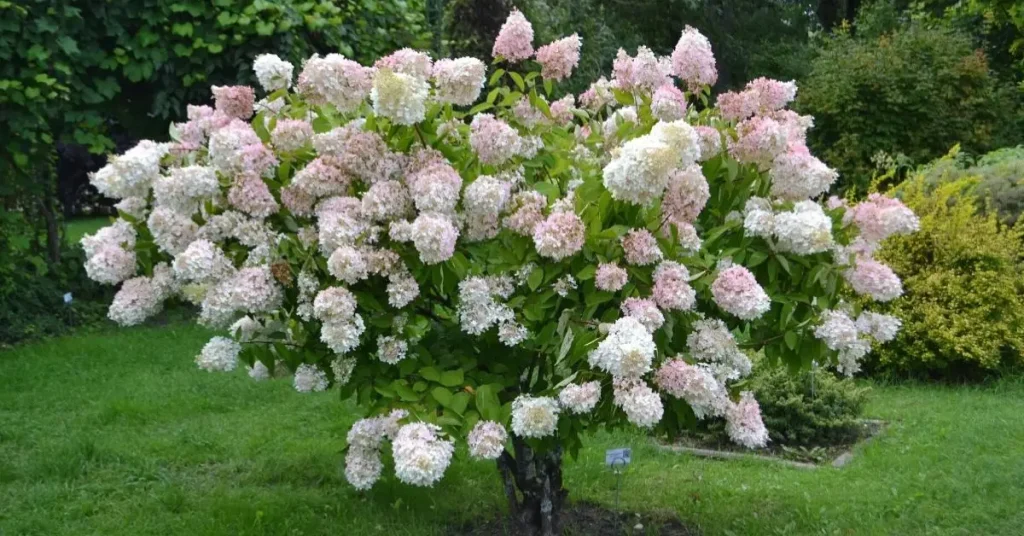
Pee Gee Hydrangea is one of the older hydrangea cultivars still widely grown, known for producing large, dense cone-shaped flower clusters that can reach 12 to 18 inches long. The flowers open white in summer and gradually shift to a dusty pink as they age into autumn, giving the plant two distinct color phases over the season.
This variety is naturally a large shrub but is frequently trained into a small tree form by removing lower growth and establishing a single trunk, which is how it most often appears in formal gardens and front yard plantings. Unlike many hydrangeas, it blooms on new wood, which makes it more forgiving to prune in late winter without risking the loss of that year’s flowers.
It tolerates more sun than most hydrangeas, performing well in full sun in cooler climates, though some afternoon shade helps in hotter regions to prevent the large flower heads from wilting in peak summer heat.