What To Plant With Roses (21 Companion Plants)
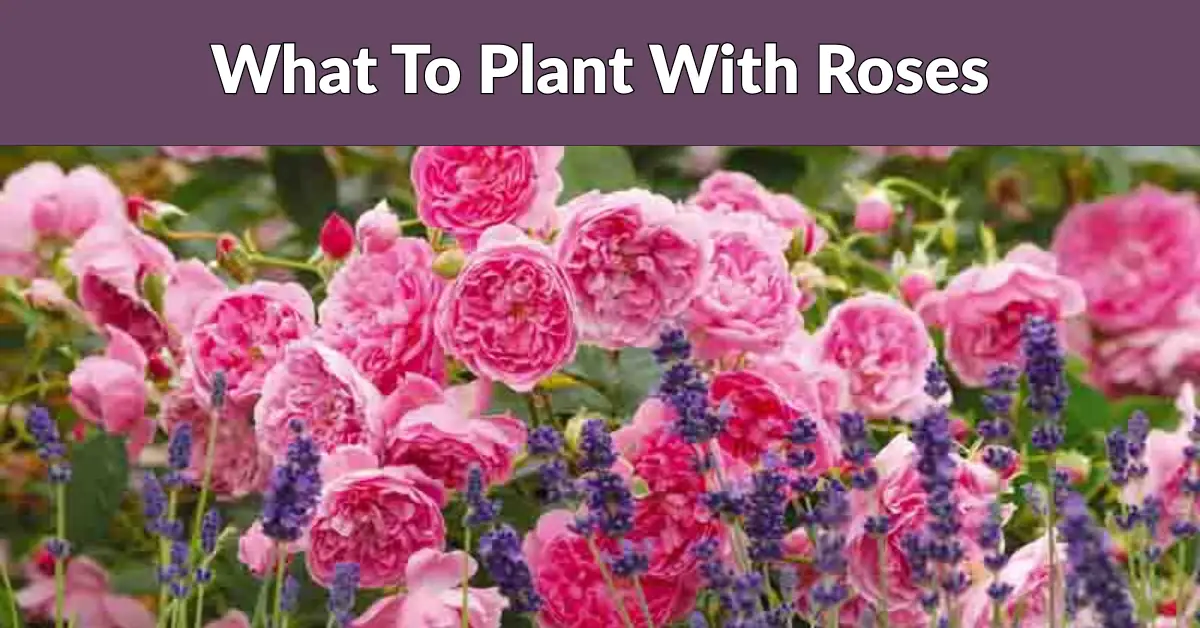
Companion planting is the practice of growing two or more different plants close to each other so they can help one another thrive. Just like people, some plants are great “friends”. They support each other when planted nearby. For example, the famous “Three Sisters” combination of corn, beans, and squash has been used by farmers for centuries. The corn grows tall and gives the beans something to climb, the beans add nutrients to the soil, and the squash spreads wide to block weeds and keep the ground moist. It’s nature’s teamwork at its finest!
In nature, plants don’t grow in single-species rows like a traditional farm; they grow together in diverse groups that balance and support each other. This diversity is what keeps ecosystems healthy. When farmers and gardeners apply this same principle, they reduce their dependence on chemical fertilizers and pesticides, making their gardens more natural and sustainable. It also improves soil health over time.
Some plants, like marigolds, naturally repel harmful insects, act as a living pest barrier. Others, like basil, can improve the flavor and growth of neighboring plants like tomatoes. Nitrogen-fixing plants like clover and beans enrich the soil so nearby plants grow stronger. Companion planting also attracts pollinators like bees and butterflies, which boosts fruit and vegetable production. Overall, it’s a smart, eco-friendly gardening strategy that saves money, protects the environment, and leads to a more abundant and healthy harvest.
Roses are undeniably stunning but they are also high-maintenance plants. They are a favorite target of common pests like aphids, spider mites, and Japanese beetles, which can damage leaves and blooms very quickly. Roses are also highly susceptible to fungal diseases like blackspot and powdery mildew. Growing roses in the same soil season after season slowly depletes nutrients. Because of all these challenges, roses simply cannot thrive at their full potential when grown in isolation. They need a support system around them, plants that can repel pests, attract beneficial insects, improve soil health, and create a more balanced growing environment.
In this post you will learn what to plant with roses.
What Herbs to Plant With Roses
Here are 7 best herbs that make wonderful companions for your roses!
Lavender
- Scientific Name: Lavandula angustifolia
- Local Name: Lavender / Common Lavender
- Native To: Mediterranean region
- USDA Zones: 5–8
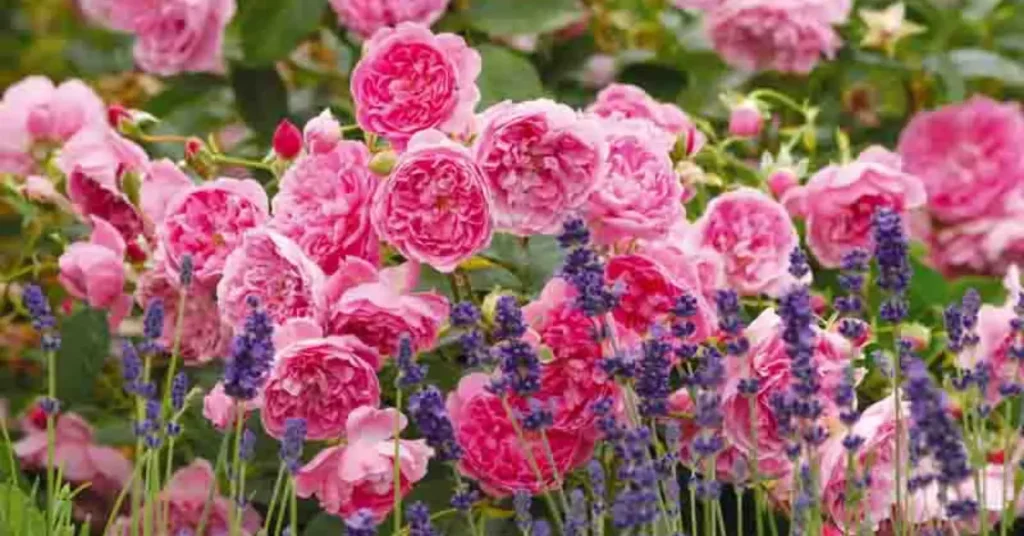
Lavender is one of the most beloved rose companions. Its strong, sweet fragrance naturally repels aphids, fleas, and moths that would otherwise attack your roses. It attracts bees and butterflies, boosting pollination all around the garden. Lavender loves the same sunny, well-drained conditions that roses prefer, making them perfectly matched neighbors. It also adds stunning purple color contrast alongside rose blooms, making your garden look absolutely breathtaking.
Garlic
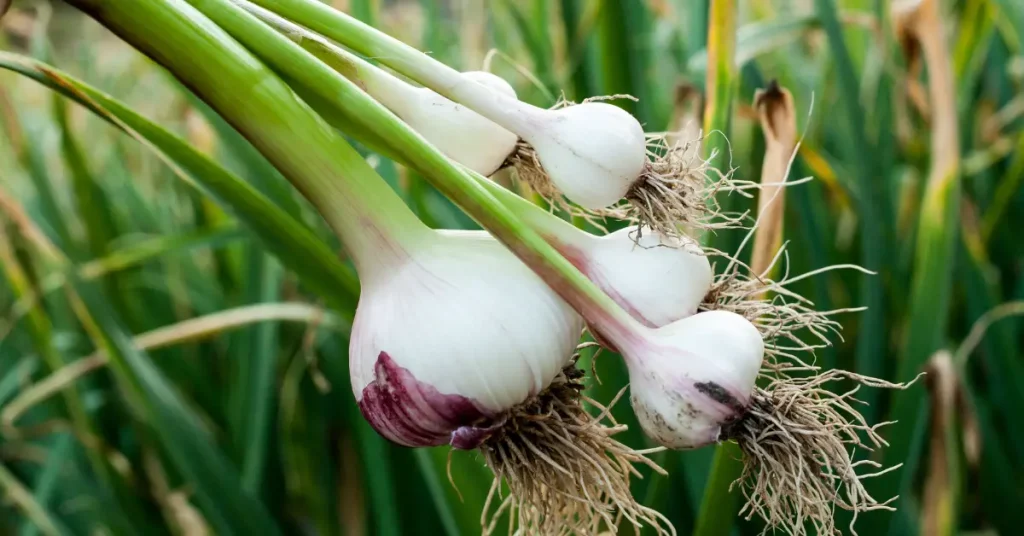
- Scientific Name: Allium sativum
- Local Name: Garlic
- Native To: Central Asia
- USDA Zones: 3–9
Garlic is a powerhouse protector for roses. Its pungent sulfur compounds naturally repel aphids, spider mites, and Japanese beetles. It is also well known for helping prevent blackspot fungus, one of the most frustrating rose diseases. Plant garlic in a ring around the base of your rose bushes for maximum protection. Garlic is easy to grow and gives you a delicious harvest while quietly guarding your garden.
Basil
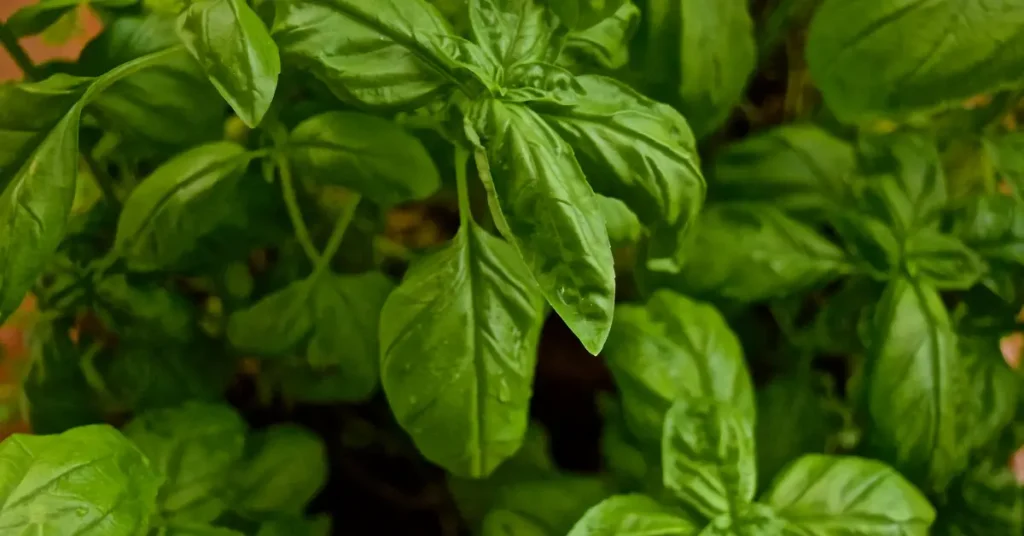
- Scientific Name: Ocimum basilicum
- Local Name: Basil / Tulsi (in some regions)
- Native To: Tropical Asia and Africa
- USDA Zones: 2–11 (grown as annual)
Basil is a fragrant and versatile herb that is a wonderful companion plant for roses. Its strong aroma confuses and repels thrips, aphids, and whiteflies that damage rose foliage. It is also believed that basil improves the fragrance of nearby roses. Basil grows quickly, stays compact, and thrives in the same warm, sunny spots roses love. Plus, you get fresh basil for your kitchen.
Thyme
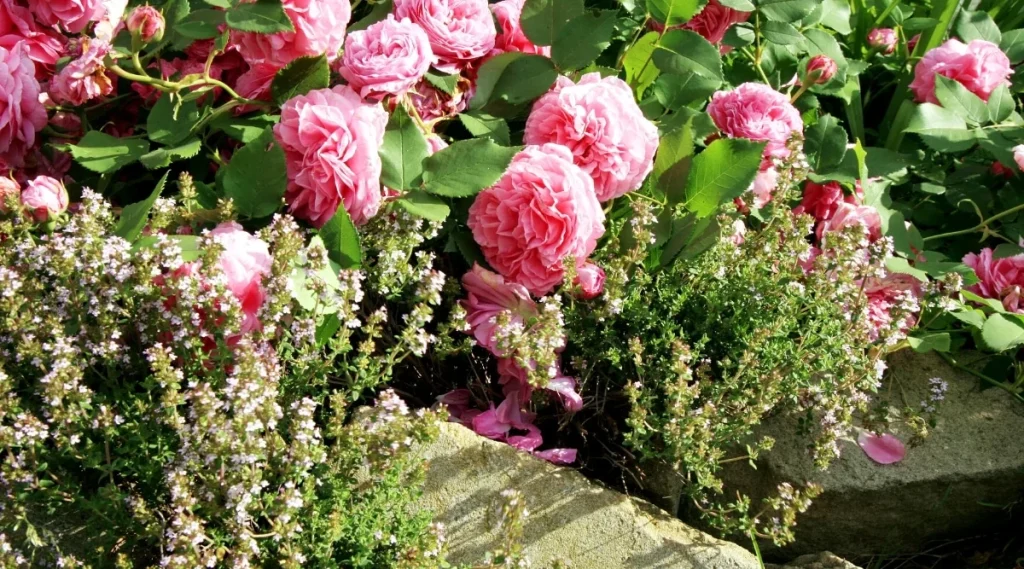
- Scientific Name: Thymus vulgaris
- Local Name: Thyme / Common Thyme
- Native To: Southern Europe and Mediterranean
- USDA Zones: 5–9
Thyme is a low-growing, hardy herb that works beautifully as a ground cover around rose bushes. It naturally suppresses weeds, reducing competition for nutrients and water. Its tiny flowers are a magnet for beneficial insects like bees and hoverflies, which prey on harmful pests. Thyme is also known to repel cabbage worms and whiteflies. It stays low and compact, it won’t crowd your roses, it simply spreads gently underneath them, keeping the soil healthy and the pests away.
Read: What is Difference Between English Thyme and French Thyme
Parsley
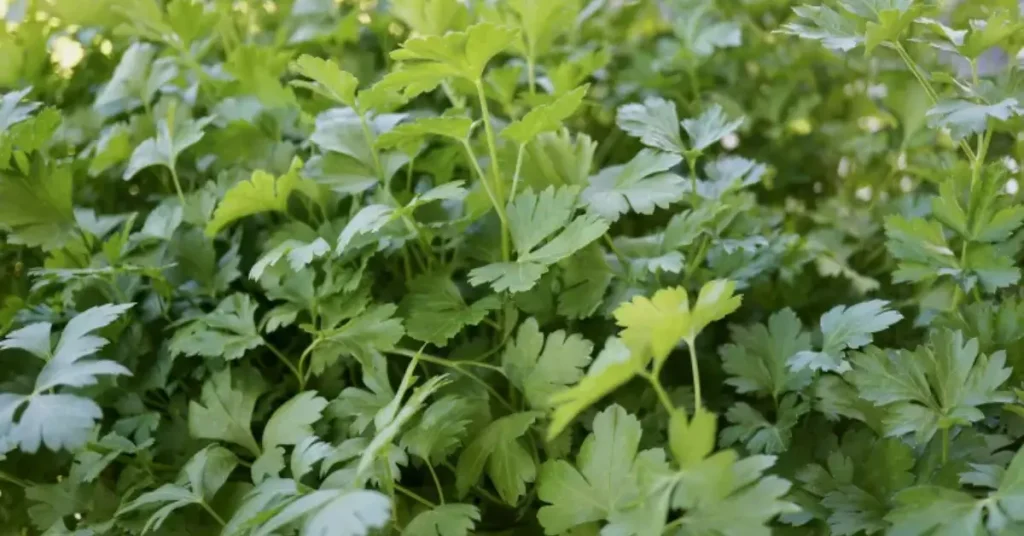
- Scientific Name: Petroselinum crispum
- Local Name: Parsley
- Native To: Mediterranean region
- USDA Zones: 4–9
Parsley is a effective rose companion. It attracts hoverflies and predatory wasps, which are natural enemies of aphids and other soft-bodied pests that attack roses. Parsley also acts as a living mulch when planted densely at the base of roses, helping retain soil moisture and regulate temperature. It’s a biennial plant, it grows foliage the first year and flowers the second and those second-year flowers are especially attractive to beneficial insects that keep your rose garden in balance.
Chives
- Scientific Name: Allium schoenoprasum
- Local Name: Chives
- Native To: Europe, Asia, and North America
- USDA Zones: 3–9
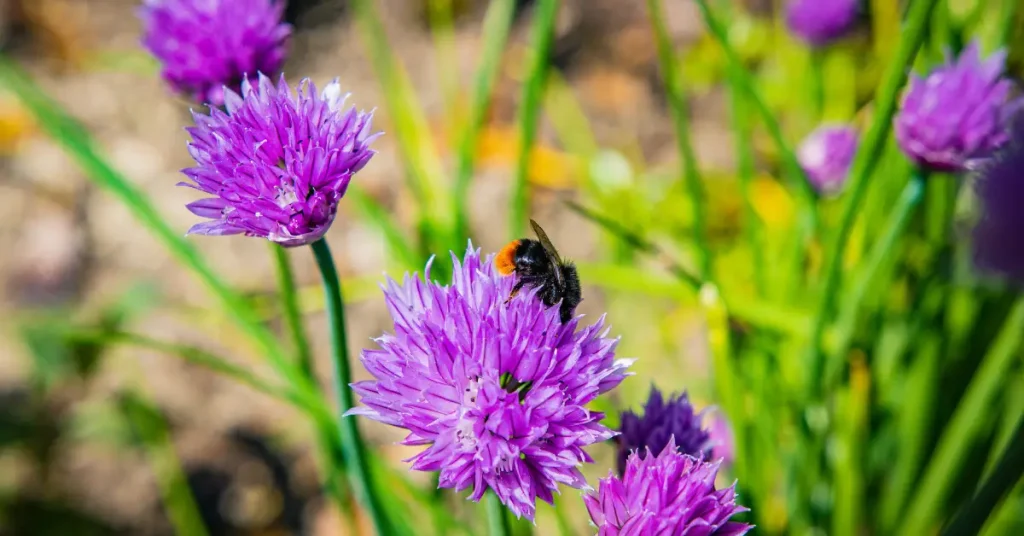
Like garlic, chives belong to the Allium family and share many of the same pest-repelling qualities. Their sulfur-rich scent deters aphids, Japanese beetles, and rose chafers effectively. Gardeners often ask What to plant with roses to stop black spot and i always advise for garlic and chives. Chives prevent blackspot and powdery mildew when planted close to roses. Their pretty purple pom-pom flowers bloom in spring, adding a charming decorative touch to the rose garden while simultaneously drawing in pollinators. They are easy to grow and come back year after year with almost zero effort.
Rosemary
- Scientific Name: Salvia rosmarinus
- Local Name: Rosemary / Rusmari
- Native To: Mediterranean region
- USDA Zones: 7–11
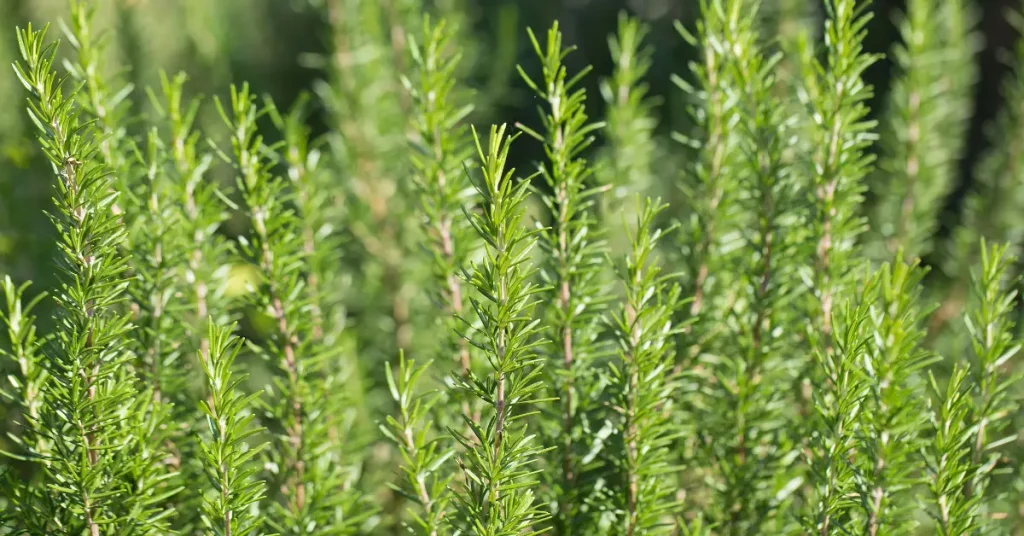
Rosemary is a strong, aromatic shrub-like herb that is excellent companion for roses. Its intense fragrance masks the scent of roses from pests, confusing insects like aphids. Rosemary attracts beneficial predatory insects that hunt garden pests. It thrives in hot, dry, sunny conditions, very similar to what roses love. Its upright, silvery-green form also adds beautiful texture and contrast to the rose garden year-round.
What Vegetables to Plant With Roses
Here are 7 best vegetables that are great companions for your roses.
Carrots
- Scientific Name: Daucus carota
- Local Name: Carrot
- Native To: Central Asia (Afghanistan region)
- USDA Zones: 3–10
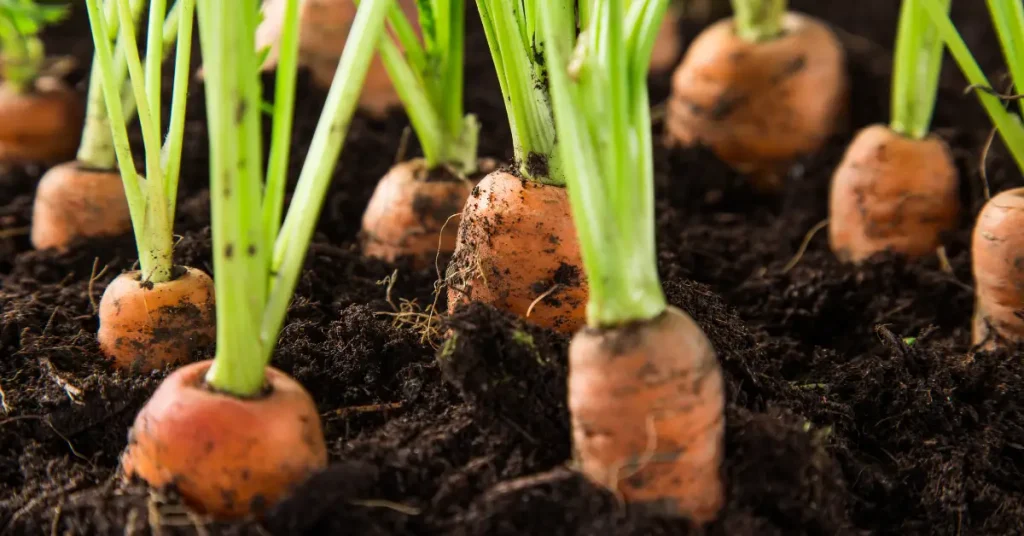
Carrots are a fantastic underground companion for roses. Their long taproots grow deep into the soil, naturally loosening and aerating the earth around rose roots. Improved soil structure allows water and nutrients to reach rose roots more efficiently. When carrot tops flower, they attract beneficial insects like lacewings and parasitic wasps that prey on common rose pests. Carrots and roses also don’t compete for the same nutrients.
Onions
- Scientific Name: Allium cepa
- Local Name: Onion
- Native To: Central Asia
- USDA Zones: 3–9
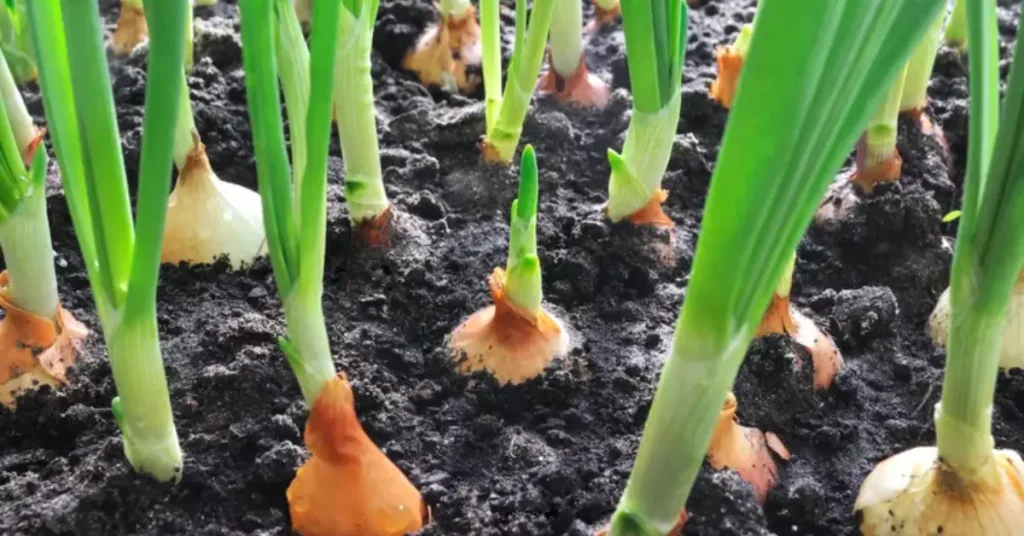
Onions are powerful protectors in the rose garden, much like their Allium cousins garlic and chives. Their sulfur-based compounds naturally repel aphids, slugs, and rose beetles that can cause serious damage to your plants. Onions also help suppress fungal diseases like blackspot when planted close to rose bushes. They grow compactly underground and don’t crowd roses at all. Plant them in clusters around your rose beds.
Leeks
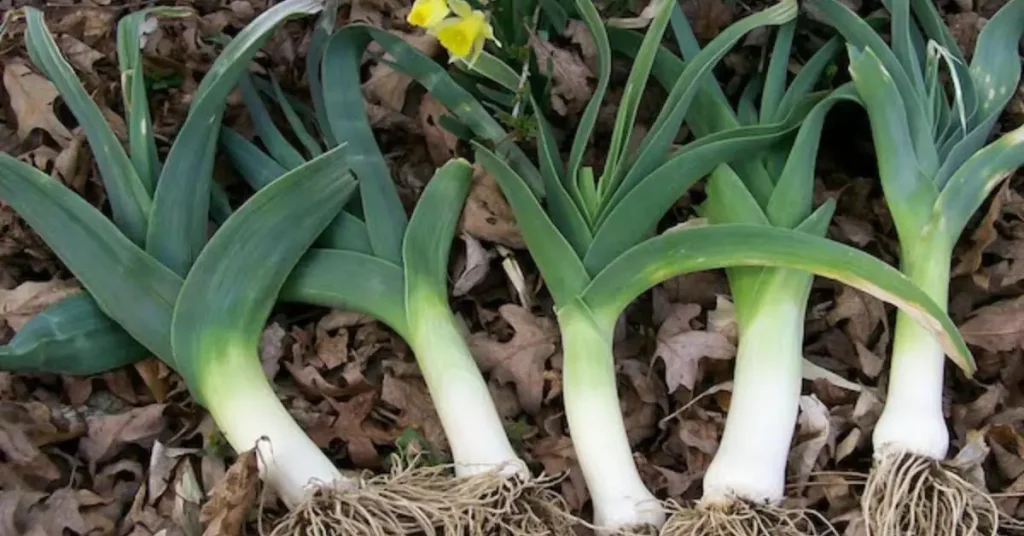
- Scientific Name: Allium ampeloprasum
- Local Name: Leek
- Native To: Mediterranean and Middle East
- USDA Zones: 3–9
Leeks are another Allium family member that brings strong pest-repelling benefits to the rose garden. Their tall, upright form and sulfurous scent deter aphids, carrot flies, and other insects that are drawn to roses. Leeks are also known to improve the general health of nearby plants by releasing beneficial compounds into the surrounding soil. They grow slowly and steadily, making them non-competitive with roses, and their elegant vertical structure adds a lovely architectural element to the garden bed.
Broccoli
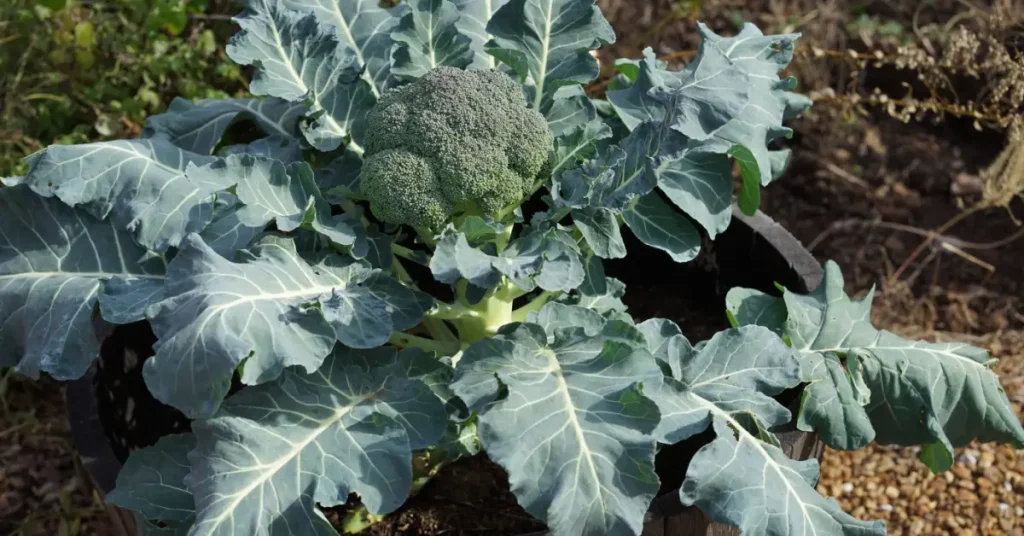
- Scientific Name: Brassica oleracea var. italica
- Local Name: Broccoli
- Native To: Mediterranean region
- USDA Zones: 2–11 (cool-season crop)
Broccoli is a cool-season vegetable that pairs well with roses in spring and autumn gardens. It acts as a ground-level companion, shading the soil around rose bases and helping retain moisture during cooler months. Broccoli’s broad leaves also act as a living mulch, suppressing weed growth around the rose bed. When broccoli bolts and flowers, it becomes a magnet for pollinators and beneficial insects that patrol the garden and keep pest populations under control. A practical and productive companion.
Read: 10 Bad Companion Plants For Roses
Asparagus
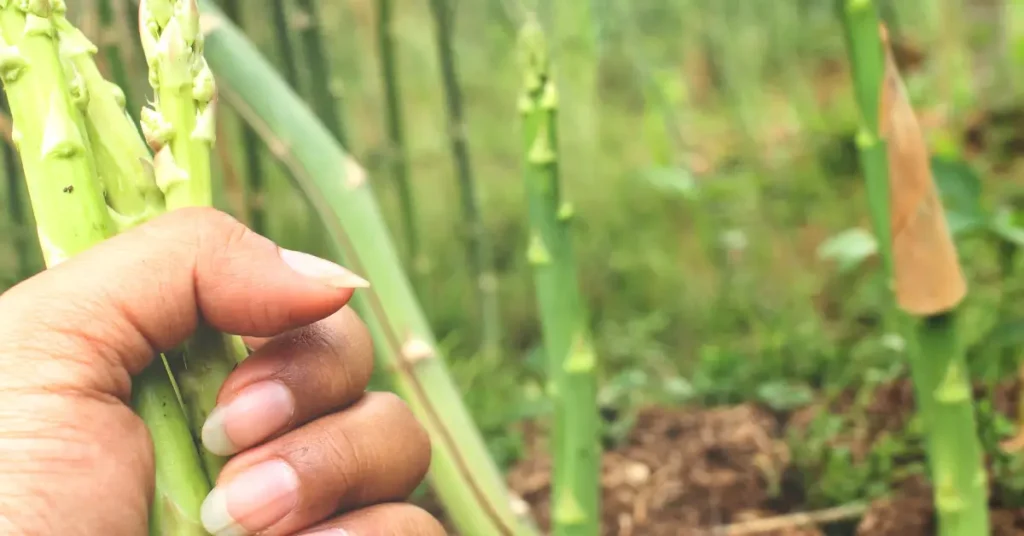
- Scientific Name: Asparagus officinalis
- Local Name: Asparagus
- Native To: Europe, North Africa, and Western Asia
- USDA Zones: 3–8
Asparagus and roses are the best long-term garden partners. Both are perennial plants, they come back year after year, and they actually benefit each other over the long run. Roses help repel the asparagus beetle, while asparagus roots release a natural compound called rotenone that helps protect roses from certain soil-borne pests. Asparagus grows tall and feathery, it also provides light dappled shade that can protect rose roots from extreme summer heat. They truly grow old together beautifully.
Cucumber
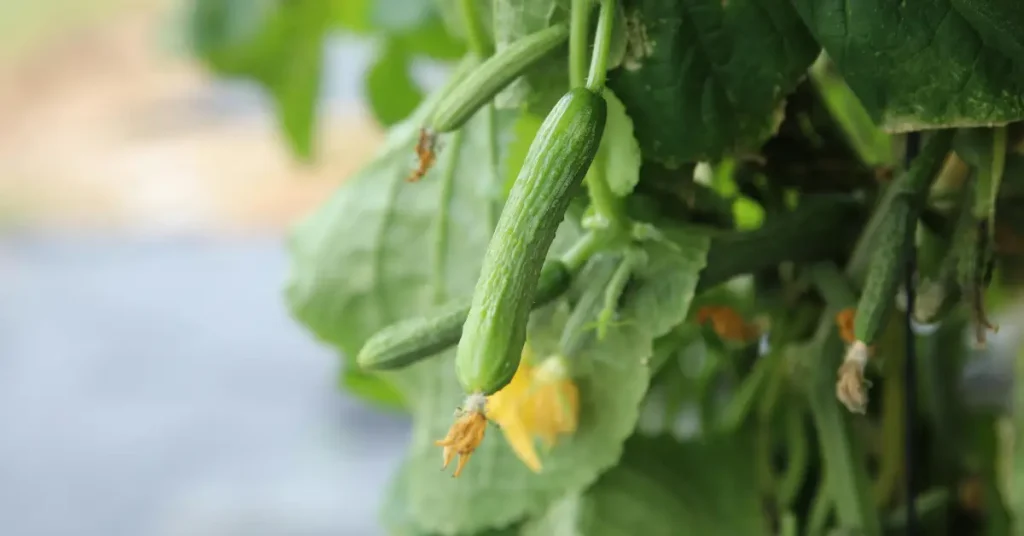
- Scientific Name: Cucumis sativus
- Local Name: Cucumber
- Native To: South Asia (India)
- USDA Zones: 4–11 (grown as annual)
Cucumbers make a surprisingly compatible vegetable companion for roses. Their broad, spreading leaves help cover bare soil, reducing weed pressure and keeping ground moisture locked in around rose roots. Cucumber flowers are highly attractive to bees and pollinators, which benefits the entire garden including your roses. They also grow quickly and fill in empty spaces in the garden bed without competing aggressively. Train cucumbers on a nearby trellis to keep things tidy and maximize your growing space.
Tomatoes
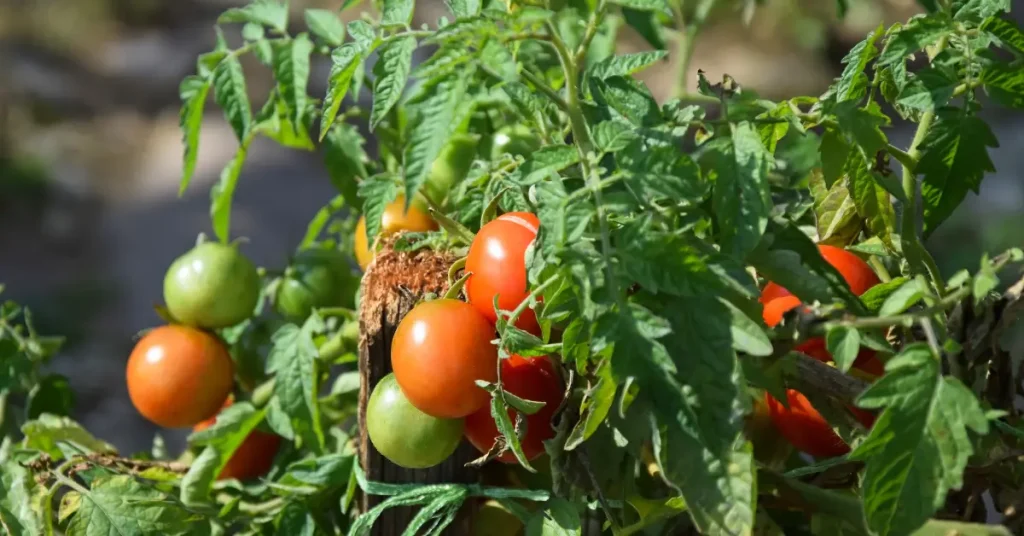
- Scientific Name: Solanum lycopersicum
- Local Name: Tomato
- Native To: Western South America
- USDA Zones: 2–11 (grown as annual)
Tomatoes and roses share a mutually beneficial relationship. Tomato plants produce a natural compound called solanine in their leaves, which is known to repel aphids and other soft-bodied insects that attack roses. In return, roses improve the flavor and health of tomatoes by attracting pollinators and repelling insects. Both plants love full sun and well-drained fertile soil and they thrive in the same garden conditions. A best pairing that delivers both beauty and a delicious harvest.
What Flowers To Plant With Roses
Here are 7 best flowers that create stunning and beneficial combinations with your roses.
Marigolds
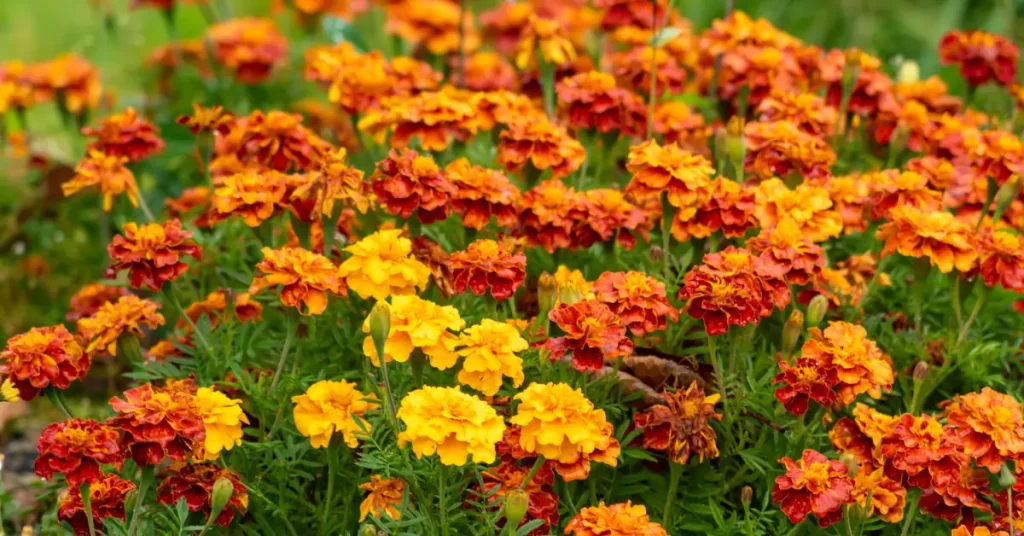
- Scientific Name: Tagetes spp.
- Local Name: Marigold
- Native To: Mexico and Central America
- USDA Zones: 2–11 (grown as annual)
Marigolds are probably the most famous companion plant in the entire gardening world. Their roots release a natural chemical called alpha-terthienyl into the soil that effectively kills nematodes. Their bold, pungent scent repels aphids, whiteflies, and Japanese beetles above ground. Marigolds bloom all season long, providing continuous color and non-stop attraction for pollinators. Plant them generously around the border of your rose beds and let them act as a living pest barrier that also looks absolutely gorgeous.
Salvia
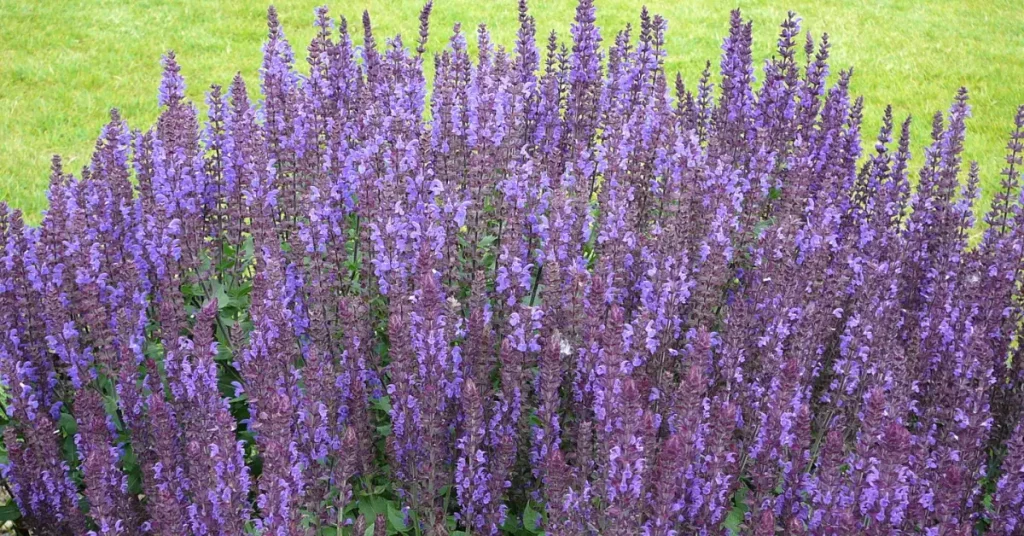
- Scientific Name: Salvia nemorosa
- Local Name: Salvia
- Native To: Europe and Western Asia
- USDA Zones: 4–9
Salvia is a stunning, spiky flowering perennial that pairs beautifully with roses in both looks and function. Its tall violet-blue flower spikes create a gorgeous color contrast alongside rose blooms. Salvia’s strong aromatic foliage naturally repels aphids, whiteflies, and spider mites that regularly trouble roses. It is also a powerful pollinator magnet, drawing in bees, butterflies, and hummingbirds that keep the garden buzzing with life. Drought-tolerant and long-blooming, salvia is a low-maintenance that is good to plant in any rose garden.
Catmint
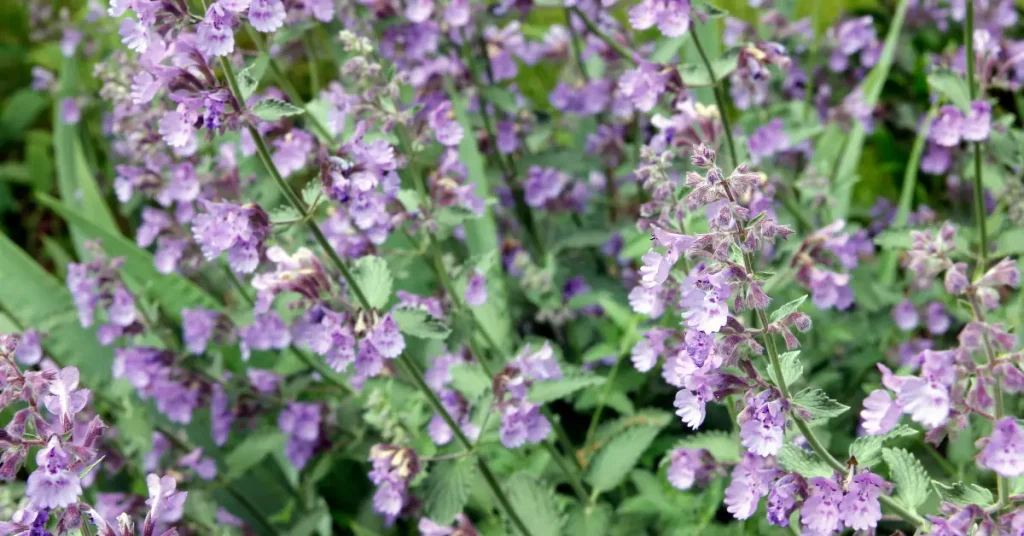
- Scientific Name: Nepeta spp.
- Local Name: Catmint
- Native To: Europe, Asia, and Africa
- USDA Zones: 3–8
Catmint is a soft, cascading perennial flower that looks magical spilling around the base of rose bushes. Its lavender-blue flowers bloom in generous waves from spring through autumn, creating a dreamy, cottage-garden feel. Catmint naturally repels aphids and flea beetles while attracting beneficial insects and pollinators. It also acts as excellent ground cover, suppressing weeds and retaining soil moisture around rose roots. Easy to grow, drought-tolerant, and beautiful, catmint is a true rose garden superstar.
Geraniums
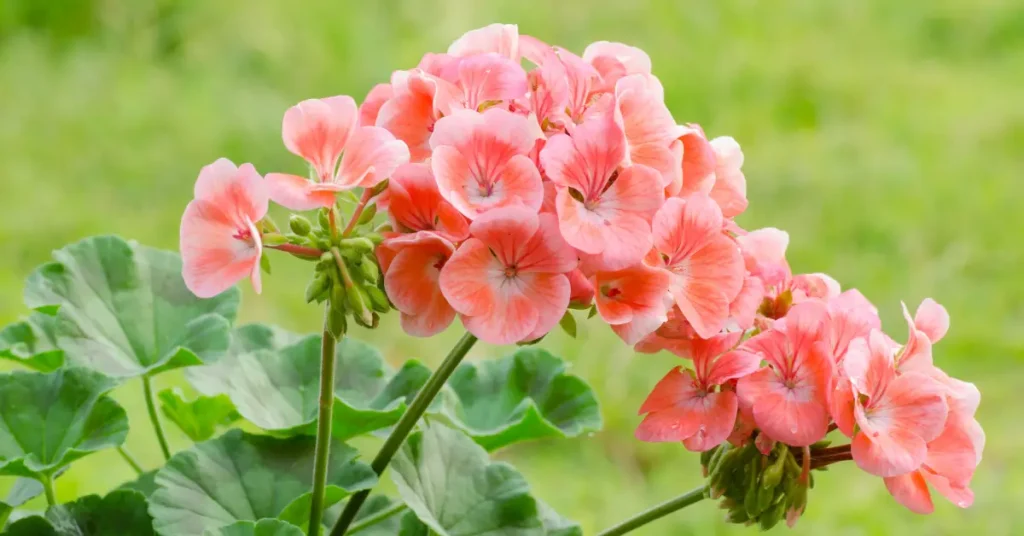
- Scientific Name: Geranium spp. / Pelargonium spp.
- Local Name: Geranium
- Native To: South Africa and Mediterranean
- USDA Zones: 3–9 (varies by species)
Geraniums are cheerful, colorful companions that bring both beauty and function to the rose garden. They are good for repelling Japanese beetles by producing compounds that temporarily paralyze beetles that feed on them. Geraniums also attract helpful predatory insects that hunt aphids and mites. Their compact, bushy growth fills in gaps between rose bushes beautifully, and their wide range of colors from white to deep red creates a vibrant and layered garden display.
Read: How To Grow Geraniums
Chamomile
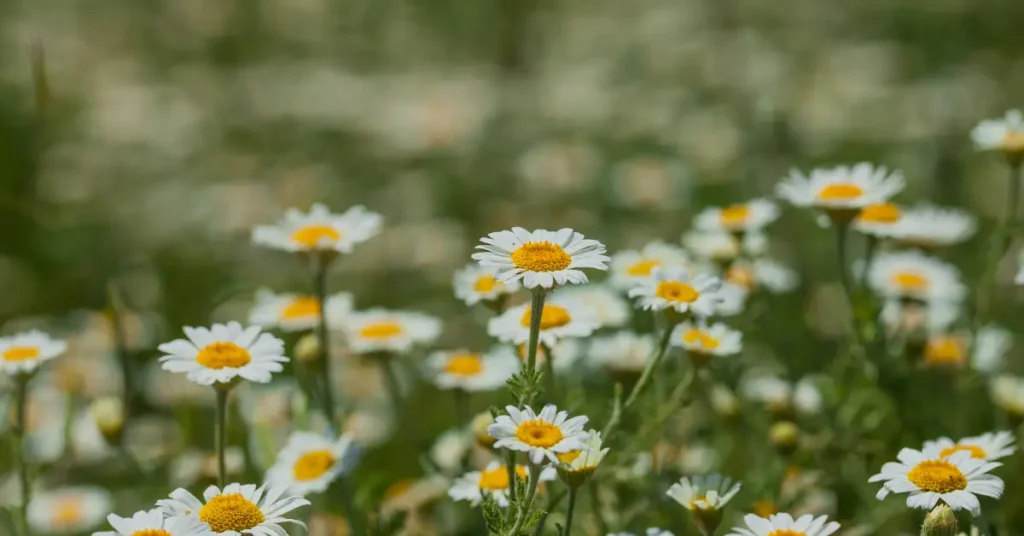
- Scientific Name: Matricaria chamomilla
- Local Name: Chamomile
- Native To: Europe and Western Asia
- USDA Zones: 3–9
Chamomile is a great companion for roses. It releases beneficial compounds into the soil that stimulate rose root growth and improve overall plant vigor. Its delicate white and yellow daisy-like flowers attract hoverflies and parasitic wasps that naturally control aphid populations. Chamomile also improves soil quality by accumulating calcium and potassium, making these minerals more available to rose plants.
Read: How To Grow Chamomile Flowers
Foxglove
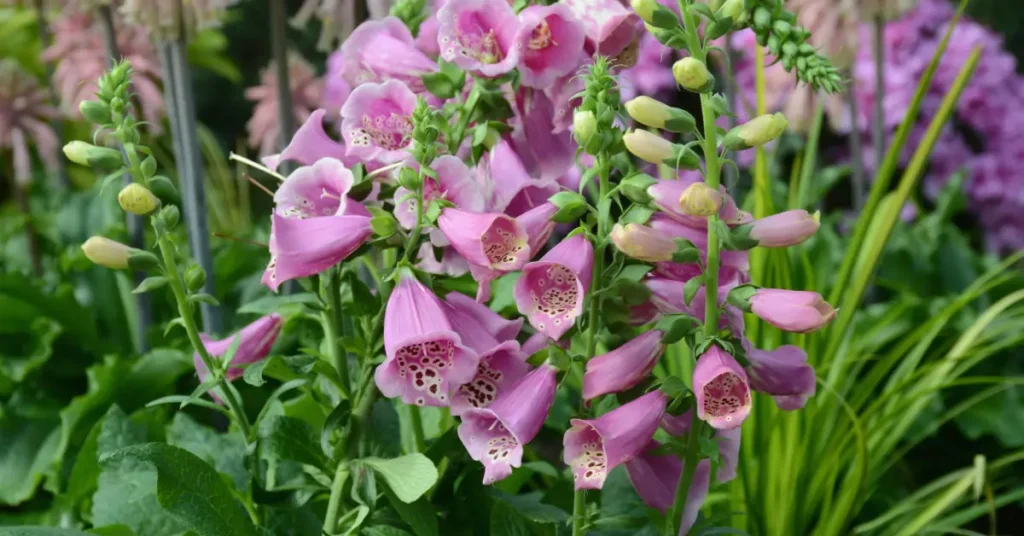
- Scientific Name: Digitalis purpurea
- Local Name: Foxglove
- Native To: Western Europe
- USDA Zones: 4–9
Foxglove is a tall, biennial flower that creates a stunning vertical backdrop for rose bushes. Its towering spires of tubular purple, pink, or white blooms adds height and old-world charm to the rose garden. Foxglove is believed to stimulate the growth and disease resistance of nearby roses by releasing potassium-rich compounds into the surrounding soil. It also attracts bumblebees which boosts pollination throughout the garden. Just keep in mind that foxglove is toxic if ingested, so handle with care around children and pets.
Echinacea (Coneflower)
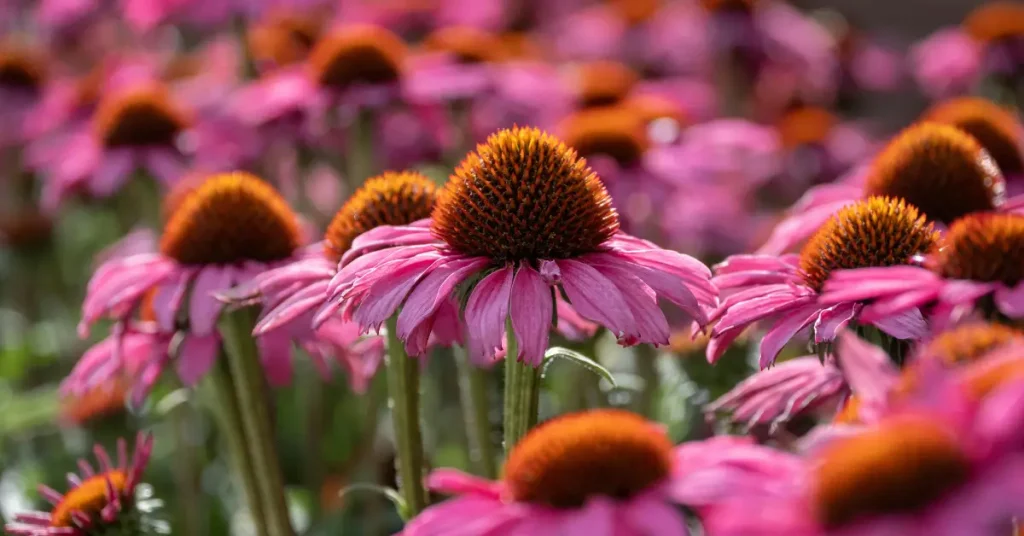
- Scientific Name: Echinacea purpurea
- Local Name: Coneflower
- Native To: Eastern North America
- USDA Zones: 3–9
Echinacea is a bold, cheerful perennial that makes an outstanding rose companion. Its large, daisy-like flowers with distinctive raised centers bloom from midsummer through autumn. Echinacea attracts beneficial insects and butterflies that help control pest populations naturally. Its deep taproots also improve soil aeration and help break up compacted earth around rose beds. Hardy, drought-resistant, and absolutely beautiful, echinacea brings ecological and visual value to the rose garden.
I hope this guide helped.